
A practical guide to improving your sleep environment. Learn how to manage bedroom temperature, light and noise without rigid rules or expensive technology.





Many adults believe that achieving optimal rest requires a complete sleep makeover with rigid temperature rules and expensive technology. The actual clinical reality points away from strict environmental mandates. The most practical intervention is a simple attempt to reduce excess heat, unwanted light and unpredictable noise. True environmental improvement relies on basic comfort adjustments rather than absolute perfection.
Chasing a universally perfect bedroom often creates unnecessary performance anxiety for tired adults. People frequently spend vast amounts of money on high-tech cooling systems or soundproofing materials. A sensible reset prioritizes personal comfort targets over strict optimization protocols. You can create a highly effective resting space without buying a complete suite of smart gadgets.
Consumer wellness culture frequently transforms basic sleep hygiene into an expensive performance target. Marketing campaigns present population-level health guidelines as strict individual rules for every household. General environmental health metrics are often used to suggest absolute household requirements. The implication is that any bedroom failing to meet perfect acoustic or thermal metrics will automatically damage your rest.
This creates an unrealistic standard for normal living environments. Urban sleepers and parents of young children often feel they are failing at sleep when their rooms include normal intermittent sounds. A rigid approach distracts people from addressing actual personalized comfort issues. A basic bedroom reset cannot compensate for untreated sleep apnea, chronic pain, depression or severe insomnia.
The wellness industry thrives on creating problems that require purchased solutions. Sleep tracking applications frequently warn users about minor fluctuations in their bedroom environment. These alerts create a false sense of urgency regarding normal nighttime disturbances. An individual might sleep perfectly well until an app tells them their room is too warm.
This hyper-fixation on environmental metrics frequently leads to orthosomnia, a condition where the pursuit of perfect sleep causes insomnia. Tired adults begin treating their bedrooms like clinical laboratories rather than spaces for relaxation. They obsess over exact humidity percentages, specific sound frequencies and precise lighting color temperatures. This analytical approach fundamentally ignores the natural resilience of the human nervous system.
The human body responds to environmental cues with substantial individual variation. Temperature provides a clear example of this physiological reality. Research on bedroom environments highlights that overheating is a plausible sleep disruptor, but forced cooling can cause equal discomfort. Researchers note substantial individual variation, so temperature preferences should be treated as a starting point rather than a universal rule.
A person who sleeps comfortably in a warmer room does not need to force their environment into extreme cold. Associations between heat and poorer sleep do not prove that lowering every bedroom temperature will improve rest for every person. The rigid pursuit of a perfectly chilled room often ignores human adaptability. True environmental improvement relies on subjective comfort rather than chasing a specific thermostat number.
The body regulates its core temperature through a natural circadian rhythm. Core body temperature drops in the evening to initiate sleep and rises before waking. A cooler bedroom supports this natural physiological process, which is why excessive heat often fragments sleep. Extreme cold can trigger shivering and wakefulness, demonstrating the need for moderate, personalized adjustments.
Light exposure also provokes measurable physiological responses without dictating one strict protocol. An observational UK Biobank analysis of more than 11,000 adults used wrist sensors to study nighttime light exposure. This research found associations between low-level light and cardiovascular changes. However, this data presents observational associations rather than proof that a simple night-light causes heart disease.
Laboratory research confirms that light characteristics matter for evening hormone regulation. Research indicates a dark bedroom is preferable for sleep, while warm-coloured light is preferable if some evening or overnight lighting is necessary. A dim bedside lamp does not instantly ruin a night of rest for every individual. Recognizing this biological flexibility helps adults set more realistic expectations for their own bedroom setups.
Instead of buying new equipment immediately, start by identifying your most obvious sleep disturbance. If you wake up sweating throughout the night, heat remains your primary target. If dawn wakes you early in the morning, focus your efforts on sensible light reduction. If neighborhood activity causes sudden awakenings, prioritize sound management techniques.
Begin with low-cost interventions before turning to commercial cooling systems. Try using lighter bedding, breathable sleepwear and closing window blinds before the room heats up during the day. You can also improve airflow by ventilating the room when outdoor air is cooler or using a basic fan. Changing and adjusting your thermal environment should begin with simple steps that support natural body cooling.
These practical adjustments often solve basic overheating problems without requiring expensive technology. The consumer market frequently presents advanced smart beds as absolute necessities for tired adults. This focus on measurement and optimization convinces many people that their basic bedroom is fundamentally flawed. In reality, most environments require only minor behavioral adjustments rather than total financial investment.
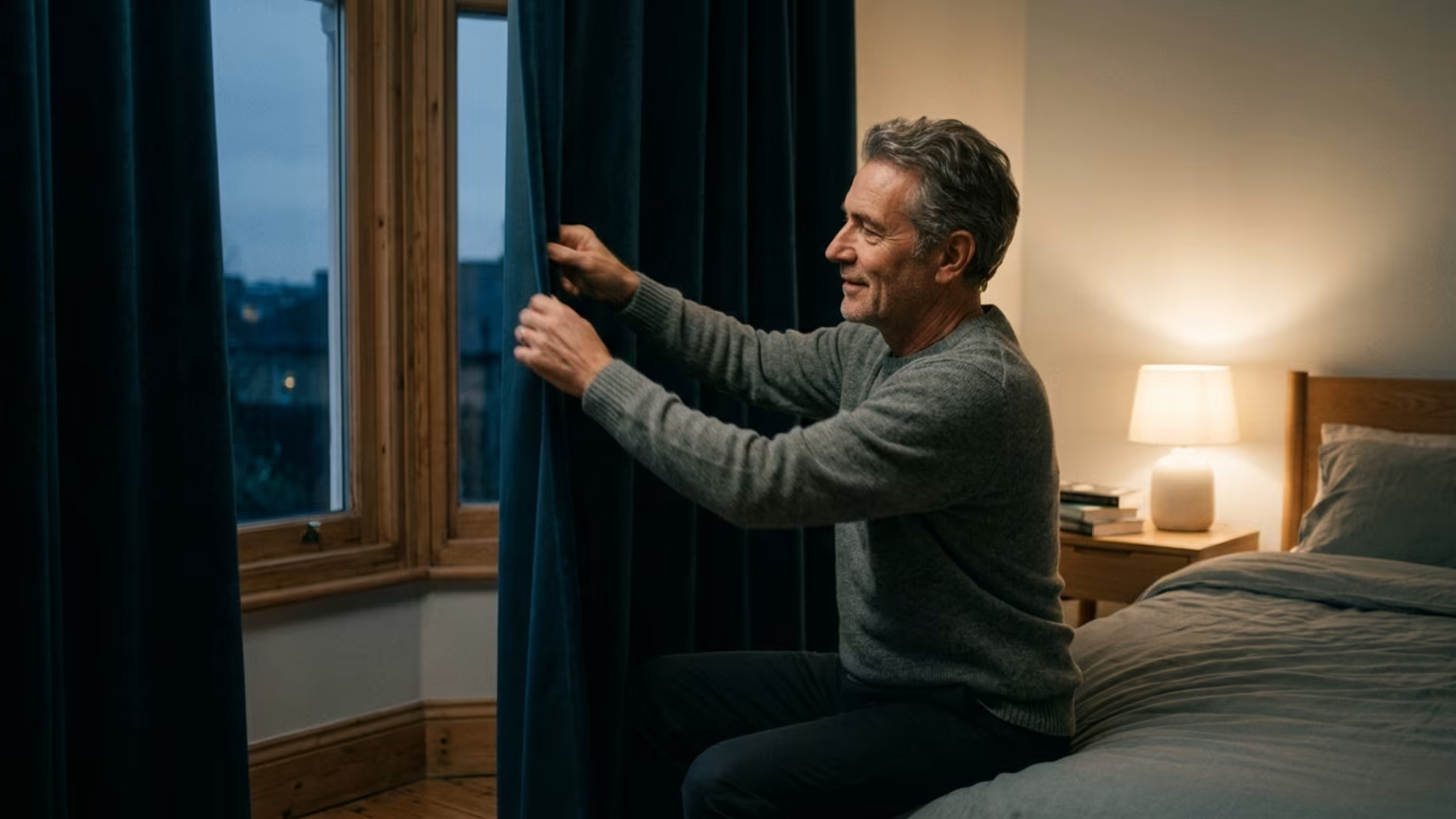
A completely dark room actively supports uninterrupted and restorative rest. Practical steps include hanging blackout curtains, wearing a well-fitted sleep mask and covering bright standby lights. Turning digital clocks away from the bed reduces light exposure and limits the temptation to check the time. Darkness is a highly sensible environmental preference rather than an absolute medical guarantee.
For those who need visibility at night, strategic compromise is highly effective. You can install motion-activated low-level lighting outside your direct line of sight. Evaluating your space and managing light exposure does not require eliminating every single glowing indicator in the house. Warm-coloured lighting provides safer navigation without creating the severe biological disruption associated with bright overhead fixtures.
When managing light exposure, evaluate the specific timing of the disturbance. Early morning sunlight waking you prematurely requires a different solution than bright streetlamps illuminating the room all night. Blackout curtains effectively block external light pollution, while simple electrical tape can cover glaring device indicators. Assessing the specific source of light helps you apply the most targeted and affordable solution.
Reduce unwanted noise at the source before trying to cover it up with new sounds. Close and seal street-facing windows, repair rattling frames and move your bed away from shared walls. You can place heavy furniture against noisy walls to add useful distance and sound absorption. For city dwellers, reducing unpredictable sound peaks often matters more than pursuing perfect silence.
Nighttime noise disruptions trigger the body's natural threat detection system. Even during deep rest, the auditory system continues to monitor the environment for sudden changes. A blaring siren or a slamming door causes an immediate spike in heart rate and brief awakenings. Consistent background noise rarely causes the same acute stress response as unpredictable, sharp sounds.
Adding continuous sound is a secondary strategy with mixed clinical support. A systematic review found low-quality and inconsistent evidence that continuous noise reliably improves sleep. A newer review reported benefits in selected adult and clinical populations, but that result should not be generalized to everyone. A fan might help mask traffic noise, but artificial sound masking remains entirely optional.
Couples frequently struggle with mismatched environmental preferences. Enforcing one person's ideal temperature or absolute darkness often causes unnecessary nighttime friction. Successfully navigating different sleep needs requires practical compromises like using separate blankets or individual sleep masks. Directional airflow from a small fan can cool one partner without freezing the other person.
Children and pets introduce additional environmental variables into the nightly routine. A completely dark room may not feel safe for every child, making a dim night-light a reasonable addition. If a pet causes repeated awakenings, trialing a separate sleeping location for several nights is a sensible experiment. Parents should prioritize safe access and security over strict optimization rules.
The most effective bedroom reset focuses entirely on personal comfort rather than rigid metric tracking. A useful direction involves cooling the room, darkening the space and reducing sudden noises. You should treat this process as a gentle self-experiment. Changing one variable at a time allows you to observe what truly supports your rest.
A successful bedroom reset must also have clear stopping rules. Earplugs may prove unsuitable for sensitive individuals, and blackout measures can create safety problems if they obstruct necessary exits. Fans or heaters must always be used according to standard manufacturer safety guidance. If basic environmental changes fail to improve your rest, you should seek professional clinical assessment rather than buying more products.
You can judge the success of these adjustments by observing your daytime function. True recovery is measured by fewer awakenings and more stable energy levels throughout the day. Success is never defined by perfect compliance with a specific temperature or decibel target. Accurately measuring restorative sleep relies on how capable and energized you feel the next morning.
Adjusting the household sleep environment frequently falls to the exhausted professional, and having Relaxopia clarify the established clinical evidence changes how you approach your bedroom setup. We translate the physiological research behind temperature and darkness to help you navigate confusion about circadian rhythm, light exposure and sleep timing. Explore Resources
Stay connected for research-led guidance on sleep quality, stress, circadian rhythm, recovery, fatigue and everyday energy. Clear ideas for adults 35+ who want to sleep better, recover more fully and feel more capable through the day.





Explore practical guidance on sleep, stress and recovery without chasing every new hack, device or promise.
explore the blog