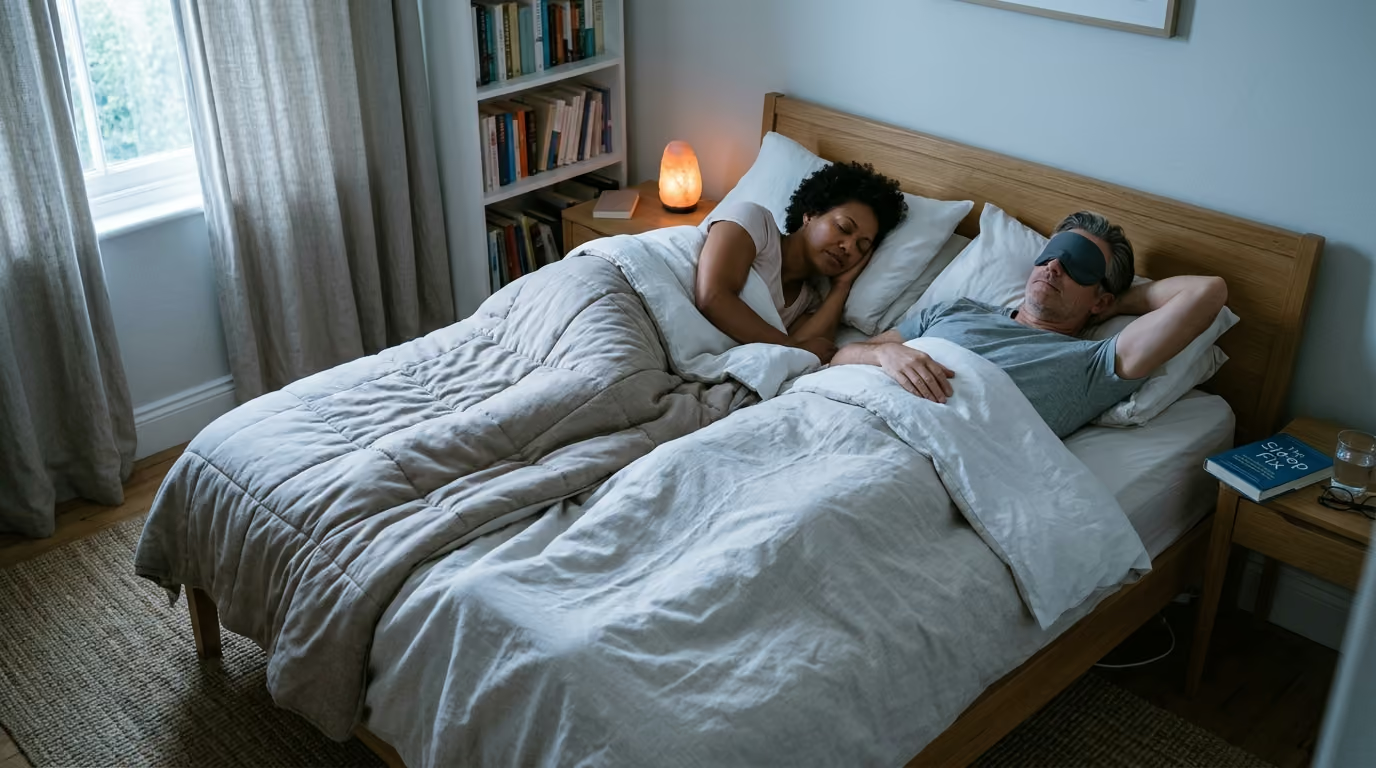

Couples sharing a bed often face sleep disruptions from movement, snoring, and different chronotypes, but targeted adjustments help both partners rest well together.





You wake up at 3:00 a.m. to the sound of heavy breathing beside you. Your partner rolls over, pulling the duvet off your shoulders and letting cold air into the bed. You lie awake watching the clock, frustrated because you need to get up early for work.
This scenario plays out in millions of bedrooms every night. Sharing a sleeping space is one of the most common aspects of adult relationships. It is also one of the most frequent sources of sleep disruption.
Many couples assume that sleeping in the same bed is a strict requirement for a healthy relationship. When sleep problems arise, they often suffer in silence or view separate sleeping arrangements as a sign of failure.
Current research shows that shared sleep affects body systems and sleep architecture in complex ways. A shared bedroom is neither inherently good nor bad for rest. Its success depends on health factors, room conditions, schedule alignment, and physical sensitivity to sound and movement.
This guide provides a research-backed breakdown of how shared bedrooms alter rest. It covers practical arrangements, environmental adjustments, and communication approaches that protect both partners' health while preserving closeness.
Research comparing co-sleeping to solo sleeping reveals a persistent paradox. What people feel about their sleep when sharing a bed does not always match objective measurements from sleep monitors.
Scientific reviews show that people consistently report feeling better rested when they share a bed with a partner. Self-report surveys indicate higher sleep satisfaction, shorter time to fall asleep, and lower anxiety levels.
Laboratory monitoring using polysomnography tells a different story. Objective sensors frequently show increased sleep fragmentation and more frequent awakenings when sharing a bed compared to sleeping alone.
One analysis of adults who shared a bed reported better subjective outcomes across multiple areas. Participants reported lower insomnia severity scores, longer total sleep duration, and lower fatigue levels than those who slept alone. However, observational data indicates that physical micro-awakenings occur frequently throughout the night without the sleeper realizing it.
Sleep-laboratory evaluations reveal that bed partners disturb each other far more often than they remember. On average, a person sleeping with a partner experiences around six movement-related awakenings per night.
Most of these awakenings are brief. Sleepers typically forget them by morning, but these interruptions still break sleep continuity.
Physical movements during sleep also increase when sharing a bed. Sleep-laboratory data recorded an average of 62 leg movements per night during co-sleeping compared to 51 movements when participants slept individually. This increase in physical restlessness directly contributes to extra light awakenings.
Sharing a bed is not purely disruptive to sleep architecture. A 2020 sleep-laboratory study measured sleep stages in healthy couples sharing a bed versus sleeping in separate rooms.
The study found that couples sharing a bed had roughly 10% more Rapid Eye Movement sleep, commonly known as REM sleep. Their REM sleep was less fragmented and featured longer undisturbed cycles.
REM sleep represented approximately 23% of total sleep time during co-sleeping compared to 21% during separate sleep. Couples also showed higher sleep-stage synchrony, meaning they entered light, deep, and REM sleep at similar times.
This research indicates that shared sleep offers psychological comfort and neural synchronization. At the same time, it increases physical movement and brief sound disruptions.
Sleep patterns change naturally as adults age. After age 35, deep slow-wave sleep decreases and sleep becomes lighter. You become more vulnerable to external disruptions like sound, light, and movement.
Getting less than seven hours of consolidated sleep per night carries clear health consequences. The Centers for Disease Control and Prevention recommends seven or more hours of regular sleep for optimal adult health.
Persistent sleep fragmentation affects cardiovascular health, metabolic balance, and immune function. Repeated night awakenings elevate stress hormones like cortisol, which keep the nervous system in a heightened state of alert.
When one partner suffers from sleep deprivation, daytime performance suffers. Focus drops, reaction times slow, and emotional regulation becomes harder.
Sleep quality and relationship health are deeply connected. Chronic fatigue reduces patience and weakens empathy. It makes everyday misunderstandings feel like major conflicts.
Research on relationship quality and the marital bed shows that poor sleep predicts higher negative interactions the next day. Conversely, relationship stress makes it harder to relax at bedtime, creating a self-reinforcing cycle.
Couples often mistake sleep friction for emotional distance. A partner who rolls away or leaves the room is usually seeking physical rest, not emotional separation. Framing sleep arrangements as a joint health strategy helps protect both physical recovery and personal connection.
If you notice changes in your rest patterns as you grow older, reviewing how midlife changes affect body clock timing after 35 can clarify what is happening.
Every couple has a unique physical and environmental dynamic. Identifying the specific source of nighttime disruption is the first step toward fixing it.
Chronotype is your natural preference for sleeping and waking at specific times. Early risers feel alert in the morning and sleepy early in the evening. Night owls remain alert late into the night and struggle with early wake times.
When an early riser shares a bed with a night owl, schedules conflict. The night owl may turn on lights, watch screens, or move around the bedroom while the early riser tries to fall asleep.
In the morning, the early riser's alarm can wake the night owl hours before their natural wake time. This constant schedule tension leads to chronic sleep debt for one or both partners.
Body temperature drops naturally during sleep to support deep rest. When two people share a mattress, body heat accumulates under the covers.
Thermal mismatch occurs when one partner runs hot and the other runs cold. The hot sleeper throws off blankets, leaving the cold sleeper chilled. The cold sleeper adds heavy blankets, causing the hot sleeper to sweat and wake up.
General sleep recommendations suggest keeping room temperatures cool. However, room air temperature does not fix individual bedding needs.
Sound sensitivity varies widely between individuals. One partner may sleep through a thunderstorm, while the other wakes at the sound of a quiet sigh.
Late-night smartphone use, TV sound, street noise, and early-morning alarms interrupt light sleepers easily. Snoring is the most disruptive sound in shared bedrooms, often reaching sound levels that prevent a partner from entering deep sleep.
People move dozens of times each night to adjust posture and blood circulation. On a shared mattress, every turn can create a kinetic wave that travels across the bed.
Movement sensitivity increases if there is a weight difference between partners or if the mattress lacks motion isolation. A sensitive sleeper may experience micro-awakenings every time their partner shifts position, even if no conflict exists.
Snoring is often treated as a simple bedroom nuisance or a topic for jokes. However, loud or persistent snoring can signal a serious medical condition that requires evaluation.
Benign snoring occurs when air flows past relaxed tissues in the throat, causing light vibrations. It is consistent, rhythmic, and generally quiet.
Obstructive Sleep Apnea, or OSA, involves temporary collapses of the upper airway during sleep. Air flow stops completely for seconds at a time until the brain triggers a sudden arousal to restore breathing.
The American Academy of Sleep Medicine highlights specific warning signs for sleep apnea:
Bed partners often try to manage snoring by wearing earplugs, buying white noise machines, or moving to another room. While these steps protect the non-snoring partner's sleep, they do not resolve the underlying health risk for the snorer.
Untreated sleep apnea places heavy strain on the cardiovascular system. CDC health guidelines link untreated sleep apnea to high blood pressure, heart disease, and type 2 diabetes.
If your partner displays warning signs of sleep apnea, temporary bedroom changes should be paired with a medical assessment. Oral appliance therapy or continuous positive airway pressure devices can treat the condition effectively.
Couples do not have to choose between sharing a single mattress or getting a divorce. There is a wide spectrum of practical sleeping configurations that balance closeness with physical recovery.
Often called the Scandinavian sleep method, this setup uses one large mattress with two separate individual duvets or blankets.
This approach solves blanket pulling and thermal mismatch completely. The hot sleeper can use a light breathable sheet, while the cold sleeper uses a thick warm duvet.
It keeps physical closeness and shared bedtime routines intact without letting cover adjustments wake your partner.
This configuration uses two twin extra-long mattresses placed side-by-side on a single king-sized bed frame.
Split mattresses eliminate motion transfer. When one partner turns over, the movement energy stops at the seam between the mattresses.
It also allows each person to select their preferred firmness level. A side sleeper can choose a soft memory foam surface, while a back sleeper selects a firm spring mattress.
Placing two distinct beds in the same room provides physical separation while keeping partners in the same room.
This arrangement works well for couples with high movement sensitivity or different wake schedules. It retains shared morning greetings and evening conversations while giving each sleeper clear boundaries.
In a hybrid model, partners spend time together in the same bed before sleep. They talk, read, or share affection during their evening wind-down routine.
When it is time to sleep, one partner moves to a separate bed or adjacent room. Alternatively, they start the night together and separate only if disruption occurs later.
This model preserves emotional intimacy while prioritizing consolidated sleep during critical overnight hours.
Targeted separation means sleeping in different rooms on specific nights based on schedule demands.
Couples may sleep together on weekends but separate before early workdays, business travel, or intense projects. This removes sleep anxiety on nights when high daytime performance is required.
Temporary room separation is a sensible health measure during specific life events:
Treating temporary separation as a practical tool prevents resentment from building during stressful life transitions.
Changing how you sleep requires thoughtful evaluation rather than impulsive decisions during middle-of-the-night frustration. Use this five-step framework to find an arrangement that works.
Do not argue about generic sleep problems. Track the precise cause of wakefulness for two weeks using a standard sleep log.
Record when you go to bed, how long it takes to fall asleep, and how many times you wake up. Note whether awakenings were caused by snoring, temperature changes, movement, light, or alarms.
A systematic log often reveals patterns that you might miss when tired.
Before buying new furniture, eliminate underlying medical sleep disorders.
If loud snoring, breathing pauses, leg jerks, or severe insomnia are present, schedule a consultation with a healthcare professional. Addressing medical issues directly often restores shared sleep quality without needing separate beds.
Implement simple low-cost adjustments focused on the main disruption before making major changes:
The CDC highlights that dark, quiet, and cool environments form the baseline for healthy sleep.
If mismatched chronotypes are the main issue, set clear rules for evening and morning transitions:
Clear boundary rules remove the anxiety of waking your partner accidentally. Setting up a predictable evening transition routine can make late entries much smoother.
Run every change as a two-week experiment. At the end of two weeks, assess the results together using simple objective questions:
If daytime recovery improves, keep the arrangement regardless of traditional expectations.
Discussing sleep arrangements can evoke feelings of rejection or anxiety. Using calm objective language keeps the focus on health and mutual support.
Shift the conversation away from relationship security and focus on physical health. Framing rest as an essential recovery metric removes emotional blame.
Focus on how proper rest makes you a more patient and attentive partner. When sleep is treated as shared healthcare, design changes feel like teamwork rather than rejection.
Use specific observations rather than sweeping statements when raising sleep concerns:
Physical separation during sleep does not mean an end to emotional or physical intimacy. Intimacy requires intentional effort rather than passive proximity.
Build predictable rituals that keep connection strong:
Active communication ensures that both partners feel cared for while getting the rest they need.
Certain life stages and occupations require tailored strategies to protect sleep for both partners.
Shift workers face significant circadian challenges. When one partner works night shifts, the bedroom must transform into a dark quiet recovery zone during daylight hours.
Use high-quality blackout shades and heavy white noise to block daytime light and neighborhood sound. The non-shift partner should avoid entering the sleep room during designated rest periods.
CDC workplace guidance emphasizes that daytime sleep requires strict environmental controls to preserve health during shift rotations.
Infant sleep demands can strain shared bedrooms. Expecting both parents to wake up at every nursery signal leads to double sleep deprivation.
Implement a shift system where one parent takes responsibility for night feeds during a defined time block while the other sleeps undisturbed in a separate space.
Switching shifts halfway through the night guarantees that both adults get at least four to five hours of continuous rest.
If one partner struggles with persistent insomnia, lying awake in a shared bed can create anxiety for both people.
Cognitive Behavioral Therapy for Insomnia, known as CBT-I, recommends strict stimulus control. If you cannot fall asleep within twenty minutes, leave the bedroom.
Move to a dimly lit room and read a book or practice relaxation exercises until you feel sleepy again. Return to the bedroom only when your body is ready for sleep.
This practice prevents your brain from linking the shared bed with frustration and avoids disturbing your partner. Readers managing chronic sleeplessness can review strategies for persistent bedtime thoughts and practical habits for persistent insomnia.
For commercial drivers, healthcare professionals, and heavy machinery operators, daytime alertness is a safety requirement.
In safety-sensitive households, sleep quality takes priority over conventional co-sleeping habits. Using separate rooms during work blocks prevents accidental awakenings that could compromise safety on the job.
The following scenarios show how couples can resolve common sleep conflicts through practical adjustments.
While practical changes resolve many bedroom issues, persistent symptoms require clinical assessment. Consult a primary care physician or sleep specialist if you notice any of the following signs:
A sleep specialist can perform diagnostic sleep studies and provide evidence-based treatments like CBT-I, CPAP therapy, or custom oral appliances. If you find yourself consistently tired despite spending enough time in bed, exploring why you feel alert when exhausted can offer valuable insight.
Revisit this guide whenever major life changes alter your daily sleep patterns. Key transition points include moving into a new home, changing work schedules, starting shift work, recovering from illness, or navigating midlife health shifts.
Review these strategies every six months to refine your bedroom environment, update your communication scripts, and keep your sleep arrangements focused on restorative health.
Prioritizing individual sleep quality is one of the most effective ways to support long-term physical health and relationship stability.
Stay connected for research and practical guidance on sleep, stress, circadian rhythm and recovery. Clear ideas for adults 35+ who want better rest, steadier energy and more resilient days.



Explore practical guidance on sleep, stress and recovery without chasing every new hack, device or promise.
explore the blog