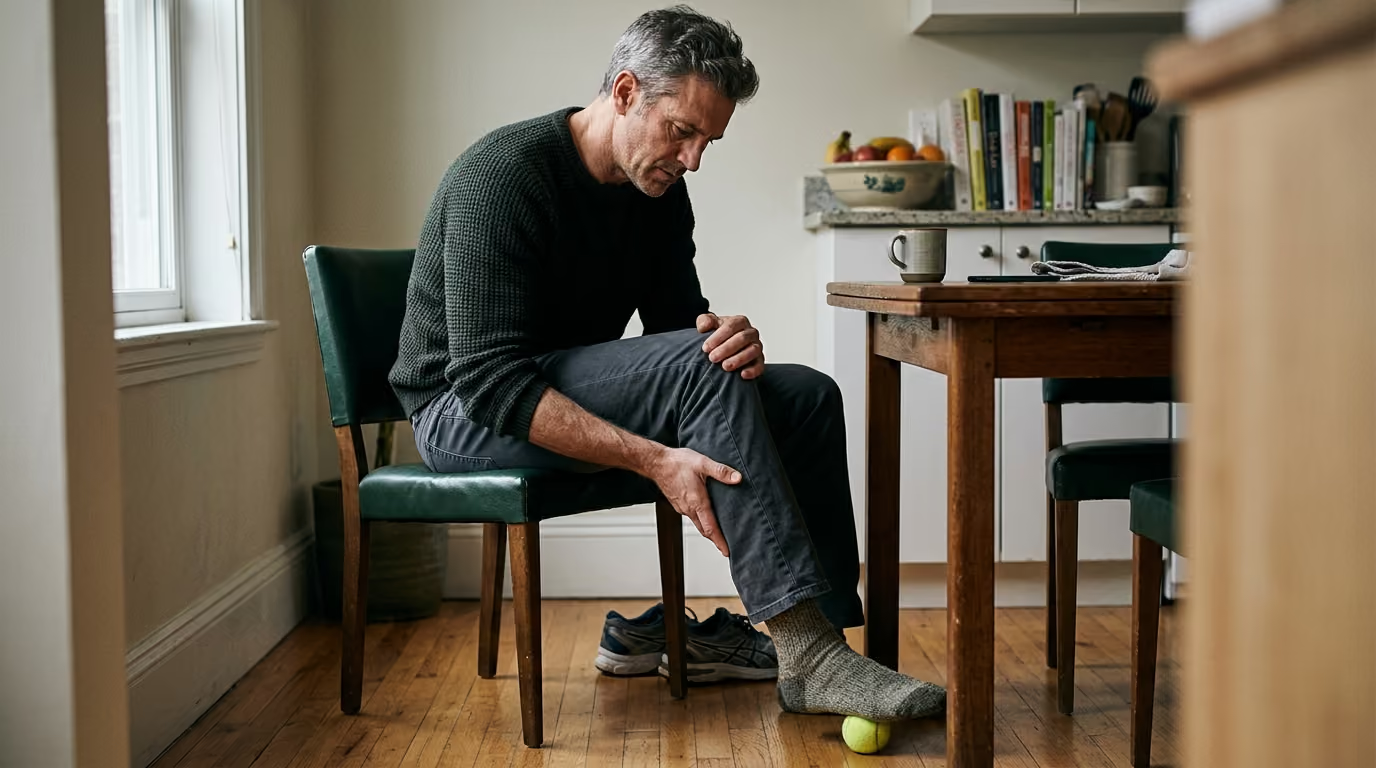

Hypervigilance keeps the nervous system trapped in constant readiness, disrupting essential rest and requiring practical behavioral adjustments to restore genuine physiological recovery.





If you have ever searched online for why you cannot relax even when your work is finished, you know how frustrating the sensation can be. Many adults describe an internal motor that refuses to idle. You might sit on the sofa after a long day, yet your mind continues to scan for forgotten emails, unfinished chores, or tomorrow's potential disruptions. You are physically resting, but your body remains braced for an incoming demand.
This state is known as everyday hypervigilance. It is a state of sustained alertness where the brain treats ambiguous or neutral cues as impending problems. Current research shows that chronic vigilance is not just a personality quirk or an excess of conscientiousness. It is a biological and behavioral loop that actively prevents the nervous system from switching into restorative rest.
This guide provides a definitive examination of how constant readiness develops, why it disrupts physiological recovery, and how you can systematically retrain your threat responses. By shifting from perpetual monitoring to bounded attention, you can protect your sleep, energy, and overall health.
Hypervigilance involves three interacting domains: cognitive, physiological, and behavioral. Cognitively, the mind stays engaged in continuous scanning, anticipating hurdles, and rehearsing conversations. Physiologically, the body maintains elevated muscular tension, increased heart rate variability suppression, and heightened startle sensitivity. Behaviorally, the individual engages in repetitive checking, rapid message response, and constant reassurance seeking.
Understanding this state requires looking at the concept of allostasis. Allostasis describes how the body alters its internal parameters to adapt to anticipated future demands. When you expect a difficult situation, your neuroendocrine and cardiovascular systems mobilize energy before the challenge actually arrives. This predictive capacity is evolutionary and protective during real emergencies.
Problems arise when this predictive mobilization never stops. When anticipatory arousal is triggered repeatedly by minor daily events, the cumulative biological toll increases. Researchers term this burden allostatic load, which reflects multi-system strain across neuroendocrine, immune, and cardiovascular pathways. Constant readiness forces the body to spend energy defending against hypothetical crises instead of rebuilding tissues and replenishing cognitive reserves.
Recovery cannot occur simply because a crisis is absent. True physiological recovery requires the nervous system to receive clear, unambiguous signals that the environment is safe enough to power down. When everyday vigilance keeps the internal alarm active, the biological transition into deep parasympathetic rest remains blocked.
It is helpful to separate normal alertness from persistent hypervigilance. Ordinary vigilance is flexible, proportionate, and temporary. It sharpens your focus when you merge onto a busy highway or finalize a complex budget. Once the drive ends or the spreadsheet is submitted, ordinary vigilance naturally subsides, allowing your body to downshift.
In contrast, chronic hypervigilance persists long after the active demand has passed. Neutral occurrences, such as a delayed text message or a brief pause in a colleague's tone, are immediately interpreted as possible threats. Even in a quiet living room, a hypervigilant nervous system scans the silence for the next obligation. Preparedness finishes when reasonable steps are taken, but compulsive readiness merely invents a new task the moment relief appears.
Hypervigilance is widely recognized as a core symptom in post-traumatic stress disorder. In clinical settings, post-traumatic stress involves a distinct cluster of intrusion, avoidance, cognitive shifts, and heightened arousal that lasts over a month and impairs daily functioning. However, millions of adults experience elevated monitoring, checking, and anticipatory tension without meeting the criteria for a formal disorder.
Life events, high-responsibility roles, and sustained workplace pressure can establish a chronic monitoring habit. The nervous system learns that staying on guard prevents mistakes, keeps other people satisfied, or avoids unpleasant surprises. Over time, the state of readiness feels normal, while letting down one's guard feels inherently dangerous.
Everyday hypervigilance is maintained by a self-reinforcing behavioral loop. The cycle begins with a trigger, which can be an unread notification, a vague calendar invite, or an unexplained physical sensation. The brain evaluates this ambiguous cue not as neutral data, but as a potential disruption requiring immediate attention.
Once a threat value is assigned, the body mobilizes. Heart rate increases, breathing becomes shallow, and muscles tighten. To eliminate the rising discomfort, the individual performs a safety behavior. They refresh their inbox, reread a sent message, ask a partner for validation, or mentally review tomorrow's schedule.
Performing the safety behavior produces immediate, temporary relief. The nervous system experiences a brief drop in tension because the uncertainty has been momentarily resolved. However, this short-term reduction comes with a hidden biological cost. The brain attributes safety to the checking behavior itself rather than recognizing that no true danger existed.
This process is known as negative reinforcement. Each time you check your messages to soothe your worry, your brain registers that checking was the action that kept you safe. Consequently, when the next ambiguous situation appears, the urge to monitor or check becomes even stronger. Research on repetitive reassurance seeking demonstrates that seeking external confirmation temporarily lowers anxiety while deepening long-term dependence on external certainty.
Understanding this loop reveals why simply telling someone to stop worrying rarely works. The checking action is not random; it is a learned protective strategy. Breaking the cycle requires changing the behavioral response to uncertainty so the nervous system can discover that unmonitored moments do not lead to disaster.
Sleep requires a significant reduction in central nervous system arousal. When the body prepares for sleep, core temperature drops, parasympathetic tone increases, and brain wave activity slows. Hypervigilance directly opposes these physiological shifts by maintaining high sympathetic tone and persistent cognitive scanning.
For many adults, bedtime transforms into another monitoring exercise. The mind watches the clock, calculates remaining hours of sleep, and inspects bodily sensations for signs of tension. Questions like "Why am I not asleep yet?" or "Will I have enough energy tomorrow?" keep the brain's threat-detection circuitry fully activated. The bed ceases to be a haven for rest and becomes a surveillance station.
This hyperarousal can cause significant sleep disruptions, including difficulty falling asleep, frequent nighttime awakenings, and light, unrefreshing rest. Chronic stress and persistent vigilance are closely linked to daytime fatigue, muscle tension, and altered immune activity. Exploring practical habits for sleep quality can help establish regular circadian signals, but mental disengagement remains equally vital.
When vigilance keeps the body activated throughout the night, the deep slow-wave sleep necessary for cellular repair and metabolic maintenance is compromised. You may spend eight hours in bed yet wake up feeling drained. This ongoing exhaustion increases baseline anxiety, making daytime ambiguity feel even more threatening and reinforcing the overall vigilance cycle.
Hypervigilance presents differently depending on an individual's roles, environment, and daily demands. Examining these common patterns can help you identify where constant readiness may be draining your energy.
In professional environments, vigilance often masquerades as diligence and exceptional responsiveness. Workers leave notifications active on every device, monitor incoming communication while eating meals, and reply to non-urgent requests within seconds. The underlying fear is that a delayed response will be interpreted as incompetence or neglect.
This behavior creates continuous surveillance rather than true productivity. When attention is fractured by constant incoming alerts, cognitive performance degrades and tasks take longer to finish. The feeling of time scarcity increases, driving even more frequent checking. Learning how invisible cognitive demands drain energy reserves illustrates why maintaining continuous digital availability takes a heavy biological toll.
Caregivers, parents, and partners often direct their vigilance toward managing the emotional climate of the household. A person may constantly scan facial expressions, tone of voice, or body language to detect early signs of frustration, sadness, or conflict in others. They step in quickly to smooth over tension, anticipate every logistical snag, and solve problems before they arise.
While caring for loved ones is deeply valuable, continuous interpersonal surveillance is exhausting. It confuses genuine empathy with the impossible task of controlling another person's emotional state. When a caregiver believes that peace depends entirely on their vigilance, they cannot experience psychological detachment even during quiet family hours.
Everyday hypervigilance frequently manifests as excessive health monitoring. An individual might repeatedly measure their resting heart rate on a smartwatch, track minor muscular twitches, or search online forums to explain normal bodily fluctuations. Ambiguous physical sensations are interpreted as evidence of an underlying medical problem.
This checking behavior creates an escalating feedback loop. Focusing intensely on a physical sensation amplifies your awareness of it, which raises anxiety and produces further physiological symptoms like palpitations or shallow breathing. Understanding these responses is central to supporting nervous system balance and daily recovery, allowing normal bodily signals to exist without triggering acute panic.
Breaking free from sustained hypervigilance does not mean ignoring real-world responsibilities or becoming careless. The goal is calibration: matching your level of attention to actual, present risks rather than hypothetical emergencies. The following practical strategies can help reduce unnecessary vigilance across daily life.
Continuous monitoring can be replaced with structured, predictable checking periods. Instead of leaving email and messaging platforms open all day, designate specific windows to review and respond to incoming correspondence. Outside of these windows, close communication applications and silence non-essential notifications.
If your role involves handling urgent issues, define clear escalation criteria with your team. Clarify what constitutes a genuine emergency that warrants a phone call versus standard tasks that can wait for the next scheduled window. This separation eliminates the need to scan every incoming notification out of fear that it might be urgent.
When you feel an intense urge to refresh an app, recheck a sent message, or ask for reassurance, practice delaying the action rather than forbidding it outright. Complete bans often elevate distress and make the impulse harder to resist.
Start with a modest delay, such as five or ten minutes. During this interval, acknowledge the internal discomfort: "I notice a strong urge to check, and I can allow this feeling to exist without acting on it immediately." Let the wave of urgency rise and subside. Often, the perceived necessity of the check fades once the initial spike of emotional arousal passes.
Hypervigilant thinking regularly demands absolute certainty before allowing the body to rest. You might find yourself searching for absolute guarantees that a project has zero flaws, a relative is perfectly happy, or your health is without risk. Because absolute certainty is impossible, the search for it is endless.
Replace the demand for absolute certainty with the standard of sufficient safety. Instead of asking if an outcome is guaranteed, ask yourself:
This cognitive shift acknowledges that some uncertainty is a natural part of daily life, allowing you to disengage without feeling negligent.
The human brain relies on contextual cues to determine when it should remain alert and when it can safely stand down. In modern life, where work and home environments often overlap, these natural boundaries frequently disappear. Implementing an intentional transition ritual helps mark the end of the active day.
A practical transition sequence might include writing down tomorrow's primary tasks, shutting down your workspace, changing into comfortable clothing, and taking a short ten-minute walk. The objective is not to force an immediate feeling of deep calm, but to establish a reliable behavioral signal that the monitoring period is closed. Understanding why physical distance alone fails to trigger detachment underscores the value of using structured habits to signal safety to the brain.
When mental load feels overwhelming, hypervigilance often expands to encompass variables well outside your personal influence. A structured mapping exercise can restore realistic boundaries to your daily attention:
By categorizing your concerns on paper, you relieve your working memory of the need to keep track of every unresolved detail. You can focus on what is immediately actionable while intentionally releasing items that belong in the external category.
Because hypervigilance is deeply rooted in physical physiology, cognitive reasoning alone is not always enough to settle the nervous system. Simple somatic practices can help signal to the brain that the immediate environment
is secure.
Slow, unhurried diaphragmatic breathing with prolonged exhalations activates the parasympathetic nervous system, slowing heart rate and softening muscle tone. Alternatively, sensory grounding can redirect attention outward. Take thirty seconds to notice five visible objects in the room, four distinct tactile points of contact, three subtle sounds, and two scents. These grounding exercises provide tangible sensory data that you are physically safe in the current moment.
Addressing hypervigilance requires dismantling several persistent myths about how safety, rest, and alertness work in daily life.
Many people approach relaxation with the same rigorous performance standards they apply to work. They monitor their internal state, asking, "Am I relaxed yet?" or "Why do I still feel tense?" This internal scrutiny transforms rest into an evaluation, maintaining the very surveillance loop they are trying to escape.
True recovery does not require an immediate state of blissful tranquility. It simply requires stepping away from active monitoring and problem-solving, even if some baseline discomfort or restlessness lingers. Allowing yourself to feel slightly uneasy without trying to fix it is often the first real step toward deeper nervous system regulation.
It is tempting to believe that glancing at your work email for three seconds during dinner causes no harm. While the physical action takes only moments, the cognitive and physiological effects are substantial. That brief glance reactivates the brain's threat-detection network, pulling you back into an analytical, problem-solving mindset.
The true impact of checking is measured not by how many seconds it takes, but by the continuous state of anticipation it maintains. When you know you might check your phone at any second, your nervous system never fully disengages from readiness.
Preparation is practical and prudent up to a natural limit. Beyond that threshold, extra preparation becomes a compulsive safety behavior designed to manage emotional anxiety rather than practical danger. Over-preparing exhausts cognitive energy, creates unnecessary fatigue, and reinforces the mistaken belief that catastrophe was avoided solely because you stayed hyper-alert.
As we age, recognizing our biological limits becomes increasingly important. Exploring why recovery feels slower after 35 can clarify why the body becomes less tolerant of sustained physiological tension, making deliberate boundaries around rest even more essential.
The human brain tends to assume that intense feelings of anxiety or urgency must be caused by an external threat. This is known as emotional reasoning: "Because I feel on edge, something bad must be about to happen."
In reality, hypervigilance frequently produces false alarms. Physical sensations of tension, racing thoughts, and a sense of impending trouble are often just echoes of chronic fatigue, excess caffeine, poor sleep, or ingrained habits. Learning to treat internal alertness as bodily feedback rather than proof of external danger allows you to pause before reacting.
While everyday hypervigilance is widespread and manageable through behavioral adjustments, persistent or severe hyperarousal requires proper professional evaluation.
Everyday vigilance involves temporary worries, habits of over-checking, and difficulty relaxing after busy days. These patterns generally respond well to environmental boundaries, scheduled checking, and regular sleep routines. In contrast, clinical conditions like post-traumatic stress disorder, generalized anxiety disorder, or obsessive-compulsive disorder involve severe, unyielding distress that impairs relationships, occupational performance, or personal safety.
You should consult a licensed healthcare professional or mental health clinician if you experience:
Evidence-based psychotherapies, including cognitive behavioral therapy and specialized trauma-focused modalities, provide structured methods for processing underlying fears, reducing unhelpful safety behaviors, and restoring nervous system flexibility. Self-help strategies are valuable for everyday habits, but they are not a substitute for clinical care when severe distress is present.
Downshifting from continuous hypervigilance is a gradual process of retraining your brain to recognize safety. Use this practical checklist to begin reducing unnecessary readiness over the coming week:
Recovery is not the complete absence of uncertainty in the world around you. It is the growing capacity of your nervous system to rest peacefully in the present moment without treating every unknown as an immediate emergency.
Stay connected for research and practical guidance on sleep, stress, circadian rhythm and recovery. Clear ideas for adults 35+ who want better rest, steadier energy and more resilient days.



Explore practical guidance on sleep, stress and recovery without chasing every new hack, device or promise.
explore the blog