

Forbes reported advice on low-level amber night lights. See the practical setup, evidence limits and separate clock-change routine guidance.





On October 30, 2026, Forbes published time-change advice that included low-level amber lighting for nighttime routes through the home. The article recommended motion-sensor or low-wattage amber LED night lights in hallways, bathrooms and near stairs leading to bedrooms.
The practical idea is to light the route someone needs to use at night rather than switch on bright room lighting. Forbes presented this as part of preparing the home for the return to standard time, with particular attention to households where older adults or young children move around at night.
Its reported recommendations were specific about the type and placement of lighting:
The distinction is between lighting for navigation and lighting an entire room. The article's rationale is that people need a way to move around without bringing bright light into a nighttime setting.
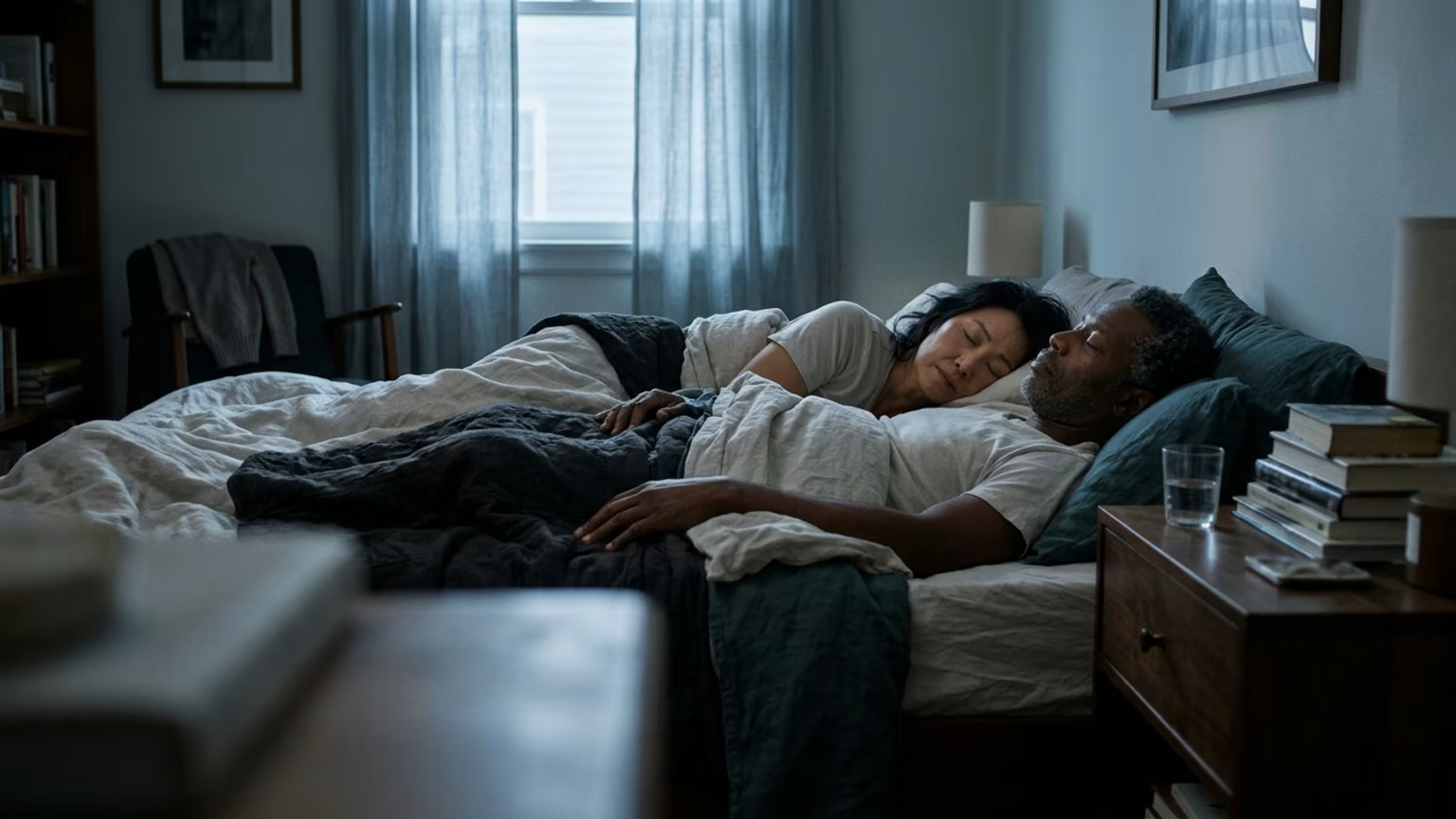
For an adult who wakes to use the bathroom, that makes the route outside the bed a useful focus. A bedroom can be kept dark while the adjoining hallway or bathroom has a different lighting arrangement. That question sits alongside the broader issue of how light fits into the bedroom environment.
Forbes presented the suggestion as practitioner and lighting-design guidance, not as a clinical trial finding. The available reporting gives no sample size, measured sleep benefit or controlled comparison showing that amber lighting performs better than other low-level lighting. It also does not establish that this setup prevents falls.
That places the recommendation in a useful but limited category: an attributed home-environment idea. It is not evidence that a particular bulb color will prevent waking or improve next-day energy. Nor should the suggestion be treated as a treatment for persistent insomnia or daytime fatigue.
This distinction matters when shopping or changing a room. The practical rationale can inform a choice without turning the product into a medical intervention. The question is whether the arrangement fits the nighttime route and the person's needs, not whether an amber label carries a proven recovery benefit.
According to coverage carried by Reuters, the U.S. fall transition took place at 2 a.m. local time on November 1, 2026. Clocks moved back one hour to 1 a.m.
That clock adjustment and the body's adjustment are separate events. Sleep specialist Loutfi told WGCU that circadian rhythms do not immediately align with the new clock time. Loutfi also described the fall transition as easier for many people than the spring change.
The extra hour on the clock therefore does not promise an extra hour of sleep for every person. For someone balancing work and family demands, the useful question is how the surrounding routine fits the changed clock rather than whether the transition should feel effortless.
Other coverage put the nighttime-lighting idea into a broader pattern. FOX61 reported guidance favoring morning light and less bright light in the evening. It also noted that evening light can delay the normal rise in melatonin.
These recommendations address different parts of the day. Morning light belongs to the daytime routine, while a low-level night light addresses a brief trip through the home. Keeping those purposes separate makes the advice easier to use without treating every light in the house as the same problem.
For someone aged 35 to 65 who gets up at night, the most direct application is a focused review of the route already being used. The Forbes suggestion does not require redesigning the entire home or creating a complicated evening routine.
Start with the places named in the reporting: the hallway, the bathroom and any stairs near the bedroom. The practical question is where nighttime movement currently leads to switching on a bright overhead light.
This keeps the adjustment tied to an everyday task. It also avoids buying lights for rooms that are not part of the nighttime route. A lighting choice can be small in scope while still addressing the specific situation described in the article.
For adults sharing a home with children or older relatives, Forbes's focus on those groups is relevant to the same review. The route may serve more than one person, so the arrangement should reflect the people who actually use it.
The options Forbes described were motion-sensor or low-wattage amber LED night lights. It also reported lighting designers' advice to place night lights below eye level and avoid bright or blue-spectrum bulbs.
Those are the features to keep in view when applying this particular recommendation. There is no need to turn it into a broader technology project. A motion sensor is one reported option, not a reason to assume every room needs an automated system.
Before adding equipment, the useful editorial takeaway is to define the job: lighting a nighttime route rather than making the whole space bright. That keeps the purchase decision connected to the original purpose instead of to a long list of product features.
If vision difficulties, nighttime mobility or fall concerns are significant, discuss the arrangement with a qualified clinician. Those personal circumstances deserve attention beyond choosing a bulb color.
The same applies when another household member needs a different lighting arrangement. The aim is a workable home environment, not compliance with a single lighting rule. Nighttime navigation and the sleep setting need to be considered together rather than treated as competing demands.
The broader clock-change reporting points toward a steady daily pattern. WGCU described advice to keep bedtime and wake time consistent, while FOX61 reported the value of morning light and reducing bright evening light.
For a midlife adult with limited time and plenty of competing responsibilities, these ideas can remain straightforward:
The point is not to make every part of the day another recovery assignment. It is to give each adjustment a clear purpose. A schedule concerns timing, morning light concerns the daytime pattern and route lighting concerns moving around after dark.
Readers working through the timing side can find related context in Relaxopia's discussion of a steadier daily wake time. Questions about the daytime side also connect with putting morning-light advice into context.
Keeping the changes distinct also makes everyday decisions less confusing. Someone may be reviewing a hallway light while separately trying to keep a familiar schedule after the clock change. Those are related choices, but they do not have to become one large project.
The most useful long-term direction may be a more specific conversation about what each part of the home is meant to support. A bedroom, a bathroom and a stairway do not serve identical purposes at night.
Future research could compare low-level lighting arrangements using both sleep outcomes and nighttime navigation outcomes. That would bring the practical household question closer to measurable evidence.
For adults in midlife, could studying these small environmental choices alongside daily light timing lead to recovery advice that is more useful without becoming more demanding?
Nighttime waking and daytime fatigue are concrete outcomes around which Relaxopia explains research on lighting and sleep timing. For adults 35+ confused by circadian advice, its coverage connects the sleep environment with daily habits so readers can make clearer choices without treating recovery as another demanding project.
Stay connected for research-led guidance on sleep quality, stress, circadian rhythm, recovery, fatigue and everyday energy. Clear ideas for adults 35+ who want to sleep better, recover more fully and feel more capable through the day.




Explore practical guidance on sleep, stress and recovery without chasing every new hack, device or promise.
explore the blog