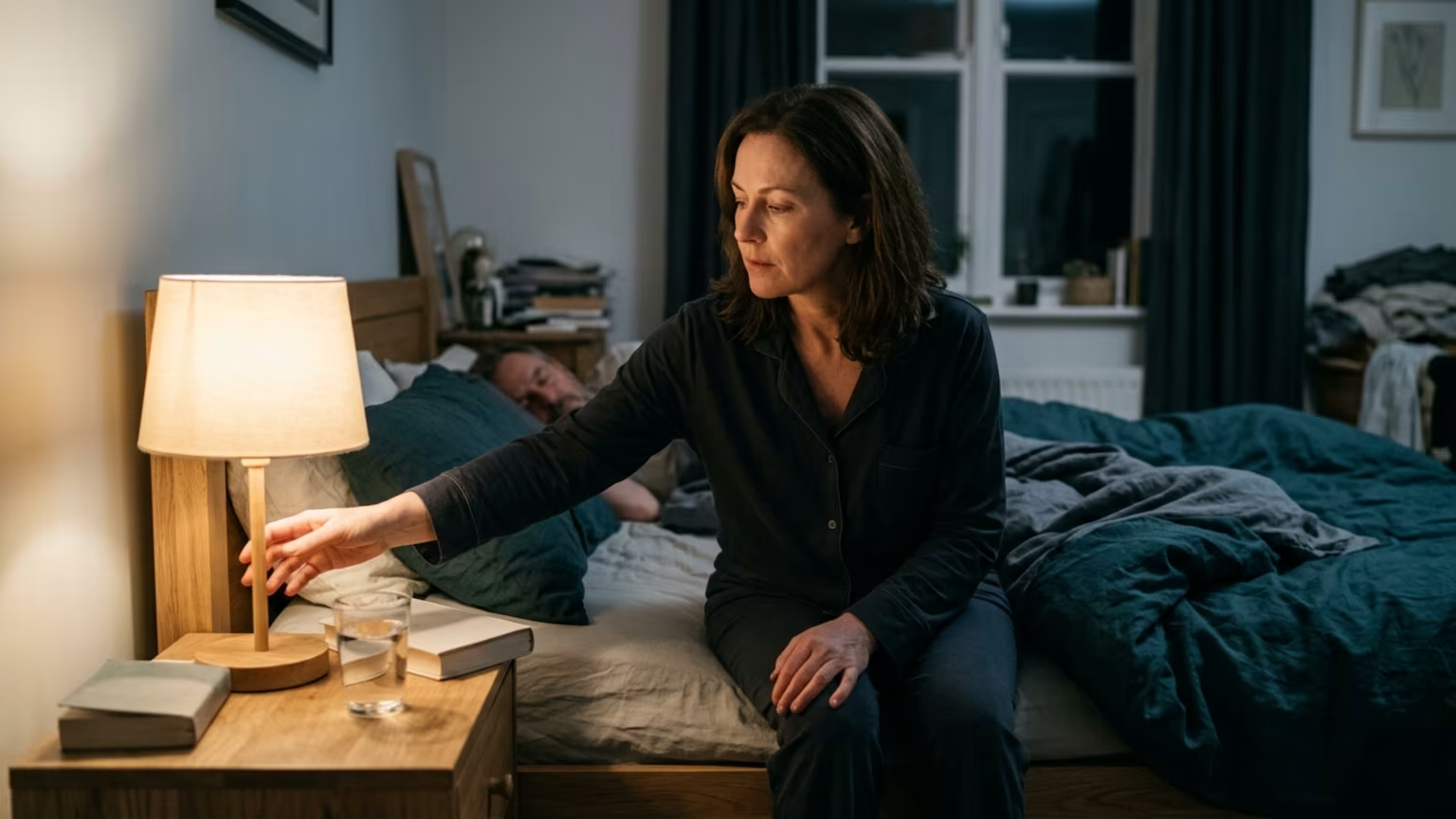

A recent study links ambient bedroom light to shorter sleep and minor cardiac differences. Learn how simple environmental changes support midlife rest.





On September 9, 2026, the European Heart Journal published a population-based cohort study examining UK Biobank data to analyze associations between nighttime light exposure and cardiac MRI findings. The researchers analyzed seven days of wrist-sensor data from 11,071 participants. They then compared this data with cardiac imaging taken a median of 3.1 years later.
The primary conclusion of the study highlights an association between ambient light at night and shorter sleep duration. The research team defined nighttime individually based on each participant's five least-active hours. They used 3 lux as an exposure threshold of interest. The authors noted that light at this level may suppress melatonin release.
Participants who experienced the highest nighttime light exposure averaged 6.9 hours of sleep. For context, those with no exposure above 3 lux averaged 7.7 hours of sleep. The low-exposure group averaged 7.5 hours, and the intermediate group averaged 7.3 hours. These figures represent group averages rather than predictions of individual sleep changes.
The study also reported modest associations with cardiac structure. Compared with participants with no nighttime exposure above 3 lux, the highest exposure group showed a 2.4 percent greater left ventricular mass indexed to height. They also had a 1.5 percent greater mean wall thickness. Finally, they exhibited a 1.9 percent lower myocardial contraction fraction after multivariable adjustment.
It is vital to understand that the study establishes an association rather than causation. The authors explicitly described these findings as associations with cardiac structure and function. They do not serve as proof that bedroom light directly caused heart damage. Furthermore, the findings do not guarantee that dimming a bedroom will prevent cardiovascular disease.
A mediation analysis in the study offered additional context. The authors estimated that shorter sleep statistically accounted for 24 to 49 percent of certain associations between nighttime light and cardiac MRI findings. Sleep duration was identified as only one possible pathway. This statistical estimate does not prove that short sleep caused the cardiac findings.
Experts commenting through the Science Media Centre provided valuable perspective on the research. They agreed that nighttime light can interfere with the body's internal clock and affect sleep quality. However, they stressed the observational nature of the study. This design means the research cannot definitively establish that ambient light caused the observed cardiac changes.
The measurement tools used in the study also present certain limitations. The researchers measured illumination using a wrist sensor rather than directly recording light reaching the eyes. The sensor captured ambient light for only one week. Additionally, it did not record the spectral composition of the light in the environment.
Understanding the difference between room light and direct eye exposure adds another layer of context. The wrist sensor captured the general light level around the participant, but it could not track whether a person was wearing an eye mask. These practical variables mean that room brightness does not always equal biological exposure. Researchers must rely on proxies like wrist sensors when studying thousands of people.
Because the exposure was tracked for a single week, it may not represent long-term bedroom conditions. The cardiac MRI was performed about three years after the initial light tracking. Experts cautioned that a one-week wrist sensor record is an imperfect proxy for an individual's biological light exposure over time. These factors limit the conclusions we can draw about personal outcomes.
The participant demographics provide another important context layer. The UK Biobank participants included in this study were predominantly White. The researchers noted that this specific demographic focus may limit how well the results generalize to other populations. They also excluded night-shift workers because activity-based estimates of circadian phase might lack validity for that group.
Setting aside these limitations, the measurement approach offered distinct advantages. It captured personal ambient light during everyday life rather than relying solely on outdoor satellite measures. The researchers also aligned nighttime to participants' least-active hours rather than a fixed clock window. This method makes the findings highly relevant to circadian timing.
Adults in their late thirties and beyond frequently notice shifts in their daytime energy. Persistent mental load can make it difficult to switch off at night. Confusion about circadian rhythm, light exposure and sleep timing often complicates the pursuit of better rest. Many people feel tired after spending enough time in bed.
Translating clinical evidence into practical routines helps alleviate this frustration. The European Heart Journal study supports measured, low-cost habit adjustments. It encourages adults to evaluate their immediate sleeping environment. Small changes can support circadian health without turning recovery into a demanding optimization routine.
For individuals dealing with inconsistent recovery, understanding light is highly practical. Reading Darkness and Sleep: The Complete Guide to Managing Light in the Bedroom offers further insight into creating a restful environment. You do not need expensive technology to make meaningful adjustments. The focus should remain on simple environmental tweaks that fit real life.
The research provides a straightforward starting point for adults over 35. A practical takeaway is to check your bedroom for light sources that are easy to eliminate. Tulane University published a summary report comparing the highest exposure category to common household items. They described the light level as roughly comparable to a phone screen at low brightness on a nightstand.
The report also compared this exposure to a hallway light entering through a partly open door. This comparison helps readers recognize possible sources of nighttime light. However, it should not imply that all phones or indicator lights produce the exact same exposure. Every bedroom environment is unique.
You can start by addressing obvious electronics near your bed. Turning off unnecessary screens is a simple step. Covering bright standby indicators on televisions or chargers can also reduce ambient glow. These are reasonable precautions consistent with the study findings.
It helps to view these adjustments as simple environmental habits rather than guaranteed treatments. Dimming the room is not a proven intervention that the study explicitly tested for health outcomes. It is simply a logical step to support natural circadian cues. Those interested in broader adjustments might read Circadian Rhythm Tools Compared: Which Daily Cues Matter Most for Sleep?.
Persistent sleep difficulties often deserve attention beyond basic bedroom lighting. If you continue to experience low daytime energy or early waking, other factors may be involved. Light is just one variable in the broader context of adult sleep. Realistic resting habits involve a combination of environment, routine and daily stress management.
Adjusting your sleep environment should feel reassuring, not stressful. You do not need a completely pitch-black room if it causes anxiety or presents a tripping hazard. The 3 lux threshold is a research parameter, not a universal clinical cutoff for every home. The goal is to minimize avoidable interference.
Understanding how the body interprets environmental cues clarifies the study findings. The 3 lux threshold was selected specifically because light at this intensity may suppress melatonin. Melatonin is a key hormone that helps regulate the sleep-wake cycle. When ambient light enters the environment, it can send mixed signals to the internal clock.
This biological response is why nighttime light warrants careful consideration. As adults age, sleep architecture naturally evolves, and resilience to environmental changes can decrease. A small amount of light that seemed harmless in your twenties might cause more frequent awakenings later in life. This makes managing ambient light a highly relevant midlife habit.
The Science Media Centre experts highlighted this connection clearly. They noted that nighttime light can alter the body's internal clock and affect sleep duration. Managing light exposure is about supporting your natural biological rhythms. Building Flexible Consistency: How to Protect Circadian Rhythm Without Living by the Clock is often more effective than rigid scheduling.
The specific cardiac measurements in the study focused on structural differences like left ventricular mass and wall thickness. The researchers observed these slight differences even after applying multivariable adjustment to their data. This adjustment process attempts to account for other health and lifestyle factors that might influence the results. It is a rigorous approach that highlights the subtle ways environmental variables interact with physical health.
The mediation analysis from the European Heart Journal study provides a fascinating look at these biological connections. The researchers wanted to understand the potential pathways linking light exposure to cardiac measurements. They estimated that shorter sleep statistically mediated a portion of certain associations. Specifically, short sleep accounted for 24 to 49 percent of the observed cardiac MRI differences.
This suggests that the reduction in sleep duration could be a major factor in how the body responds to nighttime light. The authors explicitly noted that sleep duration was only one possible pathway. The result should not be presented as evidence that a specific percentage of damage was caused by insufficient sleep. The human body operates through complex, interconnected systems.
For adults dealing with persistent stress, this complexity is a reminder to focus on foundational habits. You cannot easily control how your cardiac structure responds to isolated variables. You can, however, control the glow of a charger on your nightstand. Small, manageable actions provide a sense of agency without adding unnecessary pressure.
Evaluating your bedroom lighting does not require specialized equipment. The wrist sensors used in the study were research tools, not consumer recommendations. You can conduct a simple visual check of your sleeping space. Stand in your room at night and look for sources of artificial glow.
Hallway lights entering through a partly open door are common culprits. The Tulane University report specifically highlighted this scenario as comparable to their highest exposure group. Simply closing the door slightly more can reduce this ambient light. If you need a hallway light for safety, consider a low-intensity nightlight near the floor instead.
Electronic devices often introduce subtle light into the bedroom. A phone screen at low brightness on a nightstand was another example provided in the Tulane summary. Moving the phone across the room can solve this issue instantly. This simple habit also discourages late-night scrolling, which can further alter circadian cues.
Many adults over 35 struggle with digital boundaries. Bringing devices into the bedroom blurs the line between active daytime and restful nighttime. Readers can learn more about managing this transition in Digital Boundaries for Better Sleep: Managing Notifications, Work and Nighttime Availability. Establishing a clear physical space for rest helps signal to the body that the day is done.
Standby indicator lights on televisions, air purifiers or air conditioners also contribute to ambient exposure. These tiny lights might seem insignificant during the day. In a dark room, however, they can create a persistent glow. Covering these lights with opaque tape is a rapid, inexpensive way to darken the environment.
Some people prefer a phased approach to bedroom adjustments. You might start by removing the brightest light source one week and observing how your sleep responds. If you notice fewer nighttime awakenings, you can then target smaller standby lights. This methodical process prevents you from feeling overwhelmed and transforms a clinical finding into a practical habit.
The European Heart Journal study opens up intriguing conversations about the environments we build for rest. As researchers continue to refine their measurement tools, we will likely gain clearer insights into biological light exposure over time. It remains to be seen if future clinical trials will directly test the health impacts of bedroom darkening interventions. How might a deeper understanding of ambient environmental cues eventually reshape our long-term approaches to midlife recovery and circadian health?
Moving past basic bedroom modifications and building a comprehensive transition routine is the next step toward better rest, which Relaxopia supports through accessible, research-led editorial content. We address the confusion about circadian rhythm, light exposure and sleep timing by translating credible evidence into clear guidance, helping adults 35+ improve daytime energy without relying on wellness hype.
Stay connected for research-led guidance on sleep quality, stress, circadian rhythm, recovery, fatigue and everyday energy. Clear ideas for adults 35+ who want to sleep better, recover more fully and feel more capable through the day.





Explore practical guidance on sleep, stress and recovery without chasing every new hack, device or promise.
explore the blog