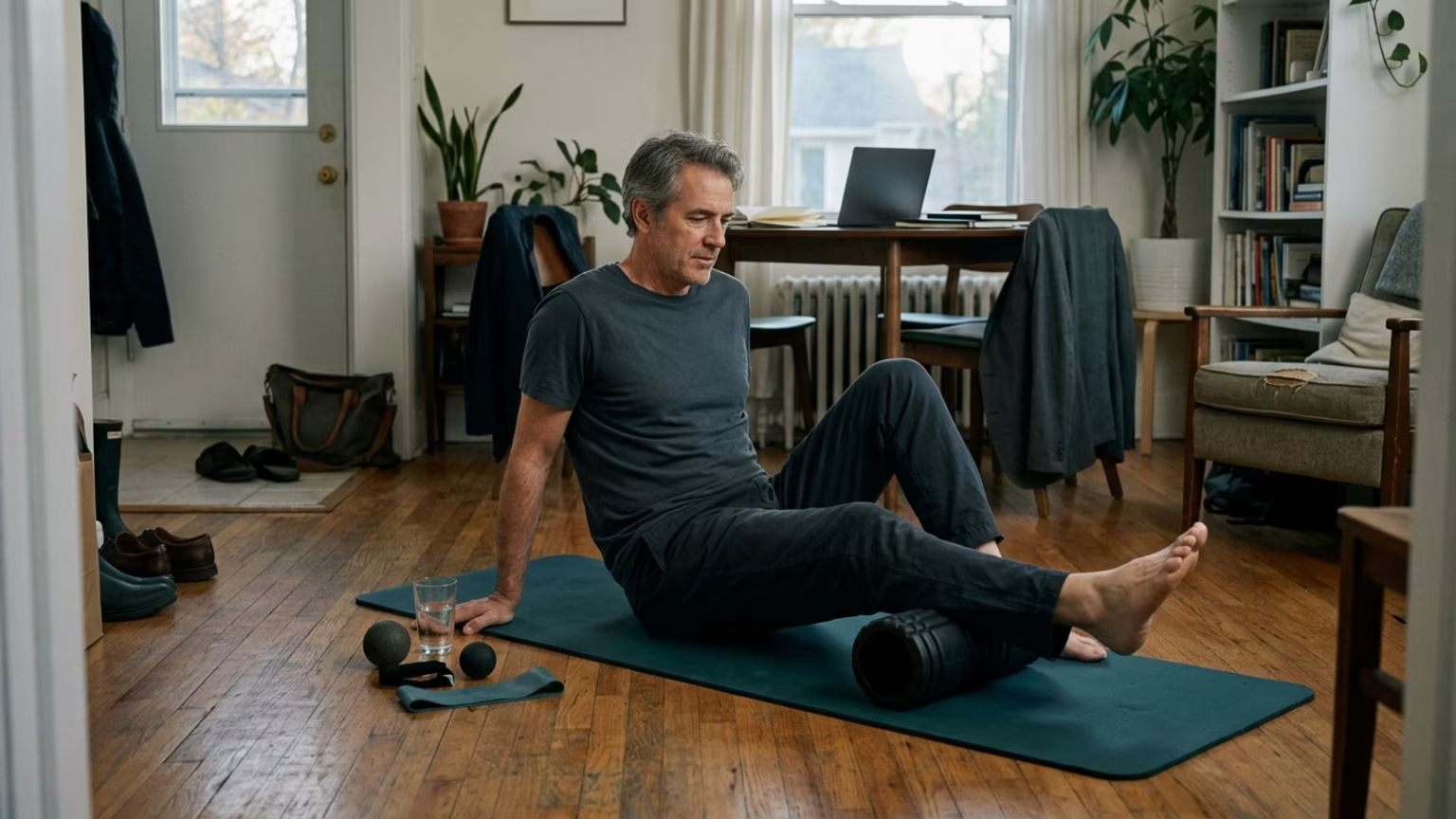

A University of Bristol feature highlights practical recovery habits like regular rest, wind-down time, and mindful breathing to help adults manage daily stress.





On 2 October 2026, the University of Bristol published a feature interviewing Dr Suzanne Scott, a university lecturer and movement coach with the England men’s senior football team. The piece examines how elite-sport principles, such as regular rest and quiet breathing pauses, might translate into practical everyday habits.
Scott stresses that loading the body without adequate rest may negatively affect biological adaptation. She explains that good sleep helps consolidate training gains and improve overall performance. This fundamental concept highlights that recovery is an active, necessary process rather than simply a passive state of inactivity. The central message from the interview is that adequate, regular rest matters just as much as proper nutrition.
Her perspective is grounded in extensive professional experience working in high-stakes athletic environments. The feature notes that Scott has worked alongside England players for more than eight years. During her tenure, she supported the team at three FIFA World Cups and two UEFA European Championships. This background provides the context for her advice on managing fatigue and coping with intense pressure.
The Bristol feature is an applied interview rather than a report of a new clinical trial. It supplies no sample sizes, measured outcomes, comparison groups, or statistical results. Its advice should therefore be presented as an expert’s practical perspective on recovery. The piece does not offer definitive proof that a particular routine will work equally well for everyone.
Athletic recovery advice does not always transfer directly to people managing work, health, or complex sleep constraints. The feature does not establish that the specific routines discussed have been tested in adults over 35. Instead, it offers Scott’s translation of her professional experience into practical suggestions for the general public. Readers can use these insights as a useful starting point for building their own sustainable routines.
The interview explicitly acknowledges that work hours, finances, and family responsibilities can severely limit people’s control over rest. Sleep disruption and caregiving duties often create unavoidable barriers to ideal recovery schedules. A useful approach to sleep health avoids implying that poor recovery is simply a failure to prioritize rest. Recognizing these daily constraints is a practical first step toward realistic stress management.
The transition from an active, demanding day to a restful evening is rarely a simple switch. Adults balancing careers, financial planning, and household management carry a mental load that athletic models do not always capture. Elite athletes often have dedicated time and resources entirely focused on their physical recovery. For the average adult, recovery must fit into the margins of an already full schedule.
Recognizing this difference helps adults give themselves permission to rest without feeling guilty. Many adults find that navigating persistent daily demands leaves them feeling stretched and constantly under-recovered. Understanding the physiological toll of continuous mental and physical load helps explain why recovery feels slower after 35 for many people. For adults facing these challenges, focusing on flexible habits is more effective than attempting rigid protocols.
Official health information provides a broad baseline for daily rest requirements across different age groups. Government guidance lists at least seven hours of sleep per night for adults aged 18 to 60. For adults aged 61 to 64, the recommendation shifts slightly to seven to nine hours. These population-level targets offer useful context for readers evaluating their own sleep habits.
When adults fall short of these general guidelines, the resulting fatigue can negatively impact daily resilience. However, treating sleep as a strict pass-or-fail test often generates frustration rather than genuine rest. The body's biological need for sleep fluctuates based on daily exertion, illness, and accumulating stress. Providing the body with a consistent window of time in bed is often more practical than forcing sleep to happen.
Neither the Bristol feature nor general guidelines imply that one exact schedule suits every single person. Rigid adherence to a specific number of hours can sometimes create performance anxiety around nightly sleep. Adults are better served by tracking how rested they feel during the day rather than obsessing over precise sleep metrics. The primary goal is steady, restorative rest that supports functional daytime energy.
For people trying to protect their sleep, Scott recommends allowing adequate wind-down time before bed. Establishing a steady transition period helps signal to the nervous system that the day's demands have ended. The article gives no prescribed wind-down duration, allowing adults to build a routine that fits their specific evening constraints. Finding practical habits for persistent insomnia often starts with creating these flexible boundaries.
Scott also suggests that avoiding late eating can support overall sleep quality. Heavy meals close to bedtime can interfere with the body's natural winding down process, shifting energy toward digestion. Adjusting meal timing is a simple, accessible variable to test when looking to improve overnight rest. These small behavioral shifts form a solid foundation for consistent, reliable recovery.
When looking to improve rest quality, adults should focus on steady habits rather than dramatic lifestyle overhauls. Protecting a realistic opportunity to rest is a highly effective strategy for managing continuous fatigue. A calm, predictable evening routine helps reduce the persistent mental load that makes it hard to switch off. The focus should remain on creating a supportive physical environment for natural sleep to occur.
On the subject of breathing, Scott describes quiet, low, slow breathing intended to encourage diaphragmatic breathing. She suggests pausing for slow, mindful breathing at two or three points during the active day. This simple habit requires no specialized equipment, making it highly accessible for busy professionals and parents. It is framed as a practical way that may help lower perceived stress.
The feature’s breathing advice includes an amount of air described as "around 500m or half a litre." It does not clarify the "500m" wording or give a research citation for that specific numeric quantity. Readers should treat this detail as an imprecise suggestion rather than a validated target to measure or achieve. The practical focus should remain on the quiet, steady rhythm of the breath itself.
Taking short pauses during the day can interrupt the momentum of sustained mental and physical load. These moments offer a sensible way to support nervous system balance amidst everyday demands. The suggested pauses can be presented as a low-complexity experiment for managing daily pressure. They offer a brief mental reset without adding complicated tasks to a busy schedule.
Perceived stress refers to how an individual subjectively experiences the demands placed upon them, rather than an objective physiological measurement. Lowering perceived stress is highly valuable because it can make a demanding day feel much more manageable. When adults feel less overwhelmed, they often find it easier to transition into a restful state later in the evening. This creates a positive cycle where small daytime habits support better overnight recovery.
When evaluating breathing exercises for stress relief, examining the broader clinical context is highly helpful. A secondary summary of a 2019 review describes the diaphragmatic-breathing evidence as noticeably limited. That particular review found only three eligible studies on the topic and called for more rigorous research. This context highlights the importance of viewing breathing exercises as a supportive habit rather than a definitive medical treatment.
The lack of extensive clinical validation does not mean that breathing exercises are entirely useless for the general public. It simply means that scientific literature has not yet established broad, definitive conclusions across large populations. Because taking a few deep breaths is a zero-cost, low-risk activity, it remains a worthwhile personal experiment. Adults can try the practice for a few weeks and observe whether their days feel any less overwhelming.
The feature does not claim that breathing practice treats a medical condition or replaces professional care. It simply provides a practical tool for adults managing the immense strain of daily life. Incorporating short, quiet pauses can help individuals navigate demanding environments with a bit more ease. Realistic expectations help adults sustain these helpful habits over long periods.
Translating athletic recovery principles into everyday life requires careful adjustment and realistic expectations. Scott’s claims about training adaptation and performance are originally framed around physical loading in elite sport. For a general audience, avoid turning them into a claim that any particular habit will reliably produce measurable health gains. Instead, view them as practical strategies for managing the normal fatigue of adult life.
Adults over 35 often face a continuous accumulation of daily stress that requires ongoing management. Protecting a realistic opportunity to rest where possible is a fundamental component of maintaining daytime energy. Acknowledging the actual limits of your schedule is a healthy part of establishing everyday boundaries. Flexible, adaptive routines are far more sustainable than rigid optimization programs.
As elite-sport recovery principles continue to reach the general public, will we see a broader shift toward practical, flexible transition routines rather than rigid performance tracking?
Consuming wellness content that turns rest into another performance target often creates unnecessary anxiety. Relaxopia actively counters this cycle by translating credible evidence into clear, practical guidance for adults 35+ dealing with low daytime energy and inconsistent recovery. We help you build realistic resting habits that genuinely support your daily life without relying on complex optimization rules. Explore Resources
Stay connected for research-led guidance on sleep quality, stress, circadian rhythm, recovery, fatigue and everyday energy. Clear ideas for adults 35+ who want to sleep better, recover more fully and feel more capable through the day.






Explore practical guidance on sleep, stress and recovery without chasing every new hack, device or promise.
explore the blog