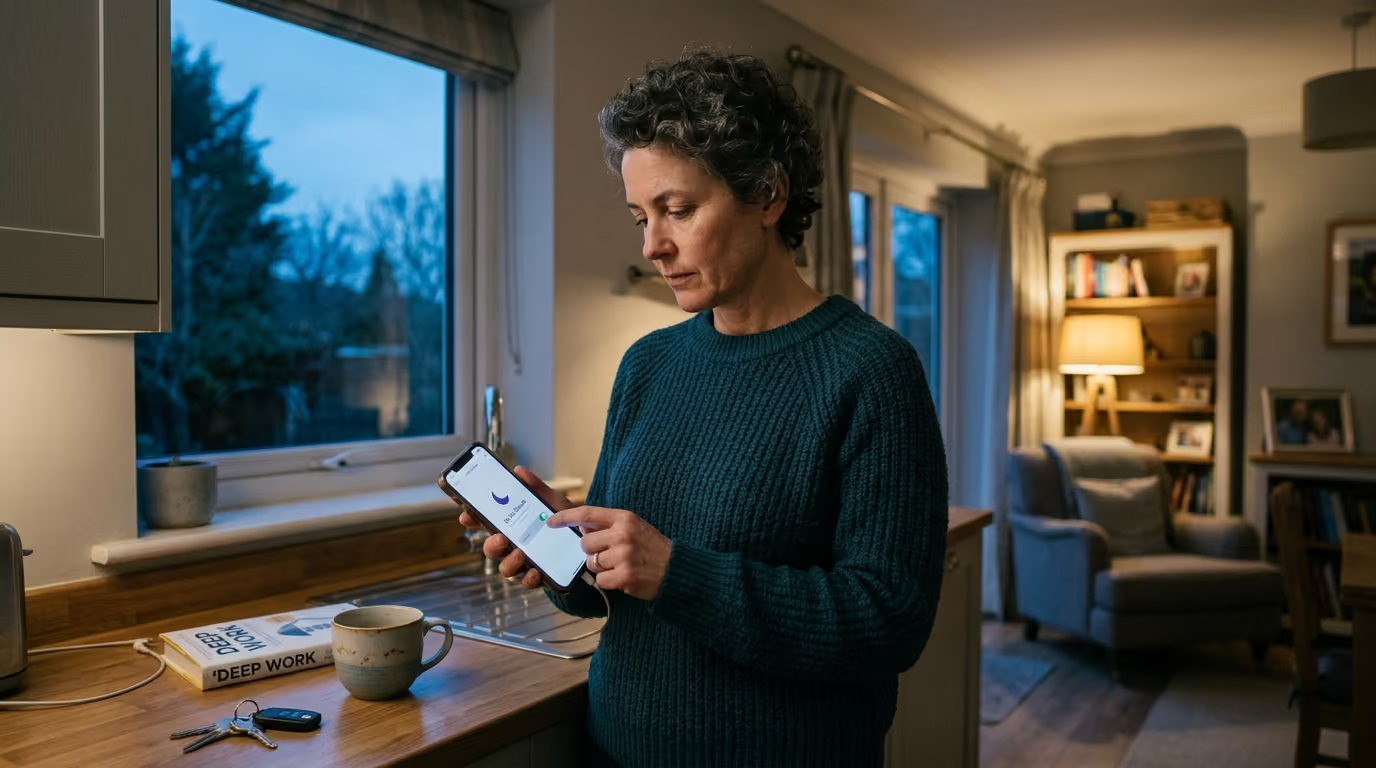

Seven or more hours of nightly sleep requires managing evening digital availability, protecting your circadian rhythm, and silencing late-night professional communications.





Digital boundaries for sleep are pre-established operating rules that govern when, how, and by whom you can be reached during rest hours. They are not an exercise in complete digital abstinence, moral judgments about screen time, or complicated wellness routines. Instead, these boundaries represent an environmental control system designed to protect physical sleep and psychological recovery.
Many adults experience poor rest not because they used a screen for twenty minutes before bed. Their sleep suffers because their bedroom functions as an active communication hub. When your phone, smartwatch, and smart home systems can chime or vibrate at any hour, your brain remains on standby.
Creating effective digital boundaries requires separating genuine emergencies from routine interruptions. It also requires removing the need to make contact decisions late at night.
This guide outlines what clinical and occupational research reveals about nighttime availability, psychological detachment, and sleep quality. It provides step-by-step systems to configure devices, align workplace expectations, audit home technology, and establish reliable boundaries that protect nightly rest.
Scientific research examining electronic media and sleep presents a nuanced picture. A comprehensive systematic review and meta-analysis of electronic media use spanning dozens of studies and over forty thousand participants found that nighttime electronic media use is consistently associated with reduced sleep quality and increased sleep disturbances. The primary mechanisms identified across the literature include bedtime postponement, light-induced biological alerting effects, and direct disturbances from alerts.
A large systematic review of evening mobile media research found that negative associations with sleep quality appeared in sixty-six percent of reported findings. The same review noted that forty-four percent of statistical effects linked evening media use to shorter sleep duration. However, the evidence is not uniform across all study designs.
Research using objective device tracking and within-person analyses frequently finds smaller or null associations compared to studies relying on retrospective self-reports. Evening technology use is often correlated with poorer sleep, but individual device use does not automatically cause sleep failure. The specific timing, interactive nature, and emotional weight of the communication shape the actual physiological outcome.
Daily tracking studies demonstrate that nighttime screen interaction relates much more strongly to delayed sleep onset and worse sleep quality than total daytime device use. When researchers examine daytime smartphone activity, it often shows no meaningful link to nighttime sleep metrics. The critical problem is not the total volume of daily technology use. The primary issue is what happens once you enter your sleeping environment.
The American Academy of Sleep Medicine and the Sleep Research Society recommend that adults sleep seven or more hours per night on a regular basis. Regularly sleeping less than seven hours is associated with impaired concentration, higher error rates, and increased metabolic strain. When late-night alerts shorten your sleep window below this threshold, recovery suffers even if you believe you have adapted to the disruption.
Nighttime availability refers to the perceived or actual requirement to remain reachable during hours dedicated to rest. It involves both physical access to devices and subjective vigilance. Low-level vigilance is a sustained state of psychological alertness where you subconsciously monitor your environment for incoming demands. You may feel tired, yet your nervous system stays prepared to process an alert, read a message, or evaluate a task.
The presence of digital communication systems interferes with human rest through four distinct pathways:
Bedtime displacement occurs when answering messages, browsing updates, or clearing work tasks pushes your bedtime past its intended target. You trade valuable recovery time for low-priority digital engagement. This delay reduces your total sleep opportunity, which accumulates into chronic sleep debt over the course of a workweek.
Receiving a difficult email, reading conflicting news, or fielding a family request activates mental processing and emotional defense systems. Once your brain begins analyzing a complex situation or drafting hypothetical responses, physiological arousal increases. Heart rate variability shifts toward sympathetic dominance, making the transition into light sleep difficult. You may put the device down, but your mind continues working through the problem.
Screen-based light in the late evening can signal biological wakefulness to the central circadian clock in the brain. The National Heart, Lung, and Blood Institute recommends setting aside the hour before bedtime for quiet relaxation and keeping your sleep environment dark. While screen light plays a role in circadian regulation, research indicates that interactive emotional engagement often creates a stronger alerting effect than light emission alone.
Incoming rings, vibration buzzes, screen flashes, and smartwatch haptics can wake you out of deep or rapid eye movement sleep. Even when an alert does not cause a conscious awakening, it can induce brief micro-arousals. These micro-arousals fracture your natural sleep architecture. The next morning, you wake feeling unrefreshed without remembering the interruptions.
Understanding these pathways clarifies why building an evening transition routine to calm bedtime thoughts is so effective for long-term health. The danger is not merely the blue light from a monitor. The true disruption stems from keeping your nervous system connected to external demands while attempting to sleep.
The impact of an incoming message depends heavily on how you perceive and handle notifications. Research on adult communication patterns shows that notification awareness and compulsive responding contribute significantly to sleep problems. If you anticipate that a message might arrive, your sleep quality declines even if your phone remains silent throughout the entire night.
Several underlying factors alter how your body responds to digital alerts:
The compulsion to immediately check and answer incoming notifications creates sustained mental strain. When an alert arrives, the urge to resolve the social or professional tension drives immediate interaction. This behavioral pattern conditions your brain to view the device as an open channel requiring continuous oversight. The expectation of communication maintains vigilance and prevents the deep relaxation needed for restorative rest.
Modern devices are designed to synchronize seamlessly across platforms. A work email received at 10:00 p.m. can illuminate your phone, trigger a haptic pulse on your wrist, and chime through a bedroom tablet. This boundary leakage dismantles the physical separation between your personal space and external demands. When every device mirrors every communication channel, your bedroom loses its function as a secure recovery environment.
Switching a phone from an audible ringtone to vibration mode is often viewed as an adequate sleep boundary. However, physical vibrations against a nightstand produce a distinct acoustic and tactile cue. Your auditory system processes this vibration as a potential demand. The tactile buzz of a wearable against your skin directly stimulates the sensory cortex, triggering an immediate shift in physiological alertness.
Psychological detachment is the mental ability to step away from job demands during off-hours. Research examining after-hours work communication shows that frequent evening emails correlate with poor psychological detachment, increased rumination, and elevated fatigue the following day. These negative effects persist even when professionals have ample off-duty hours. Extra time away from the office cannot restore your energy if work systems remain digitally active on your nightstand.
Understanding these dynamics explains how always-on work patterns create lingering cognitive fatigue over time. You cannot achieve complete nervous system recovery while maintaining continuous availability for outside obligations.
An effective boundary system does not treat all incoming data identically. The common mistake is using an all-or-nothing approach, such as switching to airplane mode or leaving every notification enabled. Airplane mode can create anxiety if you worry about missing a family emergency, while leaving all alerts active ensures broken rest.
A notification hierarchy categorizes incoming communications by their consequence and urgency. This structure allows critical safety alerts to reach you while filtering out nonessential information until morning.
True emergencies involve immediate risks to health, personal safety, or dependent security. Examples include a call from an elderly parent's caregiver, a notification from a home fire or carbon monoxide detector, or an urgent family crisis. These events require immediate attention. They must be allowed to bypass all silent modes through specific whitelisting rules.
Time-critical communications involve urgent matters with defined short windows of relevance. Examples include scheduled overnight on-call escalations for specific professions, urgent travel disruptions, or time-sensitive dependent updates. These alerts should be restricted to dedicated channels, specific phone numbers, or separate secondary devices used exclusively for on-call duty.
Important nonurgent messages require thoughtful responses but carry no real penalty if addressed the next morning. Examples include manager emails, general client inquiries, school event announcements, and banking updates. These items should be held quietly in their respective applications. They must generate no sounds, vibrations, lock-screen banners, or device badges during your protected sleep window.
Routine alerts have zero urgency and minimal long-term value. Examples include marketing updates, social media likes, app store notifications, news headlines, and automated group chat commentary. These notifications should be permanently silenced or disabled at the system level. They should never have permission to interrupt your evening or night.
Classifying the underlying event rather than the entire application is critical. A standard messaging app might deliver an emergency message from a spouse alongside low-value group humor. Setting broad application-level permissions fails to protect your rest. You must establish rules based on specific senders and contact groups.
Translating your notification hierarchy into practical device settings eliminates the need for late-night willpower. Your devices should automatically enforce your boundaries every evening.
Set your smartphone operating system to activate a dedicated Sleep Focus or Do Not Disturb schedule automatically. Establish this window to begin thirty to sixty minutes before your target bedtime and end after your morning routine begins.
Configure your contact exceptions carefully:
Wearable trackers can provide interesting insights into health trends, but they can also introduce new forms of sleep vigilance. Research evaluating consumer sleep trackers shows they generally offer high sensitivity for detecting sleep periods, but they frequently have lower specificity for detecting quiet wakefulness. Many consumer devices overestimate total sleep duration and underestimate brief nighttime awakenings.
To prevent your wearable from becoming an active sleep disruptor:
If you are tracking physiological trends, exploring how wearable sensors collect sleep and recovery metrics can help you view data constructively without developing tracking anxiety.
Connected household devices can produce sudden, unexpected interruptions that break sleep continuity. Review every connected device located within or near your sleeping area:
Setting digital boundaries on personal hardware is straightforward, but managing professional expectations requires clear communication. Research on extended workplace availability demonstrates that after-hours messaging increases occupational stress and accelerates burnout. Preventing work from intruding into your rest requires both personal habits and collaborative team protocols.
Unspoken assumptions create chronic availability pressures. When team members do not know when responses are expected, they default to monitoring their inboxes continuously.
Discuss communication expectations openly with your team and managers:
Checking work communications from bed creates an immediate surge of cognitive stress before your feet touch the floor. It replaces a calm morning waking process with reactive problem-solving.
Build a structured morning retrieval routine instead:
Adopting structured communication limits helps prevent the chronic fatigue detailed in reports examining persistent adult exhaustion patterns. Replacing continuous monitoring with predictable retrieval preserves both daytime focus and nighttime rest.
A rigid boundary strategy fails when applied to complex living situations. Families, caregivers, and non-traditional workers require systems tailored to their distinct operational realities.
Caregivers often keep their devices fully active out of genuine concern for family members. Leaving every alert active results in frequent false alarms that degrade sleep quality.
Caregivers can protect their rest by establishing precise access channels:
Shift workers must sleep during daylight hours when the rest of the world is active and communicating. A standard nighttime schedule does not protect their biological rest period.
Shift workers can safeguard their sleep opportunity by inverting their technology settings:
Digital boundaries must accommodate accessibility requirements. Individuals who rely on tactile, amplified, or visual alerting systems for hearing, vision, or medical management cannot simply silence all hardware.
Incorporate accessibility tools directly into your boundary design:
While the relationship between late-night digital availability and sleep is supported by scientific literature, several important research limitations exist. Maintaining an evidence-based perspective requires recognizing what current science can and cannot confirm.
Much of the popular literature surrounding screen use relies on cross-sectional self-report surveys. These surveys are vulnerable to recall bias and shared method variance. Individuals who already suffer from insomnia or life stress often spend more time on their devices during restless nights. In those cases, digital use serves as a symptom or coping mechanism for poor sleep rather than the direct root cause.
Studies employing objective actigraphy and automated smartphone log analysis often show more modest effects than survey-based studies. While nighttime smartphone pickups and late-night messaging correlate with shifted sleep timing, brief and passive device exposure does not invariably ruin sleep architecture. The emotional charge and interactive nature of the content matter far more than the simple physical presence of an illuminated screen.
Furthermore, consumer sleep trackers have clear diagnostic limitations. Current systematic reviews demonstrate that while consumer wearables track general longitudinal trends reasonably well, their algorithms can misinterpret quiet wakefulness as light sleep. Relying entirely on a daily wearable score to evaluate your recovery can foster unnecessary
anxiety.
Digital boundaries are an environmental adjustment that removes friction and supports biological rest. However, altering your notification settings cannot single-handedly solve unsustainable workplace workloads, unmanaged clinical stress, or deep-seated organizational demands. Boundaries create the physical space for recovery, but overall lifestyle balance remains essential.
Implementing digital boundaries often resolves sleep disruption caused by late-night alerts, work rumination, and bedtime displacement. However, technology management is not a cure for underlying primary sleep disorders or mental health conditions.
You should consider consultation with a qualified physician or sleep medicine specialist if you experience:
If you suspect your sleep challenges extend beyond notification habits, reviewing evidence-based practices for persistent chronic insomnia can help you identify when specialized clinical therapies are appropriate. A medical provider can perform objective diagnostic testing, such as polysomnography, to evaluate your sleep architecture and recommend targeted medical care.
Switching your phone to vibrate reduces audible noise, but it does not eliminate sleep disruption. Vibrations against furniture generate distinct low-frequency sounds and physical movements that can trigger micro-arousals. Furthermore, if you know the phone is actively vibrating, your brain remains in a state of low-level monitoring. True digital boundaries require suppressing both sound and vibration for nonurgent communications.
If your job requires overnight responsiveness, avoid keeping your general personal phone fully active. Use a dedicated work-provided device or configure an isolated escalation channel specifically for emergency pages. Silence all non-call notifications, such as routine emails, calendar invites, and general team chat channels. When your scheduled on-call window concludes, immediately switch your device into your protected sleep profile.
Checking your sleep metrics occasionally is harmless, but doing so compulsively can induce unnecessary stress. If your wearable displays a low score, you may experience anxiety that worsens your perceived energy throughout the day. If you notice yourself worrying about your nightly numbers, hide your sleep score until late morning. Evaluate your physical energy and mental clarity based on how your body feels rather than relying solely on an algorithmic estimate.
Modern mobile operating systems allow granular contact whitelisting within their Focus or Do Not Disturb menus. You can create a specific Favorites group containing immediate family members while muting all other contacts. You can also turn on the repeated-calls setting, which allows any caller to reach you if they dial twice in rapid succession. These settings ensure critical family access while keeping routine text conversations, media notifications, and group chats completely silent.
True recovery does not require abandoning modern technology, but it does require setting intentional limits on your availability. When you establish reliable digital boundaries, you transform your bedroom back into a protected space dedicated to genuine rest.
Stay connected for research and practical guidance on sleep, stress, circadian rhythm and recovery. Clear ideas for adults 35+ who want better rest, steadier energy and more resilient days.



Explore practical guidance on sleep, stress and recovery without chasing every new hack, device or promise.
explore the blog