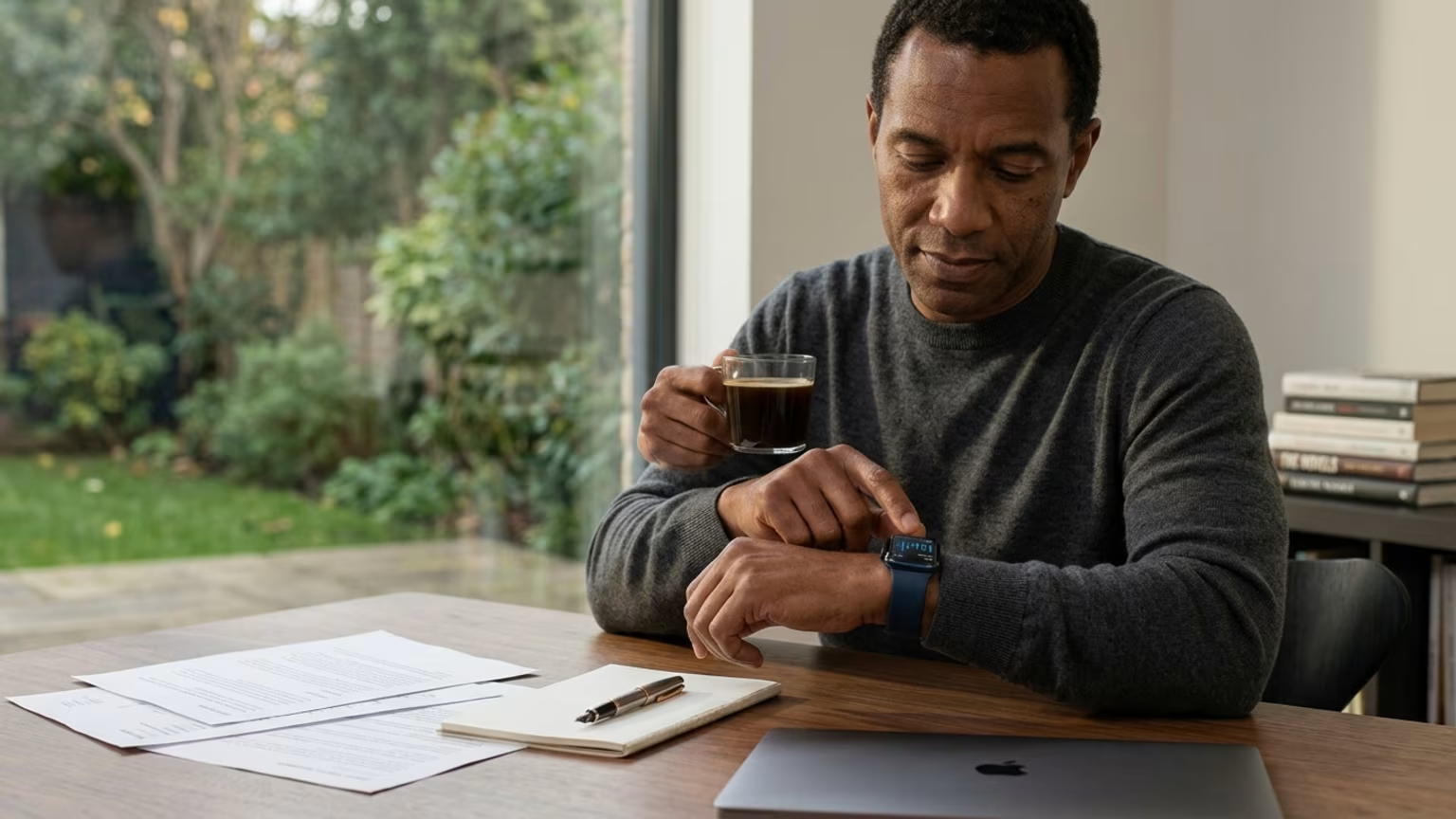

Apple's new Health Sensing System brings continuous recovery metrics to the Apple Watch. Learn how adults can use Readiness and HRV data to manage daily fatigue.





In September 2026, Apple introduced its Health Sensing System for the Apple Watch Series 12 and Apple Watch Ultra 4. The company announced hardware changes alongside new software features intended to provide deeper background tracking for sleep and cardiovascular recovery.
For years, consumer wearables focused heavily on the simple calculation of total sleep time. Apple is now moving toward a composite view of human recovery. The Apple Watch Series 12 and the Apple Watch Ultra 4 feature improved optical sensing, a larger electrode area, and more efficient green LEDs. Apple says the new system can take background health readings every five seconds, and it measures heart-rate variability every five minutes.
This higher-frequency data aims to provide a more detailed picture of autonomic recovery than occasional spot measurements. Frequent data points feed a new Readiness feature designed to help users decide when to push themselves or when to hold back. Readiness acts as a daily score based on recent activity, vital signs, and sleep data. It represents a broader industry trend where devices attempt to interpret whether a user is prepared for a demanding day.
The new hardware models are positioned at different tiers for consumers. Coverage indicates the Apple Watch Series 12 starts at $399, while the Apple Watch Ultra 4 starts at $799. Indian prices reported for the two models were ₹56,900 and ₹109,900 respectively. Both models utilize the new sensor array to continuously gather physiological signals throughout the night and day.
Apple already offers detailed nightly reporting through its established tracking tools. Users can view time spent in Awake, REM, Core, and Deep sleep. These metrics populate automatically, provided sleep tracking is enabled and the watch is worn for at least one hour during the night. Apple also lets users view sleep alongside heart rate and respiratory rate, while compatible models can even compare changes in nightly wrist temperature.
The most significant change for adults managing fatigue is how the company now combines these isolated metrics. The new Readiness feature brings sleep duration, cardiovascular measurements, and recent activity into a single daily interpretation. This approach acknowledges that a person might spend eight hours in bed but still wake up feeling completely exhausted. By adding high-frequency heart-rate variability inputs, the system attempts to capture a nuanced picture of physiological stress.
Apple also announced Health Age insights for its platform. The company describes Health Age as a way to interpret overall health relative to chronological age. Coverage describing the feature notes it may draw on factors such as resting heart rate, sleep data, heart-rate variability, and VO2 max. The available reporting does not provide a full technical formula or independent clinical validation for this resulting age estimate.
While five-second background readings provide a dense collection of observations, they do not turn a consumer watch into a medical device. A higher sampling frequency creates more data points, but it does not automatically prove a readiness score is clinically meaningful. The available event coverage does not include an independent clinical validation study for Readiness or the new Health Age feature. Medical professionals stress that wearable data should always be treated as a broad trend signal.
A watch can help a user notice shifting patterns in their nightly sleep architecture, but it cannot replace a formal medical evaluation. A consumer wearable estimates sleep stages from indirect signals collected at the wrist. In a clinical setting, formal polysomnography measures additional physiological signals like direct brain activity. Watches may misclassify sleep stages, confuse quiet wakefulness with light sleep, or miss clinically important breathing problems entirely.
This distinction is critical for adults navigating midlife health challenges. Persistent daytime fatigue, loud snoring, witnessed breathing pauses, and morning headaches warrant serious medical evaluation. A readiness score might suggest you need more rest, but it cannot diagnose obstructive sleep apnea, burnout, or cardiovascular disease. Users should avoid treating a daily score or a nightly stage breakdown as a precise medical verdict.
Managing work, caregiving, and physical training requires practical routines rather than rigid optimization. The addition of five-minute HRV measurements and a daily Readiness score offers a tool for pacing, provided the data is used correctly. High-frequency tracking is most beneficial when you look for repeated patterns following major life stressors. You can start observing how your recovery signals react after late working hours, illness, or heavy training.
Heart-rate variability is highly individual and responds to numerous temporary factors. It fluctuates with recent stress, physical exercise, breathing patterns, and evening alcohol consumption. A single low reading is not definitive proof of inadequate recovery, and a high reading is not definitive proof of perfect health. You get the most value by comparing trends measured under broadly similar conditions over several weeks.
Adults checking their wrist every morning should always cross-reference the digital score with their actual physical sensation. Note your subjective sleep quality, daily energy levels, morning mood, and muscle soreness alongside the device's information. A stark mismatch between your watch and your body requires immediate attention. If the watch shows excellent recovery metrics but you feel persistent daytime exhaustion, trusting your physical symptoms and monitoring your daily energy and fatigue always takes precedence over a wearable score.
Relying exclusively on a wearable can sometimes become counterproductive for your mental state. People who are already anxious about their sleep duration might become preoccupied with their new daily Readiness score. If tracking increases your worry or causes you to repeatedly check your watch during the night, stepping back is a reasonable choice. The goal of background sensing is to provide context quietly, not to generate another demanding performance target.
No amount of high-frequency data can compensate for a chaotic nightly routine. You must protect the basic elements of rest before worrying about a slight dip in your core sleep percentage. Wearable metrics cannot fix irregular sleep timing, a hot bedroom, untreated physical pain, or late caffeine consumption. Use your tracking data to test adjustments to your sleep environment and evening habits one variable at a time.
Treat features like Health Age as a broad educational prompt rather than a strict biological measurement. A lower score might encourage you to review your current physical activity routines or stress management tactics. It should never be read as a definitive statement about how fast your internal organs are aging. The focus must remain on sustainable physical adjustments that fit comfortably into an adult lifestyle.
If your watch indicates a low Readiness score, treat it as a gentle behavioral prompt for the day. You might decide to schedule a lighter workout, choose an earlier bedtime, or reduce unnecessary demands for that specific afternoon. This approach honors the physical signal without giving it complete authority over your life. Building mental resilience against daily stress involves blending these digital cues with genuine self-awareness.
To get the most accurate trend line from any wearable device, you must keep your measurement conditions consistent. Wearing the watch tightly one night and loosely the next can alter the quality of the optical sensor readings. Apple notes that users must wear the watch for at least one hour during the night to receive basic sleep data. For advanced metrics like heart-rate variability or wrist temperature, maintaining a stable sleeping environment is equally critical.
If you frequently change your bedtime or sleep in varying room temperatures, your baseline data will become erratic. A sudden drop in your Readiness score might simply reflect a hotter room rather than a true decline in your physical recovery. By keeping your basic nighttime variables steady, you allow the Health Sensing System to accurately detect meaningful physiological changes. This consistency turns raw background readings into a reliable tool for understanding your own body.
Adults over thirty-five frequently notice their physical resilience does not bounce back as rapidly as it did in previous decades. A late night or a stressful week at work leaves a lingering physical footprint on the body. The Health Sensing System offers a way to visualize that lingering fatigue through continuous tracking over time. It confirms that your body requires more time to return to its baseline state following a demanding period.
The availability of granular data requires consistent discipline from the daily user. You must resist the urge to react emotionally to every minor fluctuation in your resting heart rate. The most successful approach involves zooming out to view a full month of recorded health data. This wider lens smooths out the temporary dips and reveals your true physiological trajectory.
As wearable technology transitions from recording simple sleep duration to interpreting complex physiological readiness, how will adults learn to balance this flood of continuous health data against their own intuitive understanding of fatigue and recovery?
Interpreting high-frequency wearable data requires separating helpful sleep trends from unnecessary daily anxiety, which is exactly where Relaxopia takes over. Low daytime energy and inconsistent recovery can feel overwhelming to manage alone, but our research-led guidance provides the practical context you need to build sustainable habits. Explore Resources
Stay connected for research and practical guidance on sleep, stress, circadian rhythm and recovery. Clear ideas for adults 35+ who want better rest, steadier energy and more resilient days.




Explore practical guidance on sleep, stress and recovery without chasing every new hack, device or promise.
explore the blog