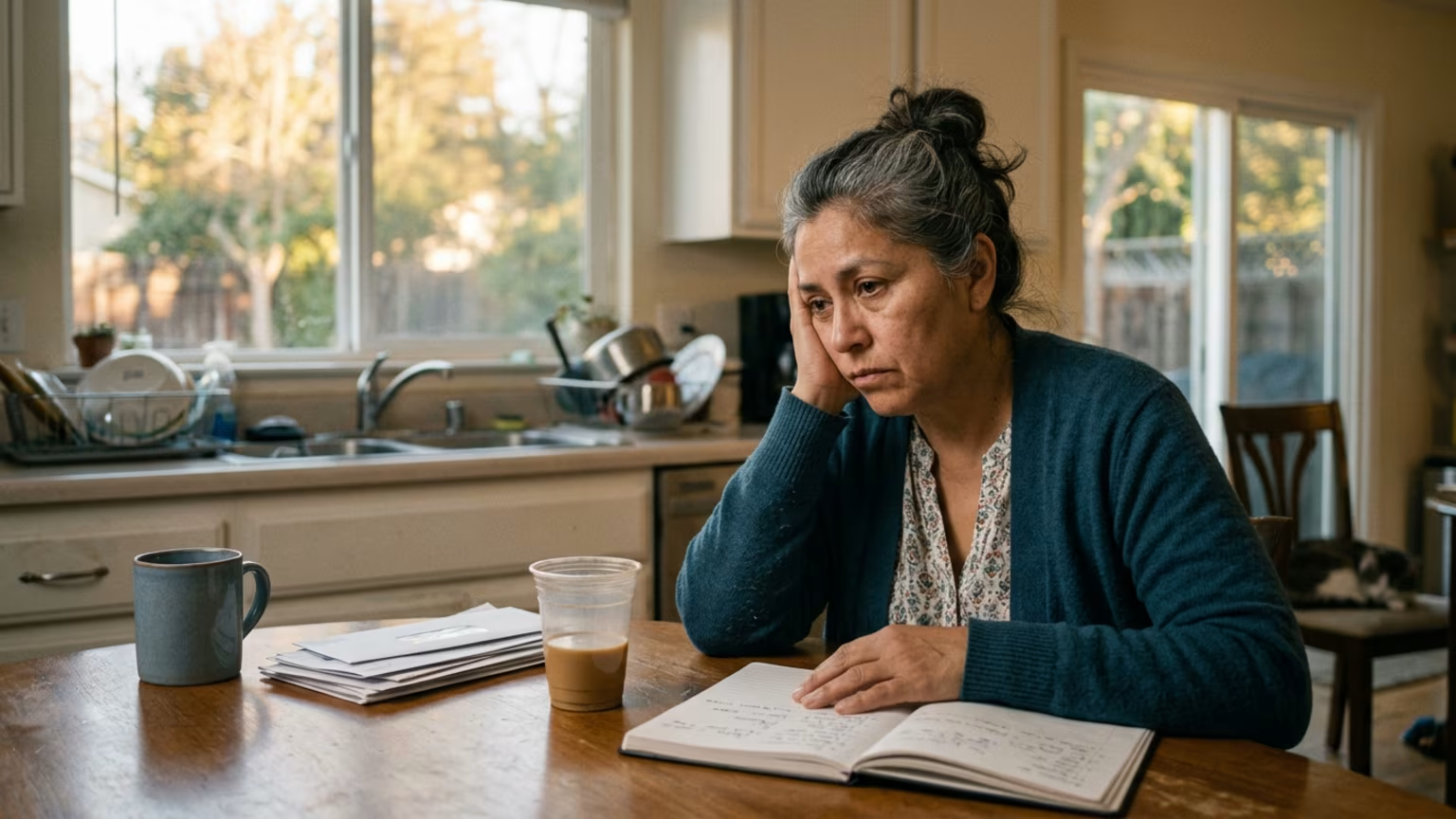

A new CDC analysis of the 2024 National Health Interview Survey reveals that 16.6% of U.S. adults experience frequent fatigue most days or every day.





In September 2026, the Centers for Disease Control and Prevention’s National Center for Health Statistics released a new analysis of the 2024 National Health Interview Survey. This report measured exactly how often adults in the United States felt very tired or exhausted over a three-month period.
According to the CDC analysis, 71.5 percent of U.S. adults reported feeling very tired or exhausted on at least some days during the previous three months. NBC News coverage characterized this finding as evidence that fatigue is highly widespread across the country. However, looking closer at the survey numbers reveals a vital distinction between normal periodic tiredness and a persistent physical state. The headline percentage combines people who felt tired occasionally with those who struggled constantly.
The detailed breakdown offers a precise picture of everyday energy levels. The survey found that 54.9 percent of respondents felt tired on some days, 10.7 percent on most days, and 5.9 percent every day. At the same time, 28.5 percent of adults reported never experiencing these symptoms during the three-month window. The CDC report defined frequent fatigue specifically as feeling very tired or exhausted on most days or every day.
By the official report definition, 16.6 percent of adults experienced frequent fatigue. This means about one in six adults met the criteria for this more clinically concerning subgroup. For these individuals, exhaustion is not just a reaction to a single late night but a regular baseline state. The CDC researchers also measured how long these feelings lasted during the day and how intense they were.
Among adults living with frequent fatigue, 45.3 percent said their symptoms lasted some of the day. Another 34.5 percent said the exhaustion lasted most of the day. Most notably, 20.2 percent reported that their fatigue lasted all day long. This shows that frequent fatigue often dominates a person's waking hours rather than simply fading after a morning coffee.
The intensity of this daily exhaustion also varies significantly among those affected. Regarding symptom severity, 14.5 percent of adults with frequent fatigue described it as "a little" intense. A much larger group, making up 46.8 percent, rated their fatigue as falling between "a little" and "a lot." Finally, 38.8 percent described their daily exhaustion as "a lot."
This high percentage of adults reporting severe intensity points to a substantial impact on normal functioning. The data confirms that a meaningful minority of the population manages significant energy deficits daily. It also reinforces that persistent tiredness is a common symptom that warrants serious attention. However, the survey focuses entirely on reporting symptom prevalence and physical characteristics.
The survey results challenge common assumptions about energy levels and aging. Frequent fatigue was reported by 19.5 percent of adults ages 18 to 34. In contrast, only 12.9 percent of adults ages 65 and older reported the same symptom frequency. This makes frequent fatigue more common among younger adults in the survey than among the oldest age group.
The reported age pattern cautions against assuming that fatigue is primarily an older adult problem. The data also revealed notable differences between men and women. According to NBC News coverage of the CDC data, women reported frequent fatigue more often than men. The survey prevalence was 20 percent for women versus 13 percent for men.
The NBC News coverage also highlighted reported differences among racial and ethnic groups. Frequent fatigue was reported by 25.5 percent of American Indian and Alaska Native adults. Following closely, 18 percent of White adults and 17.3 percent of Black adults reported frequent fatigue. The prevalence was slightly lower for other measured demographics.
Specifically, 12.9 percent of Hispanic adults and 9.1 percent of Asian adults reported the same symptom frequency. It is vital to note that these sex and racial differences describe survey prevalence only. They do not by themselves explain why the differences exist or establish biological causes. The report measures self-reported symptoms rather than formal clinical diagnoses.
Because the survey relied on participants recalling their symptoms over the prior three months, the results reflect subjective experiences. They are not based on wearable device measurements or physical sleep laboratory testing. This broad threshold should not be automatically equated with chronic fatigue or a diagnosed sleep disorder. The survey data is not equivalent to a diagnosis for clinical depression, anemia, or other specific medical conditions.
Furthermore, the available data does not prove that sleep loss, persistent stress, heavy workloads, or poor recovery habits caused the exhaustion. The CDC survey simply confirms that many adults operate with a significant physical deficit. The available results also do not show that fatigue directly caused reduced productivity, impaired cognition, or poor health outcomes. Making those specific claims would require separate evidence not included in this analysis.
For adults aged 35 to 65, the most practical implication of this report is the need to actively track personal energy patterns. Instead of dismissing recurring exhaustion as a normal part of midlife, use the CDC metrics to evaluate your physical baseline. The survey found that one in six adults reported feeling very tired most days or every day. Paying attention to persistence is a critical first step in addressing your symptoms.
You should track whether your fatigue occurs occasionally or most days of the week. Pay attention to how long it lasts during the day, and note whether it feels mild or severe. These tracking dimensions directly mirror the CDC’s own frequency, duration, and intensity measures. A simple written log can help you separate occasional tiredness from the more persistent frequent fatigue group.
Once you understand your patterns, a sensible next step is to review basic lifestyle factors. Look at your regular sleep opportunity, check for irregular schedules, and observe your evening stimulation levels. Assess your daily workload, any caregiving demands, and the actual time you have for physical recovery. Making small adjustments for better sleep and sleep quality can often yield noticeable improvements.
It is helpful to assess these factors without assuming that any one issue completely explains the symptom. Balancing daily work demands with adequate recovery and nervous system balance takes time and observation. A practical approach is to test minor routine changes and record how your daily energy responds. This measured method prevents the frustration of trying to change every habit at once.
Readers should be highly cautious about heavily marketed energy products or unproven supplements. The cited CDC and NBC materials report only on the prevalence and characteristics of physical symptoms. They do not provide evidence that any specific product treats fatigue or improves daily energy. Practical advice should therefore be framed as low-risk general guidance rather than a guaranteed medical treatment.
The source material does not establish that changing sleep routines, reducing workload, or taking a particular supplement will permanently resolve exhaustion. Quick fixes often fail because they do not address the complex physical intersections of stress management and mental resilience. Managing persistent daily exhaustion is a long-term process, not a problem solved by a single purchase. Focus your efforts on steady, sustainable routine adjustments.
It is highly practical to recognize the limits of self-managed recovery habits. While adjusting your circadian rhythm and sleep timing is helpful, it may not resolve severe or chronic cases. Adults should seek medical advice when persistent fatigue is new, worsening, or interfering with normal daily activities. You should also consult a doctor if the exhaustion is accompanied by other concerning physical symptoms.
Since the CDC survey itself does not diagnose the root cause of frequent fatigue, a professional evaluation is often appropriate. Medical professionals can help rule out underlying conditions that lifestyle changes alone cannot fix. The survey results show that feeling very tired or exhausted is a common symptom across age groups. Treating it as a valid health metric requiring evaluation is a healthy approach to midlife wellness.
As public health data continues to track daily exhaustion levels, a critical question emerges for the medical community. How might this clear evidence of widespread frequent fatigue change long-term approaches to midlife recovery, clinical evaluation, and workplace expectations?
Assessing personal energy patterns and identifying frequent fatigue is a critical step for adults managing daily exhaustion. Relaxopia supports this assessment by translating credible sleep evidence into clear, practical guidance. The publication addresses the persistent mental load that makes it hard to switch off, helping readers build realistic habits for consistent daytime energy.
Stay connected for research and practical guidance on sleep, stress, circadian rhythm and recovery. Clear ideas for adults 35+ who want better rest, steadier energy and more resilient days.





Explore practical guidance on sleep, stress and recovery without chasing every new hack, device or promise.
explore the blog