

Understand how light exposure, meal timing, and a stable wake window shape your circadian rhythm to protect daytime energy without rigid sleep optimization.





The human circadian rhythm is a complex internal timing system that relies on environmental signals to regulate alertness and rest. Rather than functioning as a simple timer dictated solely by your bedtime, the body clock processes multiple behavioral inputs to determine when you feel tired. These inputs include light exposure, physical activity, food intake, and the timing of your wakefulness. By interacting with these distinct factors, the brain establishes a schedule that controls your daily energy fluctuations.
People often blame stress when they struggle to fall asleep at a reasonable hour. The reality is that the identical bedtime can produce vastly different results when the preceding day's biological cues change. Modern living patterns frequently decouple our routines from natural day and night cycles. Understanding the daily cues that set your body clock provides a practical way to manage fatigue without adopting rigid optimization strategies.
The sleep system operates through a network of biological clocks that do not always respond identically to every signal. The process begins with the central pacemaker located in the brain. This master clock relies heavily on external light to synchronize its rhythm with the 24-hour day. Human studies identify ocular light exposure as the primary pathway for circadian entrainment and melatonin suppression.
Light detected by the eyes communicates directly with the brain to signal daytime alertness. The exact timing of this light exposure dictates the direction of the circadian shift. Morning light can shift your biological timing earlier. Evening and nighttime light can shift it later or suppress melatonin production.
This response depends heavily on the light's intensity, its wavelength, its duration, and your existing circadian phase. A systematic review found that melatonin suppression can recover relatively quickly once the evening light exposure ends. Modern electrical lighting fundamentally alters this natural biological relationship. It is frequently associated with less daytime sunlight, more post-sunset light, and a later biological clock compared to a natural light-dark cycle.
When we spend our days inside dimly lit offices and our evenings under bright artificial lights, the brain receives conflicting time signals. This modern pattern blurs the physiological boundary between day and night. The brain relies on these external cues to construct a coherent picture of the day. Without clear signals from the environment, the internal clock defaults to a rhythm that is slightly longer than twenty-four hours. Regular exposure to morning light corrects this natural drift by resetting the central pacemaker each day.
The human body also contains peripheral clocks in organs and metabolic tissues. These secondary clocks respond to different environmental signals than the central pacemaker in the brain. A human study reported that meal timing entrained some peripheral circadian clocks and glucose rhythms independently of the central pacemaker. This indicates that food acts as a potent timing signal for your digestive system.
The same study found that meal timing did not alter actigraphic sleep measures or central markers like plasma melatonin. This suggests that changing your dinner time might influence metabolism without directly shifting your sleep schedule. The evidence linking meal timing and light exposure with broader health outcomes remains heterogeneous. A recent systematic review cautioned against drawing strict causal conclusions about meal timing and metabolic disease.
Chrononutrition research is rapidly expanding to explore these specific metabolic relationships. Scientists are investigating the connections between meal timing, energy distribution, glucose regulation, and the synchronization of peripheral clocks. However, meal timing should not be presented as a guaranteed way to reset sleep. The scientific consensus remains cautious about prescribing exact dinner times for better rest.
Physical activity acts as another timing signal with highly individualized effects. A systematic review of morning versus evening exercise found no clear overall advantage for most sleep outcomes. The available evidence indicated that evening exercise was associated with more wakefulness after sleep onset when the activity was intense. The response to exercise timing depends heavily on a person's habitual sleep schedule, their chronotype, and the intensity of the workout.
This means you have the flexibility to focus on building consistency without the clock rather than following strict fitness rules. Evening exercise is not universally harmful to rest. Moderate activity in the evening might be perfectly acceptable for someone who consistently sleeps well. The practical implication is that adults should look for repeated personal patterns rather than assume that one universal rule applies to everyone.
When daily cues fall out of alignment, adults often notice physical symptoms long before they recognize a formal sleep problem. The most obvious sign is lying awake for hours even when feeling deeply tired earlier in the evening. This frustrating experience indicates that your biological sleep phase has drifted away from your desired clock time. Another common symptom is waking repeatedly during the night and struggling to return to rest.
This pattern often requires you to troubleshoot why you keep waking at night by examining daytime habits. Daytime physical signals also point to underlying circadian misalignment. You might experience persistent mid-morning grogginess that fails to clear after coffee or a warm shower. Unpredictable afternoon energy crashes frequently occur when the body clock receives conflicting signals from erratic wake times or irregular light exposure.
Some adults notice that their digestion feels sluggish or unpredictable when meals happen at vastly different hours each day. These systemic responses highlight how deeply daily timing affects overall physical function. Age plays a significant role in how these imbalances manifest physically over time. A scientific review reported that melatonin concentrations and light-induced suppression decline with age.
However, light-induced circadian phase advances remain preserved as we get older. This means older adults can still shift their body clocks effectively with morning light. They might simply experience a less robust natural sleep pressure signal at night compared to their younger years. Sleep regularity may actually matter independently of your total sleep duration.
One cited prospective cohort study reported that sleep regularity was a stronger predictor of mortality risk than total sleep duration. While this finding does not establish a definitive causal conclusion, it highlights the immense biological value of a stable routine. Relying on wearable tracking data often adds to the confusion surrounding these physical symptoms. Wearables track movement and heart rate, but the available evidence does not establish that consumer devices can diagnose circadian misalignment accurately.
Persistent symptoms like loud snoring, witnessed breathing pauses, or severe daytime sleepiness require clinical evaluation. Behavioral tweaks cannot replace professional medical assessment for ongoing physiological issues.
The most practical way to rebuild circadian alignment is through a steady wake window and a gentle observation of daily inputs. A stable wake time establishes a recurring anchor for the rest of your biological cues. When you wake at a consistent hour, your subsequent light exposure, physical activity, and meals naturally align into a predictable rhythm. You do not need to wake at the exact same minute every single day.
Maintaining a reasonably consistent morning window provides the brain with a reliable daily starting point. Once your morning anchor is set, conduct a low-pressure cue audit by changing one timing variable at a time. Start by observing your daytime light exposure without forcing a rigid outdoor schedule. Natural light is highly effective at shifting circadian timing earlier.
Understanding how to use natural light to set your body clock is a highly practical intervention. Notice whether you spend meaningful time in bright daylight during the first half of your day. One study reported that a weekend of natural summer light produced about 69 percent of the phase shift observed after a full week. This demonstrates that even short periods of robust environmental signaling can yield measurable biological changes.
Track your evening environment and physical activity patterns for a few days to identify potential disturbances. Record whether bright overhead lights or intense workouts repeatedly coincide with a delayed onset of sleepiness. The goal is to spot personal correlations between late-day inputs and nighttime wakefulness without inducing anxiety. Record your meal timing in broad categories to see if late eating affects your night.
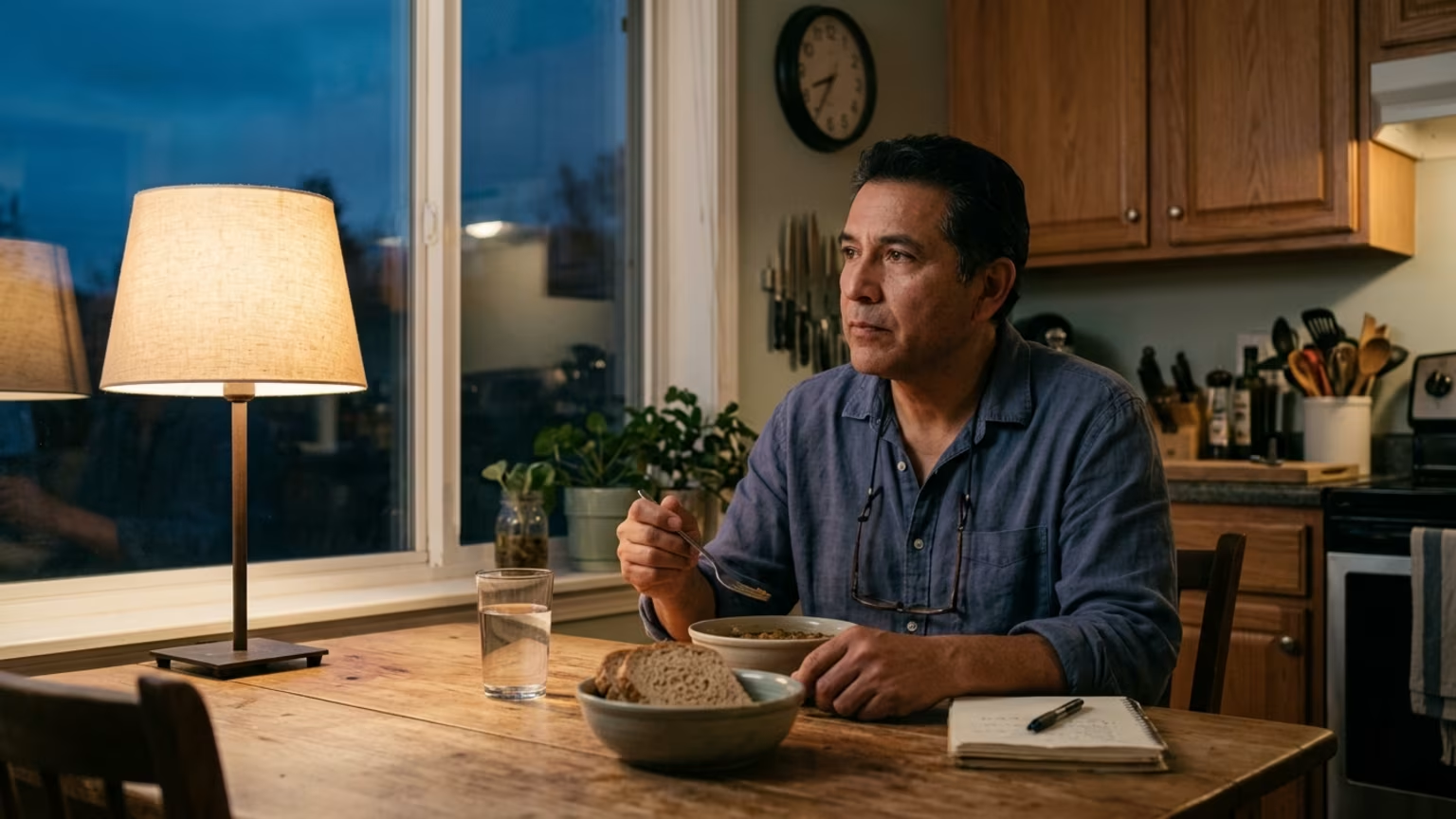
Note the approximate times for your last substantial meal, late snacks, and alcohol consumption. Do not assume that an earlier dinner is automatically better for your rest. Look for a personal pattern between late eating and sleep onset, night awakenings, or morning energy levels. Separate your physical activity from mental stimulation when making these observations.
Evening stimulation involves far more than just artificial light exposure. Cognitive activation, demanding work tasks, emotionally intense conversations, and late-night problem-solving can all make it harder to transition to sleep. The brain requires time to shift from high-alert problem-solving mode to a state of relaxed readiness. If you routinely engage in stressful mental tasks right before bed, your central nervous system remains highly activated.
When conducting your cue audit, change only one timing variable at a time to keep the experiment interpretable. For example, keep your bedtime broadly similar while making morning light more consistent for several consecutive days. Later, you can test whether dimmer evening lighting or moving demanding work tasks earlier changes the result. Use simple outcomes to measure success, such as your perceived restoration and daytime energy on a basic scale.
Look for repeated associations rather than drawing conclusions from a single night of observation. A stressful day, a mild illness, or an unusual meal can easily overwhelm the effect of your light exposure or wake time. Treat a pattern that recurs across several comparable days as far more informative than one unusually good or bad night. The ultimate purpose is to reduce uncertainty and support recovery.
Avoid treating this observation process as a rigid clinical treatment plan. Light can influence timing, but it is not an automatic cure for every sleep issue. In a randomized trial of 219 Australian women, cognitive behavioral therapy for insomnia improved symptoms, whereas bright-light therapy did not improve insomnia or fatigue. If tracking your daily cues causes stress, drop the audit entirely and focus solely on maintaining a steady wake time.
Aligning your wake time, light exposure, and daily routines creates a reliable biological rhythm that fundamentally protects your ability to recover and maintain daytime energy.
Struggling with conflicting advice about caffeine, exercise, naps, routines and sleep environments frequently leaves tired adults paralyzed by rigid evening rules. This immense pressure to perform rest perfectly often makes falling asleep harder, and Relaxopia translates the necessary clinical science so you can adjust your daily timing cues without anxiety. Explore Resources
Stay connected for research-led guidance on sleep quality, stress, circadian rhythm, recovery, fatigue and everyday energy. Clear ideas for adults 35+ who want to sleep better, recover more fully and feel more capable through the day.




Explore practical guidance on sleep, stress and recovery without chasing every new hack, device or promise.
explore the blog