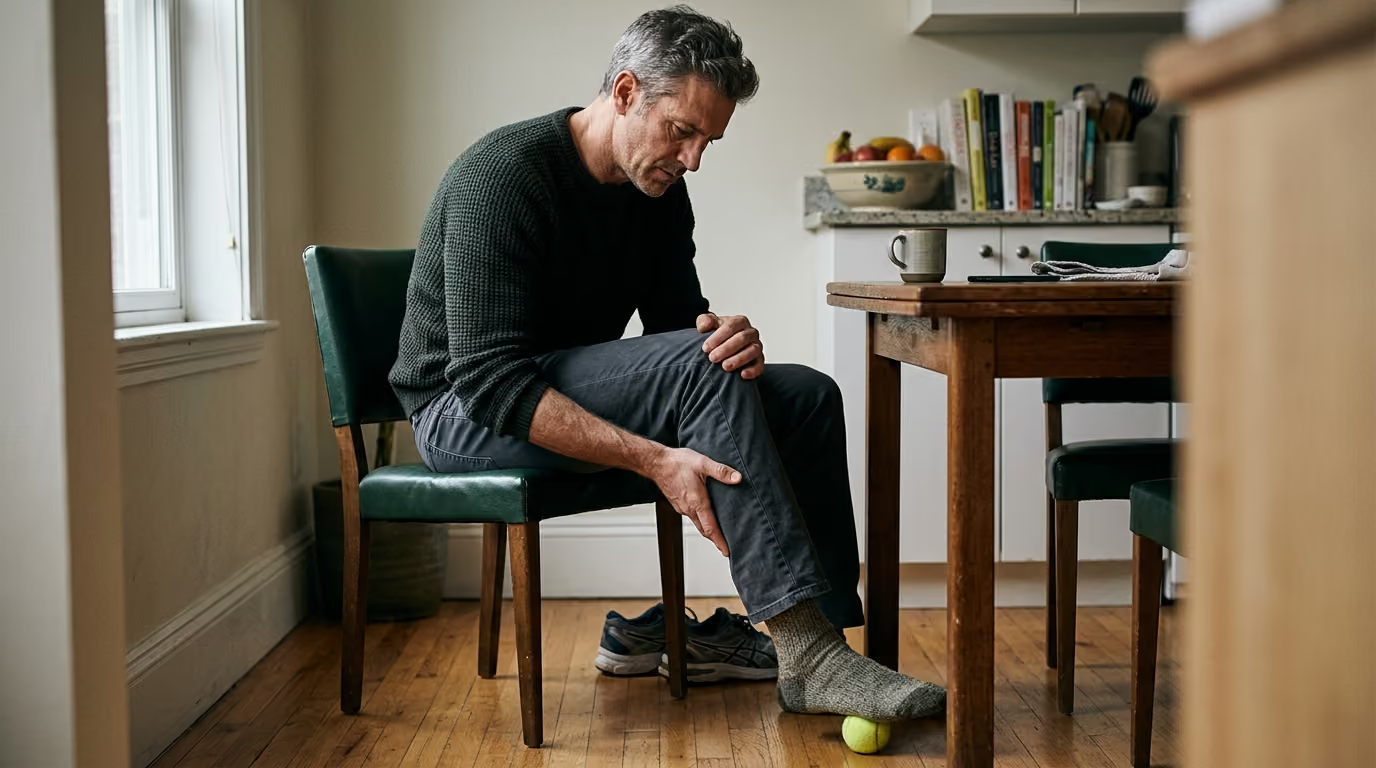

Six daily steps using light exposure, meal timing, and physical activity help synchronize your internal body clock for deeper sleep and steady daytime energy.





A circadian zeitgeber is any external or behavioral signal that synchronizes your internal biological rhythms with the 24-hour solar day. The term comes from the German words for "time" and "giver." Zeitgebers are not quick fixes or productivity tricks. They are the physiological inputs that keep cellular clocks throughout your body aligned with the external environment.
Your body contains a central pacemaker in the brain and peripheral clocks in almost every tissue and organ. Without regular cues, these internal clocks drift away from local time. This guide breaks down the science of circadian synchronization, ranks daily cues by physiological strength, and provides a layered approach to stabilizing your schedule.
Research from the National Institutes of Health confirms that human physiology follows internal cycles lasting approximately 24 hours. The central clock sits in the suprachiasmatic nucleus, or SCN, within the hypothalamus. The SCN coordinates daily fluctuations in body temperature, hormone secretion, digestion, and sleepiness.
The primary pathway for central synchronization is the retinohypothalamic tract. Specialized cells in the retina detect light and send electrical signals straight to the SCN. This makes the environmental light-dark cycle the dominant input for the central biological clock.
Biological timekeeping is not restricted to the brain. Peripheral tissues, including the liver, heart, skeletal muscle, and gut, operate their own self-sustaining cellular clocks. These peripheral networks rely on both neural signals from the SCN and systemic cues such as nutrient intake and physical activity.
When internal rhythms match the solar environment, the process is called entrainment. Entrainment requires repeated, reliable exposure to daily cues. Without these signals, the human internal rhythm tends to run slightly longer than 24 hours in most adults.
The strength of scientific evidence varies across different daily inputs. The evidence supporting light exposure as the primary circadian driver is robust across decades of clinical trials. The evidence for non-light cues like food timing and exercise is growing, but human trials show they function mainly as secondary or peripheral synchronizers.
Circadian alignment directly dictates the quality of your nocturnal rest and daytime energy. Sleep propensity is governed by two interacting forces: homeostatic sleep pressure and the circadian alerting system. Sleep pressure builds steadily during waking hours, while the circadian drive sends alerting signals that peak during the late afternoon and decline toward night.
When your biological clock falls out of sync with your schedule, these two systems conflict. You may experience strong homeostatic fatigue yet find your brain fully alert at bedtime. You can learn more about how internal pacing changes with age in this review of midlife shifts in circadian rhythms.
Circadian timing also regulates core body temperature and the release of cortisol and melatonin. Under normal conditions, melatonin rises in dim light roughly two hours before habitual sleep onset. Core body temperature drops during the night, reaching its lowest point roughly two hours before waking.
If your daily signals are erratic, this temperature drop and hormonal sequence flatten out. A blunted circadian amplitude often translates to fragmented sleep, groggy mornings, and afternoon energy crashes. Coordinated daily signals stabilize these biological curves, making sleep deeper and daily focus more predictable.
Circadian cues operate in a clear hierarchy rather than as equal partners. Treating all lifestyle factors as equally powerful leads to confusion and wasted effort.
Environmental light sits at the top of the hierarchy. The SCN responds directly to photon density reaching the retina, making light the primary mechanism for shifting the central clock. No dietary choice or exercise routine can override the presence of bright light at an inappropriate biological time.
The sleep-wake schedule functions as the primary behavioral frame. Your wake time establishes the exact moment morning light enters the eyes, when digestion starts, and when physical movement begins.
Nutritional timing acts as a metabolic cue for peripheral organs. While food intake has minimal direct influence on the central SCN, it coordinates cellular rhythms in the liver, pancreas, and gastrointestinal tract. Eating on an irregular schedule can set peripheral organ clocks against the central clock in the brain.
Physical activity serves as a reinforcing cue. Exercise influences peripheral clocks in skeletal muscle and temporarily elevates core body temperature. Social interactions, work demands, and ambient temperature provide subtle organizational layers that support the primary cues.
The biological response to light depends entirely on internal circadian phase. This relationship is described by the circadian phase response curve. Light exposure received near waking shifts the internal clock earlier, which is known as a phase advance. Light exposure received late in the evening or during the biological night shifts the clock later, which is known as a phase delay.
Outdoor morning light provides exceptional illumination intensity compared to standard indoor fixtures. Clear outdoor sunlight can deliver between 10,000 and 100,000 lux, while typical residential lighting ranges from 100 to 500 lux. Clinical protocols documented in circadian literature often utilize 30 to 60 minutes of bright light near the scheduled wake time to encourage an earlier schedule.
Reducing illumination during the final hours of the evening is equally important. Bright indoor lighting before bed suppresses natural melatonin synthesis and delays the circadian phase. Overhead fixtures in kitchens and bathrooms are common sources of high-intensity exposure late at night.
Blue wavelengths of light trigger melanopsin-containing retinal ganglion cells most efficiently. However, overall photon intensity, exposure duration, and timing across the entire visual spectrum influence circadian signaling. Focusing exclusively on blue light while sitting under high-intensity ceiling lights fails to protect evening circadian phase.
Specialized blue-light filtering lenses have gained wide commercial popularity, but objective research urges caution. A 2025 systematic review analyzing double-blind crossover trials found no statistically significant improvements in sleep onset latency, total sleep time, or sleep efficiency from wearing blue-light glasses. Lowering the overall ambient illumination in your home remains the most reliable strategy for protecting evening rest.
Food intake acts as a non-photic time signal that communicates directly with metabolic organs. When you consume nutrients, the digestive tract, liver, and pancreas adjust their metabolic machinery to process carbohydrates, fats, and proteins. These peripheral clocks contain the same molecular feedback loops as the SCN but respond primarily to feeding cycles.
Consuming calories during the biological night can trigger internal desynchronization. In this state, the central clock in the brain follows the solar light cycle while liver and gut tissues respond to unexpected midnight food intake. Maintaining a predictable first meal and avoiding large late-night dinners keeps peripheral metabolic clocks aligned with the central pacemaker.
Physical movement provides another secondary time signal. Contracting skeletal muscle produces metabolic byproducts, shifts cellular energy balances, and elevates core body temperature. Research indicates that moderate exercise performed in the morning or early evening can reinforce the active phase of the circadian cycle.
The timing of physical activity must remain practical. Early evening workouts can promote a phase advance in some individuals, whereas intense workouts right before bed may delay sleep by elevating core temperature and sympathetic nervous system tone. If your schedule only permits late-day workouts, maintaining regular timing is still preferable to remaining sedentary.
Realigning your circadian system works best through a structured progression. Making small, reliable changes to the most powerful cues produces better outcomes than overhauling every habit simultaneously.
Choose a realistic wake time that you can maintain across both workdays and free days. Your wake time serves as the anchor for the rest of your daily biological cues. Shifting wake times by several hours on weekends introduces circadian disruption, often called social jetlag. For practical steps on setting this foundation, read about the wake-time first sleep reset method.
Step outside into natural daylight within 30 to 60 minutes of waking. Aim for 10 to 30 minutes of outdoor exposure on clear mornings, or up to 45 minutes on heavily overcast days. Do not stare directly into the sun. If natural outdoor light is unavailable, a dedicated light therapy box delivering 10,000 lux at a safe viewing distance can provide an effective alternative.
Structure your meals so that the majority of caloric intake occurs during your active daylight hours. Aim to eat your first meal at a roughly consistent interval after waking. Keep evening dinners moderate in size and conclude eating at least two to three hours before bedtime to allow core temperature to drop.
Incorporate physical activity into your morning, afternoon, or early evening. A brisk 20-minute walk in natural daylight combines two reinforcing zeitgebers into a single habit. If you participate in high-intensity cardiovascular or resistance training, complete these sessions earlier in the day when possible.
Dim overhead household lights two hours before your target bedtime. Shift to low-placed lamps with warm, low-wattage bulbs to reduce total retinal light exposure. Lower cognitive stimulation by stepping away from demanding work tasks, intense arguments, and activating media. You can explore structured strategies in this guide on managing bedtime mental overload.
Establish a quiet period before sleep that permits psychological and physiological detachment. Learning how to come down from a demanding day supports the natural drop in heart rate required for deep sleep. Keep your bedroom as dark as possible throughout the night using blackout curtains or a comfortable eye mask.
Circadian synchronization does not occur in a biological vacuum. Age, lifestyle constraints, occupational demands, and individual chronotypes alter how your body processes daily time signals.
Night-shift workers face conflicting zeitgebers on a daily basis. Natural sunlight and social schedules demand daytime wakefulness, while occupational duties require nocturnal alertness. Night workers can protect their sleep by wearing dark sunglasses during the morning commute home, maintaining complete bedroom darkness during daytime sleep, and scheduling meals at predictable intervals relative to their shift.
Chronotype reflects an individual's innate biological preference for earlier or later sleep timing. Evening chronotypes possess an internal rhythm that runs slightly longer, making them prone to phase delays. Morning chronotypes have shorter intrinsic cycles and naturally wake early. Evening chronotypes benefit from strict morning light exposure and aggressive evening light reduction to prevent their internal phase from drifting too late.
As adults pass age 35 and enter middle age, the crystalline lens of the eye gradually yellows, filtering out a portion of short-wavelength environmental light. The amplitude of endogenous melatonin production also tends to decrease over time. Adults in this age group require more intentional daylight exposure during the morning to achieve the same circadian synchronizing effect.
Geographic location and winter seasons dramatically alter natural light availability. High-latitude winters offer limited morning sunlight, which can delay circadian phase and contribute to low daytime energy. Incorporating artificial bright-light devices in the morning can maintain a stable circadian signal during periods of reduced seasonal daylight.
While circadian biology is grounded in extensive research, popular wellness culture often overstates what lifestyle changes can achieve. Understanding the boundaries of the evidence prevents unrealistic expectations.
A primary limitation in the literature is the scarcity of direct human clinical trials on non-photic zeitgebers. While rodent models demonstrate that meal timing can entrain internal organs, human studies remain smaller and less definitive. Food intake is a valuable metabolic coordinator, but it cannot override the powerful signaling of environmental light on the central SCN.
Another common pitfall is the commercial promotion of targeted tools as standalone solutions. Blue-light filtering glasses, specialty sunrise alarm clocks, and rigid chronotype diets are frequently marketed with dramatic claims. The broader evidence indicates that basic environmental changes, such as going outside in the morning and dimming home lighting at night, deliver far more consistent results than specialized gear.
Finally, circadian interventions cannot resolve every sleep complaint. Severe insomnia, persistent nighttime awakenings, and unrefreshing sleep often stem from primary medical conditions rather than simple circadian misalignment. Assuming that every sleep problem can be solved with morning sunlight risks delaying proper medical evaluation.
Certain sleep disruptions require clinical diagnosis and supervised medical care. If you experience severe difficulty maintaining a normal schedule despite consistent behavioral adjustments, an underlying circadian rhythm sleep-wake disorder may be present.
The American Academy of Sleep Medicine classifies several intrinsic circadian disorders:
Clinical management of these conditions often involves precisely timed bright light therapy and low-dose melatonin administration. Melatonin acts as a phase-shifting agent rather than a standard sedative. Because the timing and dosage of light and melatonin determine whether the clock shifts earlier or later, these protocols should be supervised by a board-certified sleep specialist.
You should also seek professional evaluation if your sleep difficulties are accompanied by loud snoring, observed breathing pauses, gasping for air, restless leg sensations, or severe daytime fatigue. These symptoms indicate conditions such as obstructive sleep apnea or restless legs syndrome, which require specific diagnostic testing and clinical management.
No. Blue-light filtering lenses do not block all biological light inputs. Total lux, environmental brightness, and exposure duration across the visible spectrum still send alerting signals to the brain. Dimming overhead lights and utilizing low-wattage ambient lamps remains far more effective than wearing specialized glasses in a brightly lit room.
If you must wake before dawn, turn on standard indoor lights to begin your morning routine, but step outside for natural light as soon as the sun rises. If you consistently wake long before sunrise during winter months, a medical-grade light therapy box providing 10,000 lux can supply the necessary morning signal.
Not necessarily. While intense late-night workouts can elevate core body temperature and delay sleep onset for some individuals, moderate evening exercise does not universally impair sleep quality. If late evening is your only available time to move, maintaining a consistent exercise schedule is far better than remaining inactive.
The internal circadian clock shifts gradually. Most healthy adults can adjust their biological phase by roughly 30 to 60 minutes per day when applying consistent morning light, regular wake times, and evening darkness. Expect a substantial schedule shift to take several days to two full weeks of consistent habits.
A synchronized biological clock is built on clear, predictable signals delivered in the right sequence every day. By anchoring your wake time, seeking morning sunlight, keeping meals consistent, and dimming evening lights, you provide your body with the coherent environmental information it needs to support deep sleep and steady daily energy.
Stay connected for research and practical guidance on sleep, stress, circadian rhythm and recovery. Clear ideas for adults 35+ who want better rest, steadier energy and more resilient days.



Explore practical guidance on sleep, stress and recovery without chasing every new hack, device or promise.
explore the blog