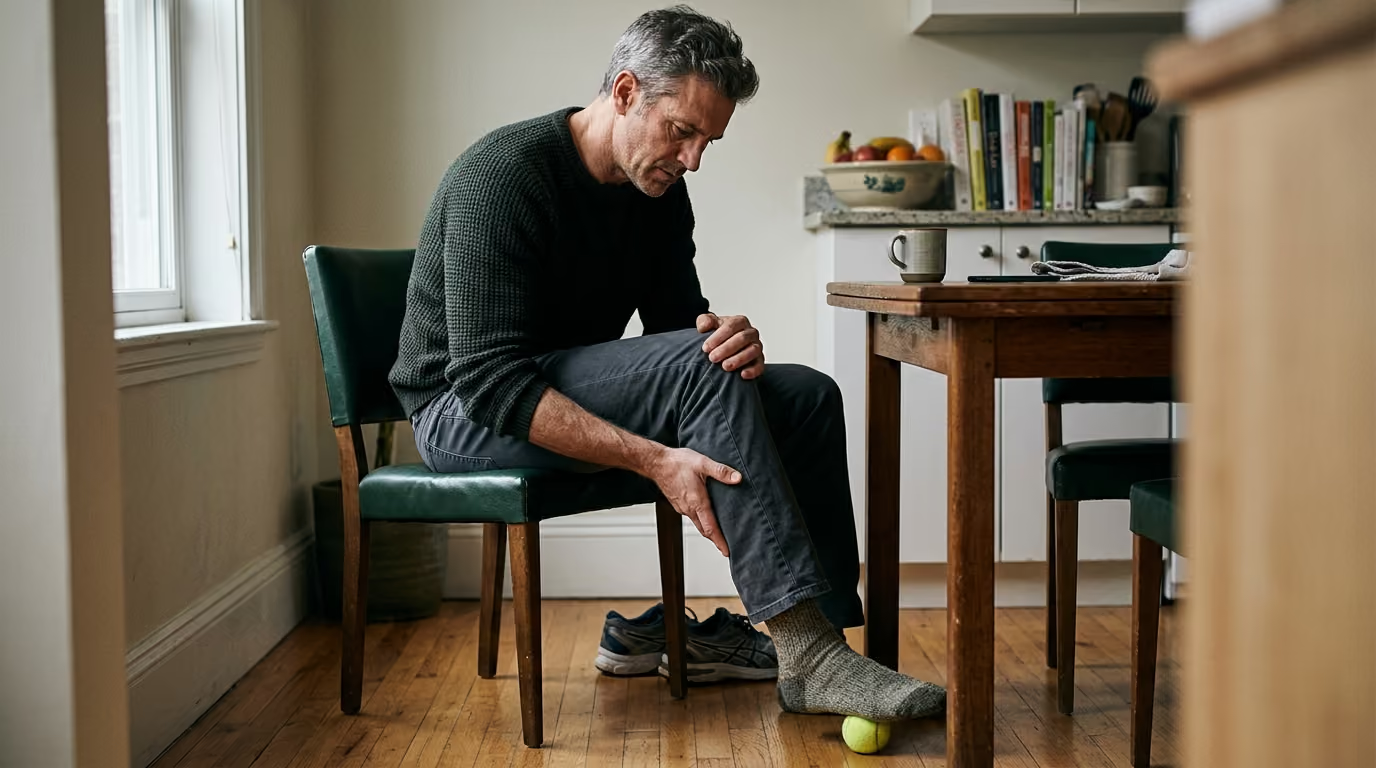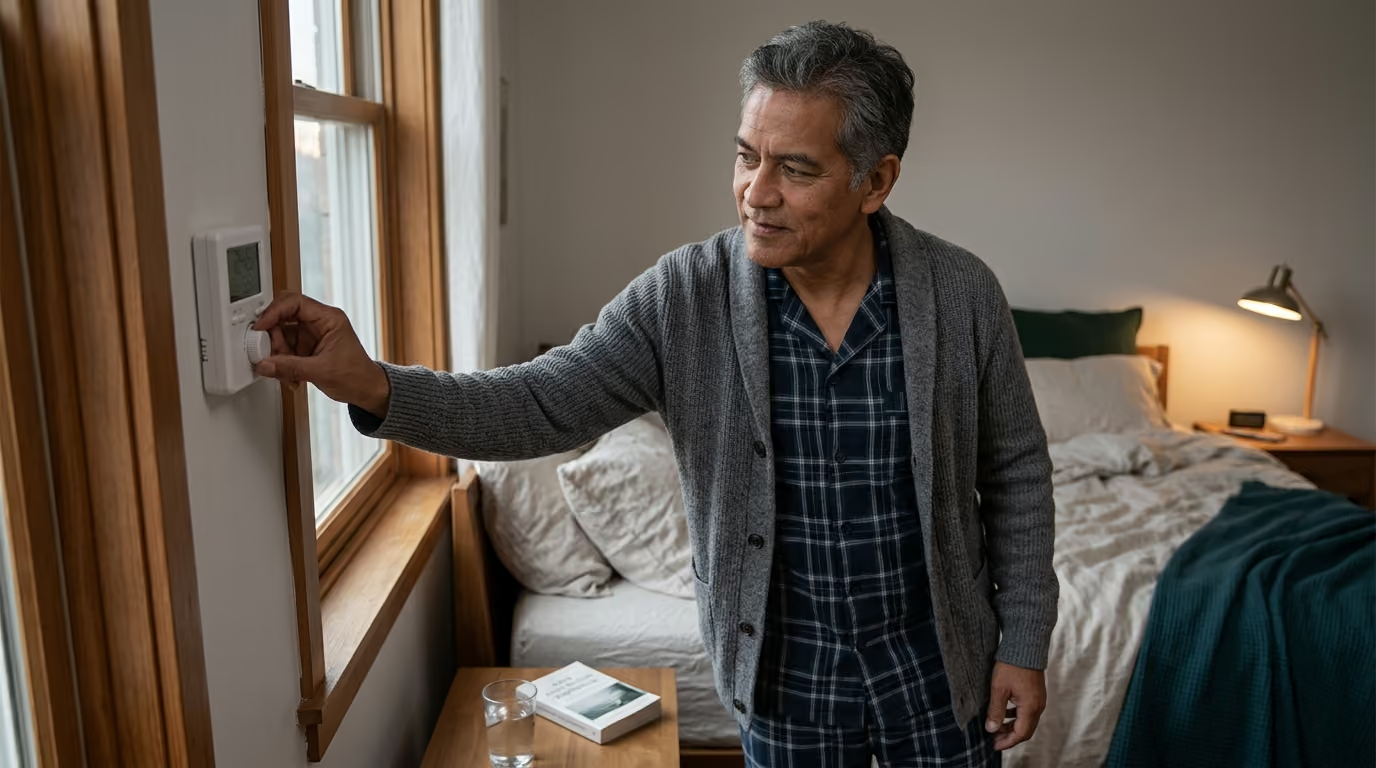

A warm bedroom feels comfortable initially, but clinical evidence shows that cooler ambient air combined with breathable bedding improves overall sleep architecture.





If you have ever searched online for why you wake up sweating at 3:00 a.m. or why setting your thermostat to 65 degrees Fahrenheit leaves you shivering with cold feet, you are not alone. Bedroom temperature is one of the most frequently adjusted environmental factors in sleep hygiene. Yet popular health advice often presents a single rigid thermostat setting as a universal law for every human body.
The reality is more nuanced. Credible research demonstrates that thermal comfort during rest depends on a combined system: room air temperature, surface radiation, humidity, mattress heat retention, clothing, and individual biological differences. A room setting that promotes deep rest for a young athlete may cause frequent awakenings for a cold-sensitive older adult.
This guide breaks down the peer-reviewed science behind nocturnal thermoregulation, bedroom climate control, and sleep architecture. You will examine what large population studies say about heat and sleep continuity, how bedding materials change your actual sleep microclimate, and how to set up an evidence-based trial in your own home without spending thousands of dollars on marketed cooling gadgets.
Your body does not maintain a flat internal temperature across twenty-four hours. Instead, human biology follows a pronounced circadian rhythm in core body temperature. Internal temperature reaches its peak in the late afternoon and begins a natural decline roughly two hours before your habitual bedtime.
This evening cooling process is not passive. Your brain signals peripheral blood vessels in your hands, feet, and lower limbs to dilate, a mechanism known as distal vasodilation. By flushing warm blood to your extremities, your body releases internal heat into the surrounding air. This increase in skin temperature relative to your torso creates a biological marker called the distal-proximal gradient. Research confirms that a widening distal-proximal gradient strongly correlates with rapid sleep onset and natural drowsiness.
If your bedroom environment is too hot, the physical temperature gradient between your skin and the room air narrows. Your body loses the ability to shed internal heat efficiently. Consequently, core body temperature remains elevated, which can delay sleep onset and disrupt normal transitions into deep rest.
Conversely, if your bedroom is excessively cold, peripheral blood vessels constrict sharply to conserve core heat. This vascular constriction can cause cold hands and feet, bodily tension, and autonomic arousal that makes falling asleep equally difficult. Sleep thermoregulation relies on achieving a state of thermoneutrality, where your body maintains its required core temperature drop without triggering active sweating or active shivering.
Thermoregulation also shifts across different sleep stages. During Non-Rapid Eye Movement (NREM) sleep, including slow-wave deep sleep, your body retains automatic temperature control mechanisms such as sweating and shivering. During Rapid Eye Movement (REM) sleep, these autonomic thermoregulatory responses become suppressed. Because your brain loses much of its involuntary temperature control during REM sleep, your body becomes far more sensitive to external ambient room temperatures during the early morning hours when REM sleep predominates.
Understanding these biological systems helps clarify why thermal comfort directly impacts your overnight recovery. You can read more about how internal biological timers interact with evening tiredness in our analysis of why dual biological systems trigger late night alertness spikes.
Scientific literature does not point to a single magic number for every bedroom, but strong research patterns exist across large population datasets and clinical trials. Broadly, evidence confirms that elevated temperatures disrupt sleep continuity far more severely than moderate cold.
A comprehensive study analyzing over 3.75 million nights of wearable device data examined how ambient temperature shifts affect real-world sleep metrics. The findings revealed a direct, step-by-step correlation between rising bedroom temperatures and reduced sleep quality between 60 degrees Fahrenheit and 85 degrees Fahrenheit.
Specifically, the study established the following statistical relationships per degree Fahrenheit increase in room temperature:
While a few seconds of extra wakefulness per degree sounds minor, cumulative temperature shifts during summer heatwaves can easily translate into twenty to thirty minutes of lost sleep per night. A separate systematic review examining thirty-six original studies on indoor environmental conditions found that 81 percent of published papers concluded that higher ambient temperatures directly caused poorer sleep outcomes.
However, clinical research also shows that age alters these thermal dynamics significantly. A community-based study evaluating older adults discovered that sleep was most efficient and restful at ambient temperatures between 20 degrees Celsius and 25 degrees Celsius (68 to 77 degrees Fahrenheit). When room temperatures for these older participants rose from 25 degrees Celsius to 30 degrees Celsius, sleep efficiency suffered a clinically relevant drop of 5 to 10 percent.
These contrasting data points illustrate why generic headlines can be misleading. Younger adults with higher metabolic rates and heavier duvets often thrive in cooler rooms around 17 to 19 degrees Celsius. Older adults, or individuals with reduced muscle mass and altered vascular responsiveness, often experience superior sleep continuity in rooms that are several degrees warmer. Exploring the broader scientific consensus on bedroom environments can clarify how ambient conditions fit into overall rest, as outlined in our overview of sleep environment, habits, and evidence-based technology.
To apply thermal research effectively, you must distinguish between your thermostat setting and your actual operative sleep environment. A wall thermostat measures air temperature at a single fixed location, often in a hallway or near a doorway. Operative temperature incorporates radiant heat from surrounding windows, uninsulated walls, ceiling surfaces, and nearby electronic devices.
Several critical factors alter how room air temperature affects your body:
Humidity dictates your body's ability to evaporate sweat. In dry conditions, sweat evaporates rapidly, cooling the skin efficiently. In high relative humidity (above 60 percent), sweat pools on the skin without evaporating, creating a sticky, uncomfortable microclimate that prevents effective heat loss. Research indicates that a broader ambient room temperature range of 17 to 28 degrees Celsius (62 to 82 degrees Fahrenheit) remains thermally acceptable only when relative humidity stays strictly between 40 percent and 60 percent.
Stagnant air creates an insulating thermal boundary layer of warm, moist air directly around your body. Gentle air velocity from a fan breaks up this boundary layer, promoting convection and sweat evaporation. This mechanism makes a room at 24 degrees Celsius feel several degrees cooler without lowering the actual air temperature.
Mattresses constructed from dense, non-porous memory foam trap body heat and reflect it directly back into your torso. In contrast, traditional innerspring mattresses or open-cell latex options permit air circulation underneath your body. A hot mattress can completely negate a cool room setting.
Your duvet, top sheet, and blankets create a closed microclimate. If your bedding insulation value is high, a cool room temperature of 16 degrees Celsius (61 degrees Fahrenheit) simply forces your body to heat the trapped microclimate air under the duvet to roughly 30 degrees Celsius. You sleep inside the microclimate, not in the open room air.
Because of these environmental modifiers, establishing your ideal setup requires viewing 17 to 19 degrees Celsius (60 to 67 degrees Fahrenheit) as an initial starting baseline rather than an absolute rule. If you tend to run cold, or if you prefer lighter bedding, setting your room to 19 or 20 degrees Celsius may yield better sleep continuity.
Many consumer wellness brands advertise specialized "cooling" fabrics made from synthetic polymers or plant-derived fibers. Evaluating these commercial claims requires examining how textile properties influence microclimate physics.
A systematic review examining nine eligible clinical studies on sleepwear and bedding fibers revealed that fabric choice undeniably impacts thermal comfort and sleep quality. However, the review found no single fabric fiber that proved universally superior for every sleeper in every climate. Instead, fabric performance depends on three distinct physical characteristics:
Air permeability measures how easily air moves through woven or knitted fabric. Highly permeable fabrics, such as loose-weave cotton or linen, allow trapped heat to escape into the room air. Dense, tightly woven synthetic fabrics can trap warm air, increasing microclimate humidity regardless of ambient room settings.
Moisture management involves two different fabric behaviors. Natural protein and cellulose fibers like wool and cotton absorb moisture vapor directly into their inner fiber structure, keeping skin dry until the fabric becomes saturated. Synthetic performance fibers do not absorb moisture inside the fiber; instead, they pull liquid sweat along the outer fiber surface to evaporate quickly. For a light sleeper who perspires moderately, natural breathable fabrics often maintain a stable, comfortable microclimate without feeling damp.
Thermal Overall Grade (TOG) measures the insulating effectiveness of duvets and blankets. A heavy winter duvet may carry a rating of 10.5 to 13.5 TOG, whereas a light summer blanket sits around 2.5 to 4.5 TOG. Mismatched TOG ratings are a primary cause of middle-of-the-night awakenings. If your duvet is rated for winter conditions, lowering your room thermostat to extreme cold settings creates an unnecessary battle between your air conditioner and your blanket.
Layering offers a far more controllable strategy than relying on a single heavy duvet. Using a breathable top sheet paired with one or two light, removable blankets allows you to fine-tune your microclimate insulation during the night without altering the master thermostat setting. This flexibility is particularly helpful when managing broader sleep challenges, as discussed in our research guide on practical habits for persistent insomnia.
Seasonal shifts demand flexible thermal management strategies. Trying to force identical thermostat numbers during mid-winter freezes and peak summer heatwaves often leads to excessive energy consumption and compromised sleep quality.
High summer temperatures represent the greatest thermal threat to sleep continuity. When ambient room air remains elevated overnight, passive cooling becomes impossible without active environmental management.
Public health guidance from the World Health Organization (WHO) outlines clear safety parameters for managing summer heat inside homes. WHO guidelines recommend keeping indoor living spaces below 32 degrees Celsius during the day and below 24 degrees Celsius (75 degrees Fahrenheit) at night during heatwaves. These public safety thresholds protect vulnerable individuals from thermal distress, though optimal sleep comfort for healthy adults usually sits several degrees lower.
To maintain a comfortable bedroom during hot weather without overworking cooling systems:
Winter sleep problems rarely stem from actual room freezing. Instead, they are usually caused by over-activated central heating systems and dry indoor air.
Central heating frequently drops indoor relative humidity below 30 percent. Dry air irritates nasal passages, causes throat dryness, and increases nocturnal awakenings. Furthermore, heating vents blowing warm air directly across a bed can artificially elevate skin temperature, triggering sudden sweating under heavy winter duvets.
A practical winter approach involves setting your thermostat to drop automatically to 17 or 18 degrees Celsius (62 to 64 degrees Fahrenheit) an hour before bedtime. To prevent cold feet from triggering vascular constriction, wear clean, loose-fitting cotton socks to bed. Warm feet promote peripheral vasodilation, helping your core body temperature drop smoothly even in a crisp, cool room.
The wellness marketplace is filled with high-priced consumer technologies designed to regulate sleep temperature. These range from smart thermostats and bedside microclimate sensors to active liquid-cooled mattress toppers and phase-change fabrics. Evaluating these tools requires separating established physiological principles from aggressive marketing claims.
Active cooling systems circulate temperature-regulated water or air through a thin mattress pad, allowing users to dial in precise surface temperatures between 55 and 115 degrees Fahrenheit.
A systematic review of personal comfort systems found that localized heating and cooling units generally improve subjective thermal comfort and sleep acceptability, particularly for individuals sharing a bed with different temperature preferences. However, the objective physiological data remains mixed.
A 2025 randomized crossover trial specifically evaluated a commercial temperature-controlled mattress cover over multiple weeks of use. The trial recorded no statistically significant improvements in objective sleep efficiency, total sleep time, or physiological biometrics compared to neutral control conditions.
While individual users who sleep exceptionally hot frequently report high satisfaction, current scientific evidence does not support presenting thousand-dollar active cooling pads as medical necessities for standard sleep improvement.
Phase-change materials (PCMs) absorb thermal energy when heat rises, transitioning from solid to liquid at a microscopic level to absorb excess warmth. When skin temperature drops, the material solidifies again, releasing stored heat.
While PCM pillows and mattress toppers feel cool to the touch when you first lie down, their heat-absorption capacity is finite. Once the material reaches thermal equilibrium with your head or torso (often within twenty to forty minutes), the cooling sensation fades. They offer modest assistance for initial sleep onset, but rarely solve persistent middle-of-the-night overheating.
Consumer wearables and smart rings track skin temperature variations and estimate sleep stages. While these devices provide interesting personal data, their temperature sensors measure peripheral wrist or finger skin temperature rather than internal core temperature.
A wearable can help you spot broad correlations between a hot room and increased restless movements. However, consumer trackers cannot isolate room temperature from other variables such as alcohol consumption, late meals, stress, or caffeine. Treat wearable metrics as informal clues rather than diagnostic facts. Learn more about evaluating personal sleep architecture in our overview of better sleep quality and sleep research.
Thermal needs vary across demographic groups, biological conditions, and living arrangements. Rigid recommendations fail when applied without considering these individual factors.
As human bodies age, peripheral vascular sensitivity declines, metabolic rates drop, and perception of ambient temperature changes. Older adults are less likely to notice dangerous ambient heat gain during warm months, yet are more susceptible to sleep disruption from cold drafts.
Research consistently indicates that adults over 65 often achieve their best sleep efficiency in rooms between 20 degrees Celsius and 25 degrees Celsius (68 to 77 degrees Fahrenheit). For older sleepers, forcing a 16 degree Celsius (61 degree Fahrenheit) environment can lead to joint stiffness, cold extremities, and frequent awakenings.
Menopausal hot flashes and night sweats originate from altered neurochemical signaling in the hypothalamus, which narrows the body's thermoneutral zone. Sudden surges of heat and sweating can occur regardless of how cool the bedroom is.
For individuals experiencing vasomotor symptoms:
When two people share a bed, individual thermal preferences frequently clash. One partner may radiate significant body heat and request a cold room, while the other partner experiences cold extremities and discomfort.
Rather than forcing one partner to suffer, couples can resolve thermal conflicts through targeted microclimate adjustments:
Using dual single-sized duvets (the standard Scandinavian bedding method) allows each partner to choose their ideal weight and warmth without compromising the room's base temperature.
Adjusting your bedroom environment should be a calm, methodical process. Do not make drastic thermostat changes overnight or buy expensive cooling products immediately. Follow this simple fourteen-day trial protocol to identify your optimal thermal zone.
Purchase an inexpensive standalone digital room thermometer and hygrometer. Place it directly on your nightstand at mattress height, rather than relying on your hallway thermostat.
For three nights, keep your routine unchanged. Log the following metrics each morning:
Before adjusting your central thermostat, optimize your bedding microclimate:
Evaluate whether microclimate changes alone resolve your sleep awakenings.
If you still wake up feeling uncomfortably warm or cold, begin adjusting your room thermostat in small steps:
Stop adjusting once you achieve consistent overnight thermal comfort without sweating or shivering. If you are exploring broader behavioral changes alongside room adjustments, review our practical guide on habits for daily performance and fatigue management.
While optimizing bedroom temperature improves sleep continuity for many people, thermal adjustments are not a cure-all for clinical sleep disorders. It is essential to distinguish between environmental discomfort and underlying medical concerns.
Persistent night sweats that completely drench sleepwear and bedsheets, occurring repeatedly regardless of a cool room, warrant evaluation by a qualified healthcare professional. Drenching night sweats can stem from endocrine imbalances, medication side effects, chronic infections, or autoimmune conditions rather than bedroom climate.
Similarly, adjusting your thermostat will not solve chronic insomnia, loud snoring, witnessed breathing pauses, or severe daytime exhaustion. Conditions such as obstructive sleep apnea, restless legs syndrome, and clinical circadian rhythm disorders require formal medical assessment and targeted therapies. Environmental optimization supports healthy sleep, but it does not replace professional medical diagnosis.
Use this practical checklist to evaluate and refine your bedroom environment this week:
Stay connected for research and practical guidance on sleep, stress, circadian rhythm and recovery. Clear ideas for adults 35+ who want better rest, steadier energy and more resilient days.



Explore practical guidance on sleep, stress and recovery without chasing every new hack, device or promise.
explore the blog