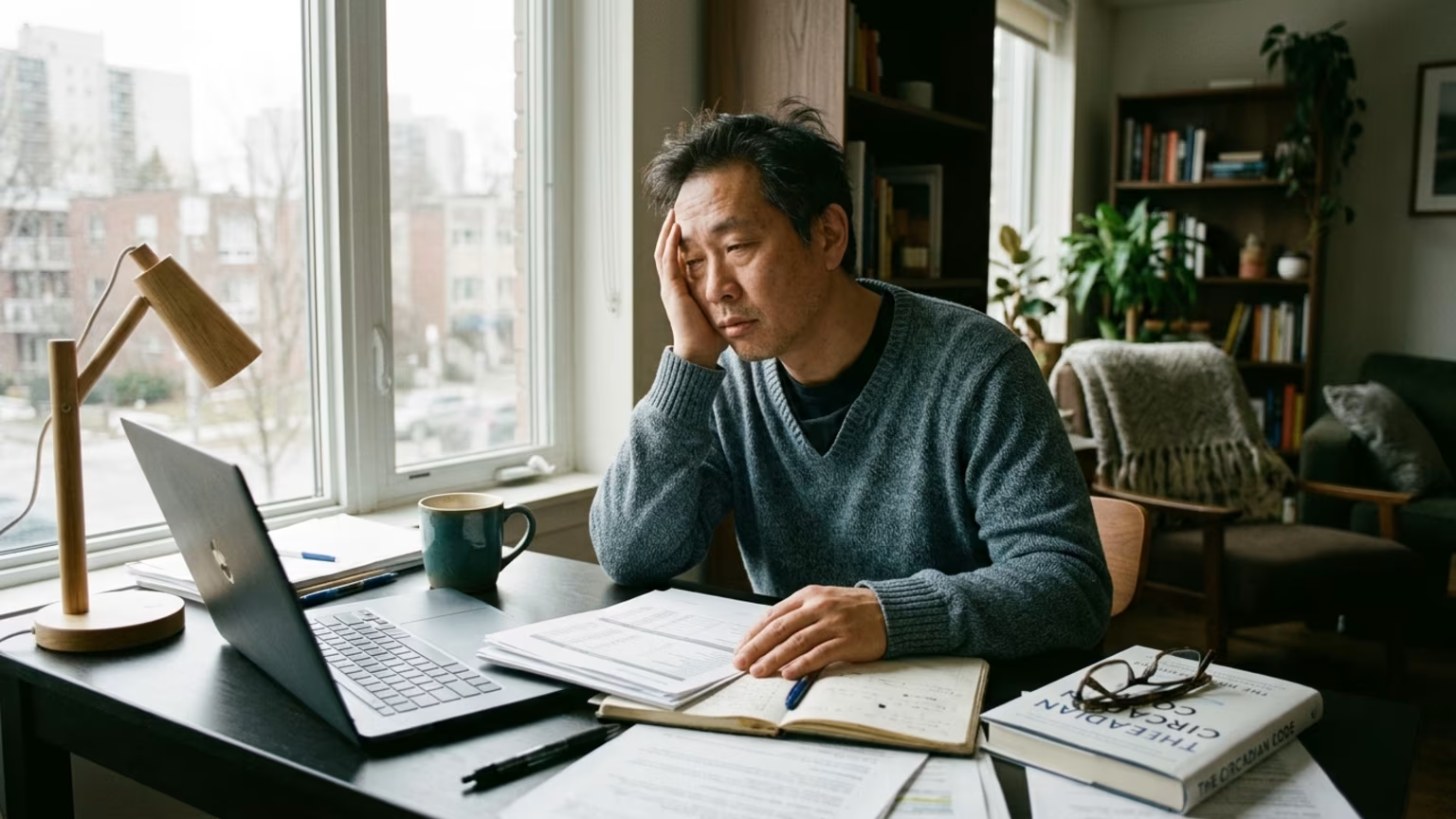

Understand why you crash in the afternoon but feel completely awake at night. Read how sleep pressure and circadian rhythms interact to affect adult recovery.





The evening energy rebound is the frustrating experience of feeling exhausted in the mid-afternoon but suddenly alert late at night. This pattern reflects a temporary misalignment between accumulating physical sleepiness and a rising wakefulness signal from your biological clock. When these two internal systems clash, adults often struggle through a mid-afternoon work meeting only to feel wide awake hours later. Understanding this dual biological process explains why a late-night burst of energy does not actually mean your body has recovered.
It simply means a powerful biological alert is temporarily masking your physical need for rest. Many adults in their late thirties and beyond experience this biological shift acutely as their daily responsibilities grow. Caregiving, professional demands and household management create incredibly long days that require constant focused attention. When the house finally gets quiet at night, the sudden rush of energy can feel like a rare opportunity to catch up on chores.
It feels highly logical to assume that an early afternoon slump means you need another coffee. It also feels perfectly logical to assume that feeling wired at midnight means you are naturally a night person. The reality is far more tied to your underlying physiological systems. Rather than viewing this daily pattern as a failure of discipline, it is better understood as a predictable interaction of internal timing systems.
The human body manages daily energy through the continuous interaction of two distinct biological forces. The first system is homeostatic sleep pressure, which tracks how long you have been awake. The second system is circadian alerting, which operates on a roughly twenty-four-hour cycle. When they fall out of sync with your schedule, they create the afternoon crash and the subsequent evening rebound.
Sleep pressure is a powerful biological drive that builds continuously from the exact moment you wake up. As the day progresses, specific chemical compounds accumulate in the brain to signal how much work the body has done. This gradual buildup creates a steadily rising physical need for rest. By the early afternoon, that pressure has been accumulating for several uninterrupted hours.
This biological reality makes tiredness much easier to feel after midday, regardless of how much caffeine you consume. The longer you stay awake, the heavier this homeostatic pressure becomes.
Your circadian system does not produce a flat, constant level of alertness throughout the day. It actively helps counter rising sleep pressure during the morning hours. The early afternoon then brings a natural period of greater sleep propensity for many adults. People commonly describe this natural physiological lull as the post-lunch dip.
Interestingly, this afternoon dip is not entirely dependent on what you eat for lunch. EOS Health summarizes laboratory evidence suggesting that the afternoon alertness dip can persist even when participants fasted and skipped lunch. This finding supports a strong intrinsic circadian component rather than just a simple physiological reaction to digesting a heavy meal. Your internal clock naturally lowers its alerting signal during this specific window of the day.
The evening can bring a surprising and temporary increase in daytime alertness. This happens because the circadian wake signal becomes significantly stronger later in the day. It strengthens even while your physical sleep pressure continues to build underneath. This late-day peak creates a specific window where wakefulness can temporarily outcompete the subjective sensation of exhaustion.
This creates a sudden burst of mental energy just when you intended to go to bed.
The exact timing and intensity of this afternoon slump and evening rebound vary significantly among individuals. A 2026 study published in Sleep Advances reported different sleep-pressure patterns by chronotype. This research noted that later chronotypes were more affected by sleep timing. A late-night burst of energy does not automatically prove a person is permanently built for late nights.
Recent sleep loss, artificial light exposure and behavioral conditioning all heavily influence the subjective experience. Furthermore, physical activity plays a role in how these internal biological clocks synchronize. Exercise is increasingly studied as a behavioral regulator of circadian function. Moving your body provides an external environmental cue that helps align your internal alerting systems.
Finding a consistent physical routine that fits your life can help smooth out the sharpest peaks and valleys of daily energy. This practical alignment is a core focus for anyone looking to support their daily performance without chasing perfection.
Stress adds a heavily complicating second layer to this physiological foundation. During the daylight hours, external professional demands keep a person functioning and moving rapidly forward. Once the house becomes quiet and the daily urgency fades, mental attention frequently turns toward unfinished tasks and future obligations. Daily stress has been associated with racing thoughts at bedtime, which can contribute heavily to disrupted sleep.
This intense cognitive arousal can make you feel entirely alert even when your physical body is utterly exhausted. When you combine the natural circadian evening surge with stress-induced racing thoughts, the result is a potent mental state that actively fights off sleep.
A mild early-afternoon lull is a perfectly normal feature of healthy human biology. A late-night second wind can occasionally happen after a highly stimulating day. A biological system that is chronically out of balance will present clear physical symptoms that disrupt daily life. Midlife adults should pay attention when normal daily fatigue crosses the line into severe impairment.
Recognizing these physical signs is a highly practical step toward achieving better sleep quality. One clear sign of clinical dysfunction is persistent nighttime wakefulness accompanied by physical agitation. In a small insomnia study, higher evening cortisol was associated with more nighttime awakenings. Research on chronic insomnia has firmly linked evening and nighttime cortisol patterns with these sudden awakenings.
This does not mean that every single instance of late-night alertness is a severe cortisol problem. It simply indicates that an overactive stress system can severely disrupt your biological ability to stay asleep. It is also highly useful to recognize that a stressed system does not always mean constant arousal. One physiological study challenged the idea that people with insomnia necessarily remain hyperaroused throughout the entire day.
The biological mismatch often becomes most visibly apparent specifically during the quiet evening transition. Severe cognitive arousal is another symptom of a struggling recovery system. When your mind races with worry the moment your head hits the pillow, your wind-down process is failing. This mental spinning prevents the smooth transition from wakefulness to deep rest.
Excessive afternoon sleepiness that makes it difficult to function is a serious red flag. Clinician guidance from Ubie lists several underlying medical factors that can intensify afternoon sleepiness. These include inadequate sleep, sleep apnea and thyroid problems. Low iron, dehydration, blood-sugar fluctuations and certain medications can also play a role.
If you are struggling to stay awake while driving or working, the appropriate response is to seek immediate medical evaluation rather than normalizing the exhaustion.
Repairing this biological rhythm does not require extreme optimization or adopting rigid wellness protocols. The most effective baseline habit is actively protecting the evening sleep opportunity through consistent timing and structured transitions. You must signal to your nervous system that the performance portion of the day is officially over. This requires a highly deliberate shift in behavior before you actually expect to fall asleep.
The American Academy of Sleep Medicine recommends at least seven hours of sleep for adults. To actively support this necessary baseline, they advise consistent sleep timing plus a dedicated 30-to-60-minute wind-down period. This evening transition should involve actively stepping away from glowing screens, work emails and demanding cognitive tasks that trigger stress. A quiet transition provides the mind a clearly defined boundary between daily stress and nighttime rest.
Reading a physical book, practicing light stretching or lowering the ambient lighting can signal to your nervous system that the day is complete. Treat your afternoon dip as highly useful biological information rather than a personal failure. If the early-afternoon sleepiness is mild, plan lower-demand work or take a brief outdoor walk. You can use natural daylight exposure to gently support your natural circadian alerting signal.
Pushing through with heavy caffeine late in the day only sets the stage for a much stronger evening rebound. Finally, externalize your unfinished professional tasks before your dedicated wind-down routine begins. Writing a brief plan for tomorrow can significantly reduce the need to mentally rehearse responsibilities in bed. This simple boundary helps quiet the cognitive arousal that often fuels the evening rebound.
A highly functioning circadian rhythm relies heavily on these consistent daily behavioral cues.
Addressing the afternoon crash and the late-night wired feeling requires immense patience and behavioral consistency. You cannot force a biological clock to instantly adopt a drastically new schedule. You can firmly control the behavioral cues that tell your body when to be alert and when to rest. By understanding how accumulating sleep pressure and circadian signals interact, you can stop fighting your own biology.
The key takeaway is that the evening energy rebound is simply a temporary biological signal masking your underlying fatigue, and consistent wind-down habits are the most effective way to restore reliable daily energy.
Managing the clash between accumulating physical fatigue and temporary evening alertness requires working with your internal clock rather than forcing sleep. For adults facing difficulty falling asleep or staying asleep, Relaxopia translates credible evidence into clear, practical guidance so you can build routines that support genuine recovery. Explore Resources
Stay connected for research and practical guidance on sleep, stress, circadian rhythm and recovery. Clear ideas for adults 35+ who want better rest, steadier energy and more resilient days.





Explore practical guidance on sleep, stress and recovery without chasing every new hack, device or promise.
explore the blog