

Research associates nighttime light exposure with higher odds of depression. Learn how adjusting your daily lighting habits supports your natural rhythms.





If you or someone you know is in crisis, call 911 for immediate danger. For immediate support, call 988 (press 1 for the Veterans Crisis Line), or text 838255.
In September 2026, Men's Journal reported on a large observational study published in Nature Mental Health regarding the timing of daily light exposure. The report noted an association between greater nighttime light and higher odds of major depression.
The research summarized in the recent news report analyzed health data from 86,772 adults. The average age of the participants in this large cohort was 62.4 years. By tracking the daily habits and medical records of these individuals, the study identified distinct patterns regarding environmental illumination. The core finding revealed that greater nighttime light exposure was associated with 30 percent higher odds of major depression.
At the same time, the research highlighted the potential benefits of morning and afternoon illumination. The data showed that greater daytime light exposure was associated with 20 percent lower odds of major depression. This contrast suggests that the timing of light holds profound significance for daily well-being. The findings point toward a relationship between our physical surroundings and our internal psychological states.
The associations observed in the study extended beyond major depression. The report noted that greater nighttime light was also associated with anxiety, bipolar disorder, psychosis, post-traumatic stress disorder and self-harm. These broad associations suggest that an overly illuminated evening environment might intersect with various forms of mental distress. However, the report did not provide individual effect sizes for these specific additional outcomes.
Observational studies involving tens of thousands of people must account for many variables that could influence the results. The researchers adjusted their data to verify that other common lifestyle factors were not skewing the findings. For instance, shift workers naturally experience highly irregular light patterns that alter their baseline health. By controlling for shift work, the researchers could look specifically at the general population's evening habits.
Controlling for cardiometabolic health is particularly relevant when studying midlife adults. Conditions affecting the heart and metabolism often overlap with sleep disturbances and mood changes. Because the researchers factored this into their analysis, the observed link between evening light and mental health stands out more clearly. The findings remained consistent after accounting for shift work, sleep patterns, urban versus rural residence and cardiometabolic health.
Even with these statistical controls, the study is cross-sectional. This methodology means it identifies associations at a specific point in time rather than establishing a clear cause and effect relationship. The findings do not prove that bright living rooms directly cause depression. Similarly, they do not establish that spending hours in the sun acts as an absolute preventive measure.
The average participant age of 62.4 years reflects a demographic that often experiences shifts in natural sleep architecture. Older adults tend to spend less time in deep restorative sleep phases compared to younger individuals. This biological reality makes the older population particularly sensitive to environmental factors that might fragment their rest. While this age limits how confidently these results can be applied to young adults, it makes the findings highly relevant for midlife recovery.
The reported associations do not show that light is the only relevant factor in depression. They simply highlight a significant pattern that warrants further consideration in how we structure our daily environments. The researchers provided a physiological rationale for the patterns they observed in the population data. They explained that daytime light serves to strengthen our natural circadian rhythms.
When the eyes receive bright natural light during waking hours, the brain receives a clear signal that it is time to be active and alert. Conversely, bright light during the evening hours can potentially interfere with these natural rhythms. The body relies on the transition from light to dark to regulate various biological processes. When artificial lighting overrides the natural darkness of the evening, the internal clock can become confused.
This circadian interference might contribute to the observed associations with mental health challenges over time. The relationship between evening light and neurological health is an active area of ongoing research across different populations. News-Medical recently reported on a separate 2026 study examining this dynamic in a specific clinical group. This separate study monitored 225 adult outpatients with schizophrenia to observe how their nighttime light exposure affected their sleep patterns.
The researchers used objective monitoring tools over a seven-day period. Participants wore wrist actigraphy devices to track their physical movement and rest cycles. They also used bedside photometers to measure the actual light levels in their sleeping environments. Using both devices allows researchers to gather objective biological data rather than relying on personal memory.
The results from this clinical sample demonstrated poorer objectively measured sleep among participants in the highest nighttime-light group. Those exposed to the most evening light experienced 10 percent lower sleep efficiency. They also registered 55.6 fewer minutes of total sleep compared to individuals in the lowest light group. Furthermore, the highest nighttime-light group experienced longer sleep onset.
Once asleep, they spent 31 more minutes awake after their initial sleep onset. While these specific figures apply only to the schizophrenia outpatient sample, they provide a concrete example of how environmental light can fragment physiological rest.
Understanding the practical application of these findings requires looking at the modern indoor lifestyle. Study co-author Sean Cain described the ideal practical light-dark pattern as "getting bright light in the day and darkness at night." This simple biological requirement is increasingly difficult to achieve in contemporary society. Cain highlighted the extent of our disconnection from natural light cycles.
He noted that people currently spend "around 90 percent of the day indoors under electric lighting." This heavy reliance on indoor environments means that many adults miss the intense brightness of natural daylight while simultaneously overexposing themselves to artificial light after sunset. The study authors see a clear opportunity for accessible lifestyle adjustments based on their observations. They concluded that avoiding light at night and seeking light during the day "may be a simple and effective, non-pharmacological means" of supporting mental health.
They view deliberate environmental lighting choices as a low-complexity tool for maintaining overall well-being. For adults balancing demanding careers and daily household management, the practical takeaway is relatively straightforward. The goal is to create a clearer, more deliberate difference between daytime and nighttime light exposure. You do not need to implement rigid protocols, avoid all screens or spend your evenings in total darkness.
Look for ordinary opportunities to get brighter light during the early parts of the day. If your work or weather limits your outdoor time, try to sit near a window during the morning hours. Taking a brief walk during your lunch break can provide a significant dose of natural light. These small exposures help anchor your circadian rhythm and signal to your body that it is daytime.
The challenge of managing daily light exposure becomes even more apparent during the shorter days of winter. When daylight hours shrink, many adults commute to work in the dark and return home in the dark. During these months, making a conscious effort to seek out midday light becomes a vital part of your daily routine. Taking a short walk outdoors at noon can provide the biological anchor your body needs when morning light is scarce.
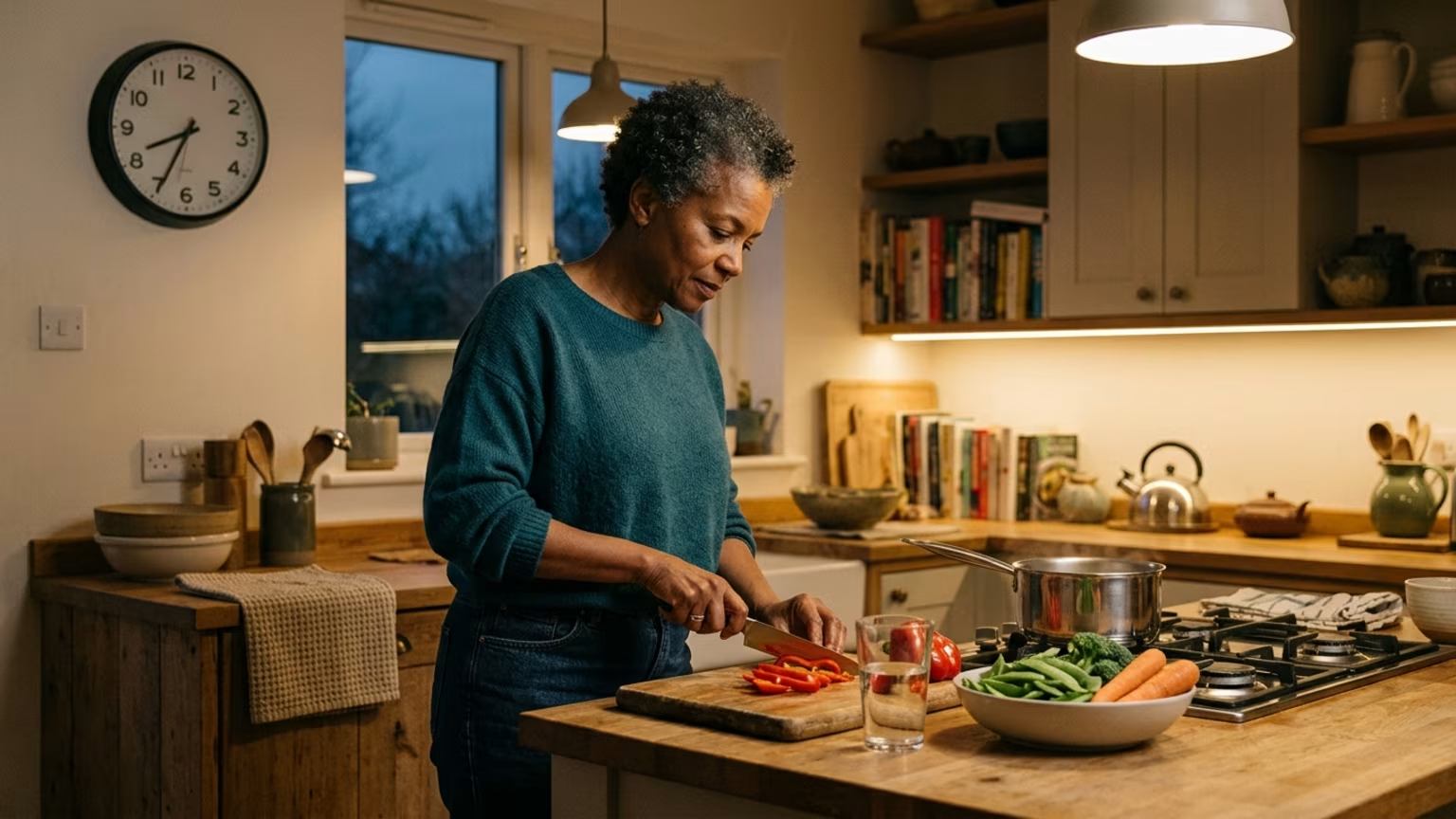
When the evening arrives, actively reduce unnecessary bright artificial light in your home. You can dim overhead light fixtures, switch to warmer table lamps and reduce the brightness on your digital devices. Understanding the basics of room illumination can help you create a physical environment that supports a natural wind-down process. These adjustments help create the biological contrast your body expects.
Upgrading your home environment does not require expensive technology or specialized equipment. Simply changing the bulbs in your bedroom lamps to warmer color temperatures can make a noticeable difference in your evening routine. Using small task lamps instead of bright ceiling fixtures helps create a softer visual environment as bedtime approaches. These basic changes support a natural biological transition without turning your home into a clinical space.
Many adults struggle to disconnect from digital devices in the hours before bed. Rather than viewing this as a failure of discipline, focus on practical harm reduction. You can adjust your evening screen habits by prioritizing less stimulating content and lowering the ambient light in the room. Small, consistent changes are more sustainable than attempting a strict digital ban.
Consistency is often more valuable than perfection when adjusting your daily habits. Occasional late nights in bright environments will not permanently damage your circadian rhythm or ruin your mental resilience. The objective is to build a reliable baseline pattern that your body can depend on for most of the week. Understanding how your internal clock operates allows you to make informed decisions about your routine without unnecessary stress.
It is also vital to recognize the limitations of lifestyle adjustments. Modifying your daily light exposure is a helpful supportive habit, not a clinical treatment. If you are dealing with persistent low mood, chronic sleep disturbance or ongoing psychological distress, treat these as reasons to seek appropriate professional support. A doctor can help determine if changes in your physical energy levels require medical intervention.
As researchers continue to map the connections between our daily environments and our internal rhythms, the conversation around mental resilience is expanding. The data suggests that how we manage our physical surroundings might play a larger role in our psychological well-being than previously thought. Will future approaches to midlife recovery treat the deliberate management of light and darkness as a standard pillar of mental health care, alongside nutrition and movement?
Transitioning from understanding the clinical associations of nighttime illumination to actually modifying your evening environment requires clear guidance on daily habits. By translating credible evidence into practical steps, Relaxopia addresses confusion about circadian rhythm, light exposure and sleep timing so you can align your physical surroundings with your biological needs.
Stay connected for research-led guidance on sleep quality, stress, circadian rhythm, recovery, fatigue and everyday energy. Clear ideas for adults 35+ who want to sleep better, recover more fully and feel more capable through the day.





Explore practical guidance on sleep, stress and recovery without chasing every new hack, device or promise.
explore the blog