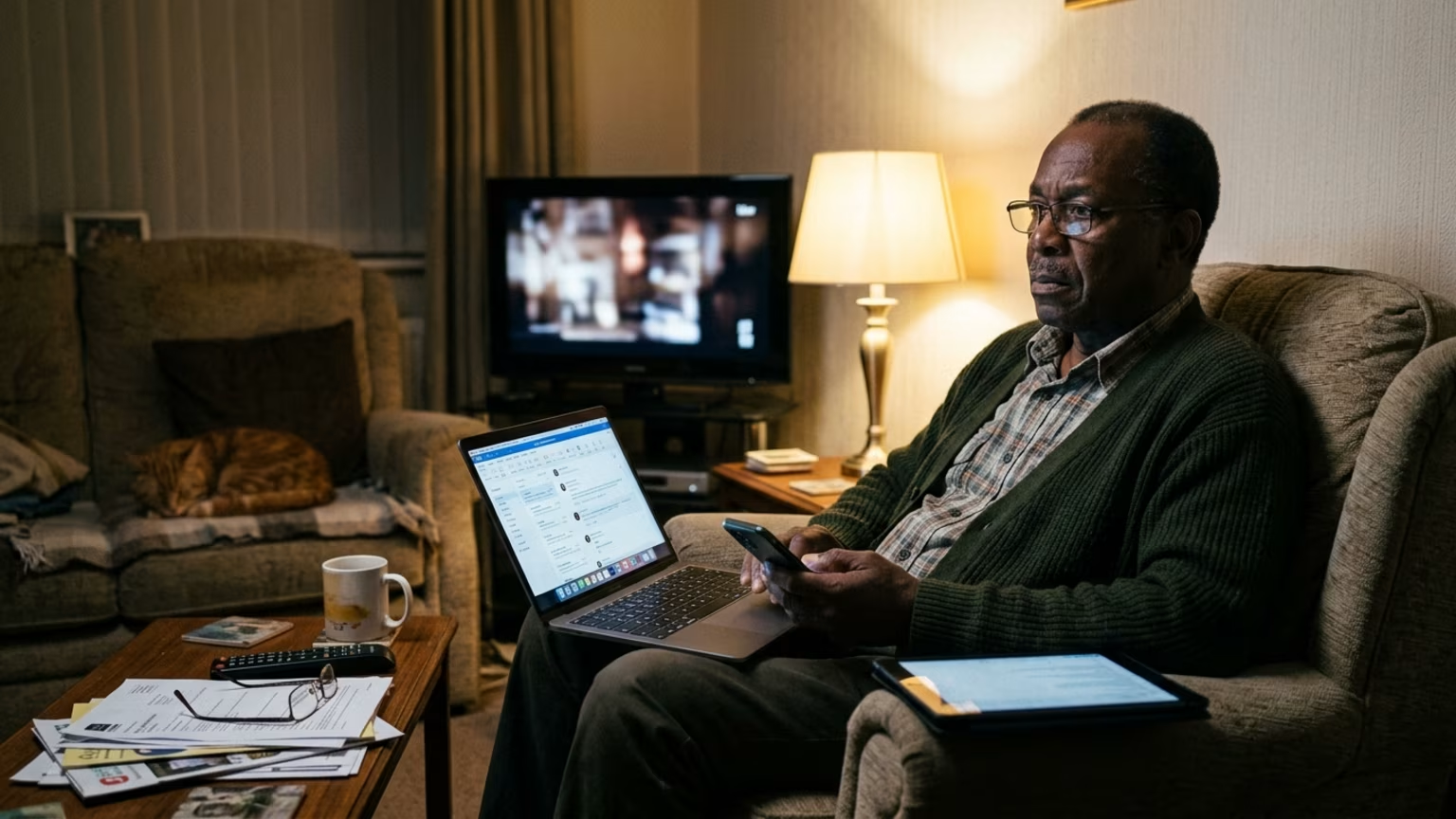

Screen use interferes with rest through light, content, timing, or alerts. Fix your specific sleep barrier with practical habits, not a total digital blackout.





A prominent cultural narrative claims that any evening screen time will ruin your sleep. Popular advice suggests that the blue light from phones, tablets, and televisions acts as a universal biological override. People frequently assume that a quick glance at a device guarantees a restless night. This sweeping belief turns everyday technology use into a source of intense bedtime anxiety.
The clinical reality is far less absolute. A 2024 National Sleep Foundation expert panel did not reach consensus that pre-sleep screen light, or screen use overall, harms adult sleep. This lack of consensus does not mean devices are harmless. It simply reveals that the effect varies by device, brightness, timing, content, individual sensitivity, and study design.
Technology impacts rest through at least four separate pathways rather than a single exposure. Researchers currently identify visible light, emotionally stimulating content, delayed bedtimes, and notification interruptions as the primary mechanisms.
The intense focus on screen brightness stems from a few highly controlled laboratory studies. Researchers wanted to understand how light-emitting screens might alter human circadian rhythms. One influential experiment placed 12 adults in a clinical setting to compare reading methods. Participants read from either a light-emitting e-reader or a printed book before bed across multiple nights.
The e-reader condition was associated with lower evening sleepiness and delayed melatonin secretion. Participants also showed later circadian timing, longer sleep-onset time, and lower next-morning alertness compared with reading a printed book. A separate 22-person randomized crossover study explored prolonged exposure using smartphone games. Healthy adults played games for a full 150 minutes in the evening using either conventional LED displays or blue-light-suppressed screens.
The conventional blue light reduced subjective sleepiness. It also delayed the time to reach 50 percent dim-light melatonin onset. Several hormonal and temperature measures did not differ significantly between the two groups. These small laboratory trials demonstrated a clear biological mechanism.
They proved that bright, close, and prolonged screen exposure can shift human physiology under specific conditions. Popular media then translated these extreme 150-minute laboratory sessions into a rigid, universal rule. The nuance of duration and intensity vanished from the conversation. The resulting advice demanded complete digital disengagement for every adult, ignoring individual sensitivity or real-world obligations.
Technology interferes with evening recovery through multiple overlapping channels. Understanding these separate mechanisms provides a much clearer picture of why certain habits ruin rest while others feel benign. You can use this knowledge to evaluate your own routines and identify specific sleep problems by pattern.
Bright light entering the eyes remains a genuine physiological input. The strongest evidence comes from prolonged exposure held close to the face late at night. Night modes and blue-light glasses act as partial measures at best. They filter out specific wavelengths, but they do not eliminate the other ways a device commands your attention.
The rationale is that prolonged evening light exposure can affect sleep-related physiology. The adult evidence does not support claiming that all screen light is inherently harmful. You must judge the exposure based on its proximity to your face and the total duration. A ten-minute text exchange with a family member is not equivalent to two hours of gaming.
Interactive or emotionally engaging material can affect sleep independently of light color. A heavily dimmed screen can still deliver work messages, breaking news, or argumentative social media posts. This type of content keeps the brain locked in an alert, problem-solving state. Social networking and gaming activate cognitive arousal right when the nervous system should be winding down.
If you struggle with this specific mental overload, the brightness of your device matters far less than the intensity of the information. Emotional activation overrides the natural transition into rest. It forces your nervous system to stay vigilant. A stress-inducing email creates physiological tension that blue-light glasses cannot block.
Sometimes a screen does not directly stimulate the brain or suppress melatonin. It simply distracts you long enough to push your entire routine later into the night. Adults often delay their own rest to reclaim personal time after a demanding day. When the house finally goes quiet, an engaging screen offers a sense of autonomy.
This behavioral pattern means the device simply pushes the schedule backward. This bedtime displacement significantly reduces the time available for biological recovery. The relevant question is not just how long the screen was on, but whether the activity delayed your actual lights-out time. A review summarized an intervention focusing on this exact behavioral delay.
Researchers looked at what happens when adults restrict phone use during the hour before bed. Restricting phone use advanced lights-out by about 17 minutes. It also increased total sleep by about 19 minutes per night. The result is highly useful as an indication that timing and self-control matter.
Short-form video is a particularly plausible example of a content-and-control problem. A 2026 review concluded that immersive or poorly controlled bedtime viewing may promote arousal, bedtime procrastination, and reduced sleep opportunity. Because that evidence is recent, it represents an emerging interpretation rather than settled consensus. However, it aligns perfectly with the everyday experience of adults losing track of time while scrolling.
A fourth pathway involves the unpredictable nature of connected devices. Notifications can trigger automatic checking habits or extend your intended use time. They also create anticipatory alertness, keeping you on edge while waiting for a reply. Crucially, audible or vibrating alerts can interrupt sleep after a person has already gone to bed.
A phone resting on the nightstand combines easy access with a steady stream of unpredictable demands. Notifications add a separate pathway that directly limits your physical rest. A single alert can ruin an otherwise perfect evening routine.
Adults over 35 frequently balance caregiving responsibilities, medical considerations, or on-call professional duties. A complete evening technology ban is rarely practical for this demographic. The clinical alternative is to test which specific component is interfering with your rest. You can implement realistic night-time disruption strategies by running a simple, step-by-step experiment.
Start by silencing all nonessential notifications before your wind-down period begins. Remove the badges and promotional alerts that invite mindless checking. You can keep emergency contacts or priority callers enabled to handle genuine responsibilities. This targeted approach removes unpredictable interruptions while maintaining vital communication.
Charging your phone away from the pillow can also reduce the temptation to check the screen if you wake up briefly. Once notifications are controlled, evaluate the emotional weight of your evening media. Move work emails, stressful news, and intense entertainment to an earlier part of the day. Replace high-arousal scrolling with predictable, low-stakes activities.
If reading helps you relax, choose the least stimulating format that still works for your lifestyle. The goal is to separate interactive demands from your biological rest window. If bedtime procrastination frequently shrinks your rest window, implement a defined stopping point. A small four-week randomized pilot studied 38 bedtime phone users.
Researchers assigned participants either to stop using their phones 30 minutes before bed or to continue as usual. The restriction group reported faster sleep onset, longer sleep, better sleep quality, and lower pre-sleep arousal. Setting a 30-minute transition period is far more achievable than attempting a two-hour digital blackout. The study relied heavily on self-report and changed overall behavior rather than isolating blue wavelengths.
This means the benefit could have come from reduced light, less content stimulation, fewer interruptions, or an earlier bedtime. The exact mechanism matters less than the practical outcome for your daily routine. Use a simple device alarm to mark this transition. Have a quiet alternative activity ready to fill the space.
If you suspect that brightness is still delaying your sleepiness, make targeted adjustments to your physical environment. Lower your device brightness and avoid holding screens inches from your face late at night. You can use night modes as a secondary tool, but do not treat them as a complete cure. If convenient, test a printed book or non-light-emitting alternative for a few nights to see if your daytime energy improves.
You can establish a personalized routine by changing only one variable at a time over a two-week period. Keep your device available for vital communication, but track how specific adjustments affect your rest. First, silence nonessential notifications to eliminate unpredictable interruptions. Track your estimated sleep-onset time for a few nights.
Next, move stimulating content earlier in the evening to reduce mental arousal. If you still struggle to settle down, introduce a 30-minute screen-free period before bed. You can then add lower brightness settings or test a printed-book alternative if light still feels like a contributing factor. Track your bedtime, awakenings, and next-day energy throughout this experiment.
This methodical approach can reveal whether your dominant issue is light, content, timing, or interruptions. The ultimate test of any evening technology routine is how you feel the next day. If you make changes to your screen habits but still feel exhausted upon waking, the core problem might lie elsewhere. Pay close attention to your daily recovery capacity.
If you implement a 30-minute device buffer and silence all notifications but see no improvement, you may need to look beyond technology. Consistent daily strain and accumulated sleep debt can heavily influence your evening rest. If you want to understand these daytime energy problems, you must recognize how screens mask your natural fatigue. By systematically testing the four screen pathways, you eliminate technology as a confounding variable.
This leaves you with a much clearer view of your true recovery needs. The relationship between screens and rest involves much more than a single wavelength of light. Small laboratory experiments highlight genuine biological mechanisms, but they do not justify a sweeping ban on all evening technology. The adult evidence clearly points to a multi-mechanism challenge involving content, timing, light, and interruptions.
By identifying the specific factor interfering with your routine, you can make precise, effective adjustments. You do not need to banish all devices from your home to achieve meaningful recovery. You simply need to align your technology habits with your biological need for quiet, uninterrupted rest.
Feeling tired despite spending enough time in bed frequently leaves adults searching for single variables like blue light to blame. Identifying the true cause of poor rest requires moving beyond sweeping technology bans and looking closely at your real evening habits. Relaxopia translates complex sleep research into clear, practical guidance that helps you manage nighttime interruptions without unnecessary complexity. Explore Resources
Stay connected for research-led guidance on sleep quality, stress, circadian rhythm, recovery, fatigue and everyday energy. Clear ideas for adults 35+ who want to sleep better, recover more fully and feel more capable through the day.





Explore practical guidance on sleep, stress and recovery without chasing every new hack, device or promise.
explore the blog