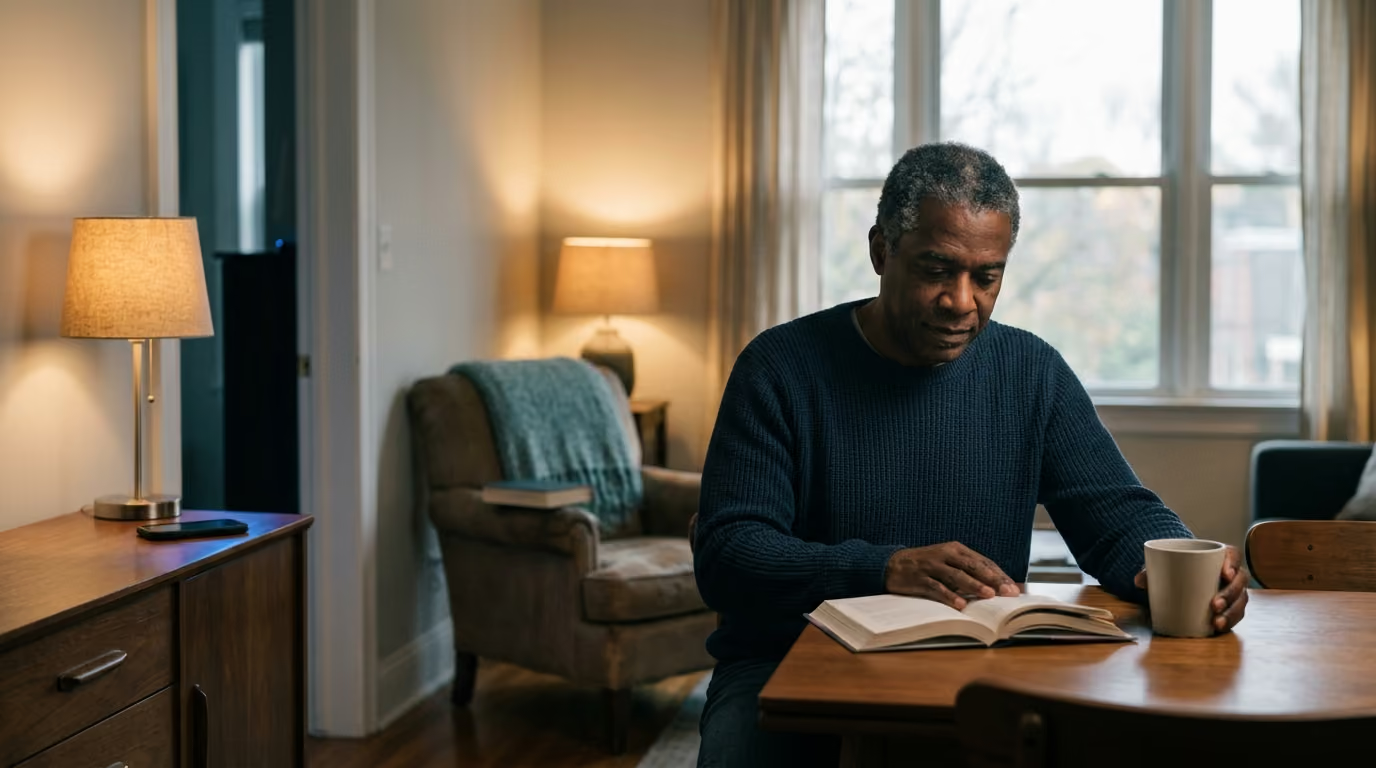

Deeper sleep and reduced evening disruption are achievable by managing screen luminance, lowering digital cognitive arousal, and adopting practical bedtime habits.





Night-time digital disruption is not a personal failure, nor is it proof that modern technology is inherently toxic to human biology. It is the friction between interactive electronic devices and the physiological processes that prepare the brain for rest. A smartphone is not just a source of light. It is a communication hub, an entertainment portal, a workplace terminal, and an open gateway to social connection.
Understanding how devices affect rest requires looking past simple warnings about screen bans. Total abstinence from technology in the evening is rarely realistic for working adults, parents, or caregivers. The goal of this guide is to explain the biological and behavioral pathways that link screens to poor rest. It provides structured, adjustable levels of intervention so you can protect your sleep without abandoning your daily responsibilities.
The body of research investigating electronic media and sleep shows clear patterns across diverse populations. Large-scale epidemiological reviews consistently report an association between higher evening media use and compromised sleep outcomes. The strength and clinical relevance of these findings depend on device type, content, user behavior, and individual physiology.
A 2025 meta-analysis pooling 21 cohort studies with 548,338 participants found that each additional daily hour of screen time was associated with roughly three to five fewer minutes of total sleep. That same analysis linked higher screen use to a 25 percent increase in the odds of experiencing short sleep. A broader review examining 55 publications across more than 41,000 participants from 20 countries found consistent links between electronic media consumption, reduced sleep quality, and elevated sleep complaints.
Large observational studies describe statistical associations across populations rather than direct universal causes for each individual. In a cross-sectional study of American adults, using screens immediately before bed was associated with 48 fewer minutes of sleep per week. Participants in that group showed a 33 percent higher prevalence of poor sleep compared to individuals who avoided pre-bed screens. Among younger demographics, studies in India documented higher odds of sleep problems among participants using smartphones for more than two hours daily, with adjusted odds ratios of 1.55 for adolescents and 1.48 for young adults.
Controlled experimental trials provide clearer insight into the physical mechanisms involved. In a landmark randomized study conducted at Harvard, researchers compared participants reading a light-emitting electronic reader before bed with participants reading a printed book under dim room lighting. Those using the light-emitting reader took longer to fall asleep, experienced reduced evening sleepiness, and exhibited lower total melatonin secretion. Their dim-light melatonin onset shifted more than 1.5 hours later, and they experienced delayed rapid eye movement sleep alongside lower alertness the following morning.
These experimental findings demonstrate that evening light can alter circadian markers under controlled laboratory conditions. They do not mean that every brief interaction with a phone causes an immediate 90-minute circadian delay. The actual effect in everyday life depends heavily on ambient room lighting, screen luminance, viewing distance, and duration of exposure.
The evidence confirms that screen use relates to poorer rest, but the relationship is multifaceted. Light exposure is only one component of the issue. Sleep displacement, emotional engagement, and nighttime notifications often play equal or greater roles in determining how rested a person feels the following day.
To understand how technology affects sleep, it is helpful to look at the underlying biological systems. Falling asleep requires a coordinated reduction in physiological arousal alongside the release of nighttime hormones. Evening screen use can interfere with this transition through five distinct pathways.
The first pathway is sleep displacement. This occurs when screen use simply delays the time a person turns off the lights. A 2025 analysis noted that greater screen time was associated with approximately 13.2 minutes of bedtime delay per additional hour of use. When an activity lacks a natural stopping point, intended bedtimes slip later into the night. This reduces the total window available for rest and shortens recovery periods.
The second pathway involves the circadian rhythm and sleep timing. The master circadian clock located in the brain responds to environmental light detected by specialized retinal ganglion cells. These cells are particularly sensitive to short-wavelength blue light. When exposed to bright artificial illumination in the evening, the brain delays the synthesis of melatonin. This biological shift makes it harder to feel sleepy at your intended hour and can cause morning grogginess.
The third pathway is pre-sleep cognitive and emotional arousal. What you consume on a screen matters just as much as the photons reaching your eyes. Engaging with breaking news, professional disputes, volatile market movements, or contentious social threads triggers the sympathetic nervous system. Heart rate increases, muscle tension rises, and the brain enters a state of heightened surveillance. This state directly opposes the parasympathetic dominance required for deep, restorative sleep.
The fourth pathway is physical sleep fragmentation from alerts and vibrations. Smart devices can wake people directly from lighter stages of sleep. A study examining adolescents found that being awakened by notifications was associated with reduced sleep efficiency and elevated wakefulness after initial sleep onset. Even when total time in bed remained long, the physiological continuity of the sleep cycles was compromised.
The fifth pathway is psychological availability pressure. This is the chronic sensation that one must remain reachable for colleagues, family members, or acquaintances. Carrying this mental load into the bedroom creates anticipatory vigilance. The sleeper never fully relaxes their sensory monitoring, keeping their nervous system primed to respond to subtle sounds or light flashes. Understanding these separate pathways makes it easier to select interventions that target your specific challenges.
The impact of screen use varies considerably between individuals. Two people can look at a display for sixty minutes before bed and experience entirely different sleep outcomes. Several core factors determine how severely technology influences night-time recovery.
Interactive devices like smartphones and computers tend to show stronger negative associations with sleep than passive media like television. An umbrella review examining adolescent technology use noted that smartphones and computers were more consistently linked to delayed bedtimes and prolonged sleep latency than standard televisions. Interactive tasks require decision-making, motor input, and rapid processing. Passive viewing allows cognitive systems to downshift more naturally.
The nature of the media consumed is a major determinant of pre-bed arousal. Watching a familiar, lighthearted program or reading an instructional manual produces mild cognitive stimulation. In contrast, reviewing financial statements, processing contentious work emails, or viewing disturbing news activates threat-detection networks in the brain. When emotional valence is intense, sleep onset is delayed regardless of screen brightness.
The physical distance between the eye and the light source dictates the intensity of retinal light exposure. Inverse-square laws of illumination mean that a handheld phone held ten inches from your face delivers significantly more light to your retina than a television screen situated eight feet away. Reading on a tablet in a pitch-black room maximizes pupillary dilation, increasing the light dose delivered to circadian photoreceptors.
Individual vulnerability to sleep disruption changes across the lifespan. Younger adults and adolescents exhibit higher circadian sensitivity to short-wavelength light. Older adults often experience natural reductions in deep slow-wave sleep and more frequent nocturnal awakenings. For an adult over 35, an interruption caused by an alert can make falling back asleep much harder. People dealing with chronic life stress or mental overload at bedtime find that digital stimulation easily tips them into prolonged wakefulness.
Before changing your evening habits, it helps to identify the exact mechanism causing your sleep difficulties. Trying to fix a content-arousal problem by purchasing blue-light glasses will not yield meaningful improvements. Assessing your patterns across five operational levers clarifies where your boundaries should focus.
Ask yourself if your device is actively pushing back your bedtime. If you frequently tell yourself you will browse for five minutes only to lose forty-five, your primary issue is sleep displacement. The open-ended nature of modern social media algorithms exploits human novelty-seeking tendencies. When apps lack natural termination points, willpower alone is rarely enough to protect your sleep window.
Consider how your eyes and body feel during evening screen use. If you view vivid screens in darkened rooms and struggle with delayed sleepiness, light exposure may be shifting your circadian phase. People who work late under bright monitors often experience delayed tiredness, followed by intense morning grogginess. Addressing luminance and room lighting provides immediate support for this pathway.
Evaluate the psychological state your screen time produces. If your evening media leaves you feeling frustrated, anxious, or mentally occupied with complex problem-solving, arousal is your main bottleneck. This frequently occurs when reading political debates, checking investment accounts, or playing competitive games. Identifying high-arousal content allows you to reschedule those activities to earlier in the day.
Examine what happens after you fall asleep. Do text tones, email chimes, or watch vibrations wake you up during the night? Even if an alert does not wake you fully, the subconscious awareness of incoming messages disrupts sleep architecture. If you find yourself reaching for your phone during normal awakenings to check the time, you introduce light and stimulation that prolongs wakefulness.
Determine whether work expectations or social obligations are keeping you tethered to your device. If you feel uneasy when your phone is in another room, you are experiencing availability pressure. This mindset keeps your nervous system in a state of low-grade operational readiness. Establishing clear communication protocols with colleagues and family helps dismantle this vigilance.
Improving your digital habits does not require discarding all your electronics. Graduated intervention levels allow you to choose a realistic starting point based on your lifestyle, caregiving duties, and professional constraints. You can begin with minor adjustments and advance to more structured boundaries if your sleep challenges persist.
Level 1 is designed for individuals seeking simple improvements without altering their overall schedule. These changes reduce the most disruptive elements of technology while preserving evening device use.
Begin by turning off non-essential notifications. Social media alerts, news updates, and marketing messages should be muted permanently after sunset. Next, move the phone off your physical bed. Keeping the device on a nightstand or desk prevents accidental waking from vibrations.
Dim your screens and activate the built-in warm color settings on your operating system. Shift from open-ended feeds to finite content like a single recorded episode or an article with a clear ending. These small adjustments lower cognitive stimulation and eliminate direct sleep interruptions.
Level 2 introduces a half-hour buffer between active digital consumption and sleep. This period allows physiological arousal to decline and helps the brain recognize the approach of rest.
Thirty minutes before your target bedtime, plug your phone into its charger and step away from it. Use this window for practical evening tasks such as hygiene routines, laying out clothes, or preparing essentials for the morning.
Fill the remaining time with low-demand, non-screen activities. You might read a printed book, listen to a low-key podcast with the screen placed face down, or practice light muscle relaxation. If you must keep your phone in the room for emergencies, configure your device settings so that only direct phone calls from designated contacts can ring through.
Level 3 establishes a robust transition period for adults dealing with substantial daily stress, demanding jobs, or frequent sleep latency issues.
One hour before bed, end all active work communication. Send any final urgent notes and set an automatic status update indicating you are offline until morning. Turn on your phone's scheduled sleep mode to suppress all visual badges and notifications.
Dim the overhead lights in your living environment and rely on low-wattage lamps with warm bulbs. Lowering the overall light level in your home signals your circadian system that night has arrived. Spend this hour reading, conversing, listening to music, or journaling to offload mental tension before getting into bed.
Level 4 provides the highest degree of boundary protection and is especially helpful for people with severe checking habits or frequent middle-of-the-night waking.
Set up a dedicated charging station outside the bedroom, such as in a hallway, kitchen, or home office. Purchase an inexpensive standalone alarm clock so your phone is no longer needed beside your mattress. Remove tablets, laptops, and televisions from the sleeping environment entirely.
By keeping interactive electronics out of your bedroom, you remove the friction of having to resist late-night checking. If you wake up during the night, there is no screen within reach to pull you into active browsing. This clear physical boundary reinforces the bed as a dedicated space for rest and intimacy.
Different lifestyles create distinct digital habits. Looking at realistic scenarios shows how these principles can be adapted to specific daily routines without imposing rigid rules.
Consider an individual who intends to sleep at 10:30 p.m. but frequently finds themselves scrolling social media feeds or video platforms until midnight. Their primary bottleneck is sleep displacement driven by dynamic algorithms with no natural ending point.
For this pattern, wearing blue-light glasses will not solve the core issue. The primary driver of lost sleep is the open-ended nature of the content. A practical solution is to set an automated application timer that closes scrolling apps at 10:00 p.m. and replace that habit with a finite activity, like reading a single chapter of a printed book or listening to a pre-selected 20-minute audio track.
Consider a professional who finishes their formal workday at 6:00 p.m. but continues to check emails, project channels, and work messages until turning off the lights. The issue here is cognitive arousal, lingering responsibility, and the blur between work and recovery.
Receiving an urgent work notification late in the evening activates mental problem-solving and raises heart rate. To protect your sleep, create a firm communication cutoff time. Inform your team that after 7:30 p.m. email is no longer monitored, but you can be reached by a direct telephone call for genuine emergencies. Setting this clear boundary lets you disconnect without fear of missing a critical issue.
Consider a sleeper who wakes naturally at 3:00 a.m. to use the bathroom, picks up their phone on the nightstand to check the time, notices an unread notification badge, and spends the next hour wide awake. Here, the issue is light exposure, cognitive stimulation, and time monitoring during normal awakenings.
Brief awakenings during the night are a normal part of human sleep architecture. Looking at a bright screen introduces light and engaging content that signals the brain to wake up. Moving the phone across the room removes the temptation to browse. An analog clock with a dim or shielded face allows you to check the time without exposing your eyes to a bright display.
Consider a parent, family caregiver, or on-call worker who must remain reachable for genuine emergencies throughout the night. Total disconnection is simply not an option for their life circumstances.
Rather than keeping the phone under a pillow with all alerts active, use customized Do Not Disturb settings. Configure your device to silence all general apps, work notifications, and social messages while allowing repeated calls from specific family members, medical lines, or monitoring systems to ring. Place the device several feet away from the bed. This setup keeps you reliably reachable while protecting your sleep from everyday digital noise.
While research confirms that electronic devices can disrupt sleep, some popular claims outpace the underlying evidence. Distinguishing established facts from early or commercially promoted concepts helps you focus on changes that make a genuine difference.
Amber or yellow-tinted blue-light blocking glasses are often marketed as a simple way to neutralize evening screen use. The scientific evidence supporting them as a standalone solution for sleep issues remains limited and mixed.
A 2025 systematic review analyzing double-blind crossover randomized controlled trials found no statistically significant improvements in sleep-onset latency, total sleep time, sleep efficiency, or wake time after sleep onset from wearing blue-light glasses. The pooled data showed a non-significant reduction of roughly 4.9 minutes in sleep latency and a non-significant increase of 8.8 minutes in total sleep time.
Glasses that filter blue light may reduce eye strain for some individuals and slightly soften light intensity. They do not prevent the emotional arousal caused by an upsetting message, the time lost to late-night scrolling, or the wake-ups caused by notification chimes. Relying entirely on special eyewear while continuing to consume stimulating content late at night is rarely effective.
It is often suggested that having a smartphone physically present in the bedroom damages sleep quality on its own, regardless of whether it makes a sound. Controlled findings on physical proximity alone show mixed results.
In an objective study tracking device use and sleep metrics, the presence of a smartphone on a nightstand was not independently linked to poor sleep when the device stayed silent and untouched. Sleep was compromised when users were woken by notifications and actively interacted with the device.
Moving your phone out of the bedroom is a practical strategy because it adds friction and stops habitual checking. It is a behavioral tool rather than a biological requirement. If you have the discipline to silence your device and leave it untouched until morning, having it in the room does not automatically harm your sleep architecture.
Much of the broader literature on screen use and sleep consists of cross-sectional surveys asking participants to estimate both their daily screen time and their average sleep quality. These studies show clear correlations, but they cannot prove direct causation.
People experiencing work stress, chronic worry, or life challenges often sleep poorly and turn to screens as a coping mechanism. In those instances, screen use is a symptom of stress rather than the primary cause of insomnia. Recognizing this nuance helps you avoid treating screen rules as a total cure for complex life strain.
Adjusting evening digital habits can help resolve delayed bedtimes and light-induced alertness. If severe sleep problems continue after making these changes, it is important to understand the limits of sleep habits alone.
The American Academy of Sleep Medicine states in its clinical practice guidelines that basic sleep hygiene should not be used as a standalone treatment for chronic insomnia disorder in adults. Chronic insomnia involves conditioned arousal, persistent sleep anxiety, and altered homeostatic sleep drive. These factors require structured behavioral interventions.
If you experience difficulty falling asleep or staying asleep at least three nights per week for three months or longer, and it affects your daytime energy, focus, or mood, consult a qualified healthcare professional. The primary evidence-based intervention for chronic insomnia is Cognitive Behavioral Therapy for Insomnia, also known as CBT-I.
CBT-I uses techniques like stimulus control, sleep restriction, and cognitive reframing to restore the biological connection between your bed and restorative rest. If you want to understand these methods, explore our guide on practical habits for persistent insomnia or our overview of better sleep and sleep quality.
Physical symptoms like chronic snoring, gasping for breath, morning headaches, or severe restless sensations in your legs require a formal medical evaluation. These are markers of primary sleep disorders, such as obstructive sleep apnea or restless legs syndrome, which cannot be resolved by adjusting phone settings.
Using a smartphone in bed is typically more disruptive than watching a television across the room. A handheld phone sits only inches from your eyes, delivering a much higher dose of light to your retinas. Smartphones also require active physical interaction, swiping, and decision-making, which elevates cognitive and emotional arousal.
A television is positioned several feet away, which substantially reduces the intensity of the light reaching your eyes. Television viewing is also passive, allowing mental arousal to decline more easily. Watching disturbing news or intense thrillers on television can still delay sleep, but standard programming viewed from across a dim room is generally less disruptive than browsing an interactive smartphone in bed.
Night modes and dark color themes can soften screen brightness and reduce short-wavelength light exposure. They are helpful tools, but they cannot replace a proper digital wind-down.
Dimming your display or warming its colors does not stop an upsetting message, an engaging video, or work tasks from activating your nervous system. These features also do not prevent sleep displacement when you continue scrolling past your intended bedtime. Display adjustments should be treated as minor aids alongside stopping rules and notification boundaries, rather than a complete solution.
How quickly you notice a difference depends on which disruption pathway was your primary challenge. If your main issue was physical sleep interruption from notifications, silencing your alerts can improve your sleep continuity within one to two nights.
If your primary challenge was circadian delay or chronic cognitive arousal, giving your brain time to adjust is important. A research trial evaluating bedtime mobile phone restriction found measurable improvements in sleep duration, pre-sleep arousal, and daytime memory across a four-week intervention. Give any new evening routine at least two to three weeks of consistent practice before deciding whether it works for you.
If you wake up during the night and find it difficult to fall back asleep, reaching for an interactive phone can prolong your wakefulness. The sudden light exposure and active content signal your brain that it is time to start the day.
Instead, keep the room dim and engage in a low-demand, quiet activity. You might listen to a familiar audiobook or podcast with the screen face down, or read a printed book under a soft reading lamp. If you feel restless or frustrated after twenty minutes in bed, move to a comfortable chair and rest quietly until you feel naturally drowsy again. This prevents your brain from associating your bed with wakeful frustration.
Evening screen disruption is driven by light exposure, cognitive stimulation, notification interruptions, and lost sleep time. Identifying which of these pathways affects you most allows you to put practical, sustainable boundaries in place to protect your rest.
Stay connected for research and practical guidance on sleep, stress, circadian rhythm and recovery. Clear ideas for adults 35+ who want better rest, steadier energy and more resilient days.



Explore practical guidance on sleep, stress and recovery without chasing every new hack, device or promise.
explore the blog