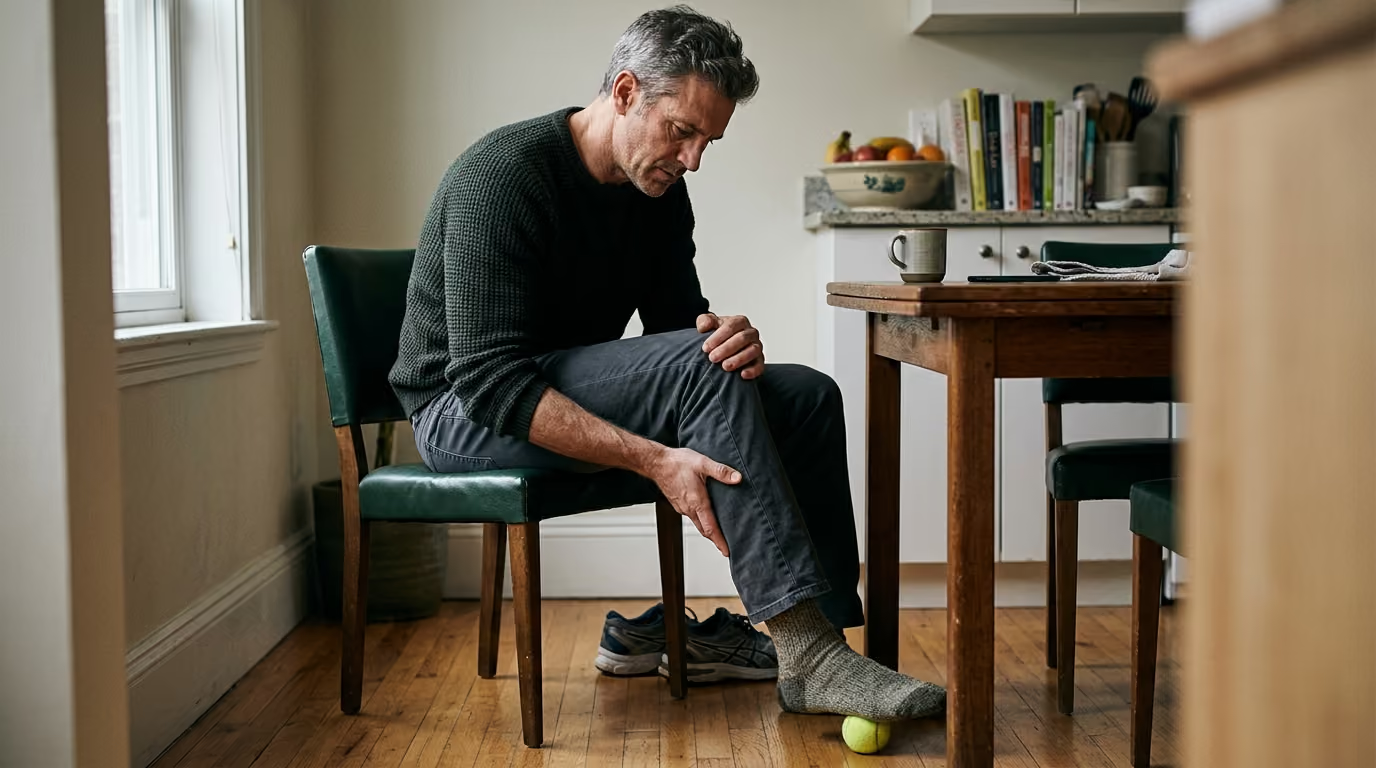

Waking up completely drained after eight hours of sleep points to distinct fatigue, sleepiness, and burnout patterns that require specific physiological classification methods.





If you are in immediate danger, call 911. For 24/7 support, call or text 988 and press 1 for the Veterans Crisis Line, or text 838255.
Why do you feel tired even after eight hours in bed? If you have typed this exact question into a search engine, you know how frustrating vague wellness advice can be. The internet often tells exhausted adults to drink more water, take a supplement, or practice generic self-care.
The real answer requires precise categorization. Feeling tired is not a single biological state. It is an umbrella term covering several distinct physiological and psychological breakdowns.
This guide provides a definitive framework to differentiate physical fatigue, daytime sleepiness, cognitive fatigue, emotional exhaustion, loss of motivation, and occupational burnout. By identifying the exact mechanism behind your low energy, you can apply targeted solutions instead of guessing.
Scientific literature establishes that sleepiness and fatigue are distinct clinical phenomena with separate mechanisms and treatments. Sleepiness describes an elevated sleep propensity, meaning a biological pressure to transition from wakefulness into sleep. Fatigue describes a diminished capacity to sustain mental or physical performance regardless of sleep drive.
A comprehensive meta-analysis of disease-related fatigue published in Scientific Reports demonstrated that fatigue affects roughly 49.4 percent of individuals across 88 distinct medical conditions. That research examined 214 datasets and highlighted how often physical fatigue appears without excessive sleepiness. Another systematic review in Nature indicated that older adults experience a fatigue prevalence of 42.6 percent, with perceived physical fatigability reaching 58.2 percent.
The World Health Organization classifies burnout exclusively as an occupational phenomenon in the International Classification of Diseases. It is not classified as a standalone medical illness or a broad lifestyle descriptor. The official definition requires three simultaneous features resulting from unmanaged chronic workplace stress: energy depletion, mental distancing or cynicism toward work, and reduced professional efficacy.
Data from the Centers for Disease Control and Prevention indicates that over 35 percent of adults sleep fewer than seven hours per night. This widespread sleep restriction creates severe daytime impairment, slower reaction times, and memory lapses. Conflating sleep restriction with burnout or chronic physical fatigue leads people to pursue ineffective remedies. Understanding the precise boundaries between these states is the first step toward effective recovery.
The human body regulates daily rest and alertness through distinct biological systems. Daytime sleepiness is governed by the two-process model of sleep regulation. Process S represents homeostatic sleep pressure, which builds as adenosine accumulates in the brain throughout waking hours. Process C represents the circadian rhythm, driven by the suprachiasmatic nucleus, which provides an alerting signal that peaks and dips across 24 hours.
When Process S is high or Process C is misaligned, a person experiences true sleepiness. You can explore how these internal clocks interact by reading about circadian alertness spikes. Sleepiness directly impairs the central nervous system mechanisms responsible for maintaining tonic wakefulness.
Physical fatigue operates through different physiological pathways. It involves metabolic, neuromuscular, and immunological changes. Central fatigue arises from altered neurotransmission within the spinal cord and brain motor centers. Peripheral fatigue occurs at the neuromuscular junction or within muscle fibers, caused by glycogen depletion, impaired calcium release, or systemic inflammation.
Cognitive fatigue stems from sustained executive control and prolonged information processing. The prefrontal cortex manages working memory, planning, and selective attention. Sustained focus on high-demand tasks exhausts these neural networks, creating subjective mental heaviness and increased processing errors.
Emotional exhaustion reflects chronic autonomic arousal and psychological strain. When demands exceed emotional resources, the sympathetic nervous system remains continuously activated. This persistent elevation of stress hormones alters emotional regulation, creating detachment, irritability, and diminished resilience.
Accurate classification requires evaluating your symptoms against five distinct behavioral and subjective profiles. A single person may experience more than one profile simultaneously, but each carries specific primary drivers.
Sleepiness is defined by an involuntary tendency to doze during ordinary daytime hours. The defining feature is sleep propensity, which is the ease with which a person transitions into sleep.
Common indicators include:
The simplest diagnostic question is straightforward: If you were given a comfortable bed and a quiet room right now, would you fall asleep within ten minutes? If the answer is yes, you are experiencing sleepiness.
Common drivers include chronic sleep deprivation, fragmented sleep architecture, and obstructive sleep apnea. Sedating medications, shift work schedules, and primary hypersomnia disorders like narcolepsy also produce intense daytime sleepiness.
Physical fatigue is a state of reduced physical energy and diminished capacity to maintain bodily exertion. It is an energy delivery problem rather than a failure of daytime arousal.
Typical indicators include:
Physical fatigue must be distinguished from true muscle weakness. Weakness represents an inability to generate muscular force, such as failing to lift an object. Fatigue represents a reduced capacity to sustain effort over time.
A person with physical fatigue can sit quietly in a meeting and remain completely awake. They feel exhausted, but their eyes do not droop and they do not drift into sleep.
Cognitive fatigue is a reduction in the capacity to sustain attention, working memory, and mental processing. It occurs when executive brain regions become depleted through uninterrupted mental effort.
Typical indicators include:
Cognitive fatigue often mirrors sleepiness, but the underlying state is distinct. A person with cognitive fatigue cannot organize complex thoughts, yet their physiological arousal remains high. If they try to sleep, their mind may continue racing, a state often linked to nighttime mental overload.
Cognitive fatigue frequently appears alongside chronic pain, persistent stress, high-volume knowledge work, and post-viral conditions.
Emotional exhaustion occurs when a person feels psychologically overextended and depleted of emotional resources. It develops when relational or interpersonal demands continuously exceed internal coping capacities.
Typical indicators include:
Emotional exhaustion is a core component of burnout, but it also occurs independently. Long-term family caregiving, intense grief, marital conflict, and sustained periods of financial uncertainty produce deep emotional exhaustion without occupational involvement.
Loss of motivation involves a reduced willingness to initiate or sustain goal-directed activities. It reflects changes in dopaminergic reward processing, value assessment, and perceived effort.
The critical classification question divides motivation problems into two categories:
The first pattern indicates physical or cognitive fatigue. The second pattern indicates demoralization, depression-related anhedonia, or deep task misalignment.
Loss of motivation is frequently mislabeled as personal laziness or poor discipline. In reality, it represents a protective neural response to chronic overwhelm, low anticipated reward, or prolonged perceived futility.
Burnout is a specific occupational syndrome defined by the World Health Organization. Under the ICD-11 standard, burnout applies strictly to the workplace and should not be used to describe non-work life domains.
The framework requires the presence of three specific dimensions:
Exhaustion alone does not constitute burnout. An individual who is deeply tired from hard work but remains proud, engaged, and empathetic is experiencing fatigue, not occupational burnout.
Burnout cannot be resolved simply by getting more sleep. It requires structural changes to work autonomy, professional demands, organizational fairness, and social support.
The expression and severity of daily tiredness are shaped by interacting biological, psychological, and environmental variables. Evaluating these factors helps isolate why symptoms persist despite lifestyle adjustments.
The primary driver of daytime sleepiness is chronic sleep restriction. When an adult consistently obtains fewer than seven hours of sleep, homeostatic sleep debt accumulates exponentially. CDC research confirms that sleep debt severely degrades daytime functioning, motor control, and cognitive clarity.
Sleep fragmentation produces profound daytime sleepiness even when total time in bed appears sufficient. Frequent micro-arousals caused by conditions like sleep apnea prevent the brain from sustaining slow-wave sleep and rapid eye movement stages. As a result, the individual wakes feeling unrefreshed, confused by their persistent daytime sleepiness.
For those struggling to maintain continuous rest, adopting structured habits for persistent sleep difficulty can stabilize sleep continuity.
Physical fatigue often acts as an early indicator of underlying medical dysfunction. When cellular respiration or tissue oxygenation is compromised, physical stamina declines rapidly.
Frequent medical contributors include:
A comprehensive medical examination is necessary whenever physical fatigue emerges without an obvious lifestyle cause.
Mental and emotional fatigue are heavily dictated by environmental friction and psychological safety. High cognitive workloads combined with frequent task-switching accelerate prefrontal cortex exhaustion.
Chronic interpersonal conflict, lack of autonomy at work, and continuous caregiving duties generate persistent sympathetic nervous system activation. This sustained biological stress response drains somatic energy reserves, leaving individuals vulnerable to both cognitive fatigue and emotional exhaustion.
Reviewing current literature on daily energy and fatigue research provides deeper insight into how environmental stress alters daily physical capacity.
To systematically determine your primary state of depletion, map your current symptoms across a structured five-axis model. Rate your position on each axis to create a personalized depletion profile.
This axis assesses your central nervous system arousal and physiological sleep drive.
Ratings at Level 3 or above point directly toward daytime sleepiness and sleep-related dysfunction.
This axis measures your muscular stamina, somatic energy, and post-exercise recovery rate.
Ratings at Level 3 or higher indicate physical fatigue, requiring medical review and energy pacing strategies.
This axis tracks executive function, working memory capacity, and mental processing speed.
Elevated scores on this axis represent cognitive fatigue, demanding workload reduction and cognitive rest.
This axis assesses emotional stability, interpersonal reserves, and empathy levels.
Elevated ratings indicate emotional exhaustion, pointing toward relationship strain, caregiver burden, or occupational burnout.
This axis measures your drive to initiate actions and your capacity to experience reward.
Level 3 confirms a primary fatigue state with intact motivation. Level 4 or 5 indicates demoralization, depression-related anhedonia, or deep vocational mismatch.
To better interpret these subtle differences, refer to our detailed guide on reading your daily energy accurately.
Clinicians and researchers use several validated instruments to quantify fatigue, sleepiness, and burnout. Understanding how these tools function helps clarify what self-report tests can and cannot determine.
The Epworth Sleepiness Scale evaluates daytime sleepiness by measuring the likelihood of falling asleep in eight passive daytime situations.
Respondents rate their chance of dozing on a scale from zero (would never doze) to three (high chance of dozing) across specific scenarios:
Total scores range from zero to 24. Scores between zero and ten represent normal daytime sleepiness. Scores from 11 to 24 indicate excessive daytime sleepiness, requiring professional clinical evaluation.
The Epworth scale measures sleep propensity exclusively. It does not measure physical exhaustion, cognitive fatigue, or burnout.
The Fatigue Severity Scale consists of nine statements rated from one (strongly disagree) to seven (strongly agree). It quantifies the functional impact of fatigue on daily life.
Sample statements include:
A mean score above four, or a total score above 36, is widely interpreted as clinically significant fatigue. The Fatigue Severity Scale evaluates functional impairment and physical stamina, making it a valuable tool for tracking chronic illness or recovery.
The Fatigue Impact Scale and Modified Fatigue Impact Scale offer even broader evaluations by categorizing fatigue impacts across physical, cognitive, and psychosocial domains.
The Maslach Burnout Inventory is the historical benchmark for evaluating occupational burnout. It assesses the three dimensions of exhaustion, depersonalization or cynicism, and reduced personal accomplishment.
Alternative tools include the Copenhagen Burnout Inventory, which differentiates personal, work-related, and client-related exhaustion.
A critical limitation of burnout inventories is that they are screening tools rather than diagnostic instruments. They measure symptom severity within specific workplaces but cannot independently establish a medical condition.
A personal symptom diary provides actionable insights into your daily fatigue patterns. Track the following variables daily for two consecutive weeks:
Analyzing a completed two-week diary quickly highlights whether your depletion follows a circadian pattern, a workload rhythm, or a systemic medical trajectory.
Misinterpreting low energy states leads to ineffective interventions and unnecessary frustration. Several recurring diagnostic traps appear in clinical practice and self-assessment.
When an individual struggles to initiate tasks, friends and managers often assume a lack of discipline. If the underlying cause is sedative medication, chronic sleep apnea, or severe cognitive fatigue, increasing willpower is impossible.
A person whose central nervous system is sedated lacks the neurological alertness required to engage executive networks. Addressing the underlying biological sedation restores task initiation naturally.
Because burnout and depression share symptoms of exhaustion, low mood, and reduced productivity, they are frequently confused. Burnout is bound to the occupational domain. When a person leaves the workplace or takes an extended sabbatical, burnout symptoms typically begin to resolve.
Major depressive disorder is pervasive. It extends across professional work, personal hobbies, family life, and basic self-care. It frequently includes deep feelings of worthlessness, pervasive anhedonia, changes in appetite, and sleep architecture disruption. Labeling major depression as simple job burnout delays essential mental healthcare.
Obstructive sleep apnea is among the most underdiagnosed causes of daytime exhaustion. Many adults attribute their morning headaches, daytime brain fog, and irritability to work stress or aging.
In sleep apnea, repetitive upper airway collapse causes nocturnal oxygen desaturations and frequent brief awakenings. The individual may believe they slept for eight quiet hours, yet their brain was repeatedly yanked from restorative deep sleep. If you experience persistent exhaustion alongside loud snoring, nighttime gasping, or morning dry mouth, seek a formal sleep study.
A major challenge in fatigue and burnout research is the wide variety of measurement tools. Studies use different questionnaires, divergent cutoffs, and conflicting case definitions.
A systematic review of the Maslach Burnout Inventory highlighted significant variations in structural validity across different translations and worker populations. Similarly, studies examining fatigue prevalence use over 28 different assessment scales, making direct statistical comparisons difficult.
Be cautious when encountering broad claims that a specific percentage of the population suffers from burnout. Always look for the specific measurement tool and clinical criteria used.
While minor fluctuations in energy are normal, persistent or worsening exhaustion demands professional medical guidance.
Consult a qualified primary healthcare provider if your fatigue is severe, progressive, unexplained, or interferes significantly with daily responsibilities.
Specific clinical red flags requiring immediate medical evaluation include:
A standard medical evaluation for persistent fatigue includes a thorough history, physical exam, and comprehensive laboratory testing:
When laboratory tests return normal and daytime sleepiness persists, specialized evaluation is the logical next step. A board-certified sleep specialist can order an overnight polysomnogram or a validated home sleep apnea test.
A polysomnogram measures brain waves, eye movements, heart rate, respiratory effort, oxygen saturation, and limb movements during sleep. It definitively diagnoses obstructive sleep apnea, central sleep apnea, periodic limb movement disorder, and sleep architecture disruptions.
If psychiatric symptoms, severe emotional exhaustion, or pervasive loss of motivation dominate, consulting a licensed mental health professional ensures accurate screening for mood disorders and targeted psychological support.
Restoring your energy requires matching your daily actions to your specific classification profile. Apply this practical recovery checklist over the coming week to systematically address your fatigue.
True recovery begins with accurate classification. When you treat sleepiness with sufficient sleep, physical fatigue with medical care and pacing, and burnout with structural boundary changes, your energy returns on a solid biological foundation.
Stay connected for research and practical guidance on sleep, stress, circadian rhythm and recovery. Clear ideas for adults 35+ who want better rest, steadier energy and more resilient days.



Explore practical guidance on sleep, stress and recovery without chasing every new hack, device or promise.
explore the blog