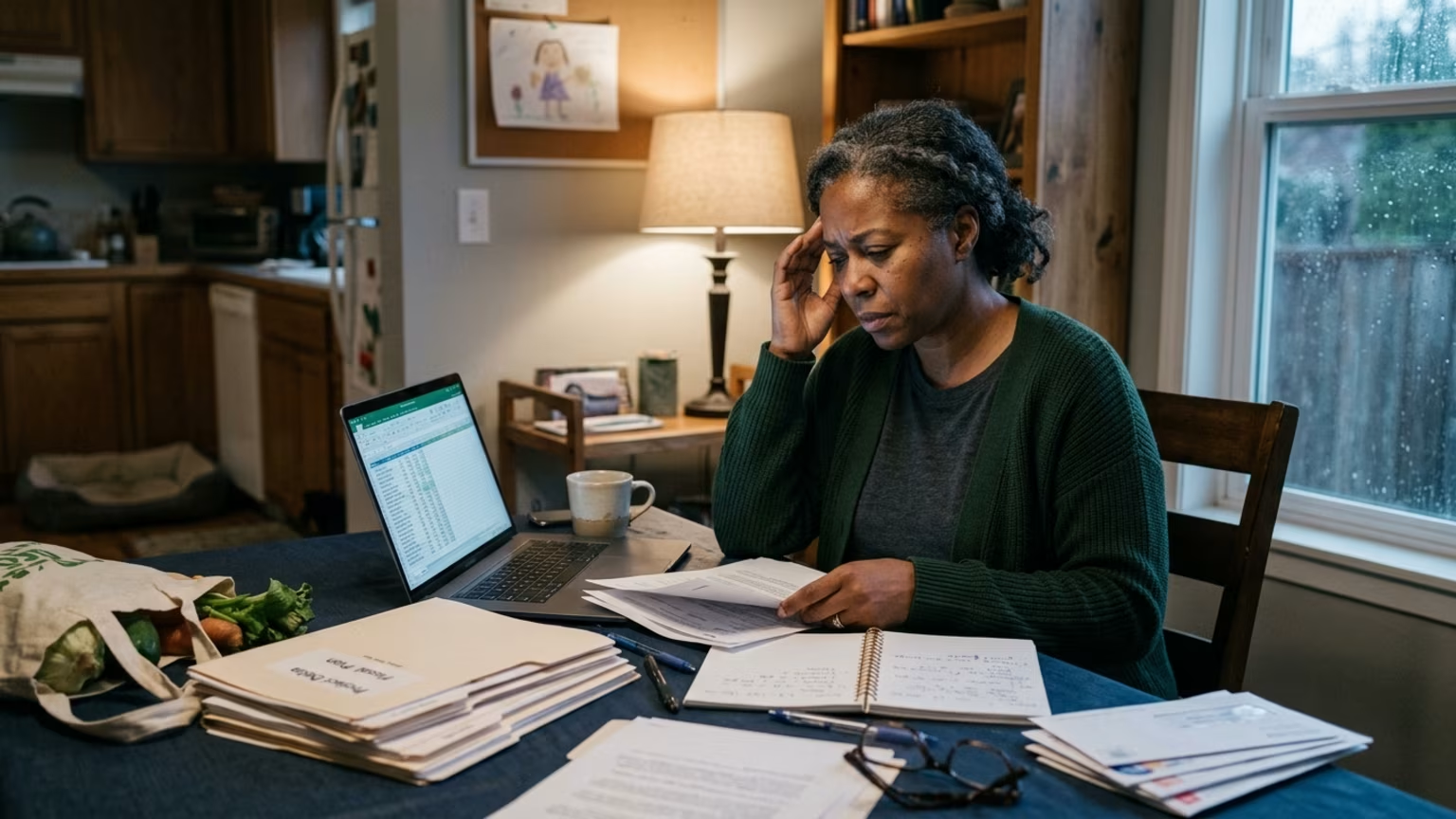

Understand how cumulative strain affects adults when stress stays active. Identify physical signs of overload and build practical habits for better rest.





Cumulative strain is the lived pattern of repeated daily demands combined with incomplete physical recovery. It occurs when ongoing pressures keep your biological stress systems activated for extended periods. Researchers often use a concept called allostatic load to describe this biological wear and tear. However, this term represents a framework for understanding stress across multiple body systems rather than a condition you can self-diagnose.
Acute stress functions as a short response to a single challenging event. Your body reacts to a specific demand and then returns to a calm baseline. Cumulative strain reflects a prolonged inability to complete that return to baseline. This often happens when work deadlines, financial uncertainty and household responsibilities overlap without adequate breaks.
Adults in midlife frequently face a unique combination of professional and personal obligations. These compounding pressures can make it difficult to find time for basic rest. Without proper downtime, the body remains in a heightened state of alertness. Understanding this process helps explain why you might feel exhausted but unable to relax.
When a stressful event occurs, the body prepares to react quickly. Heart rate increases and physical alertness peaks to help you manage the immediate challenge. In a balanced nervous system, the body eventually powers down and returns to a resting state. Ongoing daily pressures disrupt this natural biological cycle.
Work demands, caregiving duties and financial worries act as continuous signals to your nervous system. These signals prompt the body to maintain a state of heightened physical readiness. Over time, you experience more frequent transitions into alertness and fewer complete returns to a resting baseline. This ongoing activation requires continuous physical energy and mental effort.
Many midlife adults find that their work no longer has a clear stopping point. Extended mental availability and unpredictable schedules prevent the brain from fully disengaging at night. This continuous cognitive engagement means your nervous system never receives the signal that the workday has ended. The absence of this vital biological transition keeps your stress responses engaged.
Sleep loss and stress then begin to reinforce one another. A recent multi-cohort study of older adults identified depressive symptoms as the most consistent predictor of poor sleep quality across four national cohorts. The same study notes that caregiving demands can plausibly disrupt sleep through nocturnal awakenings, physical exhaustion and emotional strain. The physical toll of these responsibilities makes healthy rest much harder to achieve.
The relationship between lost rest and heightened tension works in both directions. In two randomized crossover studies, sustained mild sleep restriction was associated with higher perceived stress and subjective anxiety. When your sleep is consistently cut short, your body struggles to process the physical toll of the day. This lack of recovery makes ordinary daily demands feel significantly harder to manage. Taking time to understand how persistent stress changes daily rest can help clarify these ongoing struggles.
Researchers often view this multisystem dysregulation through the lens of allostatic load. A 2022 meta-analysis summarized by Ocarina Health pooled 17 studies involving 26,924 participants. This extensive review found a small association between disturbed sleep and higher allostatic-load scores. The reported correlation was 0.09, which shows a link without proving that poor sleep alone causes systemic damage.
Instead of looking for a clinical diagnosis, adults can observe patterns in their daily energy and physical symptoms. One primary sign of cumulative strain is sleep becoming shorter, more fragmented or noticeably less refreshing over time. You might notice your bedtime and wake time shifting substantially from day to day. These changes often explain why you cannot sleep even when you are tired after a long workday.
Another common indicator is a growing reliance on constant stimulation or heavy caffeine consumption to get through the afternoon. You may also find that irritability, emotional numbness or difficulty concentrating have become more persistent. Physical movement, regular meals and enjoyable social contact often get displaced by looming household or professional obligations. Over time, these displaced habits reduce your overall capacity to cope with new challenges.
You might also notice that your weekends or days off no longer provide sufficient relief. Spending an entire weekend resting without feeling restored on Monday morning points directly to cumulative strain. When a regular break fails to replenish your energy, your body is signaling a deeper physical imbalance. This lingering fatigue is a strong indicator that your daily baseline has shifted.
There are often repeated signs that your current workload simply exceeds your available time, money and physical energy. These questions serve as helpful screening prompts rather than diagnostic tools for any specific disease. If you notice these patterns, it is a signal to evaluate your current recovery habits. Adjusting your daily routines can help prevent further physical exhaustion.
If these symptoms persist or severely impair your daily functioning, it is critical to seek professional medical assessment. Severe daytime sleepiness, major mood changes and unexplained physical symptoms require clinical evaluation. Professional guidance is necessary when basic lifestyle adjustments fail to provide meaningful relief.
The most effective baseline habit for repairing an overloaded system is establishing regular sleep timing. A consistent wake schedule provides a reliable biological anchor for your body. You should choose a specific wake time that you can reasonably maintain on most days of the week. From there, you can move your bedtime gradually rather than attempting a sudden schedule overhaul.
Protecting a short transition period before bed is a necessary step for better sleep. This means stepping away from late work messages and intense problem-solving before trying to rest. The World Health Organization recommends developing healthy sleeping habits and ordinary routines for people dealing with stress-related symptoms. Building a predictable evening structure is more effective than demanding perfect sleep every single night. If you are struggling with circadian rhythm changes in midlife, consistency becomes your most valuable tool.
Regular physical activity provides another critical defense against persistent physical tension. CDC guidance says most adults need at least 7 hours of sleep and recommends regular physical activity to support health. They recommend 150 minutes of moderate-intensity or 75 minutes of vigorous-intensity physical activity weekly, with adaptations for health limitations. These targets offer a solid framework for maintaining your physical resilience.
You can divide this recommended movement into highly manageable pieces throughout your week. Taking a short walk during a break or doing light mobility work helps release accumulated physical tension. WHO guidance supports regular exercise, even in the form of short walks, as a practical stress-management technique. Movement should feel like a helpful recovery tool rather than another demanding chore on your schedule.
Creating brief pauses throughout the workday is a practical strategy for lowering physical alertness. Interrupting continuous task accumulation with several slow breaths or a change of scenery creates small recovery windows. WHO recommends learning formal stress-management techniques such as breathing exercises or progressive muscle relaxation. These brief moments of rest help prevent stress from building up uncontrollably by the evening.
A meta-analysis of self-guided digital mindfulness interventions among healthcare workers found short-term improvements in several mental-health outcomes. However, the researchers rated the overall certainty of evidence as low to very low. This suggests that mindfulness is a useful optional tool rather than a guaranteed cure for structural strain. Incorporating small pauses into your day is a realistic way to build mental resilience over time.
Seeking appropriate social support can alleviate the heavy physical burden of midlife responsibilities. WHO recommends connecting with trusted people to help manage stress-related symptoms effectively. In one clinical study, higher perceived social support was associated with better physical and mental quality of life. Support might mean asking someone to share a caregiving shift or simply talking through a difficult week with a friend.
Facing continuous pressure alone often magnifies the physical toll on your body. Isolation forces your nervous system to handle every logistical and emotional challenge without any external buffering. Finding ways to distribute this mental load is a practical biological necessity rather than just an emotional comfort. Even small acts of delegated responsibility can lower your baseline tension.
Reaching out for help is not always simple for people with limited networks or demanding schedules. If personal support is unavailable, formal options such as a therapist or a community caregiver organization can be invaluable. Building a reliable support system provides a buffer against the isolating effects of chronic overload.
Recovery cannot depend entirely on adding new wellness habits to an already crowded schedule. If your daily demands remain excessive, the most effective lever is often subtraction or strategic redistribution. Removing just one nonessential commitment can create the vital breathing room your body needs to recover. You might also set a strictly defined time for evening work communication to stop entirely.
Asking for a specific form of help is often more effective than waiting for general support. You can rotate caregiving duties where possible or negotiate flexible deadlines for overwhelming work projects. When financial pressure is driving the overload, seeking professional employment or social-service advice can be a critical step. Subtracting burdens is often the clearest path toward meaningful physical recovery.
The physical recovery process does not require complicated optimization schedules or expensive wellness protocols. Addressing cumulative strain involves creating small, repeated opportunities for your nervous system to return to a resting state. Taking consistent steps to protect your sleep, movement and mental downtime will gradually rebuild your physical capacity over time.
Small changes in your daily routine add up to significant physiological benefits. You do not need to fix everything at once to start feeling better. Focusing on just one realistic habit creates a foundation for deeper recovery.
Key takeaway: Managing cumulative strain requires stepping back from constant alertness and giving your body the structured rest needed to sustain long-term daytime energy.
Deciphering biological rest signals usually falls on the individual adult balancing family and professional duties, but letting Relaxopia handle the research changes how effectively you can respond. When confusion about circadian rhythm, light exposure and sleep timing makes recovery difficult, we translate credible evidence into clear, practical guidance without unnecessary complexity. Explore Resources
Stay connected for research-led guidance on sleep quality, stress, circadian rhythm, recovery, fatigue and everyday energy. Clear ideas for adults 35+ who want to sleep better, recover more fully and feel more capable through the day.






Explore practical guidance on sleep, stress and recovery without chasing every new hack, device or promise.
explore the blog