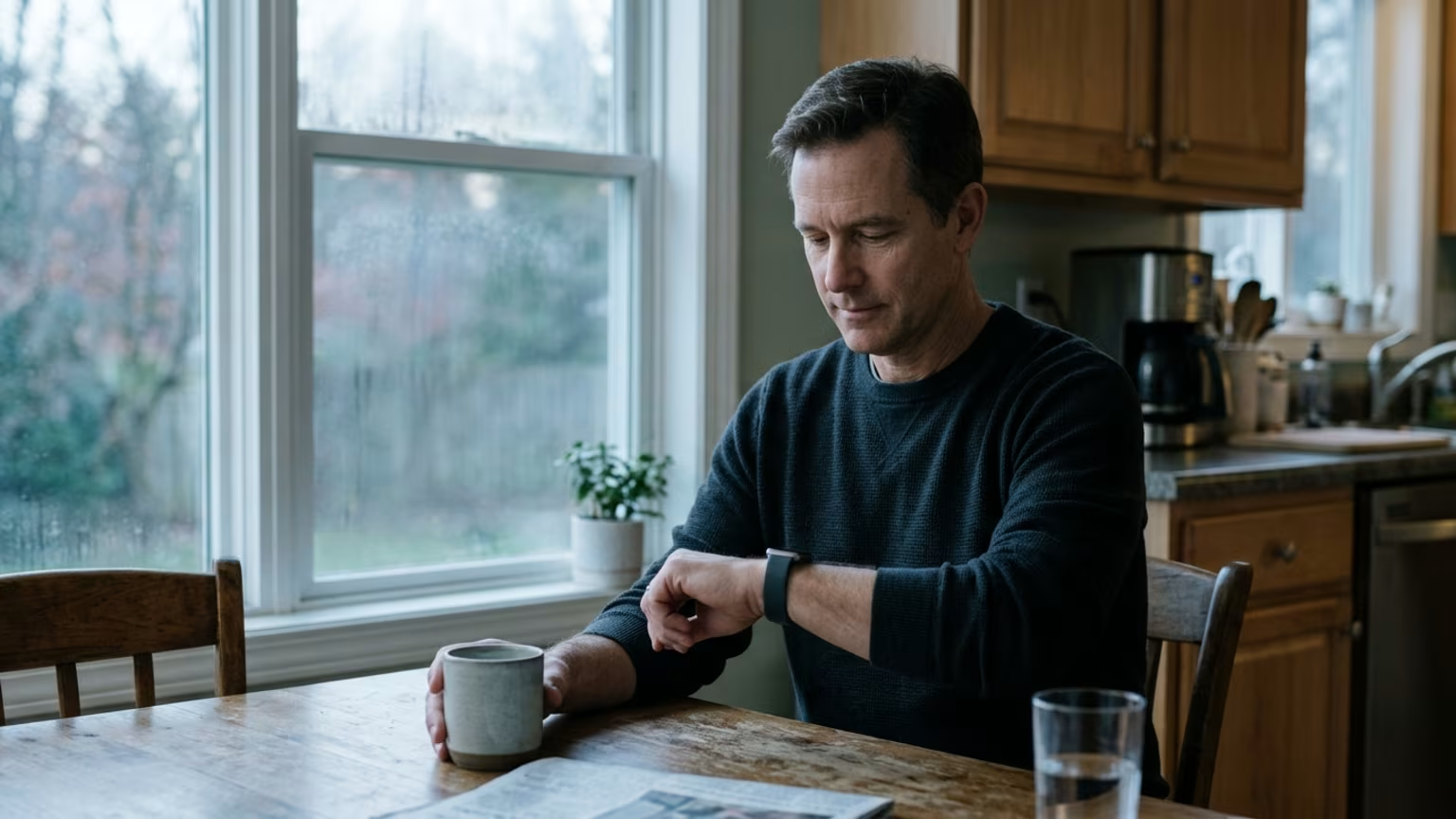

Withings users averaged 11 extra minutes of sleep at the autumn clock change. Read the findings and practical guidance for steadier sleep routines.





On October 29, 2026, Withings reported that its US users gained an average of 11 minutes of sleep on autumn clock-change nights rather than a full extra hour. The company’s announcement drew on sleep tracker and connected app data from the fall transitions of 2023, 2024 and 2025.
An extra hour on the clock did not turn into an extra hour asleep in this dataset. Withings reported a modest average gain on the transition night alongside slightly more frequent awakenings. In plain English, users slept a little longer, but their sleep was also somewhat more interrupted.
The company says its analysis covered 237,480 clock-change nights recorded in the United States. The data came from users aged 18 and over. Each person could contribute a clock-change night for each year measured.
That distinction matters when reading the sample size. The total describes recorded nights rather than a head count of different people. A user who contributed across multiple years could appear more than once in the analysis.
Withings did not simply compare the transition night with the night before it. For each person, it used an average of up to four preceding Saturdays as the comparison. It also adjusted for changes observed on the same dates in places where clocks do not change.
That approach puts the headline finding in a more useful context. The question was whether users slept differently from their usual Saturdays around the autumn transition. It was not simply whether one weekend night contained more sleep than the preceding Friday.
According to the release, the following week brought earlier bedtimes and wake times alongside slightly less sleep. By the following Saturday, the company also recorded a slightly lower sleep score. Withings said sleep quality returned to its pre-change level over the next two weeks.
The finding therefore concerns more than the night when clocks move backward. The reported pattern included the weekdays afterward. For readers interested in recovery, that is a useful shift in focus: the amount of sleep gained on one night is only part of the story.
Withings describes these findings as observational associations rather than proof that the clock change caused them. The company cautions that its users do not represent the whole population. The release also does not report a separate result for adults 35 and over.
Two reporting gaps make parts of the announcement harder to interpret. The release does not define its sleep score or give the size of the decline. For earlier waking, one passage says about 25 minutes while another says around 16 minutes; the difference is unexplained.
The 11-minute gain is also an average rather than a forecast for an individual. Withings sleep specialist Dr. Pierre Escourrou noted that individual nights naturally vary and that patterns over time are more informative. The findings appeared in a company announcement that also promoted its sleep care service.
For adults 35+ balancing work or caregiving, the most defensible adjustment is to keep sleep and wake times reasonably steady rather than count on the clock change to supply needed rest. That message is consistent with the recommendations in Withings’ release and guidance reported by the Associated Press. The practical focus is continuity rather than a special recovery weekend.
A reasonably steady bedtime and wake time provide a straightforward starting point. The aim is not to extract the largest possible sleep gain from the transition night. It is to preserve a routine that still makes sense during the following week.
That distinction can make the advice less demanding. Regularity need not become a test of whether every night follows an identical schedule. For a practical way to think about that balance, Relaxopia’s guide to keeping sleep routines workable offers related reading.
The Associated Press also reports that shifting bedtimes by as little as 15 minutes per night before a clock change may ease the transition. That is a gradual preparation option rather than a requirement for every reader. Personal scheduling decisions can stay grounded in what is realistic instead of becoming another obligation.
The following week deserves a place in the plan too. A routine has to fit ordinary weekdays after the clock-change weekend has passed. From a practical standpoint, a habit that remains manageable afterward is more useful than treating one night as a stand-alone recovery event.
The Associated Press reports that morning light can help synchronize the body clock. That gives the routine advice a second element: pay attention to morning daylight while sleep timing adjusts.
For a midlife adult with limited time, this is a simpler focus than building an elaborate recovery routine. The practical question is where morning daylight fits into the day’s existing demands. It need not be framed as another score to improve or a reason to purchase new technology.
Relaxopia’s coverage of fitting light and routine around clock changes provides a related explanation. The useful connection here is between the timing of daily life and the timing of sleep, not merely the number displayed on the clock.
Escourrou’s advice about patterns offers a calm way to approach sleep tracking. If a tracker is already part of daily life, review the pattern across nights rather than making one Saturday’s result the verdict on the whole week. The purpose is to understand the trend rather than pursue a higher score every morning.
The measures described in Withings’ announcement give that review some context. They include sleep duration and interruptions alongside bedtime and wake time. Reading these together keeps attention on the sleep pattern behind the headline number.
For readers interested in tracking, putting personal sleep data in context is a useful companion topic. A research-led approach asks what information helps explain everyday rest before treating the device’s output as a target.
In the company’s release, Escourrou said that poor sleep persisting for weeks is a reason to speak with a doctor. That is the relevant next step when the concern extends beyond a brief adjustment around the clock change. Decisions about an individual’s ongoing sleep problems belong with qualified care.
The distinction is practical rather than alarming. A calendar event can be part of the conversation without becoming the entire explanation for recurring poor sleep or persistent fatigue. Bringing the longer pattern to a clinician is more useful than expecting the extra clock hour to resolve it.
There is also a wider policy context. The Associated Press reports that the American Medical Association and American Academy of Sleep Medicine have urged year-round standard time because of its closer alignment with morning sunlight and circadian rhythms. That position is separate from Withings’ analysis, but it places daily timing at the center of the discussion.
For midlife recovery, the useful research direction reaches beyond counting minutes on the transition night. Future work could examine how ordinary routines relate to sleep during the following days and across repeated clock changes. The most helpful answers would connect research findings with habits that remain manageable during working and caregiving weeks.
Could longer-term research show which simple habits support steadier recovery in midlife, rather than treating an extra clock hour as a recovery strategy?
Putting the clock-change findings into daily life means sorting useful routine advice from competing claims, a task Relaxopia supports through accessible reporting on sleep and recovery. For adults 35+ weighing messages about caffeine, exercise and naps, that reporting provides context for realistic choices without prescribing a demanding schedule.
Stay connected for research-led guidance on sleep quality, stress, circadian rhythm, recovery, fatigue and everyday energy. Clear ideas for adults 35+ who want to sleep better, recover more fully and feel more capable through the day.




Explore practical guidance on sleep, stress and recovery without chasing every new hack, device or promise.
explore the blog