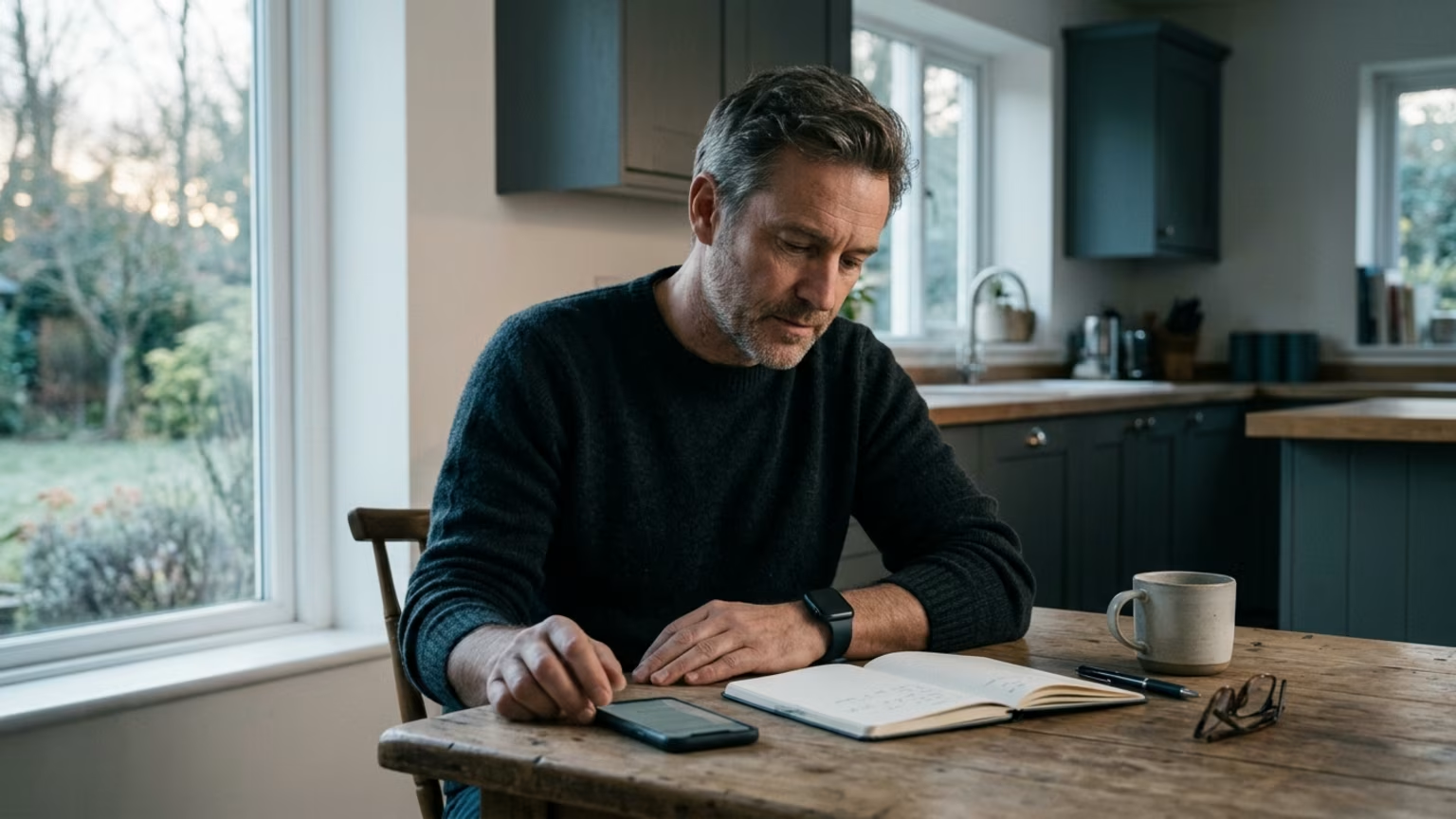

A new study suggests using long-term wearable data to define insufficient sleep based on personal history rather than universal six-hour clinical targets.





On October 6, 2026, a report detailed new research from the National University of Singapore's Centre for Sleep and Cognition. The study proposed a personalized method for defining insufficient rest using long-term wearable data.
For decades, clinical sleep guidance has relied heavily on broad population averages. The standard clinical cutoff for a short night of sleep is typically anything under six hours. The recent study introduced a personalized short-sleep measure that compares a single night of rest against an individual’s own recorded history. Researchers defined a personalized short night as one where sleep duration falls at least one hour below the individual’s 75th percentile of long-term sleep duration.
A percentile calculation looks at all your recorded nights and ranks them from shortest to longest. The 75th percentile marks the point where 75 percent of your nights are shorter, and 25 percent are longer. By setting the threshold exactly one hour below that specific mark, the researchers created a sliding scale. This approach accounts for natural biological variance between different individuals.
This new framework shifts the focus from rigid hourly targets to relative individual shortfalls. The study followed 462 working adults who wore Oura Rings and completed daily smartphone assessments for up to one year. When researchers applied the conventional six-hour cutoff, about 35 percent of tracked nights were classified as short. Using the personalized definition, about 37 percent of nights fell short of the individual baselines.
The median personalized threshold across the group was approximately 6.1 hours. The similar population-level percentages concealed significant differences in which people and nights the two definitions flagged. A person who naturally sleeps eight hours might experience a severe deficit at six and a half hours. Conversely, someone who consistently sleeps six hours might not register a physiological disruption on a similar schedule.
The research team also examined how participants recovered after experiencing these personalized sleep shortfalls. For 86.4 percent of the tracked individuals, the median sequence of personalized short-sleep nights was exactly one night. Longer consecutive runs of poor sleep became progressively less common among the participants. Most people in the study experienced bad nights as isolated events rather than prolonged weekly patterns.
When participants recorded a single personalized short night, their bodies attempted a rapid correction. The study reported that participants slept about 50 minutes more on the weekday night immediately following that first deficit. This initial rebound suggests the body reacts strongly to a sudden departure from its normal routine.
However, further consecutive short nights yielded severely diminishing returns for biological recovery. Each additional consecutive short night added less than 10 minutes of extra weekday recovery sleep per night. The body simply stopped extending its sleep window on work nights. When participants finally reached the weekend, their recovery sleep peaked at up to about 1.25 hours. This weekend recovery duration did not rise in proportion to the total amount of sleep lost over the week. These figures indicate that a weekend of sleeping in cannot mathematically cancel out a week of heavily restricted rest.
Researchers reported larger effect estimates for the personalized sleep definition across several day-to-day outcomes. These measured categories included daytime alertness, sleep satisfaction, physical stress, daily motivation and sadness. The study also measured physiological and behavioral markers like sleeping heart rate, heart-rate variability, sedentary behavior and physical activity. The negative effects in these categories increased steadily with successive short-sleep nights.
The report also featured a wider analysis of anonymized data from 376,758 Oura users across seven countries. The broader dataset included Oura users in Australia, Finland and Germany. It also tracked individuals in Japan, Singapore, the United Kingdom and the United States. This massive dataset showed clear differences in broad sleep habits by country. Yet, it reflected the exact same pattern of isolated short nights, rarer extended streaks of poor sleep and greater recovery on weekends.
While personalized baselines offer a helpful way to interpret sleep history, they are not a direct measure of biological sleep need. The researchers noted that habitual sleep reflects a complex combination of biological need, available sleep opportunity, the physical ability to sleep and everyday demands. A consistently short sleep schedule might simply indicate chronic overwork rather than a naturally low biological requirement for rest.
The findings also represent statistical associations rather than proven clinical causality. The report does not establish that crossing a personalized short-sleep threshold directly caused the observed changes in mood or physiological measures. The study population was composed entirely of working adults, but the report does not provide a specific age breakdown. Therefore, the data should not be interpreted as exclusive evidence about adults aged 35 and older.
Consumer wearables also have known technical limitations that affect data accuracy. A separate study summarized by MedicalXpress tested six wrist-worn devices on 62 adults in 2025. This evaluation found only modest agreement with clinical polysomnography for determining accurate sleep stages. It also identified significant accuracy gaps for measuring time awake after sleep onset and overall sleep efficiency. This secondary finding does not assess the specific Oura data from the Singapore study, but it highlights the reality of consumer tracking technology.
The authors of the study highlighted the value of individual history alongside established clinical guidelines. Senior author Michael Chee said: “Population thresholds remain useful, but once we have months of data from an individual, we can ask something they cannot tell us: when is this person sleeping substantially less than is usual for them?”
First author Chun Siong Soon framed the findings around the practical reality of daily life. Soon said: “An occasional short night is part of normal life. What appears more informative is whether substantial shortfalls keep recurring, and particularly whether they accumulate across consecutive nights.”
Chee also addressed the frequency of these physiological shortfalls. Chee said: “How much you sleep matters, but our findings suggest that how often you fall substantially short of your own usual sleep matters too.”
For adults navigating the intense demands of midlife, these findings offer a practical way to manage fatigue without panicking over a single bad night. If you use a wearable tracker, the most defensible approach is to watch for recurring departures from your own established patterns over weeks or months. One isolated night of poor rest is a normal part of life, and the study indicates that most people experience these as single-night events.
Instead of trying to force exactly eight hours every night, pay attention to stretches where you consistently fall below your personal normal. The study shows that consecutive short nights amplify negative effects on alertness, stress, motivation and physical activity. When you string together multiple short nights, your body will not fully make up the difference on a weekday, and weekend sleep-ins offer limited returns. If you notice a consistent negative shift in your long-term wearable record, you might need to adjust your evening routine or daytime workload.
You should view your personal baseline as a complement to broad clinical guidance, not a replacement for it. If your personal normal is only five hours of sleep per night, consistency does not make it biologically adequate. Adults experiencing persistent low energy should consider how their habits interact with established health recommendations. Establishing a consistent winding-down phase without obsessing over hourly targets can help stabilize your natural resting patterns. A structured approach to building sustainable sleep habits can help you manage these adjustments.
Evaluating your sleep history requires looking at the broader context of your entire week. A wearable device can record nighttime movement and resting heart rate, but it cannot measure how restored you actually feel upon waking. If your device flags a short night but your daytime energy remains perfectly stable, there is no need to create unnecessary anxiety. Recognizing these subjective factors can help you pinpoint the root causes of everyday fatigue without relying entirely on a screen. If you need clarity on your metrics, reading about what tracker data can and cannot tell you is a practical next step.
Relying strictly on weekend recovery is an ineffective strategy for maintaining long-term health. The research explicitly shows that biological recovery does not rise in proportion to accumulated sleep loss over the week. Pushing through a busy week with the intention of catching up on Saturday will likely leave you with a persistent deficit. Structuring your weekly schedule to prevent consecutive short nights is far more effective than attempting to repay a massive sleep debt all at once.
Using long-term tracking can also help you identify hidden seasonal or professional behavior patterns. You might notice that your sleep duration naturally dips during specific work cycles or shifts based on seasonal light changes. Recognizing these patterns allows you to make proactive adjustments, such as modifying your caffeine intake or shifting your evening meals earlier during high-stress weeks.
Understanding the limits of your devices is just as important as reading the data they generate. Since wrist-worn trackers have documented gaps in measuring sleep efficiency and wakefulness, you should never treat a low score as a medical diagnosis. A careful review of device settings can help you manage the psychological load of daily tracking. If tracking becomes stressful, reviewing data permissions and trade-offs can help you decide what information is actually useful. The ultimate goal is to use the data to make small behavioral changes rather than viewing it as a rigid daily report card.
As wearable technology continues to gather massive amounts of individual health data, will clinical guidelines eventually shift to prioritize personal sleep history over universal hourly targets?
Deciding whether to trust a smart ring's daily sleep score or adhere to rigid population guidelines often makes resting feel like a complicated chore, which Relaxopia addresses by putting the data into perspective. We clarify the evidence around difficulty falling asleep or staying asleep so you can build routines that genuinely restore your daytime energy.
Stay connected for research-led guidance on sleep quality, stress, circadian rhythm, recovery, fatigue and everyday energy. Clear ideas for adults 35+ who want to sleep better, recover more fully and feel more capable through the day.




Explore practical guidance on sleep, stress and recovery without chasing every new hack, device or promise.
explore the blog