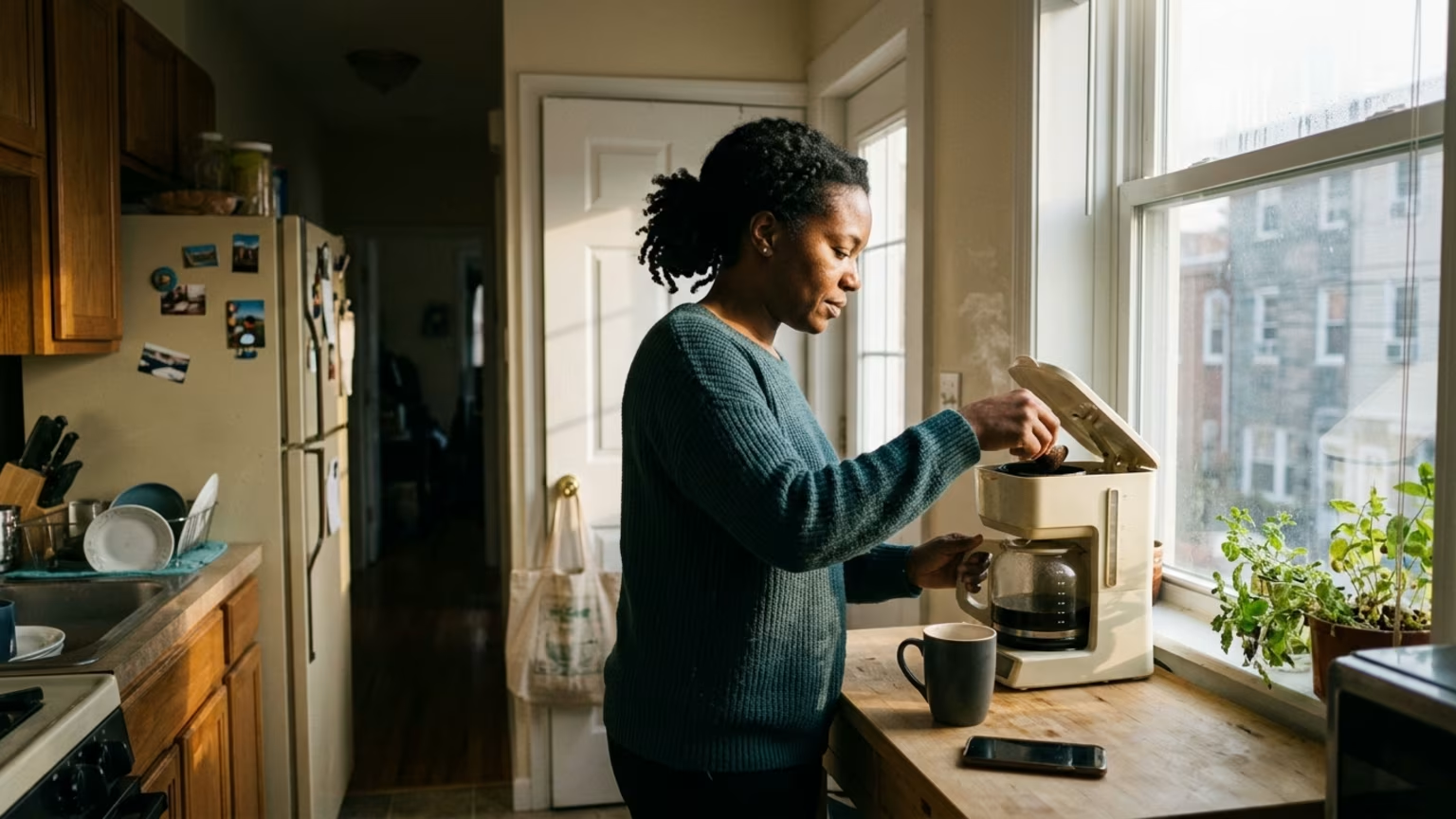

Morning light improves sleep, but strict exposure rules are impractical. This guide offers flexible circadian habits for commuters and indoor workers.





The common myth states that adults must get an exact duration of direct morning sunlight to sleep well. The factual correction is that no single universal rule works for everyone. The biological effect of light depends heavily on timing, intensity, duration, and your existing schedule. Rigid exposure targets ignore the realities of weather, indoor environments, and seasonal changes.
Adults often feel they have failed their sleep hygiene if they cannot spend thirty minutes outside at dawn. A fixed daily schedule is impractical for people who commute, work indoors, or wake before sunrise. Strict rules turn a natural biological process into a stressful pass-or-fail test. Flexibility is far more useful for maintaining consistent daily habits.
Following rigid protocols can sometimes cause more anxiety than actual physiological benefit. The goal should be working with your physical environment rather than fighting against it. You can build a workable morning routine by understanding how light exposure actually functions. A realistic approach adapts to the specific conditions you face each day.
This rigid view became popular in mainstream wellness because simple arithmetic is incredibly easy to share. Strict protocols offer the illusion of control over complicated physiological processes. When people struggle with low daytime energy, they look for immediate, quantifiable fixes. Clear directives about sunlight minutes feel like an actionable solution to chronic exhaustion.
Wellness content frequently turns rest into another intense performance target. Social media platforms reward absolute statements and dramatic physiological promises. Nuanced clinical research is harder to package into a fast visual format. Nuance gets replaced by aggressive rules that demand perfect daily compliance.
Many tired adults end up paralyzed by conflicting advice about their morning routines. They may abandon natural daylight altogether if they cannot hit an arbitrary time target. Trying to force an idealized schedule onto a messy, demanding life often creates deep frustration. This immense pressure to perform rest perfectly only makes falling asleep harder.
Mainstream advice rarely accounts for shift workers, early commuters, or people with limited outdoor access. The wellness industry profits by selling specialized routines rather than teaching basic biological principles. People are led to believe they are broken if a standard protocol fails to fix their fatigue. A more flexible understanding of the underlying science is required for sustainable recovery.
Morning light generally tends to advance the body clock. Evening light tends to delay the body clock. The actual effect depends heavily on biological timing and your individual circadian phase. Light is a powerful timing cue, not a substitute for adequate sleep or medical evaluation.
A 2022 expert consensus proposed a specific daytime target for healthy adults. This consensus suggested at least 250 melanopic equivalent daylight illuminance at the eye. This standard applies during the day, alongside much lower evening and nighttime exposure. This is a lighting recommendation expressed in a specialized measurement system, not a consumer lamp requirement.
Outdoor light is usually substantially brighter than typical indoor light, including on overcast days. Your body registers this bright outdoor light as a strong, undeniable daytime signal. A short outdoor walk or standing outside delivers a better cue than remaining in an ordinary room. You do not need perfect sunshine to get a physiological benefit from morning air.
Observational research has linked greater morning sunlight exposure before 10 a.m. with earlier sleep timing. This finding does not prove that sunlight alone caused the change. Light therapy is condition-specific, and clinical recommendations vary widely based on individual health needs. Expert consensus supports strategically timed light therapy for some conditions rather than a single universal cure.
Clinical findings depend heavily on the specific populations studied by researchers. A small pilot study in young adults found little circadian movement from morning bright light alone. A combined package involving schedule changes and evening blue-light reduction advanced timing by about 35 minutes. The participants were 18 to 25, meaning the finding should not be directly applied to midlife adults.
In one 2026 study of older adults, researchers tested an indoor-light intervention. This 12-week study was associated with improvements in daytime activity, wakefulness, and subjective sleep quality. These results highlight that appropriate light exposure helps, but responses vary across different age groups. There is no guaranteed result for every adult over 35 facing sleep difficulties.
The clinically sound practice is to seek the brightest comfortable light available soon after waking. The best approach adapts the exposure to the current conditions rather than following a strict time limit. A sensible starting point is to attach outdoor light to an existing morning activity. Taking the dog out or walking to transit delivers a strong, practical daytime signal.
The most practical hierarchy begins with open daylight outdoors. If going outside immediately is impossible, a bright window is a reasonable fallback option. Sitting close to an unobstructed window helps, especially while getting ready or eating breakfast. A window is not perfectly equivalent to outdoor exposure, but it remains a highly useful tool. Building a better transition into night complements these practical morning habits.
Cloudy weather does not ruin a morning routine or negate the benefits of natural light. An overcast sky still provides much brighter light than standard indoor bulbs. On dark or heavily overcast days, you can extend your outdoor activity if practical. Move into a more open area to increase the available daylight reaching your eyes. Understanding how to use natural light to set your body clock reduces unnecessary stress on gray days.
People who wake before sunrise face unique challenges with typical morning wellness routines. A workable pattern is far more valuable than an idealized sunrise schedule. Pre-dawn workers should use ordinary indoor light initially, avoiding staring into bare bulbs. They can then get outside during the first available daylight opportunity. Planning restorative outdoor time during a morning break builds a realistic, lasting habit.
When natural daylight is consistently impractical, a purpose-designed bright-light device might offer a practical fallback. Clinical research on specialized indoor lighting is condition-specific, meaning the appropriate timing depends on individual health needs. People considering a specialized bright-light device should follow manufacturer instructions carefully. It is wise to discuss any new light therapy directly with a trained clinician.
Protecting the evening contrast is just as critical as seeking morning light. The 2022 consensus recommends much lower light exposure in the three hours before habitual sleep. The daytime light signal works best within a broader day-night pattern of contrast. Keeping lights lower before bed supports the natural biological transition toward rest. Managing your environment to support better rest requires balancing light levels at both ends of the day.
The bottom line is that daylight is a natural biological cue, not a rigid prescription requiring perfect execution. Adults over 35 can build healthy sleep habits by prioritizing consistent, practical light exposure over strict optimization rules. Missing one morning of sunlight will not permanently ruin your sleep architecture or daytime energy levels. A flexible approach supports long-term recovery without turning morning routines into a constant source of anxiety.
Adapting to the specific light available in your environment builds sustainable daily resilience. Understanding the biological mechanisms gives you the power to make reasonable adjustments on busy, complicated days. You can confidently ignore the extreme claims found in popular online fitness content. Real-world schedules require real-world flexibility, realistic expectations, and practical habits that actually fit your lifestyle.
Forcing a busy morning routine into a rigid sunlight checklist often creates unnecessary anxiety, but letting Relaxopia translate the clinical science changes how you view your habits. We clarify the underlying biological research to help you navigate wellness content that turns rest into another performance target.
Stay connected for research-led guidance on sleep quality, stress, circadian rhythm, recovery, fatigue and everyday energy. Clear ideas for adults 35+ who want to sleep better, recover more fully and feel more capable through the day.





Explore practical guidance on sleep, stress and recovery without chasing every new hack, device or promise.
explore the blog