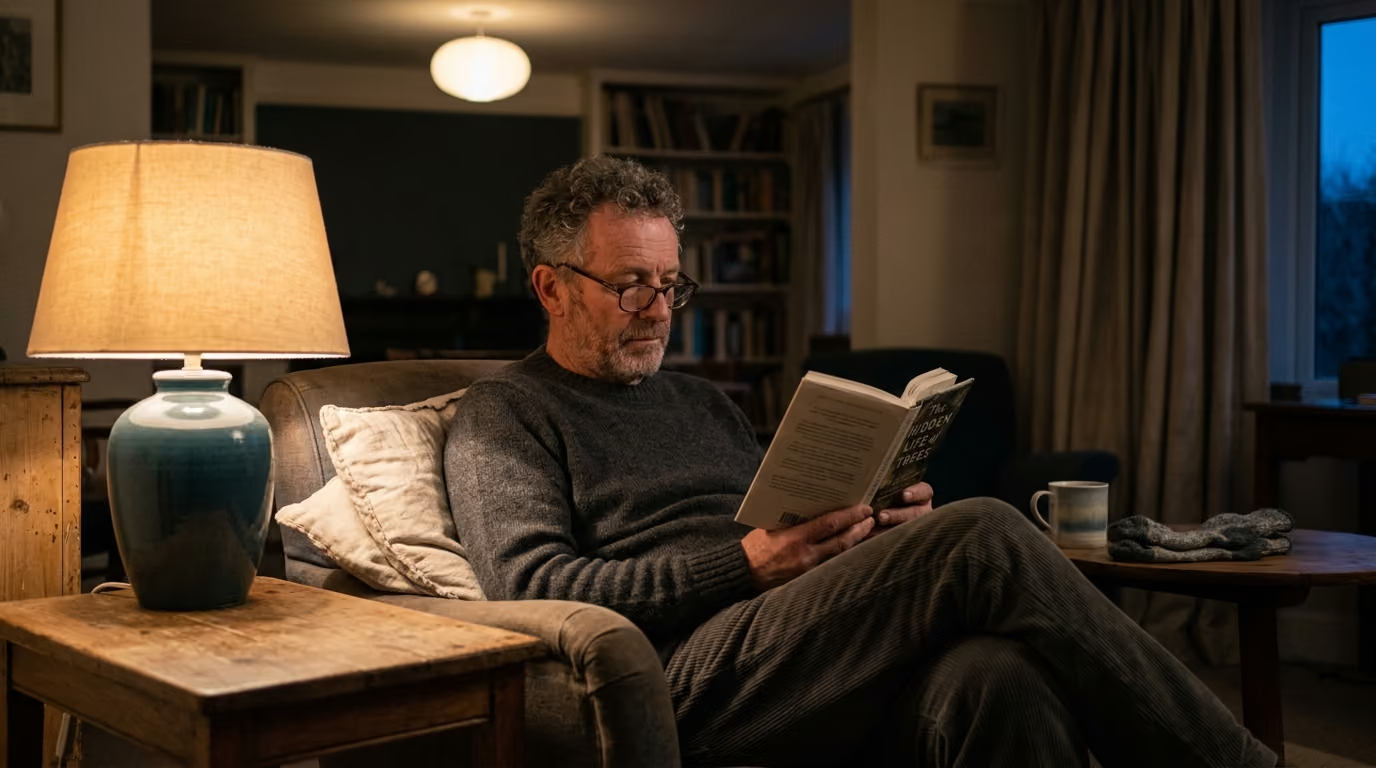

Better sleep quality comes from optimizing indoor lighting and circadian timing through practical environmental adjustments across your day.





Many adults search online for answers when they find themselves lying awake at night despite feeling completely drained. You might wonder why falling asleep feels so difficult after a long workday, or why your energy lags every afternoon. The answer often begins not with a supplement or a mattress, but with the subtle signals your eyes send to your brain throughout the day.
Light is the primary environmental signal that sets the biological clock. When you understand how light exposure directs your internal timing, you can use ordinary indoor and outdoor lighting to support deeper rest. This guide provides a research-led framework for managing light across the entire 24-hour day without requiring expensive gadgets or complicated routines.
The human body operates on an internal cycle of roughly 24 hours known as the circadian rhythm. This timing network regulates core body temperature, hormone production, cognitive sharpness, and the drive for rest. The central pacemaker for this system sits in the brain within the suprachiasmatic nucleus.
This central clock does not keep perfect 24-hour time on its own. It relies on regular environmental cues to stay synchronized with the solar day. Scientists call these environmental time cues zeitgebers, and light is by far the most powerful one. When light enters the eye, specialized sensory cells send direct electrical signals to the central clock.
These specialized cells are known as intrinsically photosensitive retinal ganglion cells. They contain a light-sensitive pigment called melanopsin. Unlike the rods and cones that generate conscious visual images, these cells exist primarily to measure ambient brightness and color spectrum. They inform the brain whether it is daytime or nighttime.
The circadian system responds to light differently than your conscious visual system. Visual sight operates in fractions of a second and functions well in low illumination. The circadian clock integrates light exposure across minutes and hours. It tracks the overall volume, spectrum, and timing of photons reaching your retinas across the day.
When your eyes receive strong light during the day, your brain registers that active hours have arrived. When the environment becomes dim, the brain initiates the chemical processes required for physical recovery and rest. Problems arise when modern indoor environments disrupt this natural contrast.
Many people spend their days inside dim offices and their evenings under bright residential fixtures. This pattern blurs the boundary between day and night. Understanding how your eyes process light is the first step toward correcting that boundary and improving evidence-based habits for restorative sleep.
Light does not produce a uniform biological effect at every hour of the day. The physiological outcome depends heavily on the internal circadian phase at the moment of exposure. Scientists map this relationship using a phase response curve.
A phase shift represents a change in the timing of your internal biological clock. When a phase shift occurs, your natural windows for alertness, hormone release, and sleepiness move forward or backward on the clock. These shifts fall into two categories:
Light exposure delivered in your biological morning produces a phase advance. The biological morning occurs right after your core body temperature reaches its daily minimum, which typically happens a few hours before your natural waking time. When bright light enters the eyes during this window, it signals the central pacemaker to advance the schedule for the next cycle.
Light exposure in the biological evening and early biological night produces a phase delay. When your retinas encounter bright illumination after sunset, the central clock interprets the signal as an extended day. It postpones the release of nocturnal hormones and shifts your sleep window later into the night.
The hormone melatonin plays an active role in this daily signaling process. Melatonin is produced by the pineal gland during periods of darkness. It acts as an internal biological night signal, telling tissues throughout the body that it is time for recovery.
Exposure to bright light during the evening suppresses melatonin synthesis. A landmark controlled study demonstrated that ordinary room light before bedtime suppressed melatonin levels and delayed the onset of melatonin secretion in 99 percent of participants. The study showed that room light shortened the total duration of melatonin production by approximately 90 minutes compared to dim light conditions.
Melatonin is not a direct sedative that knocks you out like a sleeping pill. Instead, it serves as an internal calendar and clock marker. When evening light delays your melatonin onset, your body remains in an alert state longer. Learning how to direct these daily shifts is helpful if you are navigating midlife changes in daily body clock timing.
Obtaining bright light soon after waking is one of the most reliable behavioral actions for stabilizing your rest. Morning light halts nocturnal melatonin secretion, promotes daytime alertness, and sets a timer for evening sleepiness. Research indicates that consistent morning light exposure helps establish an earlier, more predictable sleep window.
Natural outdoor daylight is vastly superior to standard indoor lighting for setting the circadian clock. The difference in intensity is substantial:
Because residential and commercial fixtures are designed purely for visual tasks, they deliver far fewer photons to the eye than outdoor environments. Spending 15 to 30 minutes outdoors in the morning provides a circadian stimulus that indoor lamps cannot match.
To make morning light an effective anchor, step outside shortly after waking. A brief morning walk, eating breakfast near a patio, or drinking tea on a balcony works well. You do not need to look directly at the sun, which can cause retinal damage. Simply looking toward the open sky allows sufficient ambient light to reach your retinas.
If you wake before the sun rises, turn on bright overhead lights in your living space to initiate wakefulness. Transition to outdoor daylight as soon as the sun emerges. Pairing consistent light timing with anchoring your morning wake schedule creates a powerful cue for your internal pacing.
Cloudy weather still provides plenty of circadian stimulation. Even on heavily overcast winter mornings, outdoor light levels are usually ten to twenty times higher than ordinary indoor illumination. Getting outside remains worthwhile regardless of cloud cover.
Many adults spend the vast majority of their daylight hours inside closed buildings. This lifestyle often results in a condition researchers call biological darkness. A room can look bright enough to read documents comfortably while failing to deliver the intensity required to signal daytime to the brain.
Workplace studies show that office employees seated near large windows receive significantly higher daytime light doses than those working in windowless interior spaces. Employees with window access demonstrate greater daytime alertness, better sleep quality scores, and longer nighttime sleep durations. Workers in windowless spaces frequently experience lower daytime energy and delayed sleep timing.
International lighting experts have published consensus guidelines measuring circadian-effective light in melanopic equivalent daylight illuminance. This standard accounts for the specific sensitivity of melanopsin-containing cells in the eye. The international consensus recommends receiving at least 250 melanopic lux at the eye level throughout the daytime.
Most indoor workspaces lit solely by standard ceiling fixtures deliver less than 100 melanopic lux to the eye. You can improve your daytime light dose with a few simple adjustments to your daily work habits:
Maintaining a strong daytime light signal makes your circadian system more resilient against occasional evening light disruptions. When your brain receives an unambiguous daytime signal, it becomes easier to produce a clear nighttime rest response.
As the sun sets, your lighting priorities must reverse. While daytime requires abundant brightness, the evening demands low intensity to allow natural melatonin production. Modern homes are often filled with high-mounted ceiling fixtures and bright screens that disrupt this transition.
The international consensus guidelines recommend keeping light levels below 10 melanopic lux at the eye for at least three hours before your target bedtime. Achieving this low level does not require total darkness. It requires changing how you illuminate your living spaces after dinner.
Overhead lights are particularly effective at stimulating the lower half of the retina, where melanopsin-containing cells are densely concentrated. Switching from overhead ceiling fixtures to low-standing table lamps or floor lighting reduces total light exposure. Placing lamps below eye level helps create a softer visual environment.
Color spectrum also plays a role in the evening hours. Intrinsically photosensitive retinal ganglion cells respond most strongly to short-wavelength blue and green light. These wavelengths are abundant in crisp white light bulbs, computer monitors, tablets, and smartphones.
Warm light with yellow and red tones produces less melanopsin stimulation per unit of visual brightness. However, color temperature is only one piece of the puzzle. A very bright warm bulb can still delay your circadian clock and suppress melatonin. Lowering the overall brightness of your lamps remains far more effective than merely changing their color.
Screen use during the final hours of the day presents a dual challenge. Electronic displays emit short-wavelength light and sit close to your visual field. In addition, interactive screen content can generate cognitive arousal that keeps the nervous system active.
You can reduce the biological impact of evening screens by adopting clear boundaries:
Lowering light levels three hours before sleep provides your pineal gland with the dark window it needs to begin melatonin synthesis. This prepares your brain for natural rest without forcing it to battle artificial daylight signals.
Once you get into bed, your environment should be as dark as practical. The international consensus target for the sleeping environment is less than 1 melanopic lux at eye level. Even low levels of light penetrating closed eyelids can affect sleep architecture and increase subtle nighttime arousals.
Urban environments introduce significant light pollution into residential bedrooms. Streetlights, commercial signs, vehicle headlights, and security lighting can enter through standard window blinds. Inside the home, electronic chargers, power strips, air purifiers, and digital clocks introduce small points of light into the room.
Studies indicate that sleeping in rooms with ambient light can alter sleep depth and lead to more fragmented rest. The autonomic nervous system remains slightly more active in illuminated sleeping environments compared to complete darkness. Heart rates tend to run slightly higher when ambient light is present during sleep.
You can create an effective dark sanctuary by making minor modifications to optimizing your daily sleep environment:
Nighttime safety remains a primary priority, particularly for midlife and older adults who need to get up during the night. Achieving a dark bedroom should never come at the expense of physical safety or create tripping hazards.
If you need illumination to navigate to the bathroom or check on family members, install low-wattage night-lights placed near the floor. Choose amber or red bulbs that direct their light downward toward the floor rather than upward into your eyes. Avoid turning on bright overhead bathroom lights during midnight visits, as sudden high-intensity exposure can trigger acute alertness.
Latitudes
Human circadian biology evolved in equatorial regions where day length remains relatively stable throughout the year. As you move farther from the equator, seasonal variations in solar timing become more pronounced. These variations can alter your sleep quality, morning alertness, and evening fatigue levels.
A study comparing populations in Accra, Ghana, near 5 degrees latitude, and Tromsø, Norway, near 69 degrees north, revealed clear seasonal patterns. Participants living at higher northern latitudes experienced significant shifts in bedtime, rise time, and sleep-onset latency across different seasons. During winter months, when daylight hours are scarce, individuals took longer to fall asleep and reported greater daytime fatigue.
Winter conditions create a seasonal mismatch for many adults. Morning alarms force individuals to wake during biological darkness, delaying the daily phase advance. By the time work ends, the sun has set, leaving people in artificial lighting conditions throughout their waking hours.
To counter seasonal winter disruptions, prioritize outdoor daylight exposure during the middle of the day. Even a 15-minute walk at noon provides valuable biological signaling that indoor lights cannot replicate. You can also increase indoor illumination in your living spaces during the early morning hours to support wakefulness.
Summer months present the opposite challenge. Extended evening twilight can delay melatonin onset and tempt you to stay up much later than your schedule permits. In regions with long summer days, close window blinds several hours before your intended bedtime to artificially create an evening wind-down environment.
Shifting your lighting practices according to the season helps stabilize your rest year-round. Paying attention to seasonal light patterns prevents your biological clock from drifting out of sync with your professional and domestic obligations.
The commercial market offers numerous products marketed as easy solutions for light-related sleep issues. Blue-blocking glasses, screen filters, and specialized color-tuning light bulbs are widely available. Evaluating the actual scientific evidence behind these tools helps you make informed choices without unnecessary spending.
Blue-blocking glasses feature lenses designed to filter short-wavelength visible light. Proponents claim that wearing these glasses during the evening prevents melatonin suppression and cures insomnia. However, systematic scientific reviews paint a more cautious picture.
In healthy adult populations, high-quality randomized trials show inconsistent objective benefits from blue-blocking eyewear. While some trials report modest improvements in subjective sleep quality or sleep onset, other rigorous studies show no significant changes in total sleep time or objective sleep architecture.
Specialized eyewear does not eliminate the biological impact of intense light. If you wear blue-blocking glasses while sitting in a brightly illuminated room with strong overhead fixtures, total photon volume can still stimulate your circadian system. Reducing overall light intensity remains far more impactful than filtering a single wavelength.
Software tools that shift computer or smartphone displays toward amber tones provide visual comfort and reduce eye strain for many users. However, these tools do not neutralize the alerting nature of interactive screen tasks. Reading emotionally charged news, replying to demanding work messages, or browsing social media keeps cognitive arousal high regardless of screen color.
Specialized products can serve as optional secondary tools, but they cannot replace foundational environmental habits. Dimming your household lamps, turning off unnecessary overhead lights, and spending time outdoors during the day provide stronger circadian benefits than purchasing expensive optical filters.
Individual sensitivity to light varies significantly across the population. Factors such as age, eye health, baseline circadian chronotype, and medical conditions shape how your body reacts to ambient lighting.
As adults age, the crystalline lens of the eye gradually yellows and the pupil size decreases. These normal physiological changes reduce the amount of light, particularly short-wavelength light, that reaches the retina. Older adults often require brighter daytime illumination to achieve the same circadian stimulus as younger individuals.
Certain medical conditions require thoughtful management of light exposure:
If you struggle with chronic, severe insomnia that does not respond to basic environmental adjustments, seek an evaluation from a qualified healthcare provider. Light management is a foundational habit, but it is not a cure for underlying clinical sleep disorders, sleep apnea, or chronic health conditions.
Transforming your lighting environment does not require remodeling your home or tracking complicated metrics. You can create a healthier day-night light contrast by making practical adjustments to your daily routine.
Evaluate your current living spaces by reviewing these straightforward environmental questions:
Applying the scientific consensus to ordinary home lighting requires focusing on three distinct phases of the day:
Aligning your daily light exposure with your natural biology provides an effortless signal for daily recovery. By giving your brain bright days, dim evenings, and dark nights, you establish the environmental foundation your body needs for reliable, restorative sleep.
Stay connected for research and practical guidance on sleep, stress, circadian rhythm and recovery. Clear ideas for adults 35+ who want better rest, steadier energy and more resilient days.



Explore practical guidance on sleep, stress and recovery without chasing every new hack, device or promise.
explore the blog