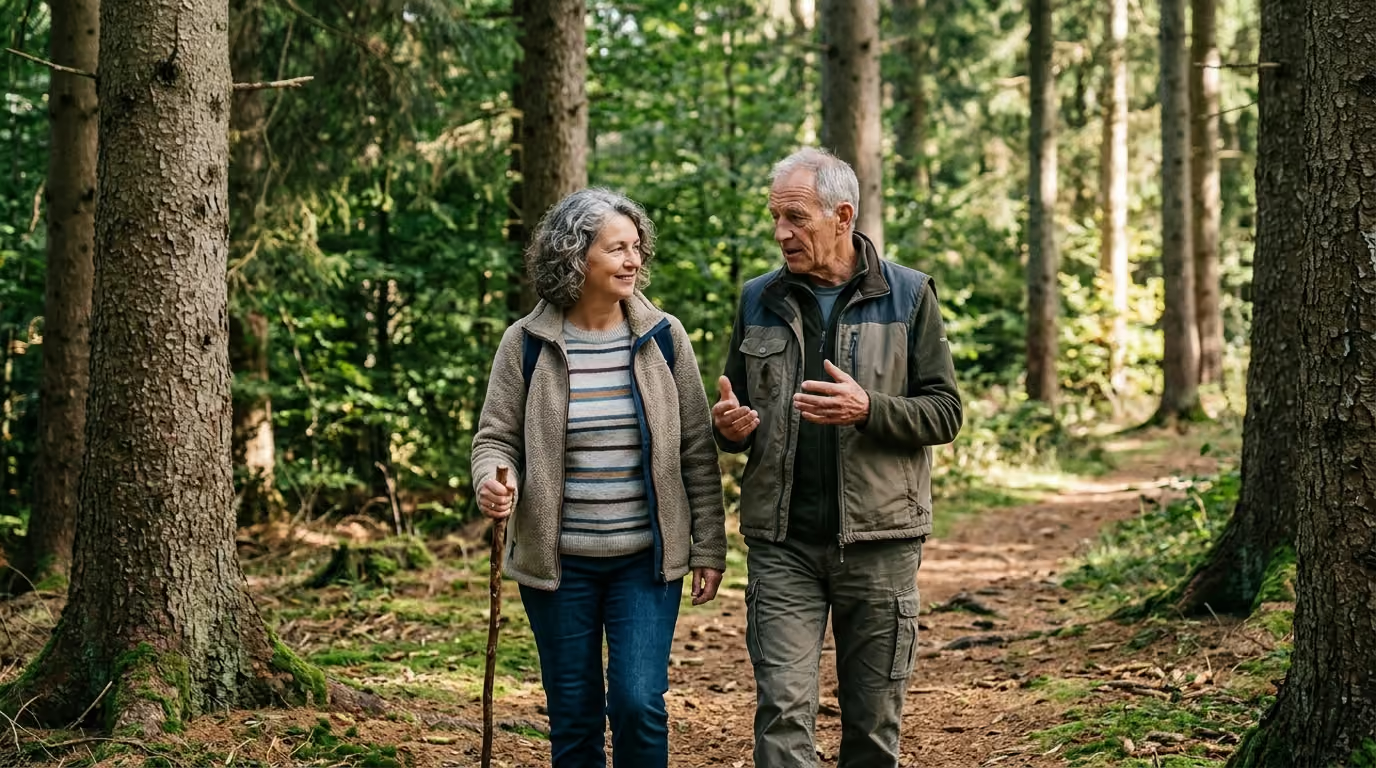

Over 40 experimental studies confirm that outdoor time restores the nervous system by lowering stress hormones, balancing circadian rhythms, and relieving mental fatigue.





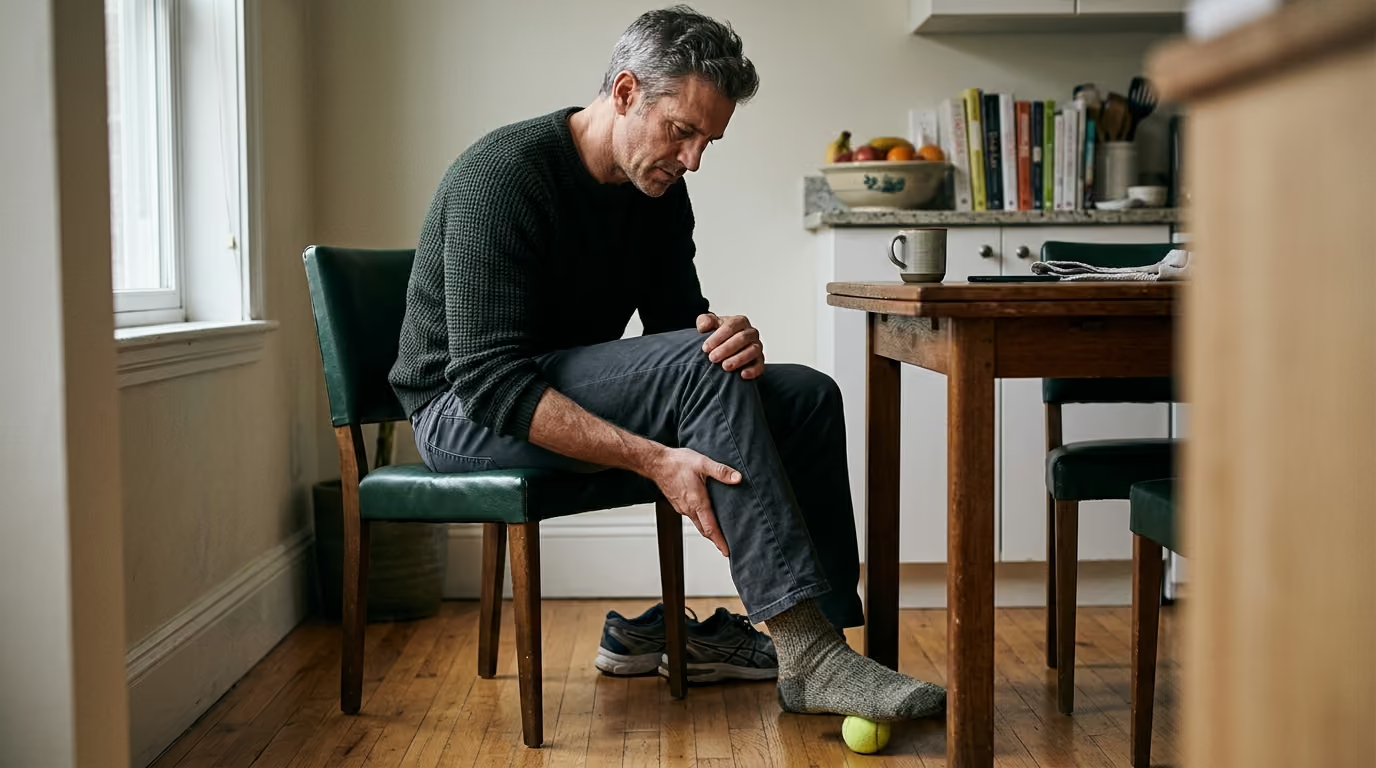
You finish a four-hour block of back-to-back video meetings, close your laptop, and feel an unmistakable heaviness behind your eyes. Your shoulders sit high against your neck. Your thoughts feel sluggish, yet your internal pace remains frantic. You step onto the back steps or walk down to the street corner for ten minutes, watching the light move through the leaves of a single roadside tree. When you step back inside, your baseline has shifted slightly: your breathing is slower, the tension in your jaw has loosened, and the cognitive fog has started to clear.
This shift is not an accident, nor is it a personal failing that indoor work leaves you feeling drained. The human body and nervous system evolved in direct contact with natural light cycles, open visual horizons, and dynamic outdoor environments. When daily life takes place entirely under static indoor lighting and within confined spaces, recovery systems often operate under sustained strain.
Restorative outdoor time provides an accessible, low-cost approach to daily physiological downshifting. It is not a cure for medical conditions, nor is it an aggressive performance routine. Instead, it is a practical recovery practice that supports autonomic balance, circadian health, and cognitive rest.
Scientific interest in how outdoor environments affect human physiology has expanded significantly over the past two decades. Researchers examine these effects through experimental trials, observational population studies, and systematic reviews across public health and environmental psychology.
The overall evidence base shows consistent associations between outdoor contact and improved recovery indicators. A comprehensive review of more than 40 experimental studies published in environmental research journals found strong evidence connecting nature exposure with reductions in heart rate, blood pressure, and self-reported stress. Systematic reviews of direct green-space contact show measurable improvements in autonomic nervous system balance and subjective relaxation.
World Health Organization reports highlight that urban green spaces, including public parks, greenways, street greenery, and forests, support mental and physical health. These reports link regular access to outdoor green areas with lower risks of persistent stress and improved psychological well-being. A recent European review of nature prescriptions showed notable drops in symptoms of anxiety and depression, lower resting blood pressure, and an average increase of roughly 900 daily steps among participants.
The evidence varies depending on the specific outcome measured:
The data is strongest for immediate, acute responses. Experimental studies consistently show that spending time in vegetated outdoor settings can reduce salivary cortisol, lower resting heart rate, and decrease blood pressure compared to sitting or walking in dense indoor or high-traffic commercial environments.
Research in environmental psychology indicates that natural views and outdoor spaces reduce directed attention fatigue. When individuals spend time looking at trees, water, or open sky, cognitive control networks in the brain show measurable relief from sustained mental demand.
Observational and clinical data indicate that exposure to bright outdoor daylight correlates with improved sleep quality, faster sleep onset, and easier morning waking. Large-scale population studies show that people who spend more daytime hours outside report fewer depressive symptoms and exhibit earlier, more consistent circadian timing.
Large epidemiological studies show associations between neighborhood greenness and reduced cardiovascular mortality, lower rates of type 2 diabetes, and better self-rated health. However, because much of this long-term evidence is observational, researchers cannot isolate outdoor exposure as the sole direct cause. Neighborhoods with higher tree canopy coverage often correlate with higher average income, lower industrial pollution, and better municipal infrastructure.
The research confirms that outdoor exposure is an effective supportive habit. It functions as a physiological buffer against chronic daily load rather than an absolute medical treatment.
To understand why stepping outside changes how you feel, it helps to examine the overlapping physiological mechanisms involved. Restorative outdoor time does not rely on a single biological switch. Instead, several bodily systems respond simultaneously to light, spatial volume, natural textures, and low-demand movement.
The autonomic nervous system balances two primary branches: the sympathetic branch, which mobilizes energy during demand, and the parasympathetic branch, which supports digestion, tissue repair, and rest. Modern work environments often keep the sympathetic branch mildly active for hours at a time through urgent notifications, tight deadlines, and confined indoor spaces.
Natural environments present visual patterns, acoustic ranges, and olfactory inputs that the nervous system processes as low-threat. Studies measuring heart-rate variability show that spending quiet time in vegetated outdoor areas supports parasympathetic activation. Your breathing rate naturally deepens, peripheral blood vessels relax, and salivary cortisol levels begin to decline.
Working at a desk or looking at a screen requires directed attention. You must actively focus on text, filter out distracting notifications, and suppress irrelevant impulses. This directed attention mechanism relies on the prefrontal cortex, which fatigues under prolonged use.
Natural settings engage what psychologists call soft fascination. Visual elements such as moving clouds, shifting tree leaves, water ripples, and textured bark catch attention effortlessly. You do not need to calculate, judge, or analyze these inputs. This passive visual engagement allows directed attention networks to rest, helping clear mental fog and reducing irritability.
Daylight serves as the primary environmental signal that synchronizes the central circadian clock in the brain. Specialized light-sensitive cells in the retina detect the intensity and spectrum of ambient light, sending signals directly to the suprachiasmatic nucleus.
Indoor lighting rarely exceeds 300 to 500 lux, which is biologically dim compared to the outdoors. Even on an overcast winter day, outdoor daylight routinely reaches 1,000 to 5,000 lux, while clear sunny days can exceed 50,000 lux. Systematic reviews confirm that light levels above 1,000 lux during daytime hours support nocturnal melatonin production, improve sleep efficiency, and stabilize daily sleep-wake patterns.
Understanding your body clock after 35 helps explain why daylight exposure becomes increasingly valuable as natural circadian signals weaken with age.
Indoor spaces confine your vision to short focal distances, usually between sixteen inches and ten feet. The eye muscles responsible for accommodation remain contracted for long periods, contributing to physical strain and subtle mental fatigue.
Stepping outside allows your visual gaze to extend to the horizon. Looking across open distances relaxes the ciliary muscles of the eyes and triggers an open-field orienting response. Outdoor environments also distribute sound across wider frequencies, replacing the sharp, artificial noises of machinery and electronics with lower-demand ambient soundscapes.
Outdoor environments encourage low-intensity physical movement such as walking, stretching, or gentle balance shifts. The World Health Organization recommends that adults accumulate 150 to 300 minutes of moderate physical activity weekly, while emphasizing that low-intensity, non-exercise movement also provides distinct health benefits.
Gentle outdoor walking stimulates venous blood return from the legs, increases oxygen delivery to tissues, and prevents muscular stiffness. Because the movement takes place in an engaging environment, it feels less like a structured chore and more like a natural physical reset.
Connecting these physical habits with recovery and nervous system balance allows you to build daily resilience without adding unnecessary physical strain.
The restorative benefit of outdoor time is not identical for every person or every environment. Several interacting variables shape how your body and mind respond to stepping outside.
A practical way to assess outdoor rest is through the three-part framework of dose, timing, and context.
The physical elements present in your outdoor space influence recovery outcomes:
Your personal physiological state changes how outdoor stimuli are processed:
You do not need access to remote wilderness or hours of free time to benefit from outdoor recovery. Structuring outdoor habits around scalable time blocks makes it possible to maintain consistency across busy workdays.
This micro-dose is designed for intense workdays when you cannot leave your workspace for long.
This duration provides sufficient light intensity to support circadian alignment while easing acute mental tension.
A fifteen-to-thirty-minute outdoor block allows physiological markers like heart rate and muscle tension to shift toward a rested baseline.
Learning how to navigate the recovery transition after demanding work can help you use this thirty-minute window as a clean psychological off-ramp between work and personal life.
These longer sessions are best reserved for weekends, non-work days, or dedicated evening recovery blocks.
When planning an outdoor session, you can choose one, two, or all three of the following elements based on your current energy level:
If you are dealing with severe exhaustion, simply choosing the light channel by sitting near a sunny window or resting on a shaded bench provides meaningful recovery without draining physical reserves.
Your daily recovery plan should adapt to how you feel:
Choose predictable, familiar routes with minimal foot traffic. Sit in a shaded area, keep your movement slow, and focus on physical sensations such as the ground beneath your feet or the movement of air.
Choose settings with broad visual horizons and open sky. Leave your phone at home or in your pocket on silent mode. Walk without navigating complex directions, allowing your mind to wander naturally without task demands.
Prioritize outdoor light within the first two hours of waking. Pair light exposure with a concrete, low-effort destination, such as walking to a nearby café, mailbox, or neighborhood corner.
When sleep disruptions drive morning fatigue, applying the wake-time first sleep reset reinforces the circadian benefit of morning outdoor light.
Do not push for step counts or aerobic effort. Sit comfortably in a lawn chair, balcony seat, or near an open window. Let daylight, fresh air, and passive viewing provide recovery while preserving your physical energy.
Idealized representations of nature often feature remote mountains or dense ancient forests. In reality, most adults manage recovery within cities, suburbs, tight schedules, and physical limitations. Restorative outdoor time can be adapted to fit your actual living environment.
You do not need pristine wilderness to gain the recovery benefits of nature exposure. Research from the World Health Organization shows that urban green elements provide meaningful health benefits:
Outdoor recovery must remain accessible to individuals who cannot walk long distances or who navigate chronic pain, balance issues, or mobility impairments:
Public health physical activity guidelines emphasize that older adults and people with chronic health conditions benefit from low-demand, balance-supporting outdoor movement that matches individual capacity.
When personal time is constrained by work deadlines or family caregiving, outdoor time should be attached to existing routines rather than scheduled as a separate, demanding event:
Cold temperatures, rain, or winter darkness do not eliminate outdoor recovery, provided safety and comfort are prioritized:
Several widespread assumptions can turn outdoor recovery into a source of frustration or unnecessary effort. Understanding these pitfalls keeps the practice sustainable.
Many people assume that city parks or street trees do not count as real nature. Studies show that small urban green spaces, residential gardens, and landscaped courtyards produce measurable drops in physiological stress markers. Accessible everyday greenery provides more recovery value over time than an occasional remote trip.
Conflating outdoor recovery with athletic training can lead to overexertion, especially when you are already mentally and physically drained. Walking slowly, sitting, stretching, or resting on a bench are effective recovery practices. Restorative outdoor time focuses on downshifting, not physical performance.
Popular wellness content often claims that walking barefoot or looking at trees will instantly clear stress hormones and balance the nervous system. Biological adaptation occurs gradually. Outdoor time creates supportive conditions for downshifting, but it does not instantly erase chronic work stress or emotional load.
Pushing yourself to stay outside in extreme heat, freezing temperatures, high air pollution, or heavy pollen conditions can increase physiological strain rather than reduce it. Match your exposure duration to environmental conditions and your personal physical tolerance.
Getting bright morning daylight is a valuable circadian habit, but it cannot override untreated sleep apnea, severe chronic insomnia, high evening caffeine intake, or erratic sleep schedules. Daylight is one supporting component of sleep health, not an isolated cure.
When nighttime mental chatter undermines your rest, learning what to do when your brain will not switch off provides practical cognitive tools to pair with daytime light exposure.
Tracking your steps, heart rate zones, GPS routes, and outdoor minutes on wearable devices can turn rest into another performance target. While data tracking can provide helpful insights, constantly checking screens while outside undermines the attention restoration that natural environments offer.
Maintaining an evidence-led approach requires recognizing the boundaries of current scientific knowledge regarding nature exposure and health.
Many published studies on nature exposure rely on small sample sizes, short intervention periods, and diverse definitions of what constitutes a natural environment. A five-minute view of a garden photograph, a thirty-minute walk in an urban park, and a weekend camping trip are often grouped under the same research heading, making precise dosage recommendations difficult to establish.
Studies evaluating nature-based interventions often attract participants who already enjoy outdoor activities, which can skew self-reported psychological outcomes. Furthermore, academic literature tends to publish positive associations between green space and health more frequently than null or negative findings.
Much of the long-term epidemiological data linking neighborhood green space to reduced disease risk is observational. While researchers attempt to adjust for income, education, lifestyle habits, and healthcare access, it remains challenging to separate the specific physiological effects of green space from the broader advantages of living in well-resourced neighborhoods.
Marketing claims surrounding forest bathing products, specialized grounding equipment, and daylight optimization lamps often extend far beyond what peer-reviewed research supports. Natural daylight, outdoor air, and public green spaces remain widely accessible resources that do not require expensive commercial purchases.
While outdoor time is generally safe and supportive, specific environmental conditions and health situations require caution and adaptation.
Air pollution significantly affects cardiovascular and respiratory health. Exercising or spending extended time outdoors during poor air quality events, such as wildfire smoke plumes or high ozone days, introduces particulate matter into the lungs that can trigger systemic inflammation.
Exposure to extreme weather places clear demands on cardiovascular and thermoregulatory systems:
For individuals with seasonal allergic rhinitis or asthma, high pollen counts can turn an outdoor walk into a source of respiratory stress and fatigue:
Certain medications, including specific antibiotics, cardiovascular drugs, retinoids, and psychiatric medications, increase skin and eye sensitivity to ultraviolet light. If you take medications that cause photosensitivity, use broad-spectrum sun protection, wear a wide-brimmed hat, and seek shaded outdoor areas rather than direct sunlight.
Public outdoor spaces are not experienced as calming by everyone. Concerns regarding personal safety, unfamiliar terrain, unrestrained animals, or past traumatic experiences in isolated areas can trigger hypervigilance rather than relaxation.
Choose well-lit, familiar spaces where you feel entirely safe. Inviting a companion or opting for a private residential balcony or garden space allows you to gain the sensory benefits of being outside without compromising psychological safety.
Restorative outdoor time supports daily well-being, but it is not a replacement for clinical evaluation. You should consult a qualified healthcare provider if you experience:
Integrating restorative outdoor time into daily life works best when approached as a repeatable habit rather than a rigid set of rules.
Look at your current daily schedule to find natural transition points where stepping outside requires minimal effort. This might be the five minutes before you make your morning breakfast, the halfway mark of your lunch break, or the immediate transition when finishing work for the day.
Choose one immediate location, such as a doorstep, balcony, or front porch, for short one-to-three-minute breaks. Choose a second location, such as a nearby park, tree-lined street, or community garden, for longer weekend or midday sessions.
Keep your outdoor footwear, a weather-appropriate jacket, and sunglasses or a brimmed hat organized near your door. Reducing the physical steps required to leave your home makes it easier to step outside when energy is low.
Make a conscious choice to leave your phone on your desk, put it in your pocket on silent, or avoid opening email and social media while outside. Allowing your eyes to rest on physical horizons and natural textures is central to cognitive recovery.
Adapt your routine as daylight hours change throughout the year. In winter, prioritize midday light when the sun is highest. In summer, focus on early morning and late afternoon hours to avoid midday heat and intense UV radiation.
Return to this guide whenever you notice your daily screen time increasing, your sleep schedule drifting later, or your baseline irritability rising under sustained work demands. It is particularly useful during seasonal transitions, after recovering from an illness, or when moving into a new living or working environment where you need to re-establish your daily outdoor habits.
Restorative outdoor time is not an ambitious optimization protocol or a cure for chronic life strain. It is a quiet, repeatable biological reset that helps your nervous system, attention, and circadian rhythms find steady footing in a demanding world.
Stay connected for research and practical guidance on sleep, stress, circadian rhythm and recovery. Clear ideas for adults 35+ who want better rest, steadier energy and more resilient days.



Explore practical guidance on sleep, stress and recovery without chasing every new hack, device or promise.
explore the blog