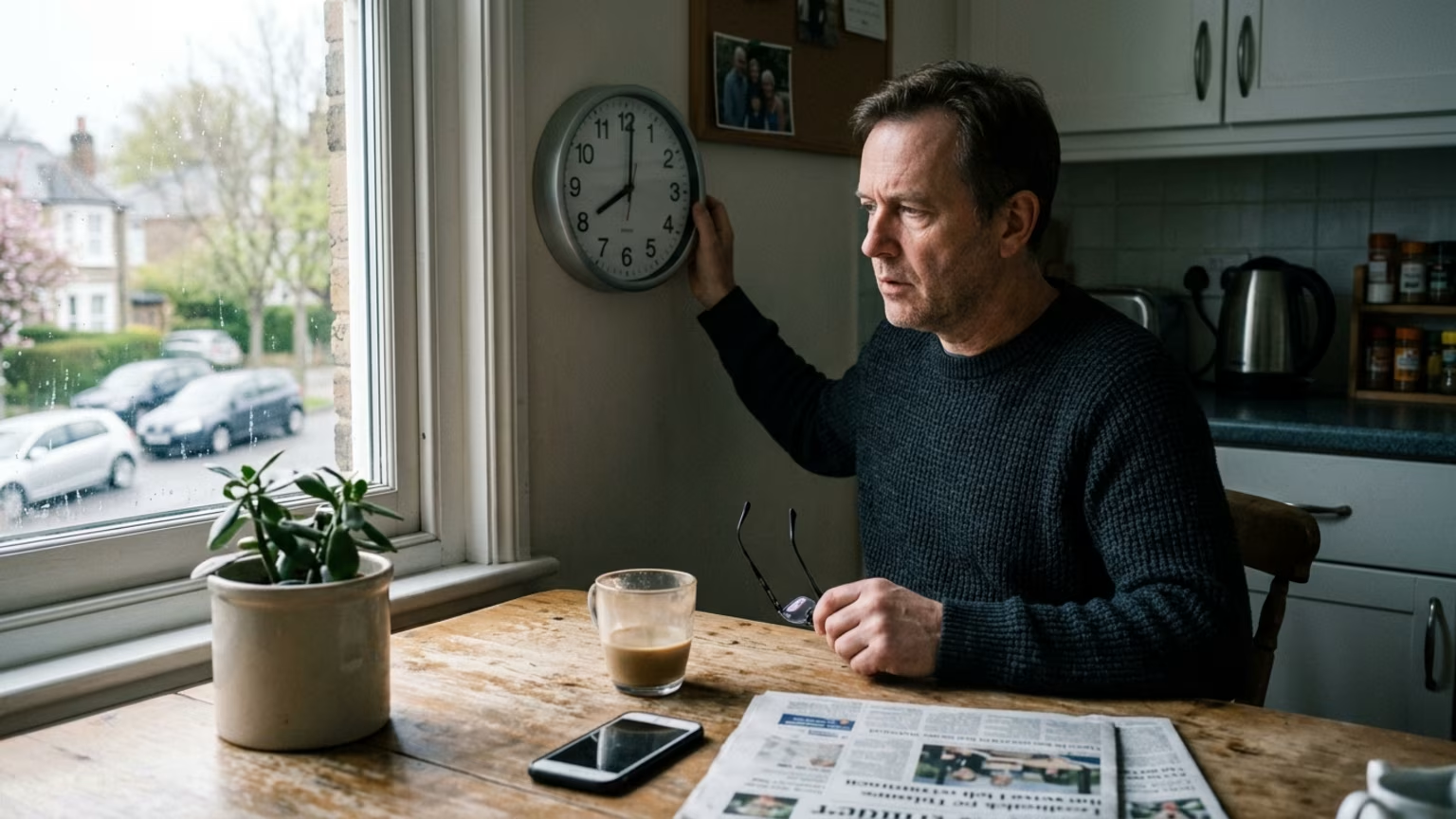

Read how the spring daylight saving shift temporarily misaligns the body clock, along with practical, research-backed steps to adapt adult sleep routines.





On September 28, 2026, 1News and SBS published expert reports examining how the spring daylight-saving transition temporarily shifts the body clock out of alignment with local sunlight. The coverage included an international review from Swinburne University evaluating the shift's broader mental health impacts.
The loss of a single hour might appear minor on paper, yet it often produces noticeable friction in daily routines. Human physiology operates on precise cycles that anticipate the timing of light and rest. Dr Karyn O'Keefe of the Sleep/Wake Research Centre explains that the spring clock change can temporarily leave the body's internal timing out of step with local sunlight. In the spring transition, the clock moves forward, while the body clock may still be aligned with the previous schedule. O'Keefe notes that this mismatch can mean difficulty feeling sleepy at the new bedtime and grogginess when waking.
This circadian disruption can alter how adults function throughout the following day. According to O'Keefe, losing an hour of sleep affects several aspects of daytime functioning. She lists impacts on sleepiness, mood and reaction time. Additionally, the shift can alter a person's motivation, concentration and decision-making over the next day.
These specific cognitive functions are critical for professionals managing complex demands, and a dip in focus can make a standard workload feel unusually draining. O'Keefe compares the combined effects of circadian disruption and poor-quality sleep to a mild form of jet lag.
The physical adjustment does not happen instantly. O'Keefe characterizes the effects for some people as lasting at least a couple of days, rather than claiming that everyone takes the exact same amount of time to adapt. Acknowledging this variation helps adults set realistic expectations for their own rest. Understanding the biological reality behind these shifts provides a calmer approach to understanding how daylight saving time affects circadian health.
Circadian science helps explain why this brief misalignment feels heavy. The human body relies strictly on environmental cues to regulate internal processes. When local time suddenly changes, the external signals no longer match the internal biological schedule. This forces the body to operate against its own predetermined rhythm for a short period. Adults in their late 30s and 40s often feel this friction more intensely than they did in their twenties. Recognizing this physical reality prevents individuals from blaming themselves for normal daytime fatigue.
Individual sleep tendencies also dictate how heavily the time change impacts a person. The 1News article states that people who are extreme early birds or night owls may find the shift harder to navigate. Night owls might struggle significantly to fall asleep earlier, while early birds might experience disjointed morning routines.
Adults who already face challenges with rest should handle the transition with particular care. Sleep specialist Anitha Patel cautions that people who already have insomnia may find the time change triggering. She recommends preparing in advance and easing into the following Monday. For adults over 35, normal changes in sleep resilience can make these adjustments feel heavier than they did a decade ago. Relaxopia often notes that treating these biological mismatches with patience works better than applying rigid optimization rules.
While short-term grogginess is common, framing the time change as a severe psychological hazard misrepresents the current data. A separate SBS report published September 28, 2026, described an international review by Swinburne University researchers. This review examined serious mental-health outcomes around daylight-saving transitions. According to researcher Ben Bullock, the review reports no consistent or large effects on those serious outcomes.
This finding creates a useful boundary between everyday fatigue and clinical risk. It is completely normal to feel tired or irritable for a few days after the clocks jump forward. Separating temporary tiredness from long-lasting psychological harm allows individuals to manage the weekend practically, without unnecessary alarm.
Translating clinical observations into daily habits requires practical, realistic steps rather than demanding overhauls. The 1News article outlines a specific adult sleep-shift example to ease the transition over a weekend. The suggested routine is to go to bed 20 minutes earlier on Friday and 40 minutes earlier on Saturday. Following this gradual shift, the individual would then wake up at the usual time on Sunday.
This tiered approach slowly brings the internal clock closer to the new external time. Going to bed 20 minutes earlier on Friday means beginning the evening wind-down process slightly sooner than usual. Building on that progress with a 40-minute shift on Saturday helps mitigate the shock of the missing hour. This method addresses the common problem of wondering why tiredness does not always mean sleepiness when the clock says it is time to rest.
The final step of the suggested weekend routine focuses on Sunday morning. Waking up at the usual time on Sunday helps lock the new schedule into place before the workweek begins. Sleeping in to recover the lost hour might feel appealing in the moment. However, delaying wakefulness can further confuse the body clock and push the adjustment period into Monday. Maintaining a structured wake time provides the clear biological anchor the brain needs. This consistency forms a vital part of protecting your overall recovery baseline.
Light remains the strongest environmental cue for setting our daily internal rhythm. O'Keefe recommends getting plenty of morning sunlight to help anchor the body to the new schedule. Stepping outside early in the day provides a high-contrast signal that tells the brain the day has officially started. Learning how to use morning daylight to set your body clock is a foundational habit for managing seasonal transitions without relying on complex interventions.
Conversely, managing the transition requires careful attention to evening environments. O'Keefe advises reducing light in the evening, which helps facilitate the natural biological transition into rest. She also explicitly recommends making the bedroom dark at bedtime. For adults managing late work demands, prioritizing a dark space is a straightforward way of making the bedroom a stronger cue for sleep.
Just as morning light signals the start of the day, evening darkness prepares the nervous system for sleep. Overhead lighting and bright screens can trick the brain into thinking the sun is still up. This delays the natural onset of sleepiness, compounding the difficulty of an earlier bedtime. Dimming the lights an hour before rest provides a clear signal that the waking period is ending. This simple environmental change requires no special equipment, making it highly accessible for busy professionals.
These environmental adjustments form a practical baseline for recovery. They rely on basic biology rather than expensive tracking technology or wellness trends. A darker room at night and a brighter environment in the morning work together to clarify the signals the brain receives.
The time change does not just affect individual adults; it also impacts household dynamics. The 1News article includes advice from baby-and-toddler sleep consultant Cherie Richards, directed mainly at children and families. Richards advises keeping a consistent bedtime routine, using morning light and keeping the bedroom dark for younger family members.
When children struggle to adapt, the resulting disruption often fragments the sleep of parents and caregivers. Implementing these light and routine adjustments across the whole household can create a more supportive environment for everyone's recovery. Working as a family unit to manage the transition helps ease the burden on adults who are already balancing full schedules.
The spring time change serves as a practical test of our baseline recovery habits. When environmental cues shift suddenly, maintaining a structured wind-down routine becomes increasingly valuable. Adults managing high-stress careers often view sleep as a flexible resource, but circadian science suggests otherwise.
Prioritizing a calm, predictable transition into the evening helps buffer the nervous system against the shock of the missing hour. Avoiding heavy physical exertion or intense mental tasks late at night can further support the adjustment. Treating this weekend as a period of active recovery helps build resilience for the week ahead.
As researchers continue to document how simple environmental shifts alter daily functioning, one must ask: how will recognizing these short-term biological mismatches change the way adults over 35 structure their long-term recovery routines year-round?
Adjusting to a sudden one-hour shift highlights the biological limits of our internal timing, and Relaxopia translates the latest clinical research to help you navigate these seasonal disruptions practically. We analyze foundational evidence to help you resolve the persistent mental load that makes it hard to switch off, leaving you calmer and more capable of managing daily stress.
Stay connected for research-led guidance on sleep quality, stress, circadian rhythm, recovery, fatigue and everyday energy. Clear ideas for adults 35+ who want to sleep better, recover more fully and feel more capable through the day.






Explore practical guidance on sleep, stress and recovery without chasing every new hack, device or promise.
explore the blog