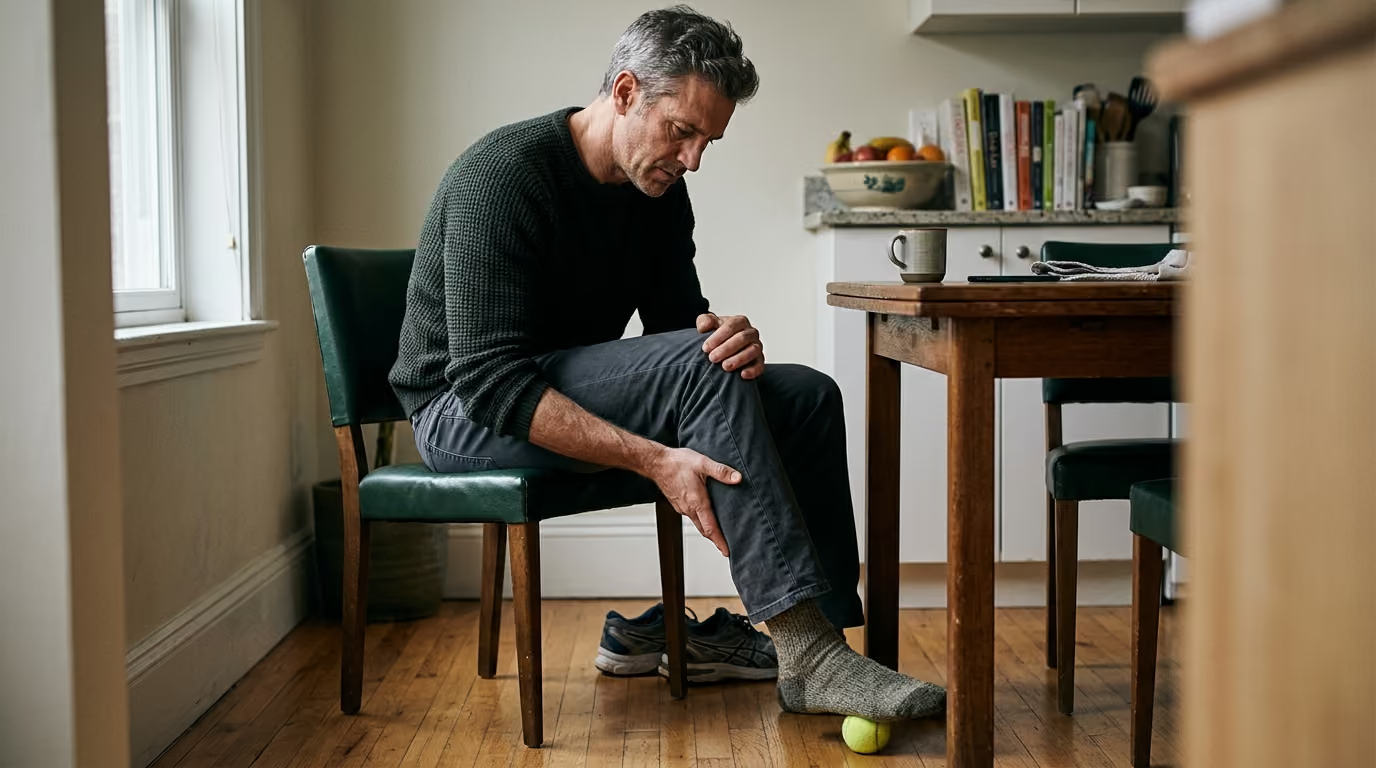

Better nightly rest becomes achievable once you recognize how circadian rhythms and homeostatic sleep pressure interact to control your daily alertness and exhaustion.





You sit on the sofa after a demanding day. Your eyelids feel heavy, your limbs ache, and your mental focus is completely spent. You crawl into bed thirty minutes later, turn off the bedside lamp, and suddenly find yourself wide awake. Your thoughts begin racing, your body refuses to settle, and the drowsiness you felt earlier has vanished.
This frustrating experience is common among adults. It illustrates a fundamental rule of human biology. Being tired is not the same thing as being sleepy.
Tiredness is a broad term that covers physical fatigue, low motivation, emotional drain, and cognitive depletion. Sleepiness is much more specific. It is the biological drive of the brain to transition into physiological sleep.
When you understand the two separate biological forces governing rest, you can stop treating sleep difficulties as personal failures. You can learn to work with your body clock rather than fighting it.
For decades, sleep researchers have investigated why people struggle to sleep when they feel exhausted. Strong scientific consensus shows that human sleep is regulated by two distinct, interacting biological systems. This framework is known as the two-process model of sleep regulation.
The first system is called sleep-wake homeostasis, or Process S. It represents the accumulation of biological sleep pressure during every hour you remain awake.
The second system is the circadian timing system, or Process C. This is an internal 24-hour clock that regulates daily rhythms of alertness, core body temperature, hormone production, and cellular repair.
The evidence supporting this dual-control model is extensive. Research across neurobiology, occupational health, and behavioral sleep medicine confirms that your state of alertness depends on the interaction of both systems.
When both systems align, sleep comes easily. When they conflict, you can feel deeply exhausted yet remain completely unable to sleep.
Current scientific findings clarify several core facts about how these systems function:
Understanding this biological framework allows you to evaluate your daily habits with clarity. You can read more about circadian rhythm and sleep timing to understand how these daily cycles affect your daytime energy.
To understand why tiredness does not guarantee sleep, you must examine how Process S and Process C operate beneath the surface. Each system follows its own rules, timelines, and chemical pathways.
Process S is a homeostatic mechanism. In biology, homeostasis refers to the tendency of a physiological system to maintain internal stability. The longer you remain awake, the more your body demands sleep to restore equilibrium.
During wakefulness, your brain consumes energy in the form of adenosine triphosphate. As your brain cells break down this fuel, a chemical byproduct called adenosine accumulates in the basal forebrain and other brain regions.
Adenosine binds to specific neural receptors. This binding progressively inhibits wake-promoting neurons and stimulates sleep-promoting circuits.
The rise of Process S does not follow a flat, straight line. Classic physiological models show that sleep pressure rises in an exponential curve.
It increases rapidly during the first hours of wakefulness, then gradually approaches an upper plateau during extended wakefulness. When you finally sleep, your brain clears adenosine, and Process S decays exponentially back toward a baseline level.
Sleep pressure has two primary consequences for daily functioning:
If you have been awake for sixteen hours, your biological sleep pressure is naturally high. However, having high sleep pressure does not automatically mean you will fall asleep the moment your head touches the pillow. Other physiological forces can interfere with this drive.
Process C runs on an approximately 24-hour cycle that is independent of how long you have been awake. This cycle is generated by a central pacemaker in the hypothalamus known as the suprachiasmatic nucleus.
The suprachiasmatic nucleus coordinates daily rhythms across every organ system in your body. It controls fluctuations in core body temperature, cortisol release, blood pressure, and melatonin synthesis.
Process C creates alternating windows of sleepiness and alertness throughout the day. Under normal conditions, the circadian drive for wakefulness peaks in the late afternoon and early evening.
The circadian drive for sleep reaches its highest point in the second half of the biological night, usually between 3:00 a.m. and 6:00 a.m.
This creates an elegant biological balance in healthy sleepers. In the early evening, when you have been awake for twelve hours and sleep pressure is very high, your circadian clock sends a powerful wake-promoting signal.
This alerting signal prevents you from collapsing into sleep before your habitual bedtime. As bedtime approaches, the circadian alerting signal drops, core body temperature falls, melatonin rises, and the high level of accumulated sleep pressure takes over.
When you experience body clock changes after 35, the timing and amplitude of these circadian signals can shift. This shift can alter your evening alertness and make nighttime awakenings more frequent.
When you find yourself exhausted in bed but unable to rest, your biological systems are in conflict. You are experiencing an imbalance between homeostatic pressure, circadian timing, and autonomic arousal.
One of the most common reasons for evening alertness is a circadian phenomenon known as the wake-maintenance zone. Sleep researchers sometimes call this the forbidden zone for sleep.
The wake-maintenance zone occurs roughly two to three hours before your habitual bedtime. During this window, your suprachiasmatic nucleus produces its strongest wake-promoting signal of the entire day.
If you usually sleep at 11:00 p.m. your wake-maintenance zone may occur between 7:30 p.m. and 9:30 p.m. If you feel mentally drained after a long workday, you might attempt to go to sleep at 8:30 p.m.
You enter bed with substantial physical fatigue, but your circadian pacemaker is actively resisting sleep. You lie awake, become frustrated, and wonder why your exhaustion is not translating into rest.
Caffeine is the most widely consumed psychoactive substance in the world. It works through a specific biological mechanism that directly targets the sleep pressure system.
Caffeine has a chemical structure similar to adenosine. When you consume coffee, tea, or energy drinks, caffeine molecules travel to your brain and bind to adenosine receptors without activating them.
By occupying these receptor sites, caffeine prevents adenosine from delivering its sleep-promoting message to your neurons. Your brain continues to accumulate adenosine in the background, meaning your biological sleep pressure continues to climb.
However, your conscious perception of that sleep pressure is muted. When caffeine is metabolized several hours later, the accumulated adenosine binds rapidly to the cleared receptors, often creating a sudden, severe crash in daytime energy.
If you consume caffeine in the afternoon or evening, it can occupy adenosine receptors well past bedtime. You may feel physically fatigued from your daily activities, but the pharmacological blockade prevents your brain from initiating sleep.
Fatigue often stems from chronic psychological stress, emotional conflict, or sustained cognitive workloads. These experiences activate the sympathetic nervous system and the hypothalamic-pituitary-adrenal axis.
This stress response increases heart rate, elevates core body temperature, and triggers the release of cortisol and adrenaline.
Hyperarousal places your brain into a state of heightened threat detection. From an evolutionary perspective, falling asleep during an active threat is dangerous.
When your mind is racing with work deadlines, family responsibilities, or financial concerns, your nervous system remains vigilant. You feel completely depleted, yet your nervous system blocks the descent into sleep.
This state is often described as feeling "tired but wired." The body has plenty of sleep pressure, but autonomic arousal acts as a brake on sleep initiation.
Readers dealing with this specific challenge can learn more about the biological mechanisms behind the inability to sleep when tired to better address nighttime activation.
When people struggle with sleep over weeks or months, a destructive psychological pattern can develop. The bed, which should serve as an environmental cue for rest, becomes paired with frustration, clock-watching, and anxiety.
In behavioral sleep medicine, this is understood through classical conditioning. If you spend hours tossing and turning, your brain learns to associate your mattress and pillows with wakefulness and worry.
You might feel drowsy while sitting on your living room couch. The moment you move into your bedroom, your brain detects the conditioned cues of the sleep environment and triggers an involuntary surge of arousal.
Multiple internal and external variables shape how your homeostatic and circadian systems interact. Recognizing these influences helps you identify why your sleep quality fluctuates.
Light is the primary environmental timing cue, or zeitgeber, for the human circadian clock. Specialized photosensitive retinal ganglion cells in your eyes detect light and send electrical signals directly to the suprachiasmatic nucleus.
The biological effect of light depends heavily on timing:
If you work indoors under dim lighting all day and expose your eyes to bright screens late in the evening, your circadian clock drifts later. You may feel exhausted from mental effort, but your internal clock believes it is still daytime.
When you do not get adequate sleep, you accumulate homeostatic sleep debt. Many people assume that recovering from sleep debt requires an exact hour-for-hour repayment.
The biological reality is different. Because sleep pressure dissipates exponentially, your brain prioritizes sleep intensity over pure duration.
During recovery sleep after sleep loss, the brain significantly increases the proportion of slow-wave sleep. Slow-wave sleep features high-amplitude delta brainwaves that clear adenosine efficiently.
Once this deep sleep need is met, sleep becomes lighter. This explains why sleeping twelve hours on a Saturday often leaves you feeling groggy rather than fully restored.
Circadian misalignment is a widespread issue across modern society. Data from the Centers for Disease Control and Prevention indicates that more than one-third of working adults report sleeping fewer than seven hours per night.
The proportion of adults reporting insufficient sleep varies geographically, ranging from 30% to 46% across different United States populations.
The conflict between sleep pressure and circadian timing is visible in occupational health research. According to data from the National Institute for Occupational Safety and Health, short sleep duration is reported by 61.8% of night-shift workers, compared to 35.9% of daytime workers.
Night-shift workers must stay awake when their circadian drive for sleep is at its absolute maximum. When they attempt to sleep during the day, daylight, rising body temperature, and daytime noise interrupt their rest, even when their accumulated sleep pressure is high.
Their bodies are biologically primed for wakefulness precisely when their work schedule demands sleep.
Real-world sleep problems often follow predictable behavioral patterns. Reviewing these models can help you identify subtle disruptions in your own routine.
A professional returns home after a stressful day at work. Around 7:30 p.m. while sitting in front of the television, they unintentionally fall asleep for twenty-five minutes.
They wake up, feel slightly disoriented, finish their evening chores, and get into bed at 10:30 p.m. Once in bed, they find it impossible to fall asleep.
A person goes to bed two hours later than usual on Friday and Saturday nights. On Saturday and Sunday mornings, they sleep until 10:30 a.m. to catch up on rest.
On Sunday evening, they attempt to go to bed at 10:00 p.m. because they must wake at 6:00 a.m. on Monday for work. They toss and turn until 2:00 a.m.
An office worker experiences a predictable afternoon slump at 2:30 p.m. To push through remaining meetings, they drink a large iced coffee containing 200 milligrams of caffeine.
They work until 6:00 p.m. exercise, eat dinner, and go to bed at 11:00 p.m. Although they feel physically worn down, their mind remains alert.
A parent puts their children to bed and opens a laptop at 9:00 p.m. to respond to work emails under bright overhead lighting. They finish working at 10:45 p.m. feeling completely drained from managing household and professional demands.
They close the screen, turn off the lights, and try to sleep immediately. Their heart feels like it is beating rapidly, and they re-read sentences from work emails in their mind.
Addressing the mismatch between exhaustion and sleepiness does not require expensive gadgets or rigid optimization routines. It requires practical habits that respect homeostatic and circadian biology.
Before deciding how to respond to evening exhaustion, evaluate what you are actually feeling. Ask yourself whether you are experiencing sleepiness, physical fatigue, or stress-induced hyperarousal.
If you are fatigued or hyperaroused rather than sleepy, going to bed early will usually lead to frustration. Instead of lying in bed awake, engage in quiet, low-demand activities until genuine sleepiness emerges.
The single most effective way to stabilize both Process S and Process C is to wake up at the exact same time every morning. This includes weekends and days off work.
Maintaining a consistent wake time fixes the starting point for your homeostatic sleep pressure accumulation. It ensures that you build an adequate amount of Process S by bedtime every single day.
A stable wake time also sets your circadian clock by establishing a predictable schedule for your morning light exposure. Using a consistent wake time strategy provides a solid biological anchor for your entire sleep-wake cycle.
Light is a powerful biological tool. Use bright light to signal wakefulness during the day and darkness to signal rest in the evening.
Napping is neither entirely good nor entirely bad. A nap is simply an intentional reduction of Process S.
If you take a long nap late in the day, you will clear the sleep pressure needed for nighttime rest. If you need a nap to stay alert, follow two evidence-based guidelines:
Stimulus control is a cornerstone of behavioral sleep medicine. Its purpose is to re-establish the bed as a strong cue for sleep rather than wakeful frustration.
Clinical guidelines from the American Academy of Sleep Medicine outline clear stimulus control principles:
Following these habits for persistent sleep difficulties helps unlink the bedroom from anxiety and performance pressure.
Because caffeine blocks adenosine receptors for hours after consumption, establishing a daily cutoff time is essential. Most adults benefit from stopping caffeine consumption at least eight to ten hours before their target bedtime.
If you plan to sleep at 10:30 p.m. your final cup of coffee, tea, or caffeinated soda should occur no later than 12:30 p.m. or 2:30 p.m. This allows your liver sufficient time to metabolize the compound, allowing natural sleep pressure to bind to receptors normally.
While the two-process model provides a robust scientific framework, sleep science continues to evolve. Several areas of research remain early, mixed, or subject to individual variation.
Not all human clocks tick at the exact same speed. Biological differences in clock gene expression produce a spectrum of natural chronotypes, ranging from extreme morning larks to extreme night owls.
A schedule that supports restorative sleep for one person may cause chronic circadian misalignment for another.
Similarly, caffeine metabolism varies widely between individuals based on liver enzyme genetics, age, and medication use. Some people clear caffeine rapidly within three hours, while others require more than ten hours to clear the same amount.
Broad public health recommendations provide a helpful baseline, but personal biology plays a substantial role.
The popularity of smartwatches, rings, and sleep trackers has expanded awareness of rest patterns. However, consumer wearables have significant measurement limitations.
Most consumer devices estimate sleep stages using movement sensors and optical heart rate measurements. They do not measure electroencephalography brainwaves.
While trackers can accurately estimate total sleep time and general awakenings, their classification of light, deep, and REM sleep often diverges from clinical polysomnography. Relying too heavily on daily tracker scores can generate unnecessary anxiety, worsening hyperarousal.
Melatonin supplements are widely marketed as universal over-the-counter sleep aids. In clinical sleep medicine, melatonin is classified as a chronobiotic, which is a timing agent rather than a sedative.
Melatonin signals to the body that the biological night has arrived. It does not exert the powerful hypnotic effects of prescription sedative medications.
Clinical research demonstrates that timed melatonin is valuable for shifting circadian phase in jet lag, delayed sleep phase syndrome, and shift work. However, evidence supporting its effectiveness for ordinary sleep-onset insomnia is modest.
Taking higher doses of melatonin will not compensate for low sleep pressure, evening screen exposure, or high psychological stress.
Occasional nights of poor sleep, temporary schedule disruptions, and situational stress are normal parts of life. However, persistent sleep problems warrant professional medical evaluation.
You should consider consulting a physician or a board-certified sleep specialist if you experience:
A healthcare professional can screen for underlying medical conditions, such as obstructive sleep apnea, restless legs syndrome, thyroid disorders, or mood conditions.
For chronic insomnia, Cognitive Behavioral Therapy for Insomnia is the gold-standard, first-line treatment recommended by major medical organizations. It provides structured behavioral protocols that retrain sleep systems safely without long-term medication dependence.
Understanding the biological difference between tiredness and sleepiness removes the mystery from difficult nights. Rest is not governed by willpower. It is the natural result of high homeostatic sleep pressure meeting a receptive circadian window in a calm nervous system.
When you align your daily light exposure, wake times, stimulant habits, and stress responses with your biology, sleep stops being a nightly struggle. It becomes the restorative recovery process your body was designed to experience.
Revisit these principles whenever you experience a major schedule shift, travel across multiple time zones, or notice yourself feeling stuck in the "tired but wired" cycle. A quick review of your sleep pressure and circadian timing can help you make practical adjustments and restore steady, dependable rest.
Sleep is a biological rhythm that responds to steady daily cues, and working with your body clock is the most reliable way to recover your natural energy.
Stay connected for research and practical guidance on sleep, stress, circadian rhythm and recovery. Clear ideas for adults 35+ who want better rest, steadier energy and more resilient days.



Explore practical guidance on sleep, stress and recovery without chasing every new hack, device or promise.
explore the blog