
Restorative sleep and balanced circadian rhythms become effortless when you automate smart lighting zones to support your body's natural 24-hour cycle.





Automating household lights is often marketed as a high-tech cure for insomnia, fatigue, and sluggish mornings. Upgrading your light fixtures will not fix chronic sleep deprivation, chaotic bedtimes, or medical sleep conditions. Light remains the primary external cue that synchronizes human circadian timing.
Strategically managing illumination creates an environment that naturally supports your biological clock. When set up with clear physiological goals, smart lighting removes the burden of manual adjustments and sets a reliable daily rhythm.
Residential lighting has transformed rapidly over recent decades. Energy-efficient light-emitting diodes, known as LEDs, have replaced traditional incandescent bulbs in most homes. While LED technology conserves electrical energy, many standard bulbs emit significant amounts of short-wavelength blue-green light. This spectral output can unintentionally communicate daytime wakefulness to the brain late into the night.
Smart lighting allows you to program brightness and color shifts throughout the 24-hour cycle. This comprehensive guide outlines the scientific principles behind light and sleep, examines what current research supports, and provides actionable setup blueprints for your home.
The human body coordinates physiological processes through a master circadian pacemaker located in the suprachiasmatic nucleus of the brain. This central clock relies heavily on external time cues, termed zeitgebers, to stay aligned with the 24-hour solar day. Research confirms that light exposure reaching the eye is the most potent environmental synchronizer of human circadian rhythms.
Specialized cells in the eye called intrinsically photosensitive retinal ganglion cells, or ipRGCs, play a central role in this system. These retinal cells contain the photopigment melanopsin, which exhibits peak sensitivity to short-wavelength light near 480 nanometers. When blue-rich light strikes these cells, neural signals travel directly to the suprachiasmatic nucleus. This signaling suppresses daytime sleepiness, promotes alertness, and alters the timing of nocturnal hormone production.
The timing of light exposure produces distinctly different biological outcomes. Light exposure in the biological morning advances the circadian phase, nudging your natural sleep-wake schedule earlier. Light exposure in the late biological evening or biological night delays the circadian phase, pushing sleep onset later.
Systematic reviews demonstrate that evening exposure to short-wavelength light significantly suppresses melatonin secretion. Melatonin is a hormone produced by the pineal gland that signals biological night to bodily tissues. Suppressing melatonin in the hours before bedtime can prolong sleep latency, reduce sleep efficiency, and diminish slow-wave sleep.
Controlled trials show that ordinary residential room lighting can alter these biological markers. Ambient domestic lighting below 200 lux can reduce or delay melatonin secretion compared to dim conditions. Dimmer ambient lighting in the four hours before bed correlates with faster sleep onset in home environments.
The physiological impact of light is not strictly binary. It depends on several interdependent variables:
Understanding these biological mechanisms provides the foundation for setting up household automation. By structuring light intensity, spectrum, and timing, you create environmental cues that work in harmony with your physiology. Exploring our guide on circadian rhythm and sleep timing offers deeper context on how these daily cycles function.
A frequent mistake in home lighting design is relying entirely on visual appearance to judge biological impact. How bright a room looks to your visual system does not always match the stimulus received by your circadian system. Visual perception is driven primarily by retinal rods and cones, which peak in sensitivity around 555 nanometers in the green-yellow band. Circadian responses are driven largely by melanopsin in ipRGCs, which responds most strongly to shorter wavelengths around 480 nanometers.
Correlated color temperature, measured in kelvin (K), indicates whether a light source appears visually warm, neutral, or cool. Bulbs rated at 2700K produce a warm, golden glow reminiscent of traditional incandescents. Bulbs rated at 5000K or higher emit a crisp, cool white light rich in blue wavelengths.
Lowering color temperature reduces the proportion of short-wavelength light, but color temperature alone does not eliminate biological stimulation. A 2200K amber lamp placed at high intensity directly in your field of vision can deliver a substantial circadian signal. Total photon flux, distance from the fixture, beam direction, and exposure duration all determine the final physiological effect.
International lighting authorities established a standardized metric called melanopic equivalent daylight illuminance, abbreviated as melanopic EDI. Melanopic EDI quantifies light specifically as it stimulates ipRGCs, measured in vertical lux at the human eye. International consensus guidelines from 2022 recommend clear thresholds across the 24-hour day:
Measuring precise melanopic EDI at home requires specialized scientific meters that typical consumers do not own. Smartphone light-meter apps measure standard visual lux rather than melanopic stimulus, providing only a rough estimate.
You can apply these principles without laboratory hardware by managing three core variables: drop overall intensity, switch to warm spectrums, and move light sources below eye level. You can read more about practical environmental adaptations in our section on sleep environment, habits, and technology.
A reliable way to implement circadian lighting is dividing the 24-hour cycle into four distinct zones. Each zone serves a unique biological function and requires specific lighting configurations.
The biological objective during the day is providing strong, melanopic-rich light. Bright daytime light reinforces the amplitude of your circadian rhythm and makes your master clock more resilient against evening light disruptions.
Open window blinds fully immediately after waking to let natural daylight flood living and working areas. When working indoors away from windows, use high-output ceiling fixtures or dedicated task lamps with neutral or cool color profiles (4000K to 5000K). Keep background home lighting comfortably bright rather than living in semi-darkness during daytime hours.
The evening transition zone begins roughly three hours before your planned bedtime. The objective is lowering melanopic stimulus so your pineal gland can begin releasing melatonin unhindered.
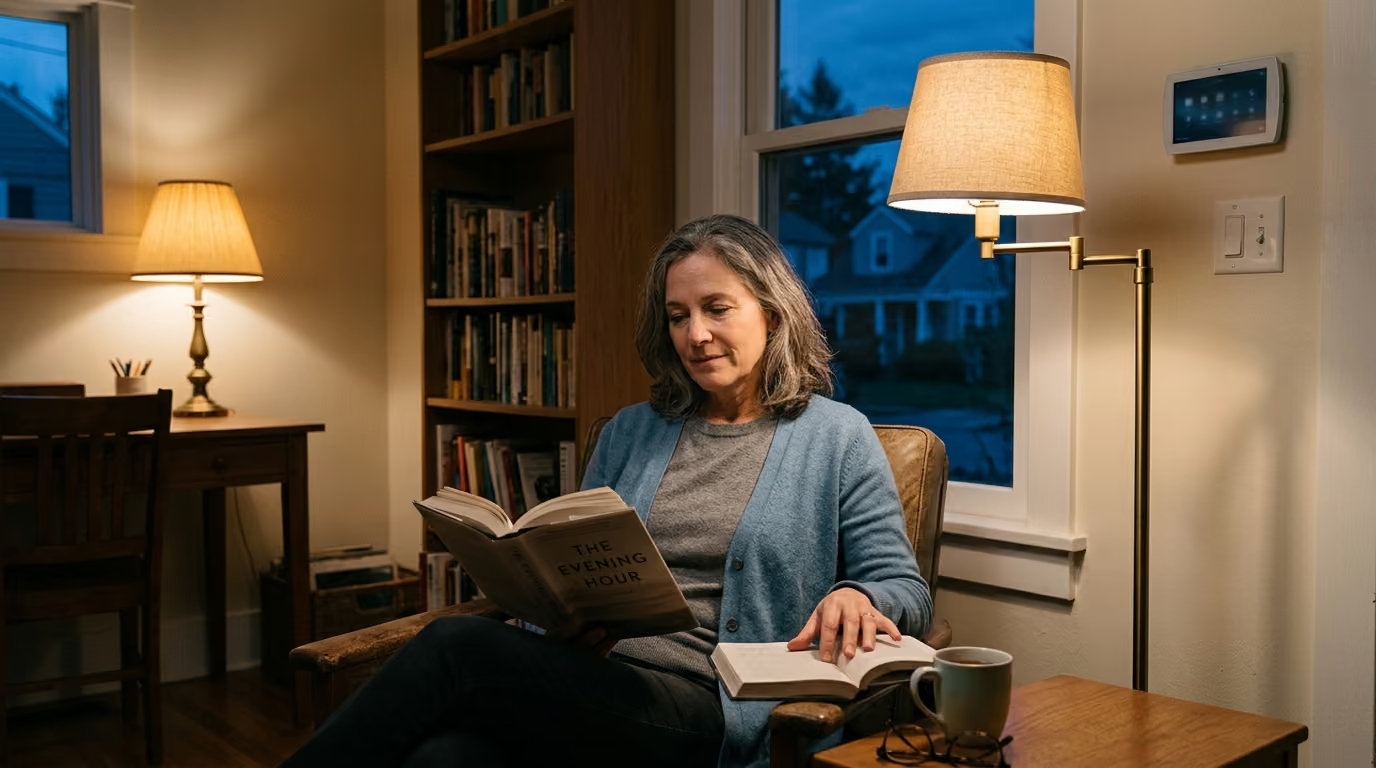
Turn off high-output, cool overhead ceiling lights across your living areas. Shift your lighting down to low-placed table lamps, floor fixtures, and wall sconces. Configure your smart bulbs to drop below 50 percent brightness while shifting color temperature to 2700K or warmer. Keep light directed onto walls, tabletops, or floors rather than straight into your eyes.
The final hour before sleep represents your biological off-ramp. High cognitive engagement, emotional stress, and intense environmental light can trigger an evening energy rebound that interferes with sleepiness.
Dim living room and bedroom lamps to their lowest stable settings, ideally between 10 and 20 percent brightness. Select an amber or very warm white setting (2000K to 2200K) that provides just enough light for comfortable movement, hygiene, and reading. Turn off any decorative lights, task bars, or accent spots that sit within direct line of sight.
The sleeping environment should remain as close to total darkness as safely achievable. Research confirms that ambient light during sleep, even through closed eyelids, can disrupt sleep depth and alter autonomic tone.
Keep all primary bedroom lighting off during the night. For safe navigation to bathrooms, use low-mounted, shielded night-lights that direct warm amber light downward toward the floor. Avoid sudden, overhead, white lighting fixtures in bathrooms or hallways.
Choosing the right equipment helps you build a system that works reliably without creating daily friction or maintenance headaches.
Smart bulbs screw directly into existing standard sockets, providing granular control over color temperature, color spectrum, and individual dimming levels. They represent the simplest entry point for bedrooms, bedside lamps, and localized reading fixtures.
Smart bulbs have practical limitations. If someone flips the physical wall switch off, the bulb loses electrical power, disconnecting from your home network and disabling scheduled automations. Some budget smart bulbs also feature a minimum dimming threshold of 5 to 10 percent, which can remain uncomfortably bright in a dark bedroom.
Smart in-wall dimmers replace standard wall switches while powering conventional dimmable bulbs. They ensure that scheduled routines work reliably regardless of whether someone uses the physical wall toggle. Dimmers maintain a familiar interface for guests, children, and partners who may not use phone apps. Smart dimmers only control brightness, not color temperature, and often require a neutral wire inside the electrical box.
Fixture placement often matters more than color temperature. Overhead ceiling fixtures disperse light across the upper visual field, directly targeting the inferior retina where ipRGCs are concentrated. Low-mounted fixtures illuminate lower visual zones, reducing direct retinal stimulation.
Use shaded lamps that diffuse direct bulb glare. Position reading lamps behind or to the side of your seating position so light reflects off reading material rather than shining straight into your eyes. For hallway and bathroom night navigation, install fixtures along baseboards or under vanity counters directed toward the floor.
Motion sensors remove the need to fumble for switches in the dark, but poor sensor configuration can disrupt rest. When setting up motion sensors for nighttime pathways:
Smart lighting routines cannot compensate for bright streetlights or glowing consumer electronics. National sleep guidelines emphasize that dark sleeping environments improve overall sleep continuity.
Install blackout curtains or fitted cellular shades to block external streetlights and vehicle headlights. Use dark fabric tape or commercial dimming stickers to cover bright blue and green LEDs on air purifiers, chargers, monitors, and power strips. Turn bedside digital clock faces away from your field of vision or set them to ultra-low amber display modes.
Automated routines help maintain lighting consistency without requiring conscious effort every night. Here are four practical automation patterns you can implement across various smart home platforms.
This schedule supports an 11:00 p.m. bedtime. Anchor the initial triggers to your target sleep schedule rather than rigid clock times:
In busy households where family members keep different schedules, turning off lights across common living areas can cause friction. The bedroom-first pattern confines aggressive circadian dimming to your personal rest space:
Dawn simulation gradually raises light levels in your bedroom prior to your alarm, mimicking a natural sunrise. This gradual illumination helps ease sleep inertia, the groggy state experienced upon sudden waking.
For a target 7:00 a.m. wake-up time:
Pairing automated dawn routines with behavioral steps, such as those described in our guide on building an effective evening transition routine, helps support more reliable transitions between wakefulness and rest.
Rigid automation schedules that do not match daily life often lead users to disable their smart lighting systems entirely. Configure your smart routines with practical flexibility:
Implementing smart lighting often introduces technical and behavioral challenges. Planning for these common failure points prevents frustration and helps your system run smoothly.
Setting smart bulbs to warm amber or candle tones does not make the light biologically neutral. If an amber bulb operates at maximum lumen output close to your face, it still delivers sufficient photons to stimulate ipRGCs and suppress melatonin. Always reduce overall physical intensity alongside shifting color temperature.
Plunging your entire home into near-darkness at 7:30 p.m. can cause eyestrain, domestic accidents, and irritation among family members. The goal is removing unnecessary, unshielded overhead glare, not making it difficult to prepare dinner or read. Use focused, downward-directed task lamps for cooking, cleaning, or paperwork, and switch them off once the task is finished.
Dimming your living room lamps while holding a bright, LED-backlit smartphone four inches from your eyes undermines your lighting plan. Screens deliver high-intensity light directly to your retinas.
Interactive social media, work emails, and intense news stories also provoke cognitive arousal and autonomic activation. A balanced routine combines low ambient lighting with screen curfews and warm display shifts.
Building complex smart scenes that can only be adjusted via smartphone apps or voice commands introduces unnecessary friction. Waking up a glowing smartphone screen at 10:30 p.m. to dim a lamp exposes you to bright light and digital notifications.
Ensure every room retains intuitive physical controls, such as smart wireless wall buttons or dimmer toggles, programmed with your preferred circadian scenes.
Inexpensive smart bulbs that connect directly to external cloud servers often experience latency or drop offline when internet connections fluctuate. When household power blips during storms, many smart bulbs default back to factory settings: 100 percent brightness at a cool 5000K white.
Select lighting systems that use local hub protocols, such as Zigbee, Thread, or local Matter control. Ensure your bulb settings are configured to "restore previous state" or "power-loss recovery mode" to avoid sudden middle-of-the-night illuminations.
Smart lighting should be understood as an environmental support tool rather than a standalone medical therapy. Examining the boundaries of current scientific evidence prevents unrealistic expectations.
Clinical research evaluating dawn simulators provides promising but nuanced findings. In a community-based crossover trial involving 100 participants over eight weeks, subjective sleep quality improved during dawn simulation use. These benefits were modest and disappeared once participants stopped using the simulators.
Another controlled study examining individuals with morning waking difficulties noted improvements in subjective alertness and mood following a 30-minute artificial dawn. In older adults, dawn simulation modified specific physiological markers before waking, but it did not produce statistically significant improvements in subjective alertness, postural balance, or cardiovascular metrics.
Dawn simulation can ease the subjective transition from sleep to wakefulness for many people, but it does not replace adequate sleep duration. A gradual sunrise lamp cannot counteract the physiological effects of chronic sleep restriction.
A standard smart bulb ramping up in a bedside lamp is not equivalent to clinical bright-light therapy. Clinical interventions for conditions like delayed sleep-wake phase disorder typically utilize specialized light boxes delivering 10,000 lux at a specified distance for 30 minutes under clinical supervision. Commercial smart bulbs rarely exceed 800 to 1100 lumens, translating to roughly 50 to 150 lux at eye level across a bedroom.
Smart bulbs provide helpful environmental framing, but they are not designed to serve as medical-grade light therapy devices. For individuals exploring broader non-pharmacological approaches to sleep disruption, our resource on practical habits for persistent insomnia outlines complementary evidence-based behavioral strategies.
To help translate these concepts into practice, here are three complete equipment and automation configurations tailored to different budgets and household needs.
This setup targets the primary sleep environment with minimal financial and technical investment:
Designed for partners who have differing sleep schedules or frequent nighttime bathroom visits:
A complete system coordinating lighting across all living spaces using a local home automation hub:
Lighting automation plans should be tailored to individual health, age, and lifestyle factors. Safety and visual function should always take priority over strict light-minimization goals.
As the eye ages, the crystalline lens gradually yellows and thickens, transmitting less light to the retina. Older adults often require higher ambient lighting to see clearly and safely. Older individuals are also more susceptible to sleep fragmentation and nighttime trips to the bathroom.
Never compromise nighttime physical safety in pursuit of zero lux. Ensure hallways, staircases, and bathrooms have continuous, low-glare, shielded floor lighting. Use fixtures that distribute light evenly across walkways to prevent tripping hazards.
Adolescents undergo a biological delay in circadian timing, naturally making them inclined to stay awake later and wake later. Developing eyes also feature clearer lenses that transmit more short-wavelength light to the retina, making teenagers particularly sensitive to evening light exposure.
Combine automated evening household dimming with clear device boundaries. Automating low living room lighting is far less effective if an adolescent continues gaming under direct screen illumination late into the night. Encourage morning daylight exposure by opening curtains and having breakfast in brightly lit spaces.
Individuals working rotating or overnight shifts require customized lighting strategies. Standard sunset-based automations can conflict with their sleep needs.
Shift workers sleeping during the day should focus on maximizing daytime bedroom darkness using quality blackout shades and eye masks. During night shifts, working under bright, cool-spectrum lighting supports alertness. Wearing blue-filtering glasses during the morning commute home helps prevent early sunlight from signaling wakefulness right before daytime sleep.
Some individuals experience headaches, eyestrain, or visual discomfort from LED lighting. This discomfort often stems from rapid, low-frequency pulse-width modulation, an inexpensive method used by some LED drivers to achieve dimming.
Select high-quality smart bulbs and dimmers that utilize continuous current reduction or high-frequency modulation to prevent invisible flicker. Avoid abrupt lighting scene changes by programming gradual fade transitions spanning several minutes.
Evaluating your new lighting routine methodically helps you verify whether it supports your sleep without causing unnecessary inconvenience. Adjust one variable at a time and track your response over two to three weeks.
Keep a simple daily sleep diary during this evaluation period. Track key metrics every morning:
Consumer smartwatches and sleep rings can illustrate broad sleep trends over time, but they should not be treated as clinical diagnostics. Focus on subjective morning energy, daytime alertness, and how easily you unwind in the evening. For guidance on assessing sleep consistency, review our analysis of sleep metrics and recovery tracking.
Smart home adjustments improve environmental conditions, but they do not treat underlying medical sleep disorders.
Schedule an evaluation with a board-certified sleep specialist or qualified physician if you experience:
Clinical sleep conditions require comprehensive medical evaluation, which may include formal polysomnography or cognitive behavioral therapy for insomnia. Light therapy is sometimes prescribed clinically for circadian rhythm disorders, but timing, duration, and intensity should be supervised by a medical professional. Learn more about evidence-based clinical sleep evaluation from the American Academy of Sleep Medicine.
Strategic lighting automation establishes consistent environmental cues that work with your natural physiology, helping you create a calmer evening transition and a smoother morning wake-up.
Stay connected for research and practical guidance on sleep, stress, circadian rhythm and recovery. Clear ideas for adults 35+ who want better rest, steadier energy and more resilient days.



Explore practical guidance on sleep, stress and recovery without chasing every new hack, device or promise.
explore the blog