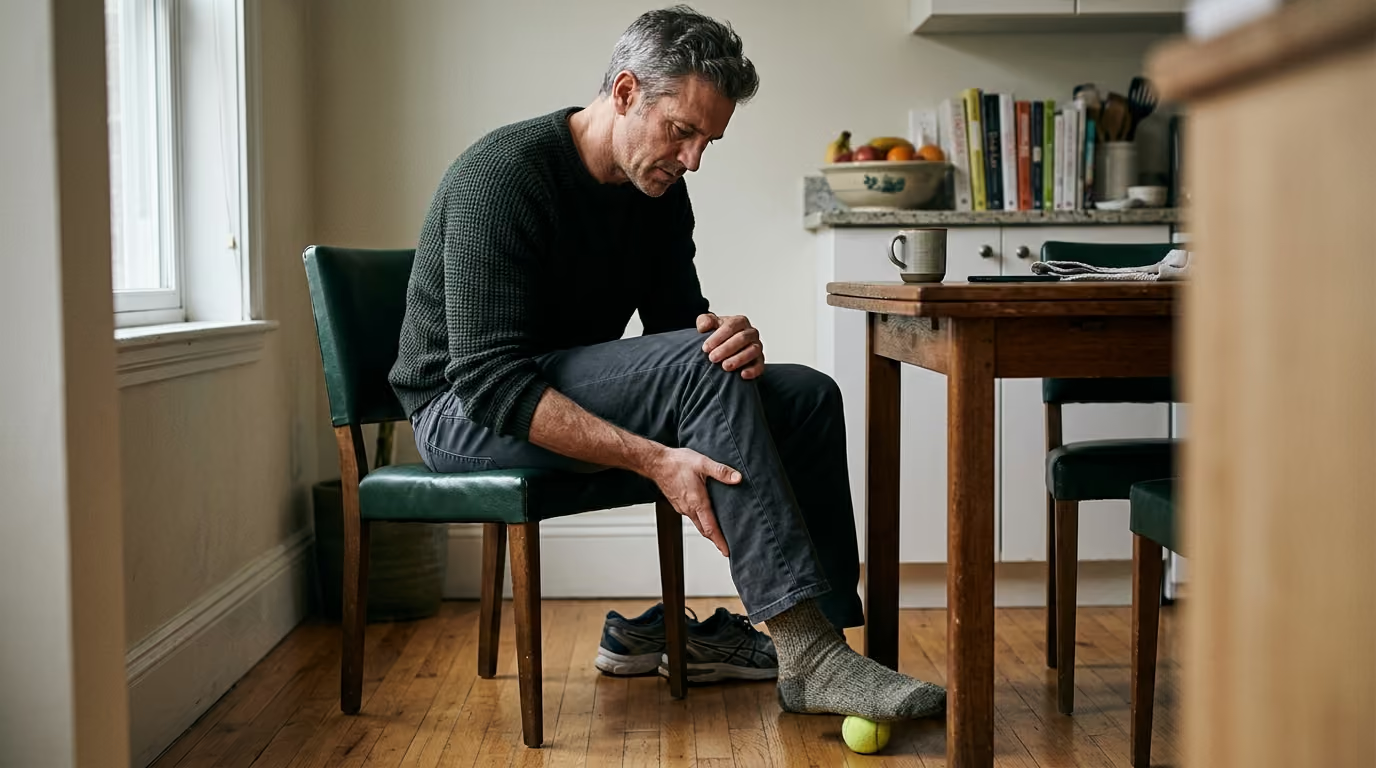

Sleep anxiety traps the brain in a cycle of nighttime hyperarousal, but practical CBT-I techniques and cognitive reframing help restore natural, effortless sleep patterns.





Sleep anxiety is a state of heightened mental and physical alertness triggered by the anticipation of poor sleep. It is not a sign of personal weakness, nor is it a permanent medical defect. Instead, it represents a self-reinforcing cycle where worry about rest produces the exact biological arousal that prevents it.
When you try to force yourself to sleep, your brain treats sleep as a goal to achieve or a problem to solve. Conscious effort works well for daytime tasks like finishing a work project or navigating traffic. When applied to a natural autonomic process, conscious effort alerts the nervous system. The mind begins monitoring the body for signs of drowsiness, asking if sleep is happening yet. This constant checking creates frustration, increases threat perception, and keeps the brain awake.
This guide provides a comprehensive review of why sleep anxiety happens and how it develops over time. It details the physiological mechanisms of hyperarousal, distinguishes routine sleep worry from chronic insomnia disorder, and breaks down evidence-based behavioral strategies. By shifting your approach from forcing sleep to creating conditions that allow sleep to happen, you can break the cycle of bedtime struggle and rebuild long-term confidence in your body's ability to rest.
Scientific research shows that sleep anxiety is driven by a state known as hyperarousal. Modern clinical models view hyperarousal as an elevated level of mental, emotional, and physical activation that persists across both day and night. It is not limited to the minutes before you turn off the light. Instead, it is a ongoing state where the nervous system remains on high alert.
Clinical evidence highlights several distinct elements of hyperarousal:
Studies examining nocturnal cognitive arousal demonstrate a direct link between nighttime worry and objective sleep disruption. Research shows that presleep cognitive arousal correlates with measurable changes in sleep architecture, including longer times to fall asleep and reduced deep sleep. Furthermore, research on insomnia-related rumination shows that repetitive thinking about sleep quality directly escalates physical tension and emotional distress.
It is important to distinguish temporary sleep worry from chronic insomnia disorder. Sleep worry happens to almost everyone during periods of high stress, travel, or physical illness. Chronic insomnia disorder, as defined by international diagnostic criteria, involves persistent difficulty falling asleep, staying asleep, or waking too early despite having enough time and a safe environment for sleep. These difficulties must occur at least three nights per week for at least three months, and they must cause noticeable daytime distress or impairment.
Data from sleep medicine organizations indicates that 33% to 50% of adults experience acute insomnia symptoms in any given year. However, approximately 10% to 15% experience symptoms accompanied by daytime impairment, and roughly 5% to 15% meet the strict criteria for chronic insomnia disorder. Recognizing where your experience falls on this spectrum helps clarify whether simple habit adjustments or structured clinical protocols are appropriate.
The fundamental problem with sleep anxiety is the paradox of effort. Sleep is an autonomic biological function regulated by two primary mechanisms: sleep drive and circadian timing. Sleep drive builds up naturally the longer you remain awake, while your circadian clock sends timing signals based on light and daily routines. Neither mechanism responds positively to conscious willpower.
When you try hard to fall asleep, your brain activates performance-monitoring pathways. You begin checking your body for signals of relaxation. You might think: "My arms feel relaxed, but my mind is still racing," or "If I do not fall asleep in ten minutes, tomorrow will be terrible." This active evaluation signals threat to the amygdala, the brain's alarm center. The amygdala responds by releasing stress hormones like cortisol and adrenaline, which increase heart rate and body temperature.
This reaction explains the common experience of feeling "tired but wired." Your physical body feels exhausted from daily activity, yet your nervous system remains biologically primed for action. The harder you try to quiet your mind, the more alert you become. Understanding why sleep feels impossible despite heavy fatigue requires recognizing that fatigue is a state of energy depletion, whereas sleepiness is a biological propensity to drift off.
Over time, this struggle creates conditioned arousal. In classical conditioning, two stimuli become linked through repeated exposure. Normally, your bed serves as a cue for rest and muscle relaxation. However, after weeks of tossing, turning, and worrying, your brain begins to pair the bed with frustration and active effort. This explains why you might feel drowsy while sitting on the couch, only to become instantly wide awake the moment your head hits the pillow. The bed itself has become a physical trigger for alertness.
The intensity of sleep anxiety varies based on a combination of biological, behavioral, and cognitive factors. Identifying these variables allows you to adjust specific daily habits without trying to overhaul your entire lifestyle at once.
Your internal clock changes as you age. Adult sleep patterns naturally shift over time, often resulting in earlier morning wakefulness or lightened sleep depth. Learning how circadian timing changes with age helps set realistic expectations for what normal sleep looks like after age 35. Aligning your sleep schedule with your natural biological timing reduces the time you spend lying awake waiting for sleep to begin.
When people sleep poorly, they often adopt compensatory behaviors to protect their energy. These behaviors seem logical in the short term, but they usually maintain long-term sleep anxiety.
The meaning you attach to wakefulness dictates your body's physical response. If you view a period of nighttime wakefulness as an annoying inconvenience, your stress response remains low. If you view it as a catastrophe that will ruin your health, career, or relationships, your nervous system releases adrenaline. Common catastrophic beliefs include:
Artificial light from devices, bright overhead lamps, and late-night media consumption suppress melatonin production. Elevated evening light exposure delays circadian timing, making sleep onset biologically difficult even if you feel mentally tired. Combined with high-stimulation work emails or news feeds, light exposure reinforces nighttime vigilance.
Cognitive Behavioral Therapy for Insomnia (CBT-I) is recommended by major medical organizations, including the American Academy of Sleep Medicine, as the primary first-line treatment for chronic insomnia. CBT-I is a structured, multi-component therapeutic system. It targets the thoughts, habits, and arousal patterns that maintain sleep difficulties. Unlike generic sleep advice, CBT-I directly dismantles the sleep-anxiety feedback loop.
Cognitive restructuring helps individuals identify and challenge inaccurate, catastrophic thoughts about sleep. It does not replace worry with unrealistic positive thinking. Instead, it replaces exaggerated fears with grounded facts.
For example, a thought like "If I do not sleep right now, tomorrow will be completely ruined" is reframed as: "I feel tired and uncomfortable, but I have functioned through tough days before. Resting quietly still provides recovery for my body."
By lowering the perceived threat level of wakefulness, cognitive restructuring reduces physiological arousal. A 2024 systematic review and network meta-analysis analyzing 241 clinical trials found that cognitive techniques play a major role in improving subjective sleep quality and reducing nighttime distress.
Stimulus control therapy aims to re-establish the bed as a strong cue for sleep rather than a site of struggle. The protocol follows standard clinical principles:
The guideline to leave bed after 15 to 20 minutes is an estimate, not a strict rule. Staring at a clock to measure 20 minutes creates the exact performance pressure stimulus control is designed to remove. Leave bed when you notice that your mind is active or your body feels restless.
Many people suffering from sleep anxiety extend their time in bed, spending 9 or 10 hours under the covers while sleeping for only 5 or 6. This dilutes sleep drive and creates long stretches of nighttime wakefulness.
Sleep restriction therapy aligns time spent in bed with the actual number of hours slept, consolidating sleep and building strong sleep pressure. Because strict sleep restriction can cause daytime sleepiness, a gentler approach called sleep compression is often used. Sleep compression gradually reduces time spent in bed by 15 to 30 minutes every few days until time in bed matches actual sleep time. Once sleep efficiency reaches 85% or higher, time in bed is gradually increased.
Clinical guidelines warn against aggressive sleep restriction for individuals with certain medical conditions, including bipolar disorder, seizure disorders, or untreated sleep apnea, as sleep deprivation can worsen these conditions.
Paradoxical intention is a cognitive technique specifically designed to eliminate performance anxiety. The instruction is simple: lie quietly in bed with your eyes open or gently closed, and make a conscious effort to stay comfortably awake without trying to fall asleep.
By removing the goal of falling asleep, paradoxical intention eliminates the fear of failing to sleep. Systematic reviews demonstrate that paradoxical intention produces clear reductions in presleep anxiety and sleep latency compared to control conditions.
Relaxation tools like diaphragmatic breathing, progressive muscle relaxation, and mindfulness meditation can lower somatic arousal. However, if you perform a breathing exercise with the expectation that it will force sleep within ten minutes, the practice becomes another performance test.
Relaxation techniques should be used as comfortable ways to pass time while awake, not as mechanisms to induce sleep. Combining these practices with strategies like offloading mental tasks before bedtime helps clear cognitive clutter before you enter the bedroom.
Translating clinical research into practical daily habits requires simple, low-friction adjustments. You do not need to overhaul your entire life to see real improvements in sleep confidence. Focus on small, reliable habits that lower nighttime pressure.
Clock checking is one of the fastest ways to escalate presleep arousal. Seeing a time like 3:14 AM immediately triggers calculations about how many hours remain before your alarm rings.
When wakefulness becomes uncomfortable, staying in bed fighting your thoughts reinforces conditioned arousal. Having a clear protocol for leaving the bed reduces decision fatigue at 2:00 AM.
Your morning wake time dictates your biological rhythm for the entire day. By anchoring your morning wake time within a narrow 30-minute window every day, you train your brain to predict when the sleep window ends.
Even after a night of brief or interrupted sleep, resist the urge to sleep in, take long morning naps, or spend the morning resting in bed. Rising at your set time builds continuous sleep pressure, ensuring you are biologically sleepy the following evening.
When unhelpful thoughts surface at night, rely on simple, neutral coping statements. Repeat these statements calmly to interrupt catastrophic thinking:
Implementing these habits requires moving beyond basic sleep hygiene into active behavioral management of your nervous system.
To better understand how these principles apply in daily life, consider six detailed case patterns. These patterns illustrate common maintains loops and show how targeted behavioral shifts break the cycle of struggle.
The Scenario: Sarah wakes up at 2:15 AM. She immediately reaches for her phone to check the time. She calculates that she only has four hours left before her alarm. She begins worrying about an important morning meeting, feels her heart rate speed up, and remains wide awake for the rest of the night.
The Loop: Nighttime wakefulness triggers clock checking, which triggers threat appraisal, physiological arousal, and prolonged alertness.
The Adjustment: Sarah places her phone inside a hallway closet before bed. When she wakes up during the night, she acknowledges that she does not know the time and does not need to know it. She focuses on slow breathing. If frustration builds, she moves to the living room to read a paper book until drowsiness returns.
The Scenario: After sleeping poorly for two consecutive nights, David goes to bed at 8:30 PM instead of his usual 11:00 PM. He hopes to make up for lost sleep. Instead, he lies awake in the dark for over two hours, feeling increasingly anxious and convinced that his sleep system is broken.
The Loop: Excessive time in bed reduces natural sleep pressure, causing prolonged wakefulness in bed and strengthening conditioned anxiety.
The Adjustment: David returns to a consistent bedtime of 11:00 PM regardless of how he slept the night before. By waiting until he feels genuine drowsiness and keeping his wake time fixed at 6:30 AM, he builds strong natural sleep drive and falls asleep much faster.
The Scenario: Elena buys sleep supplements, ambient noise machines, eye masks, and specialized breathing apps. Every night, she completes a strict 90-minute routine. While doing her breathing exercises in bed, she repeatedly monitors herself to see if she feels sleepy yet, growing irritated when she remains awake.
The Loop: Turning relaxation techniques into a strict performance test increases self-monitoring and cognitive arousal.
The Adjustment: Elena simplifies her evening routine to 20 minutes of light reading. She uses breathing exercises solely as a pleasant way to pass time, dropping the demand that they produce immediate sleep.
The Scenario: Mark wakes up feeling convinced he did not sleep a single minute all night. He feels exhausted and bitter. However, his partner reports that Mark was snoring quietly for several multi-hour stretches during the night.
The Loop: Sleep-state misperception creates intense morning dread, increasing daytime stress and presleep anxiety the next night.
The Adjustment: Mark learns that light stage 1 and stage 2 sleep can subjectively feel like conscious wakefulness. Rather than arguing with his experience or monitoring his sleep hours, he focuses on how he responds to wakefulness in bed, using neutral self-talk to reduce health fears.
The Scenario: Following a night of fragmented sleep, Rachel takes a 90-minute afternoon nap on the couch at 3:00 PM. That evening, she gets into bed at 10:30 PM but feels completely alert, remaining awake until past 2:00 AM.
The Loop: Late-day napping drains evening sleep pressure, delaying sleep onset and triggering bedtime anxiety.
The Adjustment: Rachel eliminates daytime naps. When afternoon fatigue hits, she goes for a short outdoor walk or drinks a glass of cold water. By preserving her sleep drive for nighttime, she falls asleep easily at her intended bedtime.
The Scenario: Marcus operates heavy machinery for a construction firm. He experiences severe sleep anxiety and considers trying an aggressive self-directed sleep restriction diet. However, he worries that restricted hours will compromise his workplace safety.
The Loop: Extreme sleep anxiety combined with job safety risks creates acute performance pressure.
The Adjustment: Marcus avoids extreme sleep restriction. Instead, he consults a clinical sleep specialist for guided sleep compression therapy, ensuring his sleep window is adjusted safely without compromising daytime safety.
While behavioral treatments for sleep anxiety have strong empirical support, it is important to recognize the limitations of current research and commercial offerings.
Sleep hygiene recommendations, such as keeping the room cool, avoiding caffeine, and taking warm baths, are widely promoted. However, clinical evidence shows that sleep hygiene alone is ineffective as a standalone treatment for chronic insomnia disorder. Sleep hygiene provides baseline environmental support, but it does not alter conditioned arousal, change cognitive catastrophizing, or re-establish circadian alignment.
The rise of consumer sleep trackers and smartwatches has introduced a phenomenon known as orthosomnia. Orthosomnia describes a unhealthy preoccupation with achieving perfect sleep metrics on wearable devices.
Many consumer devices estimate sleep stages using movement and heart rate algorithms, which are not as accurate as clinical polysomnography. Users often feel high anxiety upon seeing low "deep sleep" or "recovery" scores, leading to daytime fatigue driven by stress rather than actual sleep deprivation.
Over-the-counter sleep aids, antihistamines, and melatonin supplements are frequently used to manage sleep anxiety. Research demonstrates that while sedating substances may produce short-term drowsiness, they do not resolve underlying cognitive or conditioned arousal.
Furthermore, long-term reliance on sleep aids can create psychological dependency, where a person believes they cannot sleep without chemical assistance. Combining multiple over-the-counter products without medical supervision carries health risks and can obscure underlying sleep disorders.
Popular health advice often insists that every adult requires exactly eight hours of sleep every night. Clinical research demonstrates that sleep needs vary across the population, ranging from 6 to over 8 hours depending on genetics, age, and activity levels. Treating eight hours as a mandatory goal creates unnecessary anxiety for short sleepers who function well on less.
Sleep anxiety and conditioned arousal explain many cases of nighttime wakefulness, but sleep disruption can also stem from underlying medical conditions. Knowing when to seek a medical evaluation ensures that organic sleep disorders are identified and treated safely.
Consider seeking professional medical evaluation if you experience any of the following warning signs:
A sleep specialist or primary care provider can perform comprehensive diagnostic assessments, such as overnight sleep studies, to distinguish primary behavioral insomnia from physical sleep disorders.
Recovering from sleep anxiety does not require learning how to force sleep or achieving total control over your mind at night. True progress happens when you stop viewing nighttime wakefulness as a health emergency, drop the struggle to force rest, and allow your body's natural sleep systems to function without interference.
By replacing clock watching and catastrophic thinking with consistent morning wake times, sensible out-of-bed protocols, and reduced effort, you dismantle conditioned arousal. Over time, your nervous system relearns a fundamental truth: your bed is a place of comfort, safety, and natural rest.
Noticeable improvements often begin within two to four weeks of consistently applying stimulus control and cognitive restructuring techniques. However, complete recovery depends on individual factors, including how long sleep anxiety has been present. The key is prioritizing consistency over fast results, as focusing on nightly progress can recreate performance pressure.
If you experience a spike of panic or a racing heart upon waking, avoid fighting the sensation or trying to force immediate calm. Acknowledge the physical feeling as a temporary rush of adrenaline, remind yourself that it is safe, and sit up comfortably in bed or move to a dimly lit room. Focus on slow, passive exhales until your nervous system naturally settles, returning to bed only when you feel sleepy.
Lying comfortably in bed while calm and relaxed can provide rest for your body. However, if staying in bed leads to growing frustration, racing thoughts, or active attempts to force sleep, remaining in bed reinforces conditioned arousal. If rest transitions into mental struggle, leave the bed for a quiet activity in dim light until drowsiness returns.
Shift workers can apply core CBT-I principles by creating a stable sleep schedule tailored to their work rotations. Use light-blocking curtains and eye masks to create a dark sleep space during the day, establish a reliable cool-down routine before daytime sleep, and follow the out-of-bed protocol if wakefulness becomes frustrating. Focus on maintaining consistent sleep windows for each specific shift schedule.
Stay connected for research and practical guidance on sleep, stress, circadian rhythm and recovery. Clear ideas for adults 35+ who want better rest, steadier energy and more resilient days.



Explore practical guidance on sleep, stress and recovery without chasing every new hack, device or promise.
explore the blog