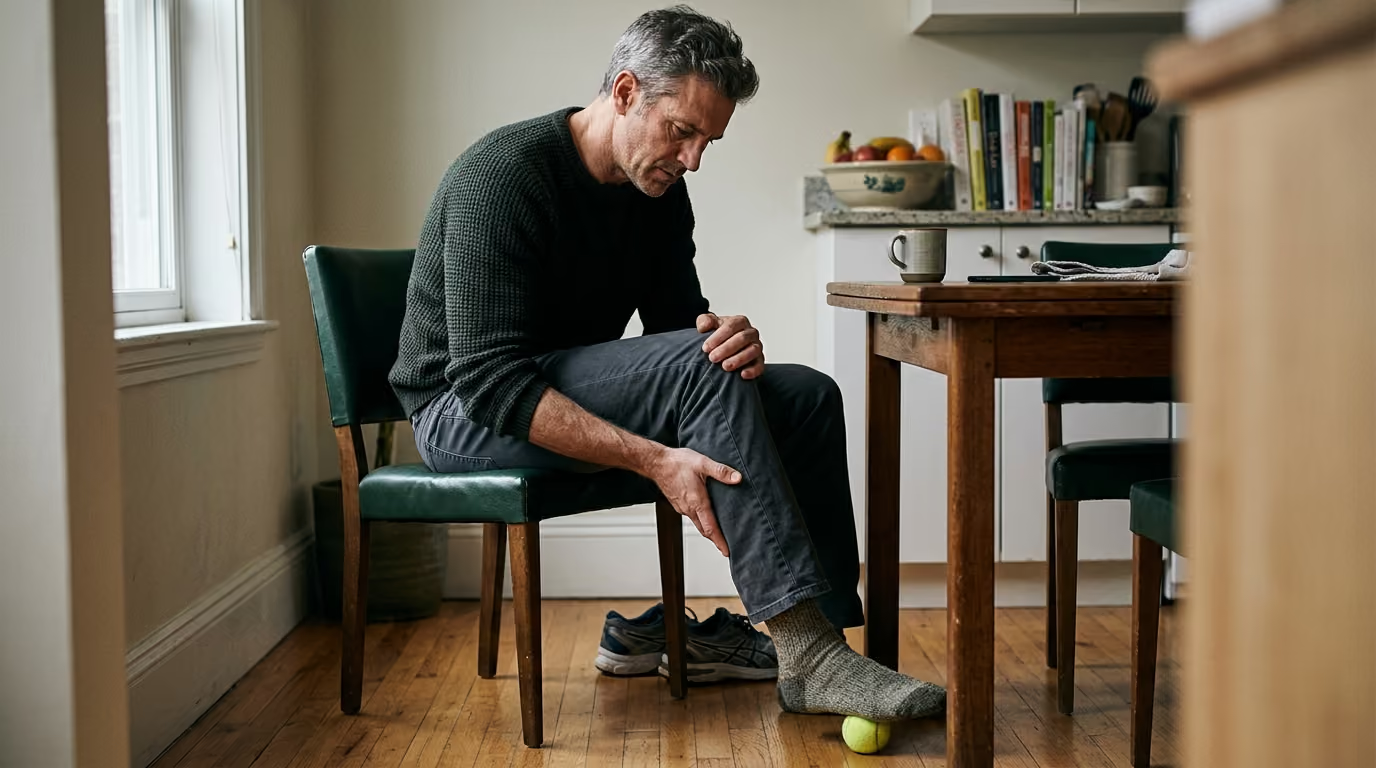

Sipping an afternoon coffee often leads to restless nights unless you calculate your metabolic clearance window and track hidden stimulant sources for deeper rest.





Many people assume falling asleep quickly after an evening espresso proves caffeine has no influence on their rest. This common observation feels logical, but controlled physiological research tells a very different story. Falling asleep easily does not mean your subsequent sleep is deep, continuous, or restorative.
Caffeine can alter your sleep architecture, shorten your total rest time, and increase light awakenings without triggering traditional tossing and turning. Understanding how stimulant timing, dosage, and personal metabolism intersect is key to waking up refreshed. This comprehensive guide breaks down the science of caffeine clearance. It provides a structured framework to help you pinpoint your ideal daily cutoff without relying on generic rules.
Caffeine exerts profound effects on human rest, but its influence is often misunderstood because sleep involves multiple distinct stages. Most people judge their sleep exclusively by sleep latency, which is the time it takes to fall asleep. Research demonstrates that caffeine affects sleep maintenance, sleep efficiency, and deep restorative stages just as heavily as sleep initiation.
A landmark randomized, double-blind, placebo-controlled study led by researchers at Henry Ford Hospital and Wayne State University evaluated the effects of 400 milligrams of caffeine. This dose equals roughly two to three standard coffees. The researchers administered this dose at bedtime, three hours before bedtime, and six hours before bedtime. Every single timing condition caused significant objective sleep disturbance compared to a placebo.
The American Academy of Sleep Medicine highlighted that taking 400 milligrams six hours before bedtime reduced objectively measured total sleep time by more than a full hour. The study also revealed a striking disconnect between subjective perceptions and objective data. Participants taking caffeine six hours before bed did not report feeling more restless. Their objective sleep monitors recorded substantial sleep fragmentation and lost sleep time.
A comprehensive systematic review and meta-analysis analyzed pooled data across multiple clinical trials. On average across laboratory conditions, caffeine consumption reduced total sleep time by approximately 45 minutes. It increased sleep-onset latency by about nine minutes. When participants consumed caffeine within six hours of sleep, total sleep time reductions frequently exceeded an hour.
A newer dose-and-timing trial compared 100-milligram doses against 400-milligram doses across different daytime intervals. Consuming 400 milligrams up to 12 hours before bedtime delayed sleep initiation and altered sleep architecture. Consuming that same 400 milligrams within eight hours of bed significantly increased sleep fragmentation. The smaller 100-milligram dose produced no statistically significant sleep disruption under identical laboratory conditions.
These findings confirm that caffeine impact is dose-dependent and timing-dependent. A small morning beverage behaves differently than a massive afternoon energy drink. Objective sleep tracking demonstrates that caffeine suppresses slow-wave delta sleep, which is the physical stage required for muscular repair and cellular recovery. It also increases micro-arousals during the night, leaving you feeling tired the next morning without knowing why.
To understand why caffeine disrupts sleep architecture, you must examine how the brain regulates tiredness. Throughout your waking hours, your brain cells burn energy molecules known as adenosine triphosphate. As this fuel burns, a chemical byproduct called adenosine accumulates in the surrounding brain tissue.
Adenosine binds to specific adenosine receptors across the central nervous system. As adenosine levels rise hour after hour, it creates homeostatic sleep pressure. This steady biochemical pressure signals to your brain that it is time to rest, recover, and clear cellular waste. High sleep pressure helps you transition smoothly into deep, slow-wave rest.
Caffeine shares a remarkably similar molecular shape with adenosine. When you consume coffee, tea, or soda, caffeine travels through your bloodstream, crosses the blood-brain barrier, and slips directly into these adenosine receptors. Caffeine docks in the receptor site without activating it, acting as an antagonist. This blocks your actual adenosine molecules from locking in.
Because your adenosine receptors are occupied by caffeine, your brain fails to detect its own rising sleep pressure. You experience a temporary sensation of alertness and mental sharpness. The underlying biological fatigue does not vanish. Adenosine continues to accumulate in the background while caffeine occupies the receptor sites.
When caffeine finally detaches and clears from your system, the accumulated pool of adenosine binds to the receptors all at once. This sudden biochemical flood creates the classic afternoon crash. If you drink another caffeinated beverage to combat this drop, you restart the cycle.
This mechanism explains why caffeine intake late in the day damages sleep quality. Even if high adenosine pressure allows you to drop off to sleep, residual caffeine remains bound to receptors. This active blockade fragments sleep cycles, lightens slow-wave rest, and impairs the brain's restorative processes. For those exploring sleep quality resources, recognizing this receptor mechanism is the foundation for improving daily rest.
The concept of half-life explains why an afternoon drink can disrupt midnight sleep. A substance's half-life represents the time required for your body to eliminate exactly 50 percent of the active compound. If you ingest 200 milligrams of caffeine, one half-life reduces the active circulating caffeine to 100 milligrams.
In healthy adults, the average elimination half-life of caffeine ranges between four and five hours. Clearance does not stop at a single half-life. After two half-lives, roughly 25 percent of the original dose remains active in your system. After three half-lives, approximately 12.5 percent continues to circulate.
Consider a practical example with a 4 p.m. cold brew containing 200 milligrams of caffeine. By 9 p.m. about 100 milligrams remain in your bloodstream. By 2 a.m. roughly 50 milligrams are still circulating through your central nervous system. That remaining 50 milligrams is biologically equivalent to drinking a cup of black tea right in the middle of your sleep cycle.
Caffeine metabolism is not uniform across all individuals. Clearance rates vary widely based on genetics, enzyme activity, lifestyle choices, and physiological stages:
Caffeine is primarily metabolized in the liver by the cytochrome P450 1A2 enzyme, known as CYP1A2. Genetic variations dictate how rapidly this enzyme processes stimulants. Fast metabolizers clear caffeine rapidly from the bloodstream, while slow metabolizers process the compound sluggishly. Slow metabolizers may carry active caffeine in their blood for eight to ten hours per half-life cycle.
Research demonstrates that cigarette smoking accelerates liver enzyme activity. Smoking significantly increases caffeine clearance, cutting its effective half-life roughly in half. When a long-term smoker quits smoking, their caffeine clearance rate drops back to standard speeds. A coffee routine that felt manageable while smoking may suddenly trigger evening wakefulness after quitting.
The use of oral contraceptive pills inhibits CYP1A2 enzyme activity. Clinical pharmacokinetic evaluations show that oral contraceptives can extend caffeine half-life substantially. A woman taking oral contraceptives may retain caffeine in her system almost twice as long as a non-user consuming identical doses.
As we grow older, liver blood flow and baseline metabolic efficiency naturally decline. These physiological adjustments mean adults over 35 often process stimulants more slowly than they did in their twenties. Many people notice that shifts in physical recovery after 35 coincide with a lower tolerance for late-day espresso. Subtle changes in your circadian body clock make sleep maintenance more fragile, amplifying caffeine's disruptive potential.
Evaluating caffeine intake by counting cups is inherently flawed. A cup is an arbitrary measurement that ignores serving volume, extraction methods, bean types, and product formulations. To manage your sleep timing accurately, you must measure your intake in milligrams.
The U.S. Food and Drug Administration notes that 400 milligrams per day is an amount not associated with general negative health effects for most healthy adults. That benchmark represents a daytime cardiovascular safety threshold rather than an individualized sleep protection guideline. Staying below 400 milligrams does not guarantee your sleep will remain uninterrupted.
Consider the broad variation in common caffeinated items:
Standard brewed coffee varies dramatically in caffeine concentration. FDA reference data shows an eight-ounce cup of regular brewed coffee contains between 113 and 247 milligrams of caffeine. A single espresso shot generally contains 60 to 75 milligrams. A large cafe beverage containing three or four shots can deliver over 300 milligrams in a single serving.
An eight-ounce cup of brewed black tea contains approximately 70 milligrams of caffeine. Green tea provides around 35 to 45 milligrams per eight-ounce serving. Matcha, white tea, and yerba mate also supply meaningful stimulant doses that require tracking in your daily audit.
Energy drinks typically contain between 40 and 250 milligrams per can, depending on brand and volume. Specialized fitness pre-workout powders frequently contain 200 to 400 milligrams per scoop. These fitness supplements often combine caffeine with other stimulants like guarana or bitter orange, amplifying their alerting potency.
Standard caffeinated soft drinks provide 25 to 50 milligrams per 12-ounce can. Dark chocolate contains natural caffeine and theobromine, providing roughly 20 to 40 milligrams per two-ounce serving. Caffeinated snack bars, mints, and workout chews can introduce unexpected stimulants into your late afternoon.
Decaffeinated coffee is not completely caffeine-free. Commercial decaffeination processes remove roughly 97 percent of the natural caffeine content. An eight-ounce cup of decaf coffee typically retains between 2 and 15 milligrams of active caffeine. For slow metabolizers drinking multiple cups throughout the evening, this residual volume can accumulate.
Several common over-the-counter pain relievers, headache medications, and cold remedies include caffeine as an active ingredient. A standard two-tablet dose of some popular headache formulations contains 130 milligrams of caffeine. Check medication labels carefully to avoid accidental late-night stimulant exposure.
Because caffeine clearance varies widely between individuals, rigid rules like "no caffeine after noon" rarely work for everyone. A fast metabolizer might tolerate an early afternoon tea, while a slow metabolizer might need to stop at 9 a.m. Conducting a structured self-experiment allows you to identify your personal threshold.
Begin by defining your target bedtime and wake time clearly. Calculate the exact number of hours between your final anticipated caffeine exposure and your intended bedtime. If your goal is sleeping by 10:30 p.m. a 3:30 p.m. coffee creates a seven-hour clearance buffer.
Log every source of caffeine you consume for one full week without altering your current habits. Record the precise time of consumption, the item, the exact serving size, and the estimated milligram total. Note whether you consumed the beverage alongside a meal, as dietary fats and protein can slow gastrointestinal absorption.
A self-experiment requires controlling outside variables that influence sleep continuity. During your test period, keep these core habits consistent:
Rather than quitting all caffeine abruptly, systematically adjust your timing across four distinct testing phases:
Track both subjective feelings and objective patterns each morning. Rate your morning grogginess on a simple scale from 0 to 10. Record how many times you remember waking up during the night, and estimate your total actual sleep time. If you use a consumer wearable, monitor long-term trends in resting heart rate and sleep continuity without obsessing over nightly stage scores.
Certain life stages and physiological circumstances alter how the human body processes stimulants. These situations demand specific adjustments to protect rest and health:
During pregnancy, maternal physiology undergoes marked hormonal adjustments that dramatically slow liver clearance rates. Medical pharmacokinetic studies show that caffeine half-life increases from roughly three hours in non-pregnant women to 10.5 hours during the final trimester. Some research reviews note half-life extensions reaching up to 16 hours near term.
The American College of Obstetricians and Gynecologists advises that moderate caffeine consumption below 200 milligrams daily does not appear to be a primary contributor to miscarriage or preterm birth. Expectant parents must remember that clearance slows progressively across each trimester. An afternoon tea that caused no sleep disruption during the first trimester may trigger severe nighttime awakenings by the third trimester. Pregnant individuals should calculate cumulative milligrams across all dietary sources and consult their obstetric care team.
The American Academy of Pediatrics advises that children under 12 should consume zero caffeinated beverages. For adolescents aged 12 to 18, daily caffeine intake should remain strictly below 100 milligrams. Pediatric medical guidelines state clearly that children and teenagers should avoid energy drinks entirely.
Adolescent brains undergo critical neurodevelopmental refinement during slow-wave sleep. Large stimulant doses from energy drinks disrupt sleep timing in teenagers, exacerbating chronic daytime fatigue and mood volatility.
When people discover their caffeine habits are undermining their sleep, their first instinct is often stopping completely overnight. Abrupt cessation frequently triggers acute withdrawal symptoms that cloud the experiment.
According to clinical reviews from the National Institutes of Health, caffeine withdrawal begins 12 to 24 hours after your last dose. Symptoms peak in intensity between 20 and 51 hours, and can persist anywhere from two to nine days. Common withdrawal manifestations include:
If you quit abruptly on a Sunday, severe withdrawal headaches and fatigue on Tuesday can trick you into thinking you need coffee to function. A gradual taper prevents withdrawal complications. Reduce your daily intake by 25 to 50 milligrams every three days until you reach your target level. This measured taper lets your adenosine receptors adapt without painful physical symptoms.
Several persistent cultural myths surround caffeine consumption, leading many adults to misjudge their stimulant habits. Examining what current evidence supports helps separate myth from reality:
This belief ignores the critical difference between sleep initiation and sleep architecture. As demonstrated by the Drake research team, 400 milligrams taken six hours before bed caused over an hour of lost sleep without participants noticing it subjectively. Caffeine increases light stage-one sleep while reducing restorative deep slow-wave rest. Falling asleep quickly does not protect you from micro-awakenings and reduced restorative efficiency.
The FDA's 400-milligram figure is a broad toxicity benchmark for healthy populations. It reflects an amount not generally linked to dangerous cardiovascular events or acute medical complications. It was never intended as a guideline for optimizing sleep continuity. A 300-milligram dose taken at 5 p.m. sits well within daily safety boundaries while severely degrading nighttime recovery.
Regular caffeine consumers build behavioral and psychological tolerance to the alerting effects of stimulants. You may no longer feel an elevated heart rate or noticeable jitters after an afternoon coffee. Tolerance at the conscious level does not mean your adenosine receptors are immune to blockade. Research on habitual users reveals that stimulant-induced changes in sleep architecture and nocturnal awakenings persist even when subjective daytime alertness feels completely normal.
Consumer smartwatches and rings provide helpful baseline estimates of movement and heart rate variability. They rely on motion sensors and optical pulse algorithms rather than electroencephalography brain wave recordings. They cannot assess sleep architecture with the precision of clinical polysomnography. Use wearable data as a broad directional trend rather than definitive proof that a late espresso left your deep sleep untouched.
Modifying your caffeine intake is a practical, evidence-based starting point for improving sleep quality. Stimulant timing is only one component of a broader biological system. If you systematically eliminate afternoon stimulants and maintain consistent habits for three weeks without improvement, caffeine may not be the root issue.
You should consider consulting a qualified healthcare professional or a certified sleep specialist if you encounter:
These symptoms may indicate underlying primary sleep disorders such as obstructive sleep apnea, chronic insomnia disorder, or restless legs syndrome. When sleep struggles stem from complex medical issues, exploring practical habits for persistent insomnia alongside a comprehensive medical evaluation offers the safest path to lasting recovery.
Optimizing your daily caffeine habits does not require giving up your favorite morning brew. Protecting your sleep simply requires understanding how dosage, timing, and individual liver metabolism interact over the course of a day.
The ideal caffeine cutoff is not a universal clock hour, but the latest timing and dose that leaves your individual sleep deep, continuous, and truly restorative.
Stay connected for research and practical guidance on sleep, stress, circadian rhythm and recovery. Clear ideas for adults 35+ who want better rest, steadier energy and more resilient days.



Explore practical guidance on sleep, stress and recovery without chasing every new hack, device or promise.
explore the blog