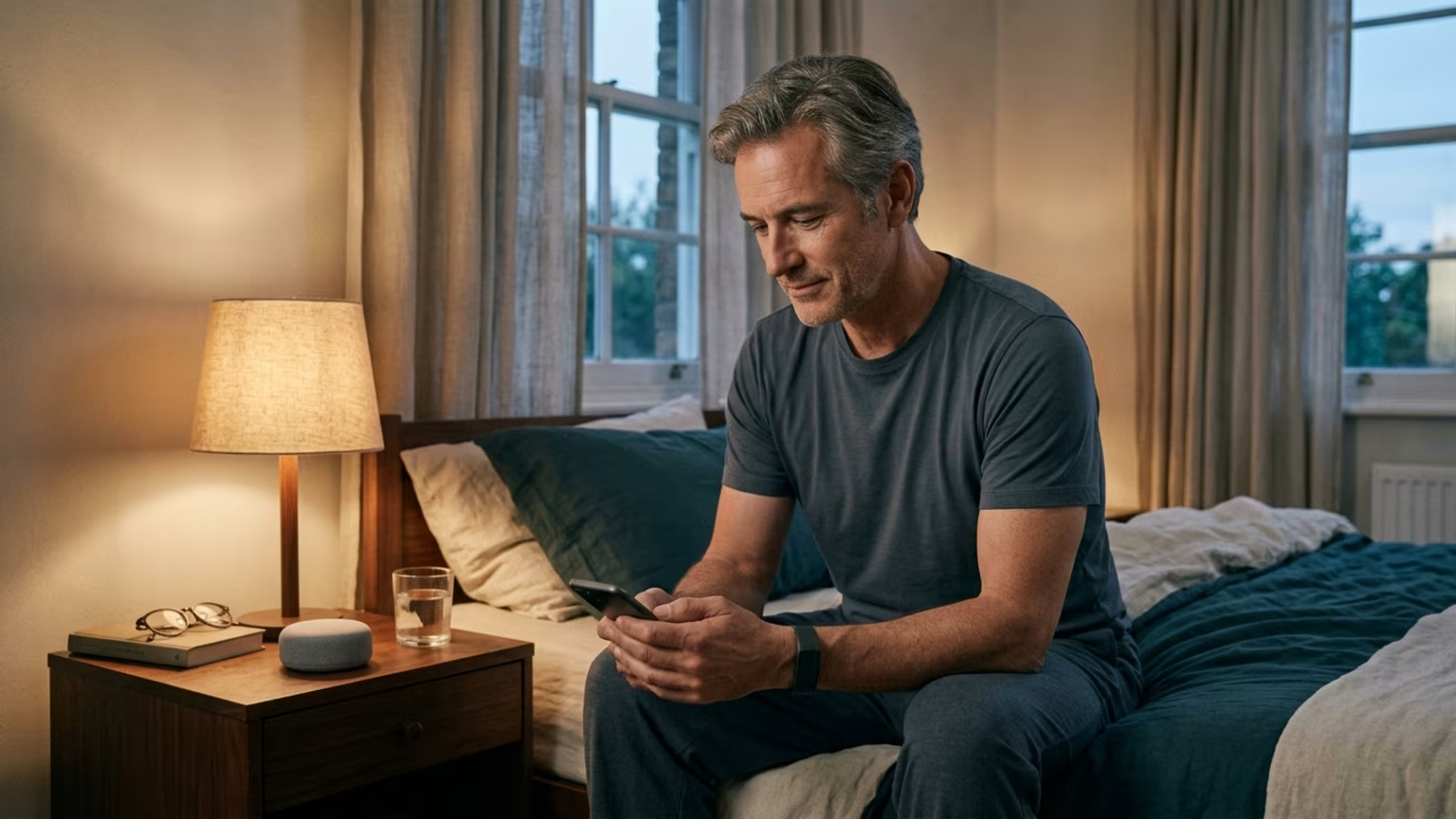

A 2026 Nature commentary highlights the limited real-world evidence and growing privacy risks of consumer sleep technologies for adults seeking better rest.





In a 2026 commentary, Nature examined consumer sleep technologies that track or actively influence rest. The publication highlighted limited evidence outside controlled settings and raised significant privacy concerns.
The central conclusion is that users have strong reasons to treat consumer sleep technology as experimental rather than diagnostic. Devices ranging from tracking applications to headbands delivering timed sounds promise better recovery. The available data suggests that practical benefits remain limited for most users. Many popular devices rely on preliminary findings rather than definitive clinical proof.
Adults in their late thirties, forties, and fifties often notice that their resilience no longer bounces back as easily as it once did. Persistent mental load can make it hard to switch off at night. When natural sleep patterns shift, the market offers a wide array of technological solutions promising a quick return to deep rest. Navigating this landscape requires separating established evidence from early or commercially promoted claims. Relaxopia focuses on translating credible research into straightforward guidance without the wellness hype.
Most experiments testing sleep technology have taken place in tightly controlled laboratories. The Nature commentary notes that wearable-supported interventions might reduce sleep disturbance. The same publication notes that effects on total sleep time are not clearly established. The overall evidence quality for most outcomes remains low.
This discrepancy between clinical environments and standard bedrooms matters heavily for adults looking for reliable solutions. Researchers often test specific outcomes over short periods in specific contexts. The Nature summary describes a four-week workplace field experiment involving a headband that delivered precisely timed sounds. Employees using the device reported better work engagement and task performance the following day.
The experiment did not assess whether these reported benefits carried over to life outside of work. Understanding this limitation is critical for adults evaluating new recovery tools. A device that boosts morning focus in a professional setting might not resolve underlying fatigue. Users must recognize that targeted workplace performance improvements do not equal comprehensive sleep health. Evaluating different features and trade-offs remains a necessary step before adopting new bedtime electronics.
Mobile applications are frequently marketed as accessible tools for better rest. A randomized trial published in the journal Sleep tested app-based audio interventions in working adults over four weeks. The study found no superior improvement in self-reported sleep disturbance when compared with a matched digital control. The interventions were safe and well-tolerated by the participants.
The findings do not support using these applications as standalone treatments for sleep disturbance. This adds a practical caveat for anyone relying on software to fix chronic fatigue. The trial reinforces the idea that results from an intervention should be compared with a credible control. Users cannot simply assume that the audio content itself produced any observed change.
Evaluating how these tools fit into everyday use requires looking closely at the actual data. Relying on an app without addressing underlying behavioral habits often leads to frustration. The available research supports a clear distinction between tracking sleep patterns and formally diagnosing a condition. The cited trials assess particular outcomes and do not establish that consumer devices can diagnose an individual’s sleep problem.
The Nature article places workplace use within a wider debate about consent and who controls sensitive health data. Bioethicists from the University of Copenhagen, the National University of Singapore, and ETH Zurich raised the questions behind the commentary. Sebastian Porsdam Mann, a legal researcher at the University of Copenhagen, warns about the long-term implications of these programs. He notes that a wellness initiative presented as an employee benefit could gradually become an expectation.
This shift becomes particularly concerning when monitoring is linked to professional expectations. The Nature summary highlights a Dutch data-protection case from 2016 involving two companies. These employers provided activity-tracking devices to their employees. In one instance, the tracked information included detailed sleep patterns.
The local authority treated the sleep data as sensitive health information. They did not consider the employee consent to be freely given. The authority cited the inherent power imbalance between an employer and an employee. This case illustrates why a nominally voluntary tracking program might not feel optional in practice.
Institutions must assess sleep technologies in terms of the sleeper’s rights and overall well-being. The commentary does not argue that all enhancement tools should be rejected outright. It calls for strict scrutiny of possible institutional pressure and wider surveillance risks. These questions deserve serious attention before tracking tools become more widely embedded in institutional settings.
For adults dealing with poor sleep or high stress, consumer technology is best treated as an optional source of observations. These tools do not provide a definitive diagnosis or replace appropriate clinical assessment. The current evidence supports caution about the limits of what these devices can actually achieve. Approaching these gadgets with realistic expectations prevents normal rest variations from feeling like a medical issue.
Before introducing a new tracker or sound device to your routine, you should ask specific questions about its function. Clarify what the device actually measures and which specific outcomes have been rigorously tested. You should also verify who can access the gathered data and whether you can stop using it without penalty.
If checking your sleep metrics creates more anxiety, removing the device is often the most practical choice. Focusing on consistent evening routines usually yields more reliable results than chasing perfect digital scores. Understanding the available options for your environment helps you prioritize simple habits over unproven technology. Evaluating daily habits is a necessary process for anyone who spends adequate hours in bed but wakes up exhausted.
As wearable devices collect increasingly detailed personal information, how will adults protect their physical privacy while still finding effective ways to restore their energy?
Assessing the privacy and evidence gaps of consumer sleep trackers requires looking carefully at how these devices fit into your daily routine, and Relaxopia helps you make that evaluation without added stress. Persistent mental load that makes it hard to switch off complicates evening recovery, and we provide evidence-based guidance to help you build practical resting habits. Explore Resources
Stay connected for research-led guidance on sleep quality, stress, circadian rhythm, recovery, fatigue and everyday energy. Clear ideas for adults 35+ who want to sleep better, recover more fully and feel more capable through the day.





Explore practical guidance on sleep, stress and recovery without chasing every new hack, device or promise.
explore the blog