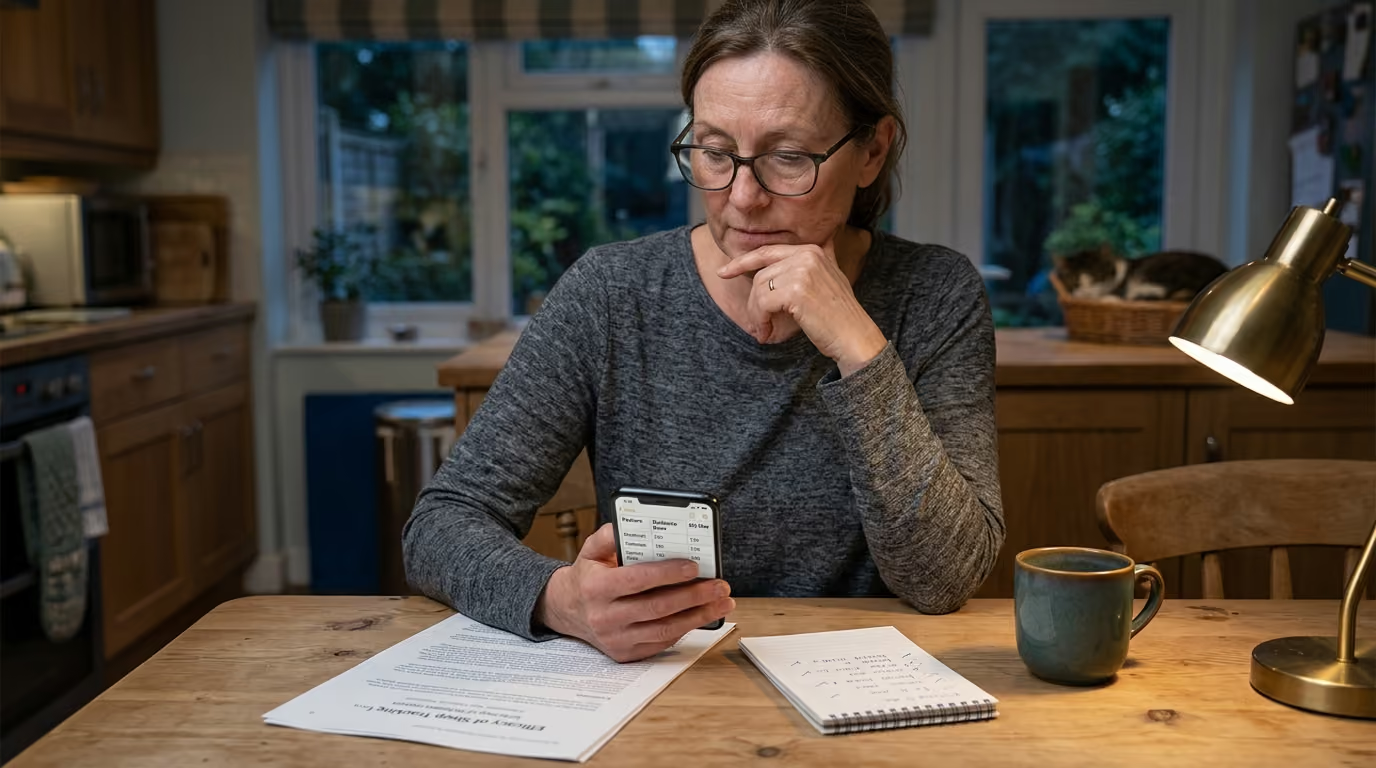

Effective nighttime recovery starts with choosing the right sleep app through a five-step framework that assesses behavioral therapy features, evidence, and privacy.





Bringing a smartphone into the bedroom contradicts almost every standard rule of sleep advice. Screen light, notification pings, and endless content feeds are well known to delay rest. Yet digital sleep applications are now among the most downloaded wellness tools in the world. Millions of adults turn on their phones right before sleep to run guided meditations, log evening habits, or track their nightly movements.
This creates a clear paradox. A device known for disrupting rest is now being used to support it.
The sleep app marketplace contains thousands of products with vastly different purposes. Some offer soothing ambient sound libraries. Others claim to deliver clinical interventions for chronic insomnia. Many sync with wristbands or rings to produce complex sleep quality graphs.
Navigating these options requires looking beyond marketing claims. Understanding what an app can realistically achieve helps you choose tools that support your evenings without adding unnecessary friction or anxiety.
The scientific evidence behind sleep applications is mixed, varied, and heavily dependent on what the app actually does. Sleep software generally falls into two categories: supportive tools and therapeutic treatments. Supportive tools provide relaxation audio, habit tracking, or schedule reminders. Therapeutic treatments attempt to deliver structured behavioral therapy to correct chronic sleep disorders.
Clinical trials show that digital interventions can produce meaningful improvements in self-reported rest. A 2024 meta-analysis of 19 randomized controlled trials evaluated mobile interventions for adults with sleep disturbances. The researchers observed moderate benefits for insomnia symptoms, with a standardized effect size of 0.60, and general sleep disturbance improvements at 0.70. Participants using structured apps reported shorter times to fall asleep, fewer awakenings during the night, and longer total sleep duration.
These improvements were not uniform across all measured outcomes. The same meta-analysis found inconsistent effects on daytime sleepiness, sleep efficiency, and wake time after sleep onset. The pooled dropout rate across app interventions reached 13.1 percent, which was significantly higher than control groups. Sustaining long-term engagement remains a major challenge for standalone software.
Other reviews highlight substantial variation across different clinical trials. A 2024 systematic review of mobile apps for insomnia examined seven clinical studies involving over 10,000 participants. While three trials evaluating digital cognitive behavioral techniques demonstrated significant gains on the Pittsburgh Sleep Quality Index, two other trials found no significant improvement on the Insomnia Severity Index. High variation across study designs, participant expectations, and app features makes broad generalizations difficult.
Evidence for digital mindfulness and relaxation apps is similarly nuanced. A 2025 systematic review and meta-analysis examined standalone digital mindfulness interventions for adult sleep. The researchers found small-to-moderate improvements in sleep quality and mental health outcomes. However, the authors rated the overall certainty of the evidence as very low because of methodological limitations, risk of bias, and high participant attrition in the reviewed trials.
Controlled trials prove that software can assist with sleep modification. However, an average statistical improvement in a research study does not mean that every commercial download delivers measurable benefits.
How an app is designed directly affects your nervous system, sleep timing, and daily energy. Digital tools interact with fundamental physiological processes that govern nighttime rest and morning alertness.
The primary physiological bridge is pre-sleep autonomic arousal. When you experience racing thoughts or work stress, your sympathetic nervous system remains active, keeping your heart rate and core body temperature elevated. This state of alertness makes falling asleep difficult. Apps that provide simple breathing routines, progressive muscle relaxation, or calming audio can help reduce sympathetic activation. Lowering this physiological tension helps your body transition toward the parasympathetic state required for rest.
Software also influences your internal body clock. Consistent daily schedules reinforce circadian timing, which controls hormone production, body temperature cycles, and sleep drive. An app that encourages regular bedtimes and wake times helps stabilize your biological clock. Conversely, an app that keeps you browsing through sound menus under bright screen light can delay circadian melatonin release and push your sleep window later into the night.
The psychological impact of data collection is equally significant. When people track their sleep, they frequently experience a phenomenon known as orthosomnia. Orthosomnia describes an excessive preoccupation with achieving ideal sleep scores generated by consumer algorithms. Rather than assessing how rested they feel, users become anxious about minor metric fluctuations.
This anxiety triggers nighttime arousal, creating the very sleep disruptions the user was trying to solve. Understanding why you cannot sleep even when you are tired often comes down to this cycle of performance pressure and conditioned bedroom arousal.
Using a sleep tool should ultimately improve how you function during the day. An effective app reduces friction, calms the mind, and builds sustainable habits that leave you feeling capable and clear-headed.
A major point of confusion in the app marketplace is the difference between basic sleep hygiene advice and structured behavioral therapy. Many commercial products market simple lists of sleep tips as complete solutions for chronic sleep disruption.
To evaluate these claims, it helps to understand standard metrics used in sleep research:
Sleep hygiene refers to general lifestyle and environmental practices that support healthy rest. Common recommendations include keeping the bedroom quiet and dark, exercising during the day, maintaining a predictable schedule, and avoiding heavy meals, caffeine, or alcohol before bed. While useful for general wellness, educational tips alone are rarely sufficient to resolve persistent sleep difficulties.
Cognitive behavioral therapy for insomnia, known as CBT-I, is a multicomponent intervention recognized by the American Academy of Sleep Medicine as the initial treatment for chronic insomnia. Unlike basic sleep advice, CBT-I directly addresses the psychological and behavioral mechanisms that perpetuate sleep problems.
A structured CBT-I program contains several specific components:
Digital CBT-I delivers these therapeutic components through structured web or mobile applications. The American Academy of Sleep Medicine notes that digital CBT-I can improve access to treatment when trained local therapists are unavailable. However, therapist-led care generally produces stronger clinical outcomes than self-guided digital platforms.
When reviewing apps in the sleep environment, habits and technology category, verify whether the product offers educational sleep hygiene or an evidence-based behavioral framework. Generic tips can support healthy habits, but chronic sleep distress requires structured intervention.
Many sleep applications rely on data gathered from smartphones, smartwatches, rings, or bedside motion sensors. These features promise to break down your sleep stages and give you an exact score each morning. Understanding the mechanical limitations of consumer sensors prevents unnecessary worry over inaccurate data.
Consumer wearables and phone apps estimate sleep primarily by tracking movement (actigraphy), heart rate variability, and acoustic signals. In general, commercial devices do a reasonable job of detecting total sleep duration and general sleep schedules when used consistently.
A validation study evaluating five popular commercial sleep trackers found that nearly all devices estimated total sleep duration with accuracy comparable to research-grade actigraphy. However, the study uncovered proportional bias across devices. The trackers frequently overestimated shorter wake periods while underestimating longer wake periods during the night.
Consumer sensors struggle significantly when attempting to distinguish quiet wakefulness from light sleep. In a performance validation study of six commercial wrist-worn devices, all trackers successfully identified over 90 percent of sleep epochs. Yet their specificity for identifying wakefulness was poor, ranging from 29.39 percent to 52.15 percent. Overall agreement with laboratory polysomnography was only fair to moderate.
Sleep stage classification is another major limitation. Smartphone algorithms that claim to calculate exact percentages of deep sleep, light sleep, and REM sleep rely on indirect proxies. A 2025 review of home sleep monitoring technologies concluded that while smartphone applications are accessible and cost-effective, they remain less accurate than clinical polysomnography. The authors noted that consumer tools are suitable for casual habit tracking, but cannot serve as diagnostic instruments.
Because of these limitations, you should avoid using consumer apps to:
For practical habit adjustment, a manual sleep log is often more useful than automated sensor feeds. Recording your approximate lights-out time, estimated morning wake time, caffeine intake, and daytime energy gives you actionable insights. Simple logs capture your personal experience without the technical errors and stress associated with automated sleep staging.
A poorly designed application can easily disrupt your sleep environment. When software incorporates intrusive notifications, bright visuals, and gamified mechanics, it encourages device checking right when your brain needs to disengage.
Bedtime media consumption creates several behavioral friction points:
A well-designed sleep app should minimize interaction time and respect your evening routine. Look for tools that allow you to start your preferred audio or log an entry with a single tap. The display should use dark themes with warm tones to prevent blue light exposure from suppressing your evening melatonin production.
Audio tools should feature automatic shutoff timers and screen-dimming modes that turn off the display as soon as playback starts. Notification controls are equally critical. A helpful app lets you silence all non-essential alerts and schedule habit reminders during the afternoon rather than right before bed.
Notifications should function as gentle cues rather than interruptions. If an app makes you interact with your phone for more than two or three minutes at bedtime, it is adding digital clutter rather than supporting your rest.
Selecting an effective sleep application requires a structured evaluation method. Using a systematic framework helps you filter out commercial hype and find tools aligned with your specific needs.
Identify the exact issue you want to address before browsing the app store. Clarifying your objective ensures you measure the app against the right standard:
Determine where the application sits along the spectrum of digital sleep products:
The American Academy of Sleep Medicine highlighted that only a small number of digital therapeutics, such as Somryst and SleepioRx, had received FDA clearance at the time of their technology review. The vast majority of available downloads are wellness apps that have never undergone rigorous clinical testing.
Be cautious when apps use phrases like "clinically proven" or "backed by science" in their marketing. Examine what kind of research actually supports the product:
An app backed by real evidence will readily link to published peer-reviewed studies rather than relying solely on user testimonials.
Marketing materials often claim an app uses advanced artificial intelligence to tailor its program to your body. Look closely at what is actually being customized.
Basic personalization simply involves selecting audio genres based on a survey or adjusting bedtime alarms to your target wake time. Meaningful personalization uses validated sleep logs to adjust your time in bed week by week, following established behavioral protocols.
Avoid apps that generate complex algorithmic health recommendations based on unverified movement data. Overly rigid targets can make you feel responsible for natural biological variations that occur from night to night.
An app must be practical to use and respectful of your personal health data. Evaluate these operational factors:
Data privacy is especially critical for digital health tools. A systematic review evaluating 24 commercial health applications found that user data was shared with 46 third parties and 216 fourth parties, including marketing and analytics companies. Many sleep services maintain policies allowing data sharing with commercial partners. Review the app's privacy policy and disable all non-essential data collection permissions.
You can evaluate any sleep application using this structured scoring system. Rate each domain from 0 to 3 to compare tools objectively:
A high total score indicates an app that balances evidence-based techniques with respectful, low-friction software design.
Different sleep challenges call for different digital tools. Reviewing common user scenarios illustrates how to apply these evaluation principles in everyday life.
This user does not suffer from chronic insomnia but regularly experiences racing thoughts about work or family responsibilities when getting into bed. They spend 20 to 30 minutes tossing and turning while their mind stays active.
This user has erratic sleep timing due to variable work shifts, frequent travel, or irregular weekend habits. They struggle with morning fatigue and daytime sluggishness because their daily schedule constantly changes.
This user has experienced severe difficulty falling asleep or staying asleep at least three nights per week for several months. They spend long hours awake in bed feeling frustrated, which impairs their focus and mood during the day.
This user wears a smartwatch to bed every night and checks their sleep score immediately upon opening their eyes. If the device reports low deep sleep, they feel anxious, check their data repeatedly, and anticipate a difficult day.
While sleep software can be helpful, the commercial digital health industry frequently makes claims that exceed current scientific evidence. Recognizing these research gaps protects you from unrealistic expectations.
A primary issue is the high dropout rate observed across digital interventions. The 2024 meta-analysis evaluating mobile apps found that users assigned to app groups dropped out significantly more often than control participants. Standalone applications require substantial self-discipline. Without ongoing human support, many people abandon digital programs before completing the behavioral modules needed to achieve lasting change.
Another limitation involves the generalizability of digital mindfulness research. The 2025 meta-analysis on digital mindfulness tools noted that while short-term gains are common, the certainty of evidence remains very low. Many published trials rely on small sample sizes, lack active control groups, and fail to track whether benefits persist several months after the intervention ends.
Furthermore, an FDA clearance for a specific prescription therapeutic does not mean that every feature in a consumer wellness app is clinically validated. Regulatory clearance applies exclusively to defined software versions used for specific medical indications. Commercial wellness apps frequently borrow medical terminology without submitting their algorithms to rigorous regulatory or peer-reviewed testing.
Finally, consumer applications cannot replace formal diagnostic evaluations. No phone app or commercial wristband can definitively diagnose conditions like obstructive sleep apnea, restless legs syndrome, or circadian rhythm disorders. Relying on an app to evaluate complex medical symptoms can delay access to appropriate clinical care.
Digital sleep applications can assist with habit tracking, relaxation, and mild schedule adjustments. However, certain symptoms indicate underlying physiological or psychological issues that require professional medical evaluation.
You should consider consulting a qualified physician or sleep specialist if you notice any of the following signs:
If you decide to seek professional care, your app data can serve as a supportive reference. Exporting a two-week sleep log that details your approximate bedtimes, wake times, caffeine habits, and daytime energy levels provides helpful context for your clinician.
However, avoid presenting wearable sleep-stage graphs as clinical proof. Physicians rely on validated medical assessments and overnight polysomnography to make accurate diagnoses. Digital tools should support your healthcare conversations, not replace professional clinical judgment.
The most effective sleep app is not the one with the most complex dashboard or largest content library, but the one that quietly supports your natural rest habits and allows you to put your phone away.
Stay connected for research and practical guidance on sleep, stress, circadian rhythm and recovery. Clear ideas for adults 35+ who want better rest, steadier energy and more resilient days.



Explore practical guidance on sleep, stress and recovery without chasing every new hack, device or promise.
explore the blog