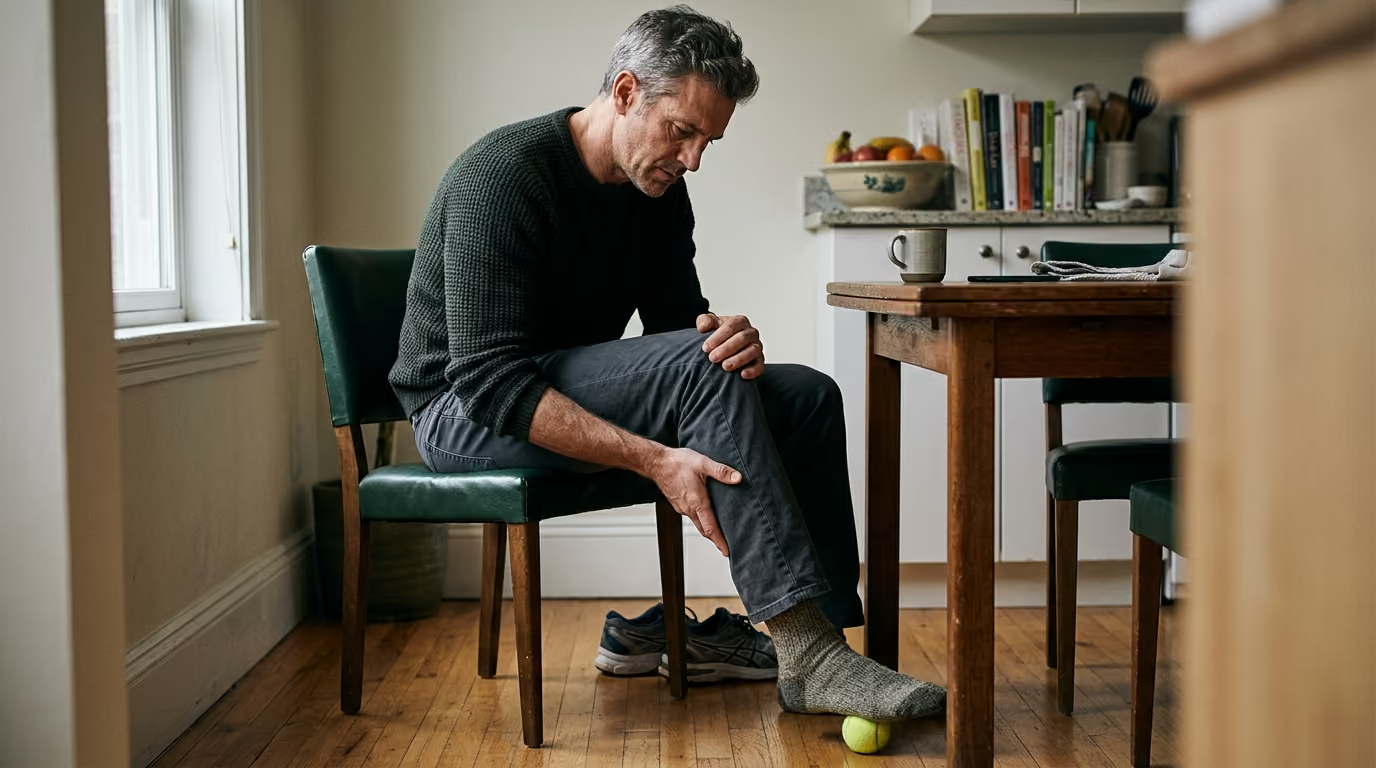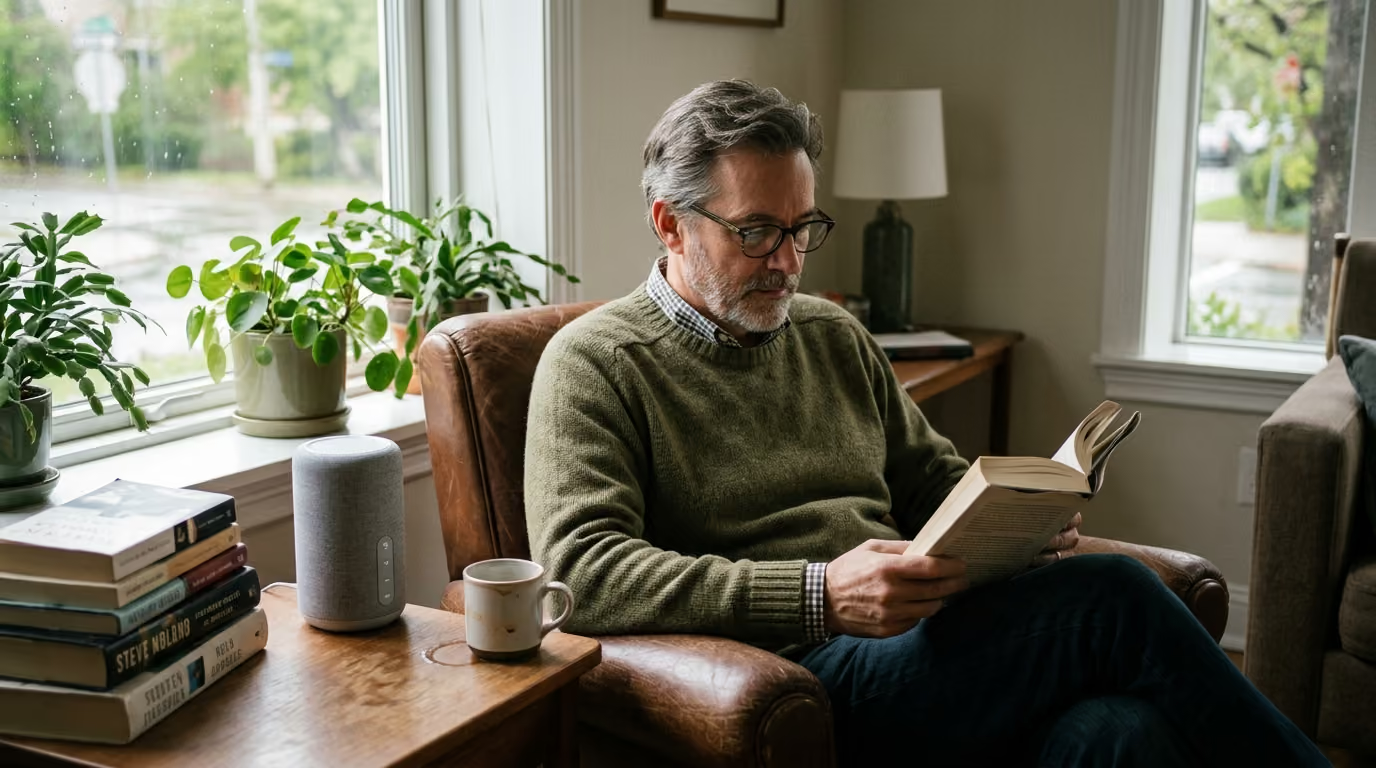

Restful nights and safe sound masking are within reach through clear evidence on white noise frequencies, decibel limits, and real-world bedroom placement strategies.





A sound machine is an acoustic management tool designed to alter the bedroom environment. It is not a biological sleep inducer, a cure for chronic insomnia, or a substitute for medical care. The primary function of any sleep sound device is acoustic masking. It adds a predictable, steady auditory signal to the room to reduce the contrast of sudden, disruptive noises.
Many adults turn to background sound when nighttime awakenings become frequent. As sleep architecture changes in midlife, sleep often becomes lighter and more vulnerable to environmental disruptions. This comprehensive guide reviews the clinical evidence behind broadband audio, compares different sound profiles, establishes safe volume thresholds, and outlines practical methods to evaluate your sleep environment.
The scientific evidence evaluating continuous broadband sound as a sleep aid is mixed, variable, and limited in overall methodological certainty. A systematic review published in 2022 evaluated thirty-four studies examining auditory stimulation during sleep. Across these studies, which included over eleven hundred participants, researchers assessed white noise, pink noise, and various multiaudio interventions. While nineteen of the studies reported some measure of positive sleep outcome, the quality of evidence across the broader literature was graded as very low.
Results vary significantly depending on study design, participant health, and acoustic delivery methods. Some trials show faster sleep onset and fewer self-reported nighttime awakenings. Other controlled studies indicate that continuous background sound can disturb sleep continuity or alter normal sleep stages. The overall literature suggests that sound devices do not automatically benefit every sleeper under every condition.
A critical finding in the research is the frequent divergence between subjective sleep quality and objective physiological measurements. Sleepers frequently report feeling calmer or subjectively satisfied when a sound machine runs in their bedroom. Polysomnography data, which tracks brain waves and sleep stages, sometimes tells a different story. In several trials, subjective comfort improved while objective indicators showed persistent micro-arousals or reduced deep sleep stages.
Hospital-based trials provide another layer of context, though their findings require careful interpretation. A systematic review of seven randomized controlled trials in hospitalized adults evaluated sound machines against intense clinical disturbances. These studies noted improvements in sleep duration and reduced awakenings in noisy hospital wards. Hospital environments contain unpredictable alarms, intercoms, and staff activity. These intense clinical environments differ substantially from a typical residential bedroom, meaning hospital findings cannot be applied directly to healthy adults sleeping at home.
The current evidence base shows that sound machines are effective acoustic buffers rather than universal sleep promoters. When background sound masks an intrusive outside disturbance, sleep quality may improve simply because fewer waking signals reach the brain. When applied in an already quiet bedroom, that same continuous sound can act as an unnecessary sensory stimulus.
Human hearing remains active throughout every stage of sleep. The auditory system functions as an environmental monitoring network, scanning the surrounding space for potential threats even while you rest. The brain does not simply react to absolute volume. It reacts intensely to acoustic contrast, which is the difference between baseline background sound and a sudden noise peak.
When a quiet bedroom is interrupted by a passing truck, a barking dog, or a closing door, the auditory cortex registers the sudden shift. This triggers a brief surge in sympathetic nervous system activity. The sleeper experiences a cortical arousal, which shifts the brain into a lighter stage of sleep or causes a full awakening. Even when a person does not remember waking up, these micro-arousals fragment sleep architecture and elevate morning fatigue.
Controlled laboratory studies illustrate the physiological cost of intermittent noise. Research using simulated traffic noise events between 45 and 65 decibels demonstrated consistent sleep fragmentation and significant reductions in stage N3 slow-wave sleep. Slow-wave sleep is the deep, restorative phase required for physical recovery, cellular repair, and metabolic regulation. When intermittent sounds repeatedly interrupt this stage, daytime cognitive performance and physical resilience decline.
Understanding this biological mechanism clarifies the specific role of sound machines. A sound machine does not eliminate the physical energy of an external sound. It raises the ambient acoustic floor of the bedroom, reducing the relative contrast between quiet background levels and sudden noise peaks. By softening this contrast, the auditory system is less likely to register an emergency alert, allowing continuous rest.
Acoustic management is only one part of an effective sleep environment. Readers working to improve their nighttime space can review practical bedroom setup and sleep technology to support deeper physical recovery.
Consumer devices offer a wide array of acoustic options, from synthetic hiss to mechanical air movement. These audio profiles differ in their frequency distribution, acoustic predictability, and potential physiological effects.
White noise contains equal acoustic energy across all audible frequencies from 20 Hz to 20,000 Hz. Because human hearing is naturally sensitive to high frequencies, white noise is perceived as a bright, steady, hiss-like sound, similar to television static.
This acoustic profile has specific strengths and limitations:
Pink noise also covers the entire audible spectrum, but its energy decreases by three decibels per octave as frequency increases. This results in greater power at lower frequencies, producing a deeper, softer tone that resembles steady rainfall or rushing wind.
Laboratory investigations into pink noise have yielded interesting findings:
Nature tracks include audio recordings of rainfall, ocean waves, flowing streams, forest wind, or moving water. These sounds are not acoustically uniform, and their effectiveness depends heavily on recording quality and rhythmic consistency.
The characteristics of nature sounds include:
A standard mechanical fan produces sound through the physical movement of its motor and fan blades cutting through air. It combines a low-frequency hum with a steady broadband rush.
Mechanical fans offer distinct practical qualities:
Selecting an audio profile comes down to personal tolerance and the specific noises you need to mask. A sleeper fighting high-frequency hallway chatter may benefit from the broad spectrum of white noise. Someone trying to soften the low rumble of street traffic often finds pink noise or a mechanical fan far more tolerable.
Sound machines are active acoustic sources. Running any audio device near your head for seven to eight hours every night introduces physical sound exposure that must be managed responsibly. Volume, proximity, and duration determine whether a sound machine protects sleep or threatens hearing health.
The World Health Organization provides clear environmental health guidelines for indoor nighttime noise. The WHO recommends that continuous indoor background noise in bedrooms remain below 30 A-weighted decibels, abbreviated as dB(A), to preserve restorative sleep. For individual sound events, the guideline advises staying below 45 dB(A) maximum sound levels to prevent sleep disturbance.
While a sound machine designed for masking must often run slightly louder than 30 dB(A) to cover external noises, increasing the volume too high introduces fresh auditory stress. Raising machine output to drown out heavy external noise increases total nocturnal sound exposure. It can also produce the very arousals you are attempting to avoid.
Infants and young children require far stricter volume precautions. Developing auditory systems possess narrower ear canals, which amplifies high-frequency acoustic pressure at the eardrum. Furthermore, infants cannot communicate auditory distress or move away from an uncomfortably loud speaker.
Rigorous laboratory testing of commercial infant sound machines has revealed significant safety concerns:
To protect developing hearing, pediatric health specialists advise strict operational protocols. Never attach a sound machine to crib rails or place it inside an infant sleep space. Position the device across the room, ideally at least two meters away from the crib. Keep the output at the lowest level that provides comfortable masking, and avoid running maximum volume settings under any circumstances.
For adults, the most effective volume is the quietest setting that softens your specific environmental disruption. A simple mobile sound meter application can offer an approximate reading when held at pillow level. If you must raise your voice to speak over your sound machine, the device is set too loud for safe overnight use.
When environmental noise penetrates a bedroom, room speakers are not the only solution. Many people experiment with sleep headphones, active noise-cancelling earbuds, or traditional foam earplugs. Each intervention operates through a different acoustic mechanism and presents clear trade-offs.
Passive earplugs block sound physically before it enters the ear canal. In controlled laboratory research comparing acoustic interventions under intermittent traffic noise, earplugs outperformed continuous pink noise in preserving natural sleep architecture. Earplugs reduced sleep fragmentation and protected deep slow-wave sleep without altering rapid eye movement phases.
Earplugs offer several advantages:
Earplugs also present practical drawbacks:
Overnight headphones and earbuds present unique challenges. Placing an active speaker directly inside the ear canal for eight hours increases local humidity and restricts natural ventilation. This can elevate the risk of outer ear canal inflammation or bacterial irritation over time. Side sleepers often experience mechanical pressure on the pinna, leading to cartilage soreness by morning.
Cords create potential entanglement risks, while wireless models require reliable battery life to avoid middle-of-the-night shut-off chimes. Active noise cancellation technology works well against steady engine rumbles, but it is less effective against sudden, sharp voices or door slams.
For most adults, a room-based sound machine placed several feet from the bed remains the most practical initial approach. If external noise is exceptionally severe, high-grade silicone or foam earplugs provide superior acoustic attenuation without introducing continuous synthetic sound.
A frequent concern among long-term users is whether sound machines cause sleep dependence. It is important to distinguish between physiological dependence and conditioned behavioral association. Sound machines do not alter neurotransmitter pathways or produce biological tolerance like pharmacological sleep aids. You do not develop a chemical need for white noise.
Conditioned sleep associations, however, are very real and biologically powerful. When an adult falls asleep to the same acoustic pattern every night for months, the brain binds that sound to the onset of sleep. The sound becomes a strong contextual cue that signals safety, relaxation, and bedtime readiness.
Conditioning becomes problematic only when it impairs your flexibility or creates sleep anxiety:
If you suspect you have developed an unhelpful psychological reliance on background sound, you can perform a systematic step-down trial. Maintain your normal bedtime routine, but lower the machine volume slightly for three consecutive nights. On subsequent nights, move the device farther from the bed, or set an auto-off timer for ninety minutes.
If sleep remains stable during the reduction, your sound machine functions simply as a helpful preference. If sleep collapses entirely in quiet surroundings, you may be dealing with unaddressed bedtime arousal. In those instances, addressing cognitive activation or reviewing managing bedtime mental overload can help settle an overactive mind without louder masking.
Using a sound machine effectively requires deliberate placement, careful calibration, and structured self-tracking. Randomly placing a speaker on your nightstand rarely yields the best acoustic or physiological result.
Follow this eight-step protocol to integrate a sound machine into your sleep environment:
To help evaluate whether an acoustic strategy fits your specific living situation, review these common residential case patterns:
A commuter bus passes your home every twenty minutes starting at five in the morning, causing early awakenings. Physical steps, such as closing storm windows and sealing frame gaps, should come first.
Place a sound machine near the window sill running a steady pink noise profile. This creates an acoustic buffer that softens the sudden engine acceleration without requiring high volume at the bed.
A partner snores with irregular rhythms, causing frequent nighttime arousals. A sound machine placed on the nightstand can mask faint breathing sounds, but it cannot safely drown out heavy, low-frequency snoring.
Escalating the machine volume to overcome loud snoring exposes your ears to excessive overnight decibels. In this scenario, combining low-level background sound with comfortable high-attenuation earplugs is safer and far more effective.
Some sleepers experience elevated heart rates or racing thoughts when entering an entirely silent bedroom. In a quiet room, every minor house settling sound or creak seems magnified, triggering hyper-vigilance.
Set a sound machine across the room playing soft nature sounds or running a mechanical fan at low speed. The goal is to provide a gentle, predictable acoustic anchor that allows the nervous system to relax without creating auditory fatigue.
Working night shifts requires sleeping while neighborhood traffic, construction, and household activity are at their peak. Daytime environmental noise is louder and more persistent than nighttime noise.
A comprehensive intervention works best here: combine blackout window coverings, room-based sound masking placed near the bedroom entry, and silicone earplugs. If your sleep timing remains disrupted despite sound control, exploring circadian rhythm and sleep timing can help align your internal biological clock with your work schedule.
While commercial marketing presents sound machines as scientifically validated sleep aids, the underlying academic literature contains substantial gaps and methodological weaknesses. A large portion of published studies rely on very small participant cohorts, often involving fewer than twenty individuals tested over only one or two nights. These short durations make it impossible to evaluate long-term auditory habituation, chronic sleep architecture changes, or subtle hearing health outcomes.
Commercial bias and inconsistent acoustic terminology also complicate the evidence base. Consumer sleep products frequently use the terms white noise, pink noise, and brown noise interchangeably, even though their acoustic spectra are entirely different. Many studies fail to report critical technical metrics, such as calibrated sound pressure levels at the ear, speaker frequency response, or precise room dimensions. Without standardized acoustic reporting, reproducing study results in real-world settings remains difficult.
Crucially, sound masking does not address the physiological root causes of insomnia or sleep-disordered breathing. Masking external noises will not resolve hyper-arousal driven by chronic workplace stress, circadian phase delays, restless legs syndrome, or obstructive sleep apnea. When sleep remains unrefreshing despite a quiet, well-masked bedroom, relying on louder audio devices only delays appropriate investigation.
Readers seeking broader behavioral strategies beyond environmental sound can consult structured habits for persistent insomnia to address non-acoustic sleep obstacles.
A sound machine is a minor environmental adjustment, not medical therapy. It is important to recognize when sleep problems indicate an underlying sleep disorder or auditory condition that requires clinical attention.
Consult a qualified healthcare professional or sleep specialist if you notice any of the following patterns:
If poor sleep leaves you feeling chronically drained throughout the workday, reviewing research on recovery sleep and daytime energy can help you understand how sleep debt impacts daytime function.
If your primary challenge is settling down at bedtime, a 60-minute shut-off timer is preferable because it minimizes total nightly sound exposure. If you live near an active street or in an apartment with unpredictable early-morning noise, continuous low-level playback helps prevent noise-induced awakenings. Keep continuous overnight sound at the lowest effective volume.
For many people with tinnitus, soft background sound provides relief by reducing the contrast between a quiet room and internal ringing. If white noise is played at high volumes or contains harsh high frequencies, it can irritate the auditory system and temporarily worsen tinnitus symptoms. Individuals with tinnitus should use lower-frequency pink noise or gentle nature sounds at modest levels.
Brown noise, also called red noise, decreases in power by six decibels per octave, giving it a very deep, heavy bass profile similar to a distant waterfall. Some people find the deep acoustic profile more relaxing than higher-pitched alternatives. Rigorous clinical trials comparing brown noise to pink or white noise remain scarce, so individual comfort should guide your choice.
You can download a calibrated sound level meter application onto a smartphone for a practical baseline estimate. Place the phone directly on your pillow where your head rests while the room is quiet and the machine is running. If the reading exceeds 50 dB(A), or if you cannot comfortably hear a normal speaking voice in the room, lower the volume or move the machine farther away.
Sound machines are useful tools for masking unpredictable environmental noise, but they are not universal sleep enhancers or biological treatments. The safest and most effective approach is to use the lowest volume necessary, keep the speaker away from your head, and prioritize source noise control whenever possible.
Stay connected for research and practical guidance on sleep, stress, circadian rhythm and recovery. Clear ideas for adults 35+ who want better rest, steadier energy and more resilient days.



Explore practical guidance on sleep, stress and recovery without chasing every new hack, device or promise.
explore the blog