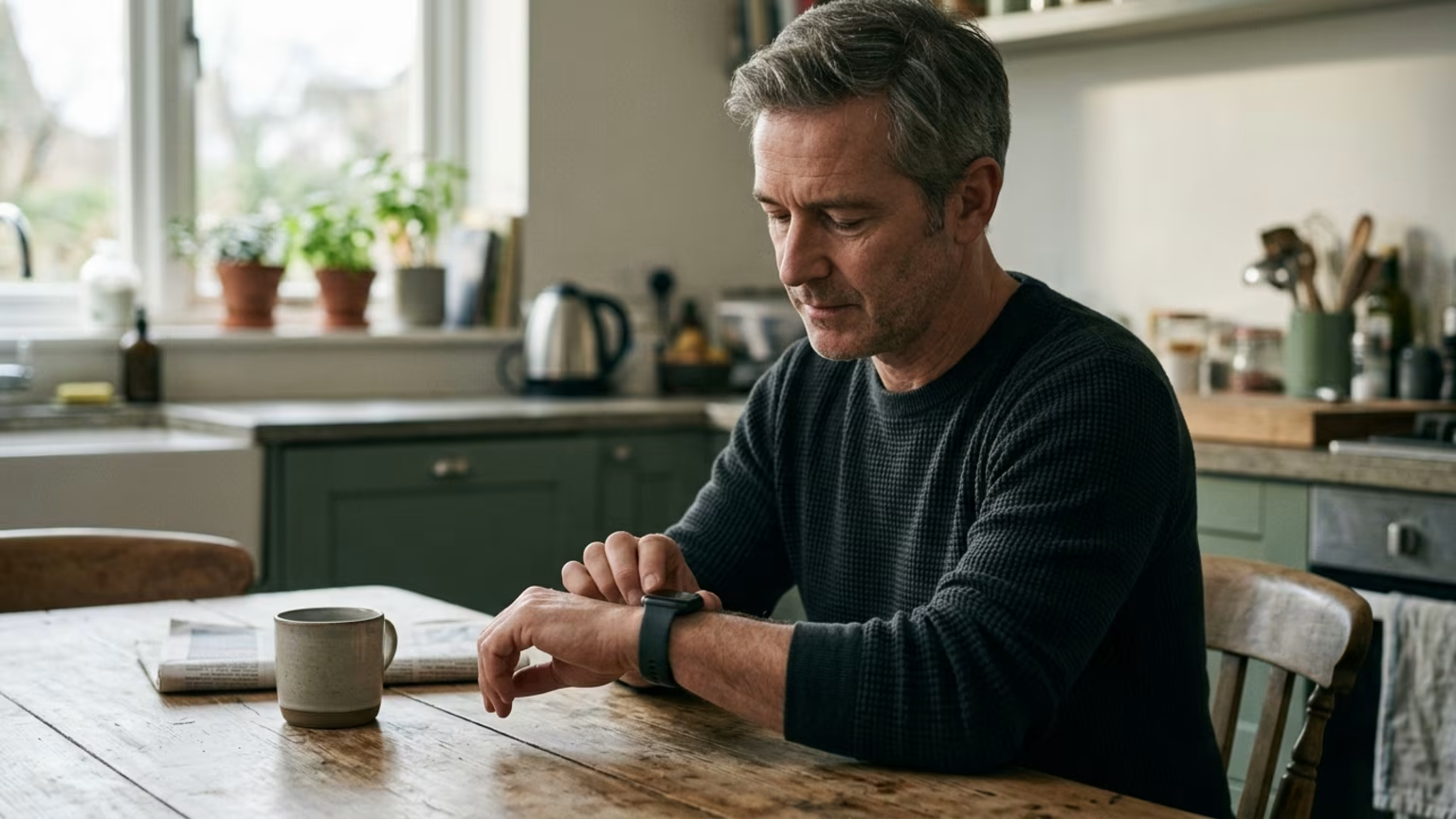

A neuroscientist’s review puts sleep tracker accuracy in context, with practical guidance on duration estimates, sleep stages and longer-term patterns.





On October 15, 2026, the Daily Mail published an article adapted from The Conversation examining how closely consumer sleep trackers match clinical measurements. It featured J. David Creswell, a Carnegie Mellon University professor of psychology and neuroscience.
The central finding is that sleep duration and sleep stages deserve different levels of confidence. Creswell’s account presents total sleep time as a more useful starting point than a single night’s deep-sleep estimate or readiness score. The practical value lies in noticing meaningful patterns rather than treating each morning’s result as a verdict on recovery.
The report compares consumer wearables with polysomnography, often shortened to PSG. This clinical sleep test uses EEG and other sensors to record brain waves and eye movements alongside muscle tone. Consumer wearables instead estimate sleep from indirect signals such as movement and heart-rate patterns.
Those signals can include beat-to-beat heart-rate variability and skin temperature. They provide physiological clues that software uses to estimate sleep rather than directly recording brain activity. Understanding that distinction helps explain why a detailed-looking sleep report may still contain uncertain estimates.
According to the Daily Mail report, a 2025 meta-analysis of 24 studies and nearly 800 participants found that wearables overestimated total sleep time by about 17 minutes on average compared with PSG. The article describes that as an error of under 4% over an eight-hour night.
The comparison became less reassuring when researchers examined sleep stages. The report describes a 2025 study of six wrist-worn devices in 62 adults that found only modest agreement with PSG on sleep stages. It also reported significant gaps in estimates of wake after sleep onset and sleep efficiency.
The comparison is identified in secondary coverage of sleep-data research as a 2025 Sleep Advances paper by Schyvens and colleagues. The findings described here are those summarized by the Daily Mail, rather than additional device-by-device results.
These results address different questions. Estimating the overall length of a night is not the same task as assigning its parts to particular sleep stages. A device’s performance on duration should therefore not be treated as proof that every other sleep metric has the same accuracy.
The report also examined whether receiving sleep information was useful in practice. It described a 2023 trial involving 113 adults with insomnia symptoms over five weeks. Participants receiving wearable feedback and guidance reported milder symptoms than the sleep-hygiene group, while measured sleep did not change.
That distinction matters: feeling less troubled by sleep and showing a change in measured sleep are separate outcomes. The report did not present the trial as evidence that a more favorable experience necessarily meant a measurable change in sleep itself.
The article also described a 2026 trial of 229 older adults in Japan using an under-bedding monitor. Reports alone did not improve insomnia scores. Reports accompanied by monthly phone guidance on sleep habits and daytime activity were associated with improved scores during at least the first three months.
Together, these accounts raise a question about interpretation. The useful element may involve how information is explained and placed in context rather than simply making more measurements available. For someone deciding whether tracking deserves a place in daily life, that is a more relevant distinction than the amount of detail an app displays.
Several boundaries belong around these findings. The average 17-minute overestimate is not a correction factor for an individual person or night. Subtracting that amount from every reading would turn a group finding into a personal calculation the research does not support.
The report identifies quiet wakefulness as one possible source of error. Someone lying awake without moving may be counted as asleep, which may be particularly relevant for people with insomnia who spend longer periods awake in bed. A reassuring duration estimate can therefore sit beside a genuine memory of being awake.
Device changes create another boundary. The article notes that hardware and algorithms may change before a validation study is published, so an evaluated tracker may already have been replaced. The trial findings are also secondary summaries reported by the Daily Mail, not independently verified treatment evidence here.
There is a personal cost to watch for too. The report uses the term “orthosomnia” for sleep-related concern focused on tracker data. When checking becomes a source of preoccupation, the question shifts from whether the device collects information to whether that information is helping.
For more context on evaluating these distinctions, Relaxopia’s guide to weighing wearable measurements separates useful observations from stronger interpretations.
The Daily Mail quotes the device-study authors as concluding that better-performing watches could track “prolonged and significant changes in sleep architecture.” That wording points toward sustained changes in sleep patterns rather than small fluctuations in a single morning’s report.
It is a narrower claim than promising a precise nightly breakdown. The useful question becomes whether something meaningful has changed over time. That keeps the scale of the research finding aligned with the scale of the decision being made.
Creswell’s practical framing follows that direction: treat deep-sleep and readiness readings as estimates and look for meaningful patterns. The aim is not to win a better score but to understand whether the information adds useful context to everyday recovery.
For an adult aged 35 to 65, a useful daily adjustment is to place the tracker beside personal experience rather than above it. That means noticing how rested and alert you feel alongside the device’s account. Work and caregiving can make recovery feel complicated enough without assigning an app the final word.
A practical way to apply the report’s findings is to give different kinds of information different roles:
This is an adjustment in how data is read, not a new recovery routine to complete. It does not require a personal deep-sleep quota or a more elaborate monitoring system. The focus stays on whether the information makes everyday rest easier to understand.
A tracker can also be kept in perspective without being dismissed altogether. Enjoying its feedback does not require believing every estimate. Questioning a score does not mean all longer-term observations are useless.
Persistent poor sleep or difficulty functioning during the day belongs in a conversation with a qualified health professional. Tracker patterns may provide context for that conversation, but the numbers alone do not explain the cause or diagnose a sleep disorder.
Readers weighing the role of individual measurements can also find context in Relaxopia’s discussion of personal sleep data and insufficient rest. The practical priority remains the person’s sleep and daytime functioning rather than the completeness of the dashboard.
The next research question is broader than whether a wearable moves closer to PSG. It is whether the information helps people make useful decisions about rest without creating another source of pressure. The reported feedback trials make guided interpretation a worthwhile part of that question.
For midlife recovery, future studies could examine whether attention to sustained patterns supports useful changes in daily functioning. They could also test how much guidance people need to make the information helpful rather than burdensome.
Could sleep tracking become a quieter part of long-term midlife recovery by focusing on meaningful patterns and useful guidance rather than a nightly score to pass?
Deciding how much weight to give a sleep score requires context beyond the display, and Relaxopia handles that editorial work through research-led coverage. For adults 35+ uncertain about wearables and recovery technology, the publication connects device evidence with sleep quality and fatigue to support practical judgments without turning rest into another performance target.
Stay connected for research-led guidance on sleep quality, stress, circadian rhythm, recovery, fatigue and everyday energy. Clear ideas for adults 35+ who want to sleep better, recover more fully and feel more capable through the day.





Explore practical guidance on sleep, stress and recovery without chasing every new hack, device or promise.
explore the blog