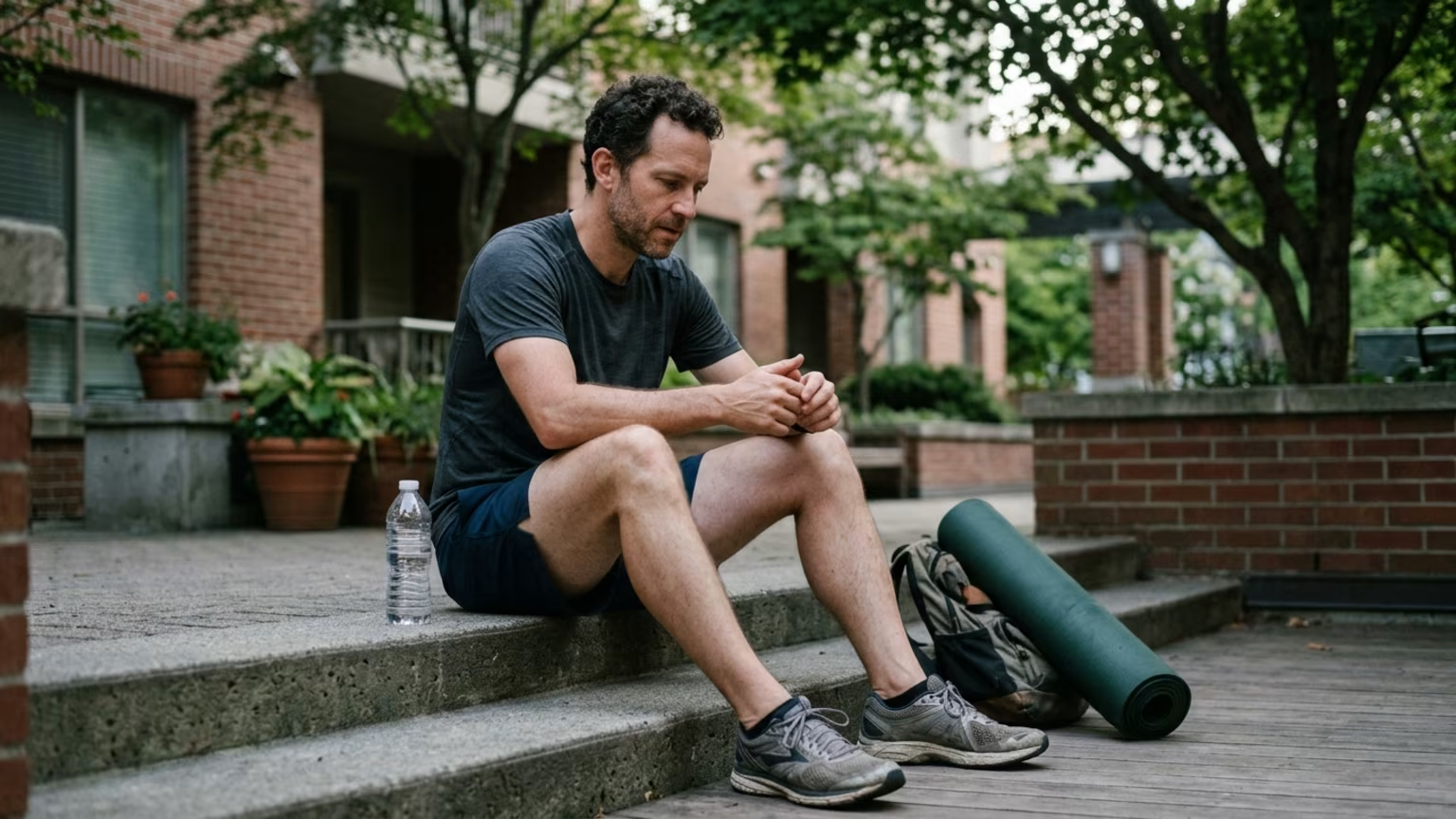

Recent reports from the New York Post and HSS outline how adults over 35 can adjust their post-workout recovery using sleep, nutrition and scaled training.





On September 21, 2026, the New York Post published a report outlining six post-workout recovery recommendations for adults over 35 from New York-based fitness coach Jacob Zemer. The September 26 update highlights that training benefits depend heavily on sufficient rest, sleep and adequate time to de-stress after exercise.
The primary conclusion of the reporting is that physical exertion is only one part of the fitness equation. Real physical adaptation requires sufficient time, dedicated rest and energy availability to heal from the stress of a workout. For many adults, managing how the body repairs itself is just as critical as the exercise routine itself.
The conversation around adult fitness is slowly changing to prioritize rest. The New York Post story cites a 2026 review that describes exercise as a cycle of stress response, adaptation and recovery. This biological framework explains why giving the body a chance to repair is so crucial for long-term health. Without sufficient rest, the adaptation phase cannot occur properly, leading to stagnating results. The available reporting does not provide enough detail to assess the review’s exact methods independently, but the central premise aligns with broader medical advice.
A separate Hospital for Special Surgery explainer published on September 15, 2026, offers further context on this physical process. It notes that recovery may feel more noticeable or take longer over time. Age changes how the body handles exertion, meaning that older adults cannot always rely on the quick bounce-back they experienced in their twenties. Understanding this shift is vital for anyone trying to maintain a consistent exercise routine into their later years. This explainer serves as a useful counterpoint to any single coach’s recommendations by reminding readers that individuals’ recovery needs can vary wildly.
The American College of Sports Medicine sets clear baselines for physical activity. The organization recommends that adults get 150 minutes of moderate-intensity aerobic activity and two muscle-strengthening sessions each week. Meeting these targets places a regular physical demand on the muscular and nervous systems. Balancing these clinical targets with enough rest can complicate assessing your daily physical capacity if you ignore your own fatigue levels. Pushing through exhaustion without adjusting your routine often leads to diminished returns and increased frustration.
Zemer’s specific coaching practice focuses primarily on clients ages 35 to 55. These individuals are typically focused on longevity rather than bodybuilding or powerlifting. To help them reach their goals safely, his coaching focuses on six distinct areas. These include sleep, regular bloodwork, heat exposure and stretching. He also prioritizes proper protein intake, hydration and finding time to de-stress after exercise. While these steps are highly practical, they form a coaching perspective rather than a universal medical requirement.
Fitness professionals and exercise physiologists notice distinct patterns when adults try to maintain aggressive workout schedules. Zemer notes that his clients are mainly interested in longevity and “want to age well.” This shift in priorities fundamentally changes how individuals measure the success of a training block. The focus moves away from simply lifting heavier weights to maintaining consistent energy for daily life.
Clinical specialists see similar trends in the timeline of muscular repair. In the Hospital for Special Surgery article, exercise physiologist Kelyssa Hall provides a timeline for typical physical responses after training. She explains that typical stiffness and soreness resolve within 24 to 72 hours for most people. Hall also notes that hydration and adequate protein can matter greatly when someone is more tired than usual.
The biological mechanisms of muscle repair do change as we get older. Hall says muscles can become less efficient at using dietary protein with age. To address this natural decline, she advises consuming protein throughout the day rather than in one sitting. This is expert guidance reported by the Hospital for Special Surgery, noting that readers should use it as general education rather than a rigid prescription tailored to every single person.
The practical implication of this reporting is that adults should treat recovery as a formal part of their weekly training schedule. Protecting your sleep and making room for post-workout rest are highly necessary habits. Assuming that more intensity always produces better results can easily lead to excessive fatigue. Instead, you can build a sustainable routine by monitoring how your body responds to physical stress. By integrating rest into your actual calendar, you make certain that physical exertion does not overwhelm your nervous system.
Quality sleep remains the undeniable foundation of physical restoration. Zemer recommends getting seven to nine hours of quality sleep each night. He also suggests maintaining a consistent bedtime, reducing screen use before bed and avoiding stressful conversations near bedtime. The CDC broadly supports this volume, stating that most adults need at least seven hours of sleep each night for proper health. Readers should view the coach's specific list of bedtime habits as helpful suggestions rather than medical requirements.
Exercise itself is still a physical stressor, even when it is highly beneficial. Zemer advises that taking time to de-stress after a training session is incredibly valuable for the nervous system. Eating a meal and resting briefly before moving on with the day may help the body recover. Pausing to transition slowly from a workout to work tasks is a useful method for managing periods of elevated physical and mental strain throughout the week.
Supporting your body with adequate fuel is a non-negotiable part of the physiological repair cycle. The New York Post article cites sports nutrition guidance of about 20 to 40 grams of high-quality protein after training. Active adults might aim for roughly 1.4 to 2 grams of protein per kilogram of body weight per day. However, it is vital to remember that these protein needs should be individualized. This is especially true for people managing certain pre-existing medical conditions. Hydration also remains critical, particularly when you feel unusually drained after an aerobic session.
Understanding the difference between expected fatigue and overtraining is a vital skill for anyone exercising in midlife. Zemer describes short-lived soreness as an expected, normal outcome of physical exertion. As a coaching rule of thumb, he says soreness lasting more than two or three days may indicate that someone did too much. If this happens, one practical response he suggests is reducing your overall training volume by 30%.
Readers should not treat these specific soreness thresholds or volume reductions as universal diagnostic cutoffs. The 24-to-72-hour timeframe from the Hospital for Special Surgery describes what is typical, not a strict deadline by which everyone must recover. If soreness persists beyond a few days, scaling your expectations is often the safest path forward. Significant pain or unusually prolonged fatigue requires individualizing your recovery approach.
Many adults explore complementary practices to speed up their physical repair and reduce discomfort. The New York Post article reports that a 2025 review of 22 studies found nearly half of participants reported improved muscle-function recovery with heat therapy. While this sounds promising, it does not establish that heat improves recovery for absolutely everyone. Regular stretching is also recommended as a supportive habit for maintaining joint mobility over time.
Finally, Zemer suggests getting regular bloodwork to monitor internal health markers. Preventive testing should always be personalized by age, gender, symptoms and medical history. Rather than demanding blanket hormone testing, individuals should discuss appropriate preventive screening with a doctor. This comprehensive approach acknowledges that physical restoration takes longer as we age and requires thoughtful, targeted care.
As fitness for adults shifts away from sheer intensity toward long-term resilience, how will an evolving understanding of the physical stress response change our daily approach to midlife recovery?
Balancing intense exercise with sufficient rest requires realistic information rather than rigid fitness protocols. Relaxopia translates credible evidence into clear, practical guidance for adults navigating the physical strain of workouts, directly addressing difficulty falling asleep or staying asleep so you can establish habits that genuinely restore your daytime energy. Explore Resources
Stay connected for research-led guidance on sleep quality, stress, circadian rhythm, recovery, fatigue and everyday energy. Clear ideas for adults 35+ who want to sleep better, recover more fully and feel more capable through the day.





Explore practical guidance on sleep, stress and recovery without chasing every new hack, device or promise.
explore the blog