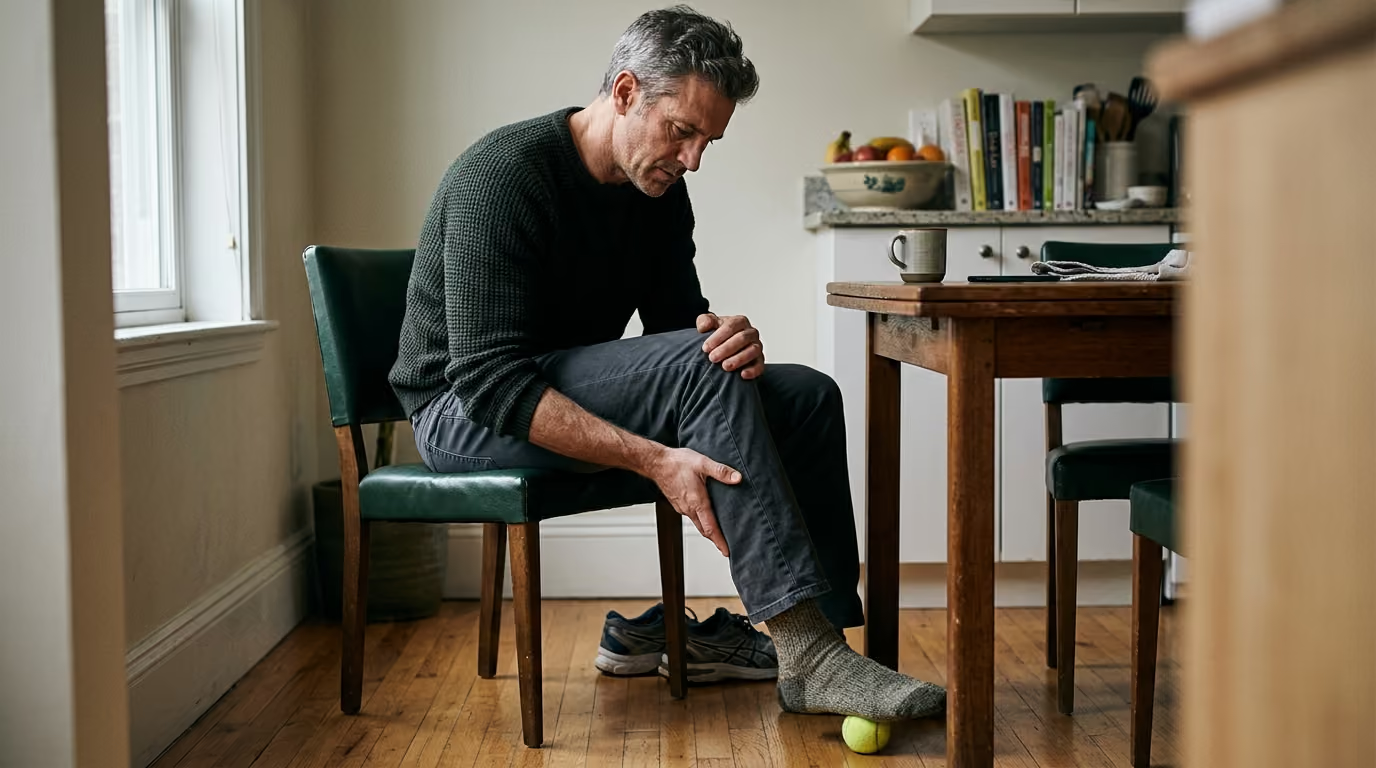

A 24-hour recovery protocol guides you through five structured phases to regulate your nervous system, restore cognitive function, and bounce back from acute stress.





If you are in immediate danger, call 911. For 24/7 support, call or text 988 and press 1 for the Veterans Crisis Line, or text 838255.
Acute stress is the body's rapid reaction to an unexpected challenge, sudden conflict, intense workday, or sudden sleep disruption. It is not a character flaw, a clinical diagnosis, or a permanent state of dysfunction. When an overwhelming event strikes, your biology shifts into high gear to help you respond to immediate demands.
The trouble begins when the acute event ends, but your internal alarm remains turned on. The first twenty-four hours after a major stressor determine whether your physiology settles back toward balance or stays locked in high arousal.
This guide outlines a structured, research-backed framework for those critical twenty-four hours. It provides a realistic roadmap for stabilizing your nervous system, lowering cognitive load, nourishing your body, and preparing for restorative sleep.
Acute stress triggers a coordinated cascade throughout your nervous and endocrine systems. Heart rate climbs, blood pressure rises, muscles tighten, and alertness sharpens. Blood flow shifts toward large muscle groups and away from digestion.
These changes are designed to help you handle an immediate physical demand. When the challenge is mental or emotional, such as a confrontational meeting or a difficult phone call, the physical activation can feel out of proportion. You may experience a pounding pulse, shallow breathing, jaw clenching, an upset stomach, or sudden fatigue.
Emotional and cognitive shifts occur alongside these bodily changes. People commonly report feelings of irritability, sadness, mental fog, or repetitive thoughts about the stressful event. Attention narrows, making it difficult to process complex information, evaluate subtle risks, or switch between tasks.
It is helpful to separate acute stress from related states:
Recovery after acute stress is not a passive process of doing nothing. True recovery is a strategic reduction in your demand-to-capacity ratio. By lowering avoidable demands while maintaining basic biological inputs, you give your system room to reset.
The science of acute stress recovery centers heavily on sleep, basic physiology, and deliberate down-regulation. Credible evidence shows that while your body has built-in mechanisms to restore equilibrium, full cognitive and emotional recovery often follows a distinct timeline.
Sleep is your most potent recovery tool. When you sleep after an acute stressor, your brain alters its normal architecture to support emotional processing and neural recovery. Research indicates that acute social stress often leads to an increase in deep, slow-wave sleep during the early parts of the night. This slow-wave rebound helps the brain process emotional experiences and reset baseline sensitivity.
A single night of extended sleep can significantly improve basic alertness and subjective fatigue. Studies show that a recovery sleep opportunity lasting nine to ten hours can return simple vigilance to baseline levels after severe sleep deprivation.
One night of rest does not always correct every deficit. Research indicates that higher-order cognitive functions, complex decision-making, and emotional stability may take longer to normalize. Studies tracking recovery after cumulative sleep loss show that subjective sleepiness improves faster than complex working memory. You may feel awake before your executive functioning is operating at full capacity.
The physiological response to stress and sleep loss is highly variable. A systematic review evaluating total sleep deprivation found inconsistent patterns in cortisol and autonomic markers. Sleep loss blunted stress responses in some participants, heightened them in others, and produced no significant changes in over seventy percent of measured outcomes.
This variability means there is no single physiological switch that turns stress off. Popular claims about instant nervous system resets oversimplify complex human biology. Real recovery relies on steady, foundational habits rather than quick fixes.
Simple regulation tools, such as slow breathing, have solid empirical support when applied without force. Guidance from health organizations recommends slow, gentle breathing through the nose to support physical relaxation. Evidence suggests that breathing practices are most effective when sustained for at least five minutes without straining.
Your recovery timeline is shaped by several intersecting factors. Understanding these variables prevents unrealistic expectations and helps you match your recovery plan to your current reality.
Your baseline sleep reserve plays a significant role. If you enter an acute stress event with substantial pre-existing sleep debt, your system has less physiological bandwidth to buffer the shock. The compounding effect of chronic sleep restriction slows down the rate at which attention and mood stabilize.
Circadian timing also influences recovery. Experiencing a severe stressor late in the evening disrupts your natural wind-down window, delaying the evening rise in melatonin. When daytime stress bleeds into the night, sleep latency increases and overall sleep efficiency drops. Learning how midlife shifts in daily circadian rhythms alter rest patterns can help you adjust your evening schedule after demanding days.
Age is another important consideration. As adults pass age 35, physiological resilience changes naturally. Deep slow-wave sleep decreases, joint and muscle recovery takes longer, and autonomic flexibility shifts. Exploring why recovery feels slower after 35 provides helpful context for why your body requires more intentional pacing than it did a decade ago.
The concept of a "minimum viable day" is useful here. When your capacity is temporarily reduced, trying to maintain your normal routine creates unnecessary strain. A minimum viable day contains only the essential tasks needed to preserve safety and basic functioning:
The first twenty-four hours after acute stress require a phased approach. Moving from immediate stabilization toward gradual re-entry prevents secondary stress and supports natural recovery.
The immediate priority is safety and sensory reduction. In the first fifteen minutes, focus on de-escalating the crisis before trying to solve any long-term problems.
Begin by checking your immediate environment. Ask yourself:
If there is immediate danger, severe chest pain, or an urgent medical crisis, contact emergency services. Self-care routines are designed for ordinary stress, not acute medical emergencies.
Acute stress floods your sensory system. Deliberately subtract incoming inputs to reduce cognitive overload:
Use a simple sensory exercise to break the cycle of panic or mental spinning. Look around your space and silently name five objects you can see. Notice three distinct sounds in the room. Feel your feet firmly planted on the floor.
Relax your jaw, drop your shoulders away from your ears, and take one unhurried breath. This shifts your attention away from catastrophic thoughts and re-anchors your mind in your immediate physical surroundings.
Once immediate stimulation drops, shift your focus to physiological stabilization. Stress depletes basic resources, so replacing them is your next task.
Acute stress can leave you with a dry mouth and mild dehydration. Drink a glass of water, herbal tea, or another gentle beverage.
Avoid extreme hydration practices or drinking excessive volumes rapidly. Steady, moderate hydration supports circulation and kidney function without placing extra burden on your body.
Stress hormones suppress appetite in some people while triggering intense cravings in others. If eating feels difficult, choose simple, easily digestible foods that provide balanced energy:
Eating a balanced combination of carbohydrates, protein, and healthy fats stabilizes blood sugar. This prevents glucose dips from mimicking or amplifying anxiety symptoms.
Continue taking your daily medications exactly as prescribed by your doctor. Do not double doses, skip doses, or introduce unprescribed sedatives to force relaxation. Avoid using alcohol or illicit substances to calm down, as these disrupt sleep architecture and worsen rebound anxiety.
Choose one gentle activity to help your body downshift. Do not turn relaxation into a demanding checklist:
Pick one practice and stay with it for several minutes. Switching between multiple techniques can create performance pressure.
During the middle portion of your recovery day, your primary objective is protecting your limited mental bandwidth. Understanding how persistent stress changes daily energy highlights why cognitive pacing is vital after an acute shock.
Avoid complex decision-making while your nervous system is agitated. Sort your pending responsibilities into three simple categories:
Avoid cognitive multitasking. Focus on a single stream of information at a time:
Mono-tasking lowers the mental effort required to process information, allowing your nervous system to settle.
When people demand your time or input, use clear, neutral boundaries to buy yourself space:
Postponing emotionally charged conversations until you are rested prevents impulsive statements you might regret later. Learning why physical time away from your desk fails to trigger true detachment can help you set psychological boundaries during this phase.
If you feel physically up to it, take a short, easy walk for ten to twenty minutes. Light movement encourages blood flow, eases postural tension, and provides a gentle change of environment.
Keep the intensity low. This is not the time for heavy weightlifting, interval training, or exhausting endurance sessions. Stop immediately if you feel dizzy, lightheaded, or unusually weak.
The evening hours must be dedicated to setting up an environment that welcomes sleep. Rest is where the most substantial physiological repair happens.
Aim to give yourself an eight to nine-hour sleep opportunity. Establish a calm, predictable wind-down sequence sixty to ninety minutes before bed:
Following evidence-based habits from our better sleep and sleep quality resources can optimize your rest environment.
Sleep cannot be forced through sheer willpower. If you lie in bed for more than twenty minutes feeling restless or wide awake, get out of bed calmly.
Move to a comfortable chair in dim light and read a physical book or listen to calming audio. Return to bed only when your eyelids feel heavy and you feel genuinely drowsy. Treating sleep as an unpressured opportunity reduces bedtime anxiety.
When your day has been stressful and demanding, you may feel tempted to stay up late browsing the internet or watching television to reclaim personal autonomy. While this provides short-term comfort, it creates a severe sleep deficit that amplifies tomorrow's stress.
Acknowledge the urge, remind yourself that sleep is your most effective recovery tool, and transition to bed at a reasonable hour.
The morning after an acute stressor is a time for gradual re-entry rather than rushing back into high-demand performance.
When you wake up, assess your readiness across practical functional markers:
Remember that subjective alertness often returns before complex cognitive precision. Proceed with reasonable care, especially with safety-sensitive tasks.
Do not attempt to make up for lost time by working at maximum capacity. Aim to operate at roughly seventy percent of your normal pace:
Pacing your re-entry prevents the common boom-and-bust cycle, where a brief burst of overcompensation triggers a secondary crash. Exploring our recovery and nervous system balance materials will give you ongoing tools for managing these transitions.
Every acute stressor has unique qualities. Here is how to apply the 24-hour principles across four common situations.
The situation: You endure a hostile performance review or a high-stakes client confrontation that leaves your stomach churning, your heart racing, and your mind replaying the conversation.
Hours 0 to 2: Leave the office or shut down your home workstation promptly. Silence work chat apps. Drink a tall glass of water and eat a simple meal of rice, vegetables, and protein. Avoid the temptation to send a defensive late-night email.
Hours 2 to 6: Take a twenty-minute walk around your neighborhood without checking your phone. Use a brief communication script with colleagues: "I am reviewing the notes from today's session and will provide a structured response by tomorrow afternoon."
Hours 6 to 12: Write down your factual thoughts on paper to clear your head. Take a warm shower, read fiction for twenty minutes, and go to bed thirty minutes earlier than usual.
Hours 12 to 24: Arrive at work with a clear, single-task focus. Address the factual aspects of the dispute calmly, keeping your emotional investment low and taking regular posture breaks.
The situation: A heated argument with a partner or family member erupts late in the evening, leaving both people agitated and unable to rest.
Hours 0 to 2: Call a safe, mutual pause on the discussion. Send or state a gentle script: "I care about resolving this, but my emotions are high and I cannot communicate clearly right now. Let us pause and talk tomorrow after breakfast."
Hours 2 to 6: Move to separate rooms or distinct spaces. Drink a glass of water, practice five minutes of gentle nasal breathing, and refrain from continuing the argument over text messages.
Hours 6 to 12: Focus on getting comfortable in bed. Do not review the argument in your head. Focus on the physical sensation of the mattress supporting your body until sleep comes.
Hours 12 to 24: Revisit the conversation in the morning or early afternoon after both parties have eaten a nourishing meal. Keep the discussion focused on practical solutions rather than re-litigating past statements.
The situation: You spend the entire night awake caring for an ill child or an aging parent, leaving you exhausted, emotionally raw, and cognitively scattered.
Hours 0 to 2: Confirm that your dependent is safe and stable. Drink a glass of water and consume a nutrient-dense breakfast, such as oatmeal with nut butter and fruit.
Hours 2 to 6: Simplify your daily schedule radically. Postpone non-essential driving, cancel unnecessary appointments, and ask a family member or neighbor to assist with errands. Use caffeine conservatively early in the day, avoiding excessive intake.
Hours 6 to 12: Avoid late afternoon naps that exceed twenty minutes, as long naps will disrupt your nighttime sleep drive. Eat a light dinner and begin your bedtime preparation early.
Hours 12 to 24: Aim for a solid nine-hour sleep opportunity. Reassess your mental clarity in the morning before resuming safety-sensitive activities like highway driving.
The situation: You experience a near-miss car accident or a frightening household emergency that leaves you trembling, hyper-vigilant, and flooded with adrenaline.
Hours 0 to 2: Sit down in a safe, quiet room. Place both feet flat on the floor and name five objects you can see. Drink room-temperature water and wrap a warm blanket around your shoulders to ease muscular shaking.
Hours 2 to 6: Call a trusted friend or family member. State clearly: "I had a scary scare earlier. I am physically fine, but I feel shaken up and would appreciate having some company for an hour."
Hours 6 to 12: Avoid watching intense television shows or reading alarming news. Keep lighting low and engage in quiet, familiar activities until you feel ready for bed.
Hours 12 to 24: Notice how your body settles over the course of the day. If trembling, panic, or intrusive fears persist without easing, consider speaking with a healthcare provider.
When trying to recover from high stress, people often reach for strategies that seem logical but backfire. Avoiding these common pitfalls protects your recovery progress.
Withdrawing completely from the world feels protective when you are overwhelmed. However, absolute isolation often increases repetitive rumination, as you have no external input to interrupt catastrophic thoughts.
A healthier approach is selective connection. Reach out to one calm, trusted person. Let them know you do not need advice or problem-solving; you simply want grounding presence or low-key conversation.
Many people believe they should sweat out stress through strenuous exercise, heavy lifting, or intense interval training. While regular physical activity supports overall health, intense exertion immediately after severe stress or sleep loss adds a heavy load to an already strained cardiovascular and hormonal system.
Opt for low-demand movement like walking, gentle stretching, or easy mobility work. Save performance-driven training sessions for when your system has fully stabilized.
Deliberately taking large, rapid, or aggressive deep breaths can induce dizziness, tingling in the fingers, or air hunger. This can trigger a secondary panic reaction.
Breathing exercises should always feel smooth, gentle, and unforced. Keep your breath natural, allowing the abdomen to expand comfortably while breathing exclusively through the nose. If focusing on your breath increases your anxiety, stop the exercise and ground yourself through external senses instead.
Having a glass of wine or an over-the-counter sleep medication may seem like an easy way to knock yourself out after a stressful day. While
these substances can produce sedation, they interfere with critical rapid-eye-movement and slow-wave sleep stages.
Sedation is not the same as natural, restorative sleep. Alcohol often causes middle-of-the-night waking, dehydration, and increased morning anxiety. Rely on natural sleep drive and wind-down routines instead.
Some wellness trends suggest that acute stress calls for juice cleanses, extreme fasts, or special supplement protocols to remove toxins. These restrictive practices deprive your brain and central nervous system of glucose, amino acids, and essential minerals when they are needed most.
Recovery requires predictable, balanced nutrition rather than deprivation. Regular, wholesome meals provide the steady fuel your body needs to rebuild resilience.
The strategies outlined in this playbook are designed for everyday, self-limiting acute stress. They are not a replacement for professional clinical care.
Certain symptoms indicate that a stress reaction has exceeded the scope of self-directed recovery. If you experience any of the following signs, seek an evaluation from a qualified healthcare professional:
If you or someone you know is experiencing thoughts of self-harm, a mental health crisis, or severe emotional distress, please reach out for immediate support. You can call or text 988 in the United States and Canada to connect with the Suicide & Crisis Lifeline, available twenty-four hours a day, seven days a week. Veterans can call 988 and press 1, or text 838255. In the United Kingdom, you can call 111 for mental health support or 999 in an emergency. These services are free, confidential, and provide immediate compassionate care.
A brief nap lasting ten to twenty minutes can improve immediate alertness without causing significant grogginess. However, longer naps taken late in the afternoon can diminish your homeostatic sleep drive, making it harder to fall asleep at night. If you choose to nap, keep it short and schedule it before three in the afternoon to protect your nighttime rest.
If intrusive thoughts keep you awake, avoid lying in bed fighting them. Keep a notepad on your nightstand and write down the thoughts or tasks that are looping in your mind. Transferring the thoughts to paper signals to your brain that the information is safely stored. If your mind continues spinning, get out of bed, move to a dim room, and engage in a calming, low-stimulation activity until drowsiness returns.
Recovery rarely moves in a straight line. Look at functional indicators rather than just your subjective mood. Notice if your physical muscle tension is easing, if your appetite is returning, and if you are able to focus on basic tasks with greater ease. Feeling tired the day after an acute event is completely normal; what matters is that your overall physical arousal is gradually trending downward.
Shift workers should apply these phases relative to their personal sleep window rather than conventional clock time. After a high-stress shift, begin Phase 1 immediately upon leaving work. Protect your primary sleep block during the day by using blackout curtains, eye masks, and white noise machines. Treat the hours before your main sleep period as your personal evening, regardless of the sun's position outside.
Recovering from acute stress is not about forcing an immediate return to maximum productivity or achieving perfect relaxation. It is a structured process of reducing unnecessary demands, nourishing your biology, and giving your system the time and space it needs to reset naturally.
Stay connected for research and practical guidance on sleep, stress, circadian rhythm and recovery. Clear ideas for adults 35+ who want better rest, steadier energy and more resilient days.



Explore practical guidance on sleep, stress and recovery without chasing every new hack, device or promise.
explore the blog