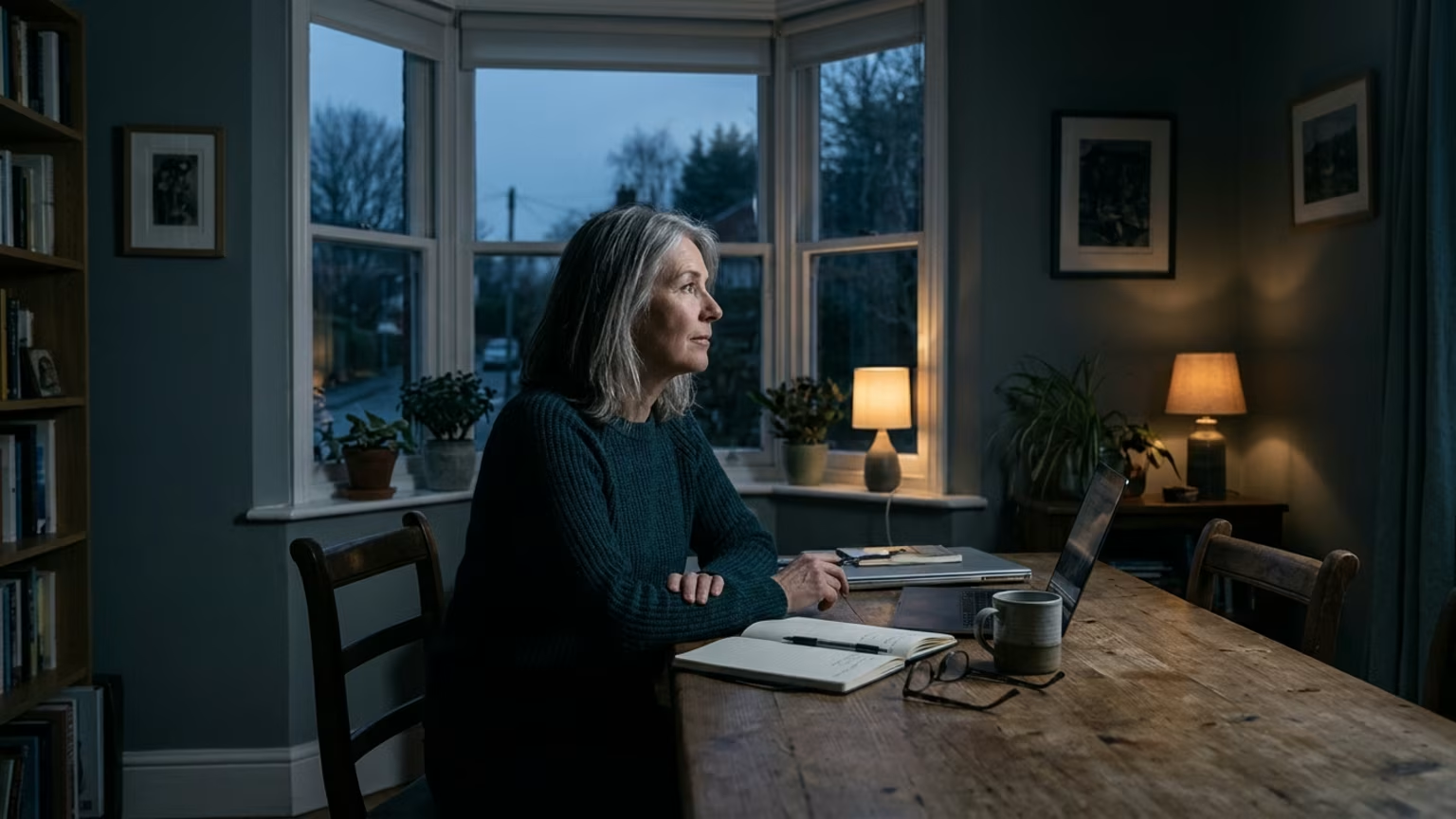

An expert explains how dark mornings and evening light may affect waking, with practical guidance on daylight, regular sleep and persistent fatigue.





On October 21, 2026, Bluewin published an expert explainer on seasonal difficulty waking that featured neuroscientist Caroline Lustenberger. The publication identifies her as director of the sleep laboratory at ETH Zurich since 2019.
The central point in Lustenberger’s explanation is not simply that autumn makes people tired. Darker mornings can coincide with a daily light pattern that moves biological timing later. That can leave a fixed morning alarm poorly matched to the body’s internal schedule.
Dark mornings may remove a bright-light cue that normally helps with alertness. Lustenberger explains that getting little natural light during the day and substantial artificial light in the evening may shift circadian timing later. Waking can then happen while the internal clock is still in its nighttime.
This creates a useful distinction between not getting enough sleep and waking at an unfavorable biological time. Bluewin identifies both as possible contributors to difficult mornings. A brighter start addresses a different part of the problem from allowing enough time for sleep.
The article also describes individual differences. People whose sleep timing tends to run later may find dark mornings especially difficult. Responses to darker months vary, with sleep and exercise playing a part alongside social interaction and personal circumstances.
For adults in midlife, the practical question is therefore broader than whether the bedroom is dark when the alarm sounds. It is whether the whole day has become dimmer while the evening remains bright. That pattern is worth examining before treating morning sluggishness as a failure of motivation.
Bluewin’s article is an expert explanation rather than a new controlled intervention study. It offers general recommendations but no quantified light exposure duration or individualized timing plan. Those boundaries matter when translating the explanation into everyday habits.
The publication reports that some field studies found people slept about 15 to 20 minutes longer on average in winter than in summer. It also says whether people actually need more sleep in winter remains unclear. An observed seasonal difference in sleep duration is not a prescription to add a fixed amount of sleep.
The evidence described for gradually brightening alarm clocks is also limited. Bluewin says small studies suggest they may help people feel somewhat more awake after waking. It supplies no study names or sample sizes, and it notes that the light may disturb someone sharing the room.
Taken together, these findings support a measured reading: the article provides a plausible explanation and practical suggestions rather than a tested seasonal recovery protocol. Its strongest everyday message concerns the combined pattern of daylight, evening lighting and sleep opportunity. A device purchase is not the main recommendation.
For a 35-to-65-year-old adult balancing work and family responsibilities, a useful response is to review the existing day rather than build an elaborate new routine. Lustenberger recommends brighter mornings, daytime natural light and regular activity. She pairs those suggestions with gradually dimmer evenings and regular sleep times.
The following adjustments translate that advice into ordinary scheduling decisions. They are options for shaping a workable routine, not a checklist that has to be completed perfectly.
Lustenberger recommends using bright light after getting up and seeking natural light as soon as possible. She also recommends morning exercise. For someone whose day begins indoors, the practical adjustment is to make room for light near the start of the day rather than leaving daylight entirely to chance.
A morning walk is one way to combine natural light with activity when the schedule allows. The point is not to turn waking into a demanding fitness session. It is to connect the start of the day with the brighter and more active conditions described in her advice.
She notes that outdoor light can be useful on cloudy days too. Readers looking at where this fits around everyday commitments can find related context in Relaxopia’s guide to making morning light fit real schedules.
The recommendation extends beyond the first part of the morning. Lustenberger also advises getting natural light during the day and exercising regularly. A practical review therefore includes whether daytime commitments leave any realistic opportunity to be outdoors.
This is particularly relevant when thinking about work hours. In the Bluewin article, Lustenberger says a later start may help people with delayed biological timing if it allows sufficient sleep. She also points out a trade-off: finishing work later may leave less opportunity to get outside during limited winter daylight.
That does not make an earlier or later start universally better. It makes the whole schedule the relevant unit of attention. Sleep opportunity and access to daylight belong in the same discussion rather than being treated as separate goals.
For adults with little flexibility over working hours, the useful question is where natural light can fit within the day they already have. There is no need to make changing the entire workday the starting requirement.
Lustenberger recommends gradually dimming lights in the evening. This follows directly from her explanation that substantial evening artificial light can contribute to later circadian timing when daytime natural light is limited.
The practical adjustment is to look at the transition into evening, not only the moment of going to bed. Does the lighting remain bright through the final part of the day? Is there a workable opportunity for it to become dimmer as bedtime approaches?
This is a change in the daily pattern rather than a demand for a perfectly controlled home. Relaxopia’s discussion of daytime and nighttime brightness offers related context for thinking about both ends of the day together.
Lustenberger’s advice includes keeping bed and wake times regular while allowing enough time for sleep. She is clear that a morning routine cannot compensate for persistent sleep deprivation. Light and activity therefore sit alongside sleep opportunity rather than replacing it.
For an adult managing competing responsibilities, that means checking whether the intended routine actually leaves room to sleep. An earlier alarm added to an already restricted night would miss this part of her recommendation. The aim is a workable relationship between bedtime and waking time, not an earlier start for its own sake.
Regularity also belongs in this review. Instead of judging each morning in isolation, look at whether bed and wake times have become difficult to maintain across ordinary commitments. That keeps the focus on the schedule rather than on trying harder when the alarm sounds.
The central adjustment is simple: make room for sleep while working toward brighter mornings and dimmer evenings. None of those elements needs to become a separate performance target.
Bluewin advises taking persistent low mood or symptoms that significantly interfere with daily life seriously. Its practical guidance also supports seeking professional evaluation when fatigue continues after allowing enough time for sleep. The season should not become the automatic explanation for an ongoing problem.
For readers, this creates a clear boundary between reviewing a routine and making a personal health decision. Light exposure and sleep timing are useful subjects to discuss with a qualified professional. They do not need to become a self-diagnosis.
A useful starting point for that conversation is a plain description of what remains difficult: waking, daytime energy or feeling restored. Relaxopia’s broader coverage of fatigue and everyday functioning can help readers keep those concerns in view without reducing recovery to a morning habit alone.
The most useful implication of this explainer may be a change in how seasonal recovery is framed. Instead of asking which alarm or morning ritual will overcome darker days, it directs attention toward the relationship between daily light and available sleep.
For adults in midlife, that is a less demanding starting point than treating every sluggish morning as something to correct with another tool. It also makes room for practical trade-offs around working hours and family responsibilities. The goal is a routine that remains workable as daylight changes.
Could future research help make seasonal adjustments to light and sleep timing a more useful part of long-term midlife recovery, without turning rest into another demanding routine?
Treating harder autumn mornings as a reason to buy a device can miss the wider daily pattern, so Relaxopia examines light alongside sleep timing and recovery. For adults 35+ facing confusing circadian advice, its research-led reporting offers practical explanations that connect everyday habits with rest while separating credible evidence from stronger claims.
Stay connected for research-led guidance on sleep quality, stress, circadian rhythm, recovery, fatigue and everyday energy. Clear ideas for adults 35+ who want to sleep better, recover more fully and feel more capable through the day.





Explore practical guidance on sleep, stress and recovery without chasing every new hack, device or promise.
explore the blog