
Learn how morning daylight and sensible evening dimming help adults 35+ regulate their daily sleep cycles, stabilize energy and improve nightly recovery.





Light is the strongest environmental cue for synchronizing your brain's internal clock with the 24-hour cycle of day and night. This biological timing system relies on specific cells in your eyes to detect brightness and send timing signals to your body. When you step outside or turn on a lamp, you give your biological systems clear information about the time of day. This input dictates whether it is time to be alert or time to rest. You can use natural light to set your body clock without needing complex optimization routines. The contrast between bright days and dark nights keeps your energy stable.
To understand how your body reacts to brightness, it helps to look at the process step by step. First, specialized retinal cells at the back of your eyes absorb incoming light. These cells are highly sensitive to short-wavelength brightness. This type of brightness is abundant in normal outdoor daylight.
Second, these cells send a direct signal to the master clock in your brain. This master clock is called the suprachiasmatic nucleus. Once it receives the timing signal, this clock directs the production of hormones.
Melatonin is one of the main hormones involved in this process. When your eyes detect bright morning light, the brain stops producing melatonin to promote daytime alertness. When the environment dims later in the day, the brain signals that melatonin production should increase. This gradual increase prepares your body for physical recovery.
Your response to these daily signals shifts slightly as you get older. Light-induced melatonin suppression tends to decline with age, but light-induced circadian phase advances can remain preserved. This means that a midlife adult might not experience the exact same chemical response to an evening lamp as a younger person. Yet a person over 35 can still shift their daily schedule earlier by seeking out morning sunlight.
You do not need an age-specific protocol to manage your daily rhythm. The goal is to build a steady routine that fits real life. Managing your exposure to brightness is a practical way to support your daily energy levels. You can adapt these concepts to fit your career and family demands.
When your daily cues lack clear contrast, your physical rest and daytime energy suffer. Adults over 35 might notice they struggle to wake up feeling refreshed or experience persistent afternoon fatigue. A lack of daytime brightness followed by too much evening stimulation often leads to feeling wired right before bed. You might also find it difficult to fall asleep or notice that you wake frequently during the night.
These physical symptoms often appear when you spend the entire day in dim indoor rooms. When your brain receives the same low-level brightness all day and night, it struggles to distinguish between waking hours and resting hours. This constant state of low contrast leaves you feeling perpetually out of balance.
Over time, a weak daily rhythm can make stress harder to manage. Your body relies on clear environmental signals to regulate mood and focus. Without these signals, ordinary work pressures can feel much heavier.
Rebuilding a clear contrast between day and night is the most practical habit for repairing this system. This means anchoring your morning with outdoor brightness and protecting your evening from excess stimulation. Getting outside soon after waking is a simple and highly effective first step.
A practical target is roughly 10-30 minutes when conditions make that realistic. You do not need perfect weather or direct sunshine to see benefits. Ordinary outdoor daylight is much brighter than typical indoor lighting. You can walk the dog, take a morning stroll, or simply drink coffee on your porch.
Consistency matters far more than reaching a strict daily time limit. A modest routine that you can repeat most days works better than an idealized protocol. If you miss a morning, you can always seek out brightness later in the day. You do not need to turn your morning habits into a source of stress.
Maintaining brightness throughout the working hours helps reinforce the signals you sent in the morning. Many adults spend their entire workday in dim interior spaces. This lack of brightness can contribute to midday grogginess and poor nighttime recovery. Adding natural brightness to your workspace is a simple adjustment.
In one pilot study of 49 office workers, employees with windows received 173% more white light during work hours and slept 46 minutes longer per night than workers in windowless offices. While windows alone do not guarantee perfect rest, the association shows that your working environment plays a role.
You can take small steps to improve your daytime conditions. You might take a short walk during lunch or move your desk closer to a source of natural brightness. If you work from home, opening your blinds fully can make a noticeable difference in how you feel. Small additions of brightness can use your environment to support better rest over time.
Many adults assume that their afternoon fatigue is purely a sign of poor sleep the night before. While nighttime rest is important, your midday energy levels are heavily influenced by your immediate environment. If you sit in a dark room all day, your brain receives continuous signals that it should be resting. This creates a confusing biological state where your body feels sluggish during active hours.
Increasing your exposure to natural brightness helps clear away this mental fog. The same specialized retinal cells that manage your morning wakefulness continue monitoring your environment all day. When they detect strong daylight, they maintain the suppression of sleep-promoting hormones. This constant feedback loop helps you sustain focus during long workdays.
You can think of daytime brightness as a form of biological support rather than a medical treatment. It provides the necessary contrast to make your evening wind-down feel more effective. Without this midday support, your nervous system has to work much harder to keep you alert. Providing your brain with clear environmental cues takes the pressure off your internal resources.
Adults who work from home or in large office buildings face specific challenges with daily light. These spaces are often illuminated by artificial bulbs that lack the intensity of natural daylight. You do not have to quit your job to fix your daily rhythm. You just need to be intentional about capturing natural brightness when it is available.
Taking your phone calls outside or eating lunch near a bright window are easy ways to boost your exposure. If you manage a team, encouraging midday breaks outdoors can improve overall focus for everyone. These brief interruptions in your indoor routine send strong reinforcing signals to your master clock.
You can also adjust your indoor environment to be more supportive during the day. Open the curtains fully in your workspace and arrange your desk to face the nearest window. Every small increase in daytime brightness helps build the contrast you need for a restful night. These practical adjustments are far more sustainable than attempting a complete lifestyle overhaul.
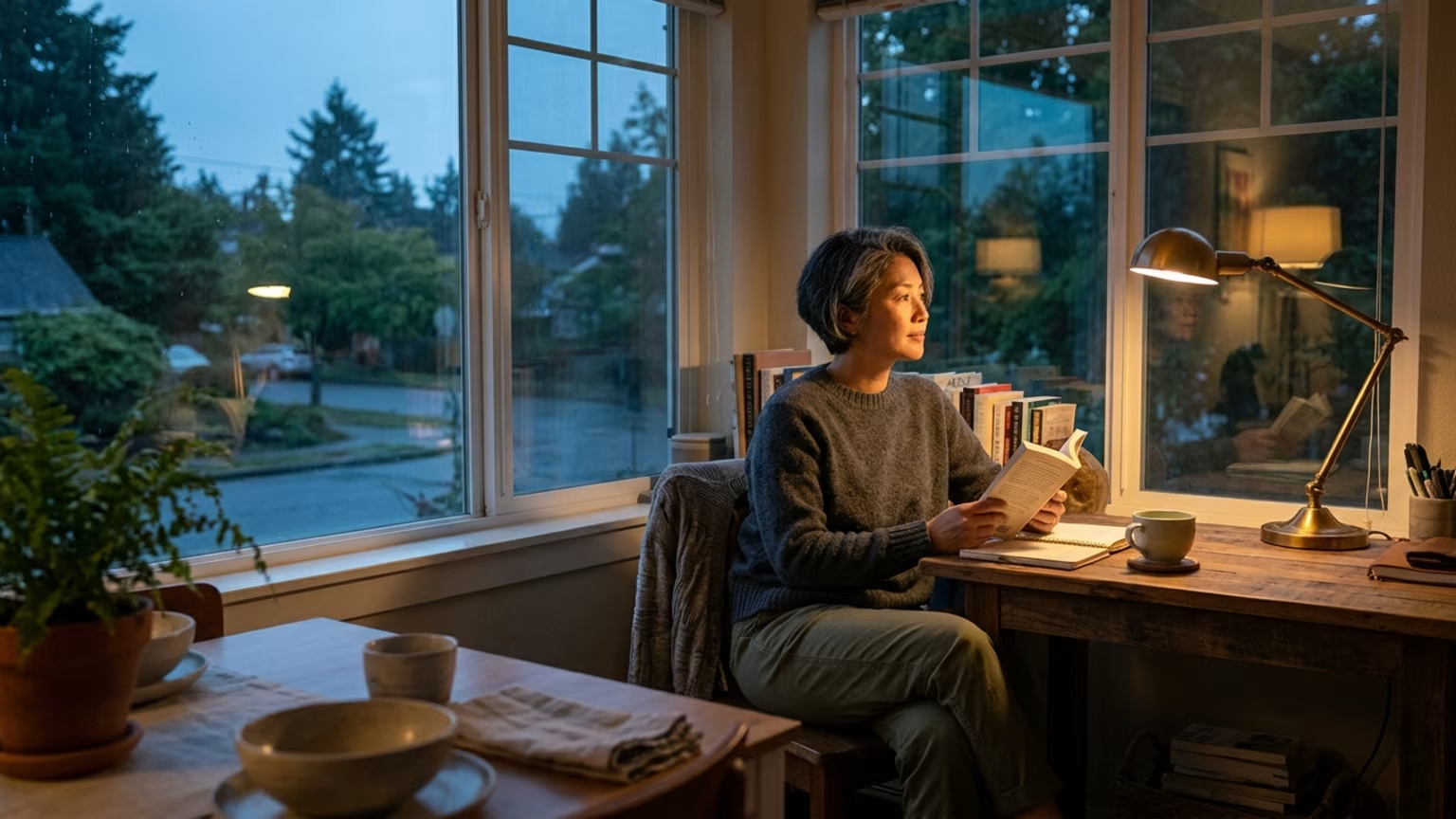
As the day ends, you need to send your brain a clear signal that rest is approaching. Begin dimming the environment as bedtime approaches, especially during the last two to three hours. You do not need to sit in pitch darkness. Turning off overhead fixtures and relying on lower-level lamps is usually sufficient.
Many adults worry about the specific light emitted by televisions and phones. In a controlled study, reading from an LED-backlit device before bed suppressed the evening rise in endogenous melatonin and reduced both subjective and objective sleepiness compared with a non-LED condition. Prolonged screen use close to your face can confuse your internal clock.
However, you can manage this without overhauling your entire evening. Keep your screens farther away from your face and shorten your close-up use right before sleep. You can evaluate which daily cues matter most for sleep by tracking how you feel after a low-stimulation evening.
The market is filled with products claiming to fix modern sleep problems. Many companies sell blue-light-filtering glasses as a guaranteed solution for evening screen use. The current evidence does not support these broad claims for the average person. A Cochrane review of 17 randomized trials found that they probably do not reliably improve sleep for ordinary computer users.
This finding is echoed across multiple analyses. Researchers confirm that blue-light-filtering glasses do not reliably improve sleep for ordinary computer users. Instead of buying expensive accessories, you can focus on simply dimming the brightness of your screens.
A dimmer overall environment is far more useful than purchasing specialized equipment. You can turn down the brightness on your phone and avoid highly stimulating tasks right before sleep. These behavioral changes cost nothing and provide a reliable way to wind down.
Your bedroom should reinforce the idea that the biological day has ended. You do not need to install complicated automated systems or measure the exact brightness of your room. Small and practical steps are often the most successful. You can start by covering bright indicator lights on chargers or electronics.
Keeping phones away from the bed reduces the temptation to scroll late into the night. It also prevents sudden bursts of brightness if you check the time during the night. If streetlights shine into your room, simple curtains can provide a noticeable improvement.
The goal is to create a calm space that feels distinct from your active daytime areas. When you keep your sleeping area reasonably dark, your brain can continue its natural rest processes without interruption. A reliable sleeping environment removes unnecessary friction from your nightly routine.
Many people try to fix their fatigue with one massive burst of outdoor activity on the weekend. While weekend daylight is helpful, your biological clock responds better to steady patterns. Waking up at a similar time each day provides a firm anchor for your internal rhythm. When your wake time fluctuates wildly, your brain struggles to predict when you need energy.
A consistent daily pattern reduces the friction of waking up on workdays. You do not have to follow a rigid military schedule. Keeping your routine within a reasonable window is usually enough to maintain stability. This gentle consistency tells your nervous system that your environment is predictable and safe.
Predictability allows your body to prepare for rest before you even get into bed. You will notice that you start feeling naturally tired around the same time each evening. This natural sleepiness is the direct result of maintaining a steady morning anchor.
Sometimes behavioral adjustments are not enough to resolve severe issues. If you maintain a steady routine but still struggle with prolonged exhaustion, it might be time to look deeper. Persistent problems like sleep apnea or restless legs require medical evaluation rather than just a new morning habit.
A consistent routine is a foundation for health. It is not a cure for clinical disorders. If you feel overwhelmed by your symptoms, a healthcare provider can offer targeted guidance. You should not blame yourself if simple adjustments do not fix a long-standing medical issue.
A sustainable routine starts the moment you wake up. You can incorporate your morning brightness habit into things you already do. Taking the dog out, commuting to work, or checking the mail all count toward your daily exposure. You do not need to carve out a separate block of time just for this purpose.
Throughout the day, you can look for small opportunities to step outside. A quick break in the afternoon provides a mental reset and reinforces your internal timing. These minor additions of brightness accumulate over the course of the week.
When evening arrives, you can transition smoothly by turning off unneeded overhead fixtures. You can switch to lamps and reduce the brightness on your devices. This gradual wind-down feels natural and requires very little mental effort.
Key takeaway: Managing your exposure to brightness throughout the day provides the most reliable foundation for stabilizing your energy and improving your nightly recovery.
Navigating daily light cues typically falls entirely on the exhausted adult, but letting Relaxopia interpret the underlying evidence changes how you view your home environment. We translate environmental research to help you solve feeling tired after spending enough time in bed without relying on complicated sleep technology. Explore Resources
Stay connected for research-led guidance on sleep quality, stress, circadian rhythm, recovery, fatigue and everyday energy. Clear ideas for adults 35+ who want to sleep better, recover more fully and feel more capable through the day.






Explore practical guidance on sleep, stress and recovery without chasing every new hack, device or promise.
explore the blog