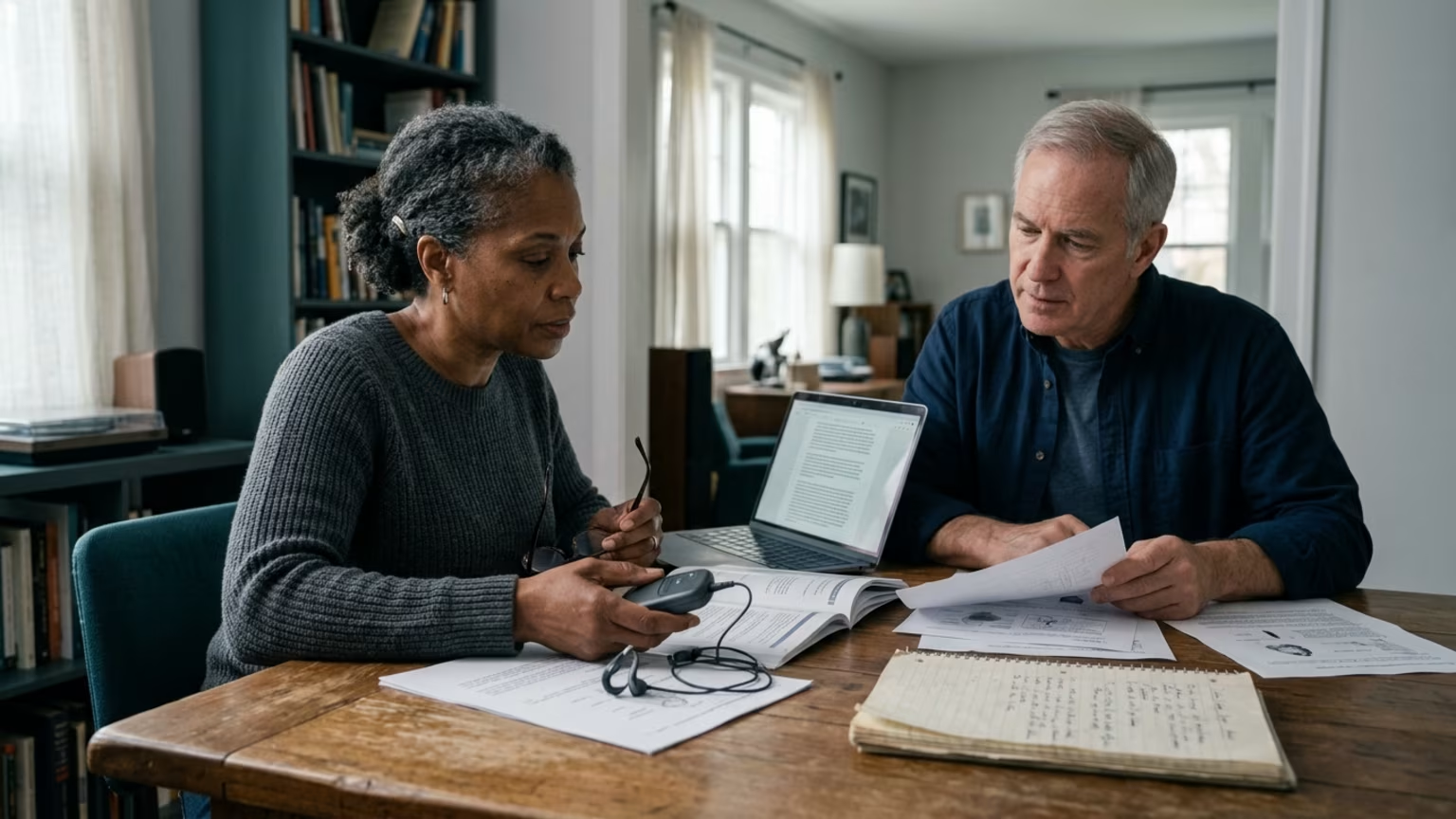

An analysis of neurowellness devices, vagus-nerve stimulation and HRV tracking, evaluating the clinical evidence and offering practical habits for adults.





On September 24, 2026, The Globe and Mail published a report examining the rapid growth of "neurowellness" products designed to regulate the human stress response. The report concludes that consumer wellness companies are translating physiological measurements into everyday recommendations much faster than clinical trials can verify their effectiveness.
Neurowellness represents a widespread effort to manage stress and fatigue through sensory techniques and wearable technology. The Global Wellness Summit formally identified this field as a top trend for 2026. This commercial expansion is occurring during a period of historically high self-reported stress. According to the recent reporting, global stress levels have reportedly doubled over the past two decades.
Social media platforms have accelerated public interest in these concepts significantly. More than 200,000 videos on TikTok reportedly feature the specific hashtag #nervoussystemhealing. Consumers are searching for tangible ways to manage the mental load of daily life. The market now spans electrical stimulation devices, vibration tools, ear-based clips, and watch-based stress scores.
The movement relies heavily on the biological concept of activating the parasympathetic nervous system. This branch of the autonomic nervous system controls rest and digestion functions. Proponents suggest that stimulating this system can counterbalance sympathetic activation, which drives the body into a state of heightened alertness. Consumer products are marketed as tools to force this shift toward recovery.
However, healthy nervous system function actually involves normal movement between both branches. The body naturally mobilizes for physical or mental effort and then returns toward a baseline state. Maximizing parasympathetic activity at all times is not the biological goal. A lower heart rate and calm state are necessary for sleep, but alert states are equally necessary for daytime function.
A central problem highlighted in recent reporting is the lack of specific clinical trials showing that individual consumer devices work reliably. The Globe and Mail report identifies several prominent brands operating in this expanding category. Consumer products mentioned include SONA, an ear-based stimulation device, and Nuropod, a specialized ear clip. The Apollo Neuro functions as a vibrating wristband, while Pulsetto applies mild electrical current through gel pads placed on the neck.
Wellness companies have largely moved faster than the scientific evidence can support their specific hardware claims. Many apps supporting these devices use heart-rate variability as a primary health metric. Apps like StressFace, Welltory, and Elite HRV interpret stress through this changing interval between heartbeats. While a lower reading can occur alongside sustained tension, the measurement is also affected by fitness levels and other physical conditions.
A high heart-rate variability reading is frequently marketed as proof of excellent vagal tone and complete physical readiness. In reality, normal sympathetic activation is not necessarily a biological problem to be solved. The body needs to mobilize its resources for physical effort, demanding cognitive tasks, and daily responsibilities. Achieving a constant state of deep relaxation is neither practical nor healthy for a functioning adult.
Clinical experts caution that evidence for one specific laboratory protocol cannot automatically be transferred to every commercial product. The type of stimulation, the location on the body, and the treatment schedules differ drastically across the market. The lack of standardized protocols makes it difficult to predict whether a specific consumer gadget will produce the intended biological response.
A 2026 review of vagus-nerve stimulation for sleep disorders evaluated the clinical data behind non-invasive techniques. Researchers characterized transcutaneous auricular vagus-nerve stimulation as promising but still experimental. They noted that some studies showed measurable improvements in sleep quality and insomnia symptoms. Even with these findings, the review rated the overall certainty of evidence for treating chronic insomnia as low to very low.
This low rating stemmed from significant methodological problems across the available scientific literature. Researchers noted issues with small sample sizes, risk of bias, and inconsistent treatment methods. Noticeable physical sensations from the devices also complicated the research process. These sensations can reveal whether a participant received active stimulation or a sham treatment, which compromises the reliability of the trial.
The lack of standard procedures makes comparing different trials incredibly challenging. Some studies utilized continuous stimulation, while others applied the current in short intermittent bursts. Researchers also found significant variation in where the devices were placed on the body. Because subjective outcome measures were frequently used instead of objective clinical data, the true physiological impact of these consumer tools remains unclear.
The review did summarize one 2024 randomized trial showing strong initial results for non-invasive stimulation. That specific eight-week study reported a 69.4 percent response rate with the active treatment compared to a 27.8 percent rate with a sham treatment. The reported benefits were sustained through 20 weeks. While this single study result is notable, it should not be presented as the expected outcome for all users across different devices.
A 2025 systematic review and meta-analysis summarized in the same source found similar favorable data. That analysis reported a mean Pittsburgh Sleep Quality Index difference of -3.60 favoring the active treatment over the sham version. Even with these positive signals, researchers maintained their low certainty rating. The sleep-research literature is moving toward more rigorous testing, but current evidence remains preliminary.
A separate peer-reviewed review published in 2026 reached comparable conclusions about the available literature. That paper reported that transcutaneous stimulation may improve sleep quality in some people with insomnia. It also noted potential reductions in daytime sleepiness in some narcolepsy studies. Like the previous review, this paper highlighted the emerging nature of the clinical evidence.
The researchers evaluating these narcolepsy studies cautioned against viewing the findings as definitive medical directives. The clinical data suggests a potential mechanism for managing severe daytime sleepiness, but the application remains largely experimental. Translating these specific laboratory findings into broad promises for consumer energy levels misrepresents the current state of the science. Medical claims require robust, repeated independent replication before they become established treatments.
When evaluating these tools, users must differentiate between invasive medical procedures and non-invasive consumer products. Evidence for implanted vagus-nerve stimulation should not be casually generalized to consumer wearables. The 2026 sleep review explicitly linked invasive stimulation with respiratory complications. These complications included increased apnea events and possible worsening of obstructive sleep apnea.
For non-invasive consumer devices, the short-term application appears tolerable and apparently safe based on early data. However, the long-term safety profile of regular daily use has not been definitively established. The current research agenda calls for longer-term safety monitoring and dose-response studies to better understand how continuous stimulation affects the body over months or years.
The 2026 sleep review does not establish non-invasive stimulation as a proven treatment for sleep-related breathing disorders. Evidence regarding its use in that specific medical area remains insufficient. People with witnessed breathing pauses or marked daytime fatigue should prioritize proper medical assessment over consumer tracking tools.
Medical professionals recommend treating consumer devices with cautious optimism. Paul Lespérance, a researcher at the University of Montreal, told The Globe and Mail that current tools are "not yet at the point where these devices can be considered universally useful for nervous system regulation." He noted that the premise of stimulating the vagus nerve to reduce stress is "not airtight" because the biological relationship is highly complex.
Christine Gibson, a family physician and author of the Modern Trauma Toolkit, suggested that vagus-nerve stimulators "could be useful to some." However, she argued that relying entirely on hardware should not replace the process of learning to recognize one's own bodily signals. Gibson noted that tracking might help people identify specific stressors, but she cautioned that external monitoring "can't be the whole thing."
Over-reliance on hardware can cause individuals to ignore physical signals of fatigue until an app confirms them. Relying exclusively on an algorithm to validate exhaustion often disconnects people from their own physical reality. A healthy approach involves using the technology to confirm suspected patterns rather than letting the device dictate your daily schedule. Building internal awareness of physical tension is a fundamental skill that cannot be entirely outsourced to a wearable tracker.
Adults in midlife seeking better rest should treat wearable stress scores as feedback rather than a medical diagnosis. A single poor reading on a smartphone app is not a final verdict on whether you are recovered. Look for repeatable patterns in how poor rest, alcohol consumption, illness, or work pressure consistently change how you feel. This cautious application of personal data can highlight areas for lifestyle adjustment.
If checking a device makes you anxious or preoccupied with the numbers, it may be helpful to reduce how often you monitor those metrics. The recent reporting specifically warns that monitoring can itself become a source of stress. Staring at a poor recovery score can increase evening arousal, which actively works against your efforts to calm down before bed. Managing evening stimulation and delayed sleep is often more effective than analyzing complex physiological metrics.
Before purchasing electrical stimulation technology, you might consider starting with low-risk and low-cost practices. Practitioners often utilize approaches such as comfortable breathing, humming, singing, and sensory grounding exercises in clinical settings. While humming and gargling should not be described as equivalent to medical vagus-nerve stimulation, they offer an accessible starting point. These simple sensory techniques allow you to test how intentional calming routines affect your evenings.
Start with simple modifications before investing in expensive hardware. If you notice that intense late-night work consistently lowers your recovery scores, adjust your schedule before buying a stimulation device. Learning how to build sustainable sleep habits requires observation and patience rather than a quick technological fix. Using your personal data to guide modest behavioral changes is far more reliable than chasing a perfect physiological metric every single night.
Established health care must remain the central focus for persistent fatigue. Consistent routines and appropriate medical assessment provide a stronger foundation than relying on a single piece of wearable technology. If you struggle with persistent nighttime awakenings, focusing on better sleep quality through behavioral adjustments is a practical first step. Maintaining realistic workload boundaries and seeking evidence-based insomnia treatment are more defensible strategies for long-term health.
The current research agenda for non-invasive stimulation includes larger multicenter randomized trials, better sham controls, and standardized protocols. Researchers suggest the longer-term potential may emerge when wearable systems can actively learn an individual's unique patterns. Researchers refer to this concept as digital phenotyping. As technology shifts away from generic algorithms toward personalized monitoring, how will continuous physiological feedback change our long-term approaches to midlife recovery?
Deciding which calming practices to integrate after testing a new wellness device can feel confusing for tired adults, but letting Relaxopia evaluate the foundational research simplifies your daily habits. We translate complex behavioral evidence to help you navigate conflicting advice about caffeine, exercise, naps, routines and sleep environment without adding rigid performance targets to your schedule. Explore Resources
Stay connected for research-led guidance on sleep quality, stress, circadian rhythm, recovery, fatigue and everyday energy. Clear ideas for adults 35+ who want to sleep better, recover more fully and feel more capable through the day.




Explore practical guidance on sleep, stress and recovery without chasing every new hack, device or promise.
explore the blog