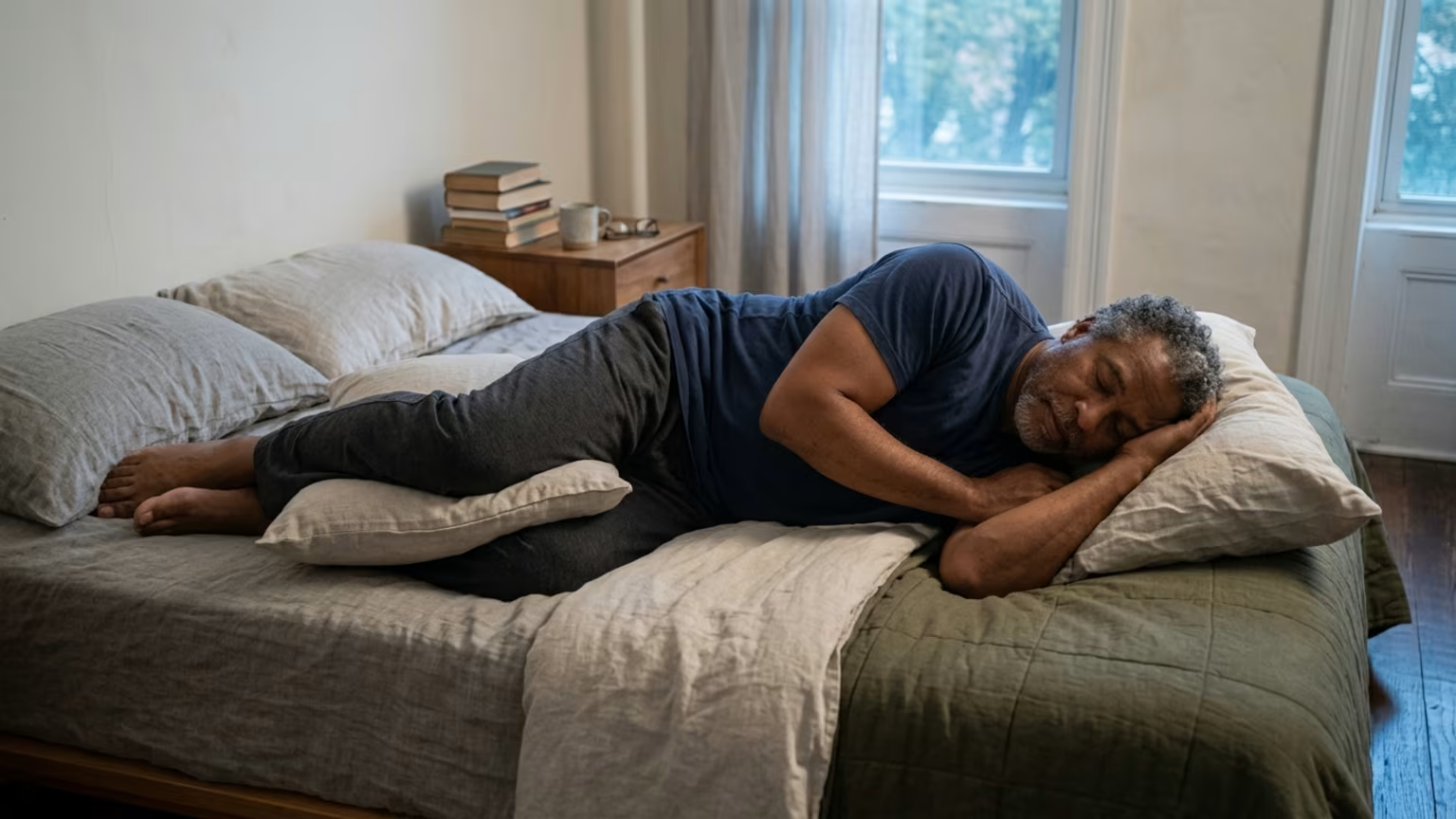

Sleep experts suggest there is no single best sleeping posture for adults. Learn why prioritizing comfort, breathing and simple pillow adjustments matters more.





On October 2, 2026, Popular Science published an Ask Us Anything podcast episode evaluating how sleep position impacts adult breathing and spinal alignment. Hosted by Sarah Durn and Annie Colbert, the discussion outlined why the search for a perfect sleeping posture often ignores biological reality.
Many adults spend significant energy trying to force themselves into a specific sleeping stance. They read conflicting advice and attempt to change lifelong habits to achieve better physical recovery. The recent podcast challenges this demanding approach. Drawing on advice from clinical experts, the episode concludes that there is no single universally best adult sleep position.
Sleep specialist Dr. John Saito and Johns Hopkins sleep neurologist Rachel Salas stress that finding a restful stance matters more than strict adherence to a specific posture. Dr. Saito serves as a representative for the American Academy of Sleep Medicine. Both experts suggest that prioritizing easy breathing and physical comfort is far more important than holding a rigid pose. People naturally move during sleep, making it highly unrealistic to expect the body to remain totally static.
If a person sleeps comfortably and experiences no pain or breathing problems, they have no reason to force a new posture. Adults over thirty-five often notice that their resilience to minor physical strain decreases. They might wake with minor stiffness or dull aches. However, the solution is usually adjusting their current position rather than abandoning it entirely. The goal is finding practical ways to achieve better sleep quality rather than winning a contest for perfect form.
Side sleeping is highly common among adults. While it offers several benefits, it can sometimes leave the body unsupported and misaligned. When a person rests on their side, gravity naturally pulls the upper leg down. This downward pull can twist the pelvis and strain the lower back. Over the course of the night, this minor torque can translate into morning stiffness.
Dr. Saito recommends a very simple adjustment for side sleepers. He suggests placing a pillow between the knees. This low-cost intervention helps keep the head, neck, hips and spine better aligned. It prevents the upper leg from dragging the spine out of its natural neutral orientation. This is not presented as a guaranteed medical treatment for chronic pain. Instead, it serves as a practical comfort adjustment that adults can easily try at home.
Side sleepers should also evaluate their head and neck support. A pillow that is too thick will bend the neck upward unnaturally. A pillow that is too thin will let the head sag downward toward the mattress. The episode highlights whole-body support and structural alignment. The head should rest in a comfortable neutral position that matches the rest of the spine.
Sleeping on one side does not carry the exact same physical effects as sleeping on the other. The podcast discusses specific physiological differences between left-side and right-side sleeping. These differences stem from the internal asymmetric layout of the human body.
Dr. Salas notes that right-side sleeping can actually worsen heartburn or reflux for some individuals. The anatomical position of the stomach makes it easier for stomach acid to escape into the esophagus when resting on the right side. Conversely, left-side sleeping may help reduce these frustrating digestive symptoms. For adults managing nighttime reflux, this symptom-specific consideration might guide their initial positioning choices.
Dr. Saito also describes potential physiological differences regarding heart flow and the brain's glymphatic system. The glymphatic system is responsible for clearing metabolic waste from the brain during rest. The story does not establish these side-specific considerations as a rigid medical rule for everyone. They are simply potential variables that adults can experiment with if they are struggling to sleep even when tired.
Back sleeping is frequently praised for its ability to keep the spine completely straight. For some people, resting flat on their back suits their structural needs perfectly. A supportive head pillow can help keep the neck and upper spine neutral. To further support the spine's natural curve, Dr. Saito suggests placing a pillow directly under the knees. This intervention significantly reduces tension on the lower back.
However, back sleeping carries notable airway concerns. The Popular Science episode flags back sleeping as a potential problem for people who snore or have sleep apnea. When a person lies flat on their back, gravity pulls the relaxed tongue toward the back of the throat. This backward shift can narrow or completely block the airway. Restricted breathing disrupts rest and places stress on the cardiovascular system.
Adults who snore heavily or stop breathing during sleep should be aware of this positional risk. While a pillow under the knees might solve lower back tension, the resulting back-sleeping posture could compromise airway clearance. Balancing spinal alignment against easy breathing is a practical tension many adults must navigate.
Stomach sleeping frequently receives heavy criticism from posture advocates. Resting face down forces the neck to rotate sharply to one side just to breathe. Over several hours, this sustained rotation can put significant strain on the cervical spine and surrounding neck muscles. Furthermore, the heaviest part of the adult torso often sinks deeply into the mattress. This sinking pulls the lower back entirely out of alignment.
Even with these drawbacks, stomach sleeping is not universally unacceptable. The episode acknowledges that stomach sleeping can actually help keep the airway open. Because gravity pulls the tongue forward rather than backward, the throat remains clearer. This can be a noticeable benefit for individuals who struggle with airway resistance during the night.
To manage the associated spinal strain, stomach sleepers can make targeted adjustments. The episode presents placing a thin pillow directly under the hips as one possible way to manage lower back tension. This slight elevation helps level out the pelvis and reduces the extreme arch in the lumbar spine. It represents a practical middle ground for adults who cannot fall asleep in any other stance.
Adults who wake up unrefreshed often turn to wearable technology for answers. They purchase sophisticated sleep trackers to monitor their exact sleep stages and bodily positions. While this data can be interesting, it frequently introduces a new layer of mental burden. The podcast pairs its positioning advice with a serious discussion about the limits of consumer sleep technology.
The Popular Science episode draws heavily from an article titled "Can tracking make my sleep worse? The quiet torment of sleep tech." It highlights the phenomenon of orthosomnia, a term researchers first identified in 2017. They coined the word after observing patients who grew highly anxious about their sleep-tracker results. Instead of sleeping better, these individuals worried obsessively about achieving perfect digital metrics.
This anxiety over metrics becomes a source of stress rather than genuine reassurance. Constantly monitoring position changes or grading sleep quality can keep the nervous system elevated. When rest transforms into another performance target to manage, natural recovery becomes much harder to achieve. Moving beyond strict sleep hygiene rules requires trusting the body's natural signals. If a person feels physically comfortable and wakes reasonably rested, a poor score on an app should not dictate a change in posture.
Adult sleep guidance differs drastically from infant sleep guidance. The podcast makes this distinction very clear to avoid any confusion. While adults should choose positions based on physical comfort and airway clearance, babies require entirely different safety standards. The episode explicitly states that babies should always be placed on their backs to sleep. Caregivers are directed to the latest recommendations from the American Academy of Pediatrics.
For adults, the priority remains individual physical adaptation. Trying to mirror the exact sleeping posture of a spouse or a popular wellness influencer rarely produces good results. Everyone has different joint flexibility, mattress firmness and respiratory patterns. The most effective approach involves gentle experimentation with pillows and angles until physical tension fades.
The human body is not designed to remain completely frozen for eight hours. The article points out that people naturally move during sleep. Muscle tension redistributes, joints adjust and blood flow shifts as the body cycles through different phases of rest. Trying to lock the body into one idealized posture fights against this very natural biological rhythm.
When adults wake up in a different position than the one they started in, they often feel a sense of failure. They might assume their sleep was somehow less effective because they rolled onto their stomach or back. The expert advice dismisses this anxiety entirely. Movement is an expected part of healthy adult sleep architecture. A comfortable starting stance simply helps the body relax enough to fall asleep initially.
For many adults dealing with persistent mental load, the pressure to optimize every aspect of life is deeply exhausting. The wellness industry frequently frames rest as a skill that must be mastered and constantly measured. This perspective turns the bedroom into just another environment for critical self-evaluation.
The podcast's approach offers a welcome relief from intense optimization culture. By prioritizing simple comfort over medicalized perfection, the episode gives adults permission to stop overthinking their rest. If a cheap pillow between the knees solves a morning hip ache, the intervention is a complete success. There is no need to layer expensive tracking technology over a basic physical adjustment. Relying on simple, low-cost modifications provides a much more sustainable path to realistic nighttime consistency.
Translating these clinical insights into a daily habit requires a sensible approach to nighttime comfort. Adults aged thirty-five to sixty-five who wake with neck or hip discomfort should treat sleep positions as an experiment rather than a rigid medical prescription. If you currently sleep on your side and feel stiff in the morning, place a supportive pillow between your knees tonight.
If you prefer sleeping on your back but notice lower back tension, try sliding a rolled blanket or pillow beneath your knees. Should nighttime reflux disrupt your rest, consider initiating sleep on your left side to see if symptoms decrease. Above all, if your current posture allows you to sleep comfortably and breathe easily, resist the urge to force a change.
As the medical understanding of nighttime recovery evolves, will adults gradually abandon complicated sleep trackers in favor of trusting their own physical comfort?
Putting a stop to obsessive posture adjustments is the first step toward reclaiming your night. When wellness content that turns rest into another performance target makes you feel like you are failing at sleep, Relaxopia translates credible evidence into clear guidance so you can build routines that support genuine recovery without the mental strain.
Stay connected for research-led guidance on sleep quality, stress, circadian rhythm, recovery, fatigue and everyday energy. Clear ideas for adults 35+ who want to sleep better, recover more fully and feel more capable through the day.





Explore practical guidance on sleep, stress and recovery without chasing every new hack, device or promise.
explore the blog