
An IPS article separates adjustable-bed positioning from bedroom heat. Review the evidence and practical options for curtains, airflow and lighter bedding.





On October 30, 2026, IPS published an article about a practical limit of adjustable beds: changing a sleeper's position does not cool a warm bedroom. The article separated bed positioning from the room conditions that shape sleep comfort.
An adjustable frame addresses the angle of the sleeping surface. Bedroom-temperature management addresses the space around it. Treating these as separate jobs helps clarify what a bed purchase is being asked to do.
According to IPS, adjustable frames can let bed partners choose different sleeping positions. Raising the head or legs changes that position, but it does not remove heat from the room's air. A preferred sleeping angle and a comfortable bedroom climate are therefore separate questions.
That distinction is not a verdict against adjustable beds. It is a way to match a feature to a particular need. Someone interested in changing their sleeping angle is evaluating a different function from someone whose main complaint is that the bedroom feels hot or stuffy.
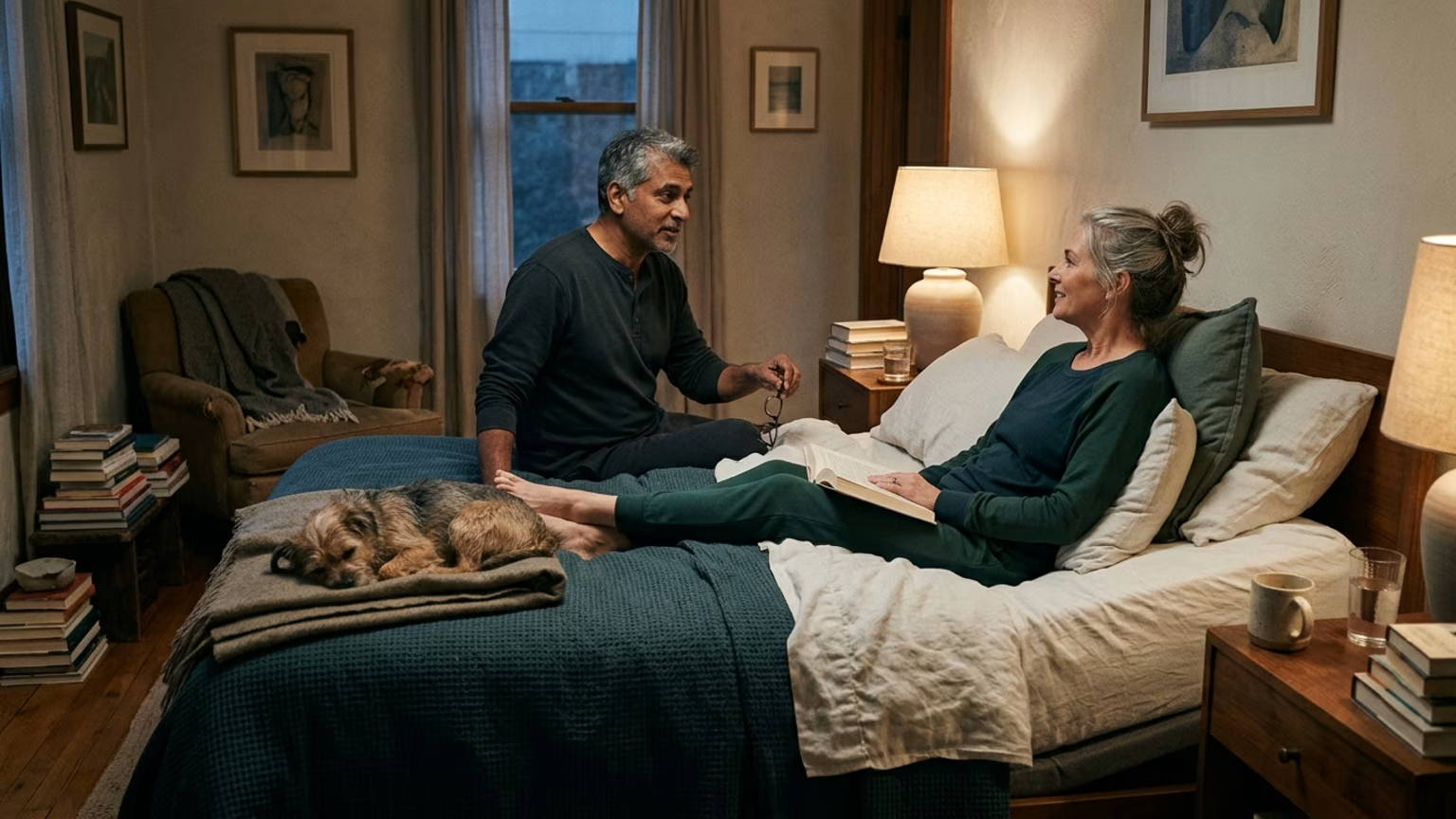
For a shared bedroom, both questions can matter at once. Partners may want different positions while still occupying the same warm room. Separate positioning controls address the first issue without settling the second.
This is also a useful starting point for thinking about bedroom temperature through comfort. Before comparing furniture features, it helps to name the problem those features are meant to address: an unwanted angle, uncomfortable warmth or limited air movement.
In its October 15, 2026, launch announcement, SweetNight said its SenseSync adjustable base offers independent head and foot adjustments and preset modes. The company presented the base alongside a mattress and other bedding within its broader “Cooling Sleep System.”
Those descriptions bring positioning and cooling into the same product story. For a reader evaluating that story, the useful question is which component is intended to address which concern. An adjustment feature describes how the bed moves; a cooling claim concerns a different outcome.
The evidence behind these points needs to be kept in separate categories. The IPS article supplies practical suggestions, the SweetNight announcement supplies manufacturer descriptions, and a study in Air Quality, Atmosphere & Health supplies observational research on household ventilation.
The IPS text has no named author, linked research or disclosure. It also names the SweetNight CoolNest Ultra Memory Foam Mattress without providing independent tests establishing that it cools sleepers or improves sleep. SweetNight's product descriptions are company claims rather than independent comparative evidence of sleep benefits.
The journal study examined window-opening patterns and sleep-related outcomes among older adults in China. It reported higher odds of “good sleep quality” for summer-predominant window opening and frequent year-round window opening than for infrequent window opening.
The reported odds ratios were 1.18 for summer-predominant opening and 1.24 for frequent year-round opening. Both comparisons used infrequent window opening as the reference. These figures describe an association, not an amount of extra sleep or a predicted benefit for an individual.
Because the study was observational, it does not establish that opening windows caused better sleep. Its findings also concern older adults in China rather than adults across all midlife settings. The IPS suggestions should therefore be read as comfort adjustments, not guaranteed treatments for poor sleep.
One further boundary matters for practical use: IPS explicitly says these measures do not replace air conditioning where it is needed. That keeps a modest set of household options from being presented as a complete answer to bedroom heat.
For adults aged 35 to 65, the daily implication is to connect an adjustment with the discomfort actually present. The report points toward familiar options rather than a requirement to replace the bed: curtains during hot periods, ventilation when outdoor conditions are cooler, a fan and lighter bedding.
This need not become a complete bedroom redesign. A practical question is whether the concern is daytime heat entering the room, the timing of window opening, air movement or the bedding covering the sleeper. Each question corresponds to a different suggestion in the IPS article.
IPS suggests closing curtains during the hottest part of the day to block direct sun. The relevant habit is daytime shading, rather than waiting until bedtime to think about how the room feels.
For someone balancing work and family responsibilities, that gives the advice a clear place in the day. The cue is the hot period affecting the bedroom, not a universal curtain schedule. It also keeps the adjustment separate from decisions about the mattress or frame: the proposed change concerns the room's exposure to daytime sun.
The article recommends opening windows when outdoor conditions are cooler. The timing condition is part of the suggestion, not a minor detail. This is more specific than treating an open window as an automatic answer to a warm room.
For a midlife adult trying to make evening routines manageable, the practical question is whether the outdoor conditions fit that advice. The research on household window opening adds context without turning ventilation into a fixed nightly requirement. Readers can also find a focused discussion of bedroom airing and its evidence without combining it with a furniture decision.
A fan is another option IPS proposes for encouraging air movement. This addresses a different part of bedroom comfort from raising the head or foot of a bed.
The distinction helps keep the choice grounded. A person describing still air is asking a question about airflow; a person wanting a different reclining angle is asking about positioning. There is no need to treat those as competing explanations or to assume that a feature aimed at one must also address the other. They can remain separate parts of the same room assessment.
IPS also suggests trying lightweight bedding. This shifts attention to what covers the sleeper rather than to the adjustable mechanism underneath the mattress.
For someone whose main complaint is feeling too warm under the covers, bedding is a directly relevant part of the setup to review. The useful decision is whether the current covering matches the comfort sought. That is a narrower question than whether an entire branded sleep system is necessary, and it does not require treating every component as a single purchase decision.
These options are most useful as a way to organize choices. Curtains relate to daytime sun, window opening relates to outdoor conditions, a fan relates to air movement, and lighter bedding relates to the covering on the bed.
Relaxopia's approach favors focusing on a specific sleep disruption over turning recovery into another demanding project. Here, that means keeping the original complaint in view rather than letting a long feature list define the problem.
Persistent sleep difficulty or fatigue calls for a personal discussion with a qualified clinician. Decisions about care belong there rather than in a bedroom-product comparison.
The broader lesson from the IPS article is about matching questions to solutions. Positioning features can be evaluated for positioning. Room-climate choices can be evaluated for the comfort concern they are meant to address. Keeping those questions distinct makes both research findings and product descriptions easier to interpret.
For midlife recovery, useful future research would connect specific environmental changes with outcomes people recognize in daily life. Feeling comfortable in bed is one question; feeling restored the next day is another. Studying both would offer a clearer basis for judging the role of bedroom changes over time.
Will future research separate bed positioning from bedroom climate clearly enough to show which adjustments support more consistent long-term recovery in midlife?
Sleep comfort and daytime energy provide a focus for evaluating bedroom claims; Relaxopia brings research-led context to the habits and technology that shape rest. For adults 35+ facing low energy and inconsistent recovery, its coverage makes competing advice easier to assess without turning sleep into a complicated routine.
Stay connected for research-led guidance on sleep quality, stress, circadian rhythm, recovery, fatigue and everyday energy. Clear ideas for adults 35+ who want to sleep better, recover more fully and feel more capable through the day.




Explore practical guidance on sleep, stress and recovery without chasing every new hack, device or promise.
explore the blog