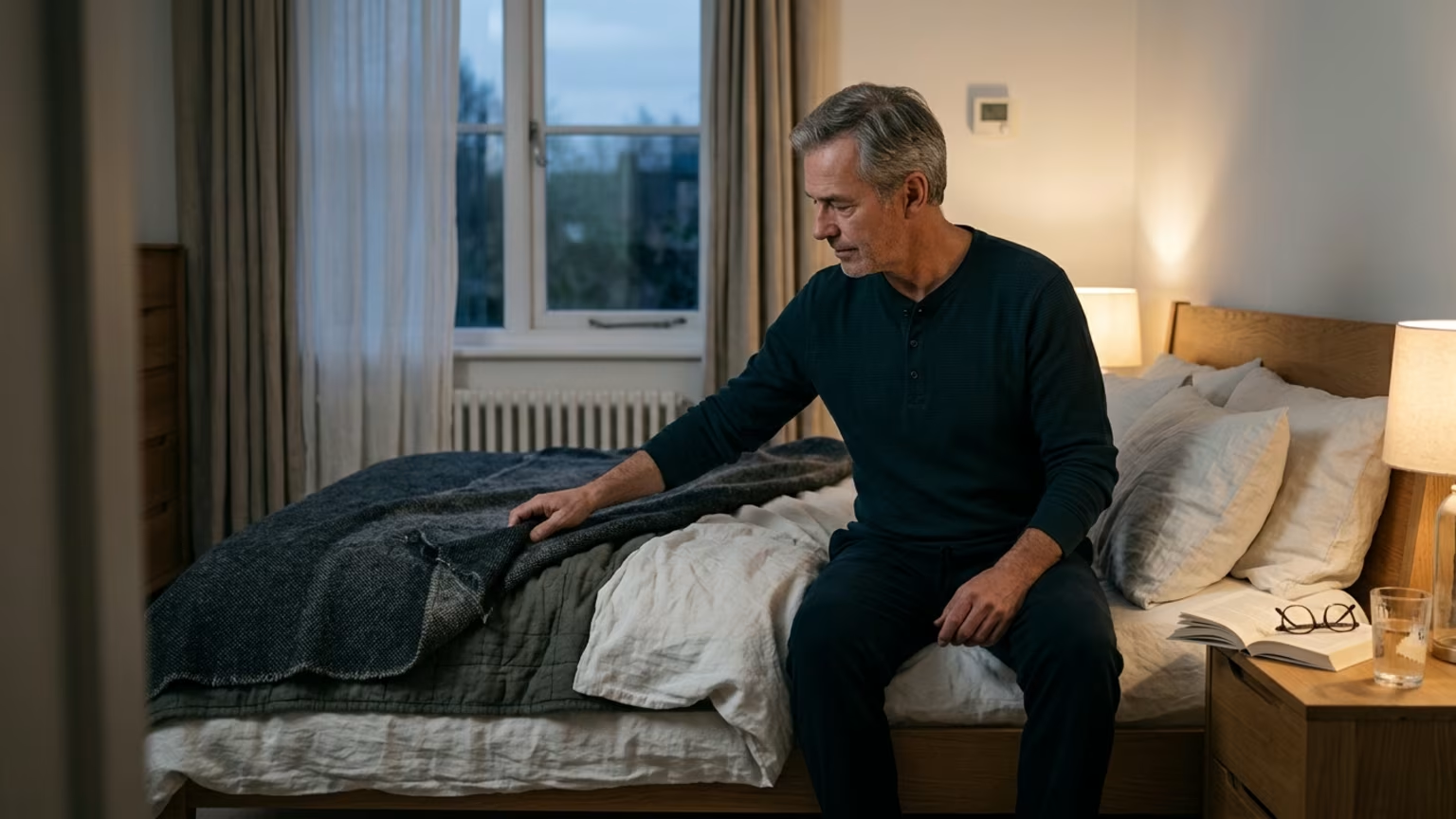

A patient guide suggests 65°F as a starting point. Learn how gradual adjustments, bedding and overnight comfort fit into bedroom temperature decisions.





On October 18, 2026, Acibadem Health Point published a patient-facing guide to bedroom temperature that suggests starting near 65°F (18°C). The guide recommends adjusting gradually according to overnight comfort rather than treating that setting as a requirement.
The guide’s central message is more flexible than its headline temperature might suggest. A comfortably cool bedroom is the aim. If a setting leaves someone cold or repeatedly waking with discomfort, reaching the suggested number has missed the point.
Acibadem Health Point also describes a broader suggested range of 60 to 67°F. That gives context to the starting point without creating a temperature test that everyone needs to pass. Personal comfort and circumstances remain part of the recommendation.
The evidence category matters here. This is patient guidance rather than a clinical trial establishing an optimal temperature, and the page does not identify an individual author or provide author credentials. Its recommendations are best read as practical options for adjusting a bedroom rather than a validated prescription for better sleep.
The guide also looks beyond the thermostat. It recommends attention to breathable sheets and sleepwear, lighter bedding layers, airflow when a room feels stuffy, and darkness and quiet. Temperature sits within that wider set of environmental considerations.
For an adult aged 35 to 65, the useful daily habit is a brief comfort check rather than a nightly effort to reach an exact number. The guide supports noticing how the room feels through the night and making gradual adjustments. That approach leaves room for a workable routine around employment, family responsibilities or caregiving.
The starting question is simple: did the bedroom feel comfortably cool, too warm or too cold? The answer gives the suggested temperature some personal context. A number is less useful when it is disconnected from the experience of sleeping in the room.
Starting near 65°F is one option offered by the guide. It is not a reason to keep lowering a setting that already feels cold. The recommendation explicitly allows adjustment when cooling brings discomfort or waking.
This distinction also changes how a night is judged. The goal is not to wake up having maintained a particular thermostat reading. It is to notice whether the environment felt comfortable enough to leave alone or whether a small adjustment seems worth trying.
Acibadem Health Point recommends changing the temperature by about 1 to 2 degrees at a time. It advises observing how sleep responds over several nights rather than making a decision from a single night.
That gives the experiment a manageable shape: make a small change, live with it across several nights and notice the response. There is no need to turn the suggestion into an elaborate schedule. The guide’s approach is gradual adjustment guided by comfort.
If the cooler setting leaves someone uncomfortable, the response is not to persist simply because it is closer to the suggested number. The guide’s direction is to find a comfortably cool setting that avoids cold-related waking. Comfort remains the reference point throughout the adjustment.
The guide suggests keeping notes for one to two weeks. It recommends tracking temperature alongside bedding and sleep quality, which may help distinguish a temperature pattern from other changes in routine.
A brief record can stay close to those recommendations:
These are observations rather than a score to improve. A short description can capture the information without requiring a detailed diary or a new tracking system. The guide’s recommendation is about noticing a pattern across nights.
The notes also keep the surrounding conditions visible. A temperature entry beside a bedding entry gives a clearer account of what was tried than a temperature entry alone. This fits a focused look at bedroom disruptions rather than treating the entire room as a project that needs rebuilding.
The record does not need to become another evening obligation. Its purpose is to support the adjustment, not to add a standard that a tired person must meet. Keeping it brief is consistent with using the guide as a practical starting point.
When a room feels warm, the thermostat is not the only option in Acibadem Health Point’s guidance. The guide also suggests lighter, breathable bedding and sleepwear. Light layers provide another part of the setup to review alongside the room setting.
For a midlife adult fitting rest around a full day, that keeps the question concrete: is the room uncomfortable, or is the bedding part of what feels too warm? The guide supports looking at both rather than assuming every uncomfortable night calls for a colder room.
There is no need to read these suggestions as a shopping list. The practical task is to look at the sheets, sleepwear and layers already being used. Any change can then be included in the same brief notes about temperature and sleep quality.
The guide recommends airflow or ventilation when a bedroom feels stuffy. This is another reason to describe the discomfort before choosing an adjustment. A room that feels stuffy raises a slightly different practical question from bedding that feels too heavy.
The recommendation does not require a complicated equipment routine. It places airflow among the environmental factors worth reviewing rather than making a lower temperature setting the answer to every complaint about the room.
For someone trying to simplify recovery, that is a useful distinction. The adjustment should respond to the discomfort being noticed. Keeping the description specific makes the guide easier to use without turning every night into a search for another bedroom change.
Acibadem Health Point includes darkness and quiet in its advice. These deserve separate attention rather than disappearing from view once temperature becomes the focus. A bedroom review can include attention to nighttime light while keeping the temperature question distinct.
This does not require changing every part of the environment at once. The guide offers several practical factors to review, not a demand to complete a full room makeover. A comfortable temperature is one part of that review.
If sleep problems persist, seek advice from a qualified healthcare professional rather than continuing to adjust the room indefinitely. Personal sleep concerns deserve an assessment that is broader than a thermostat experiment.
This guide raises a useful question for future research: how should bedroom advice account for the experience of the person using it? A temperature recommendation becomes more practical when it includes bedding and overnight comfort rather than stopping at a number.
For adults in midlife, the longer-term aim is guidance that remains usable without making recovery another demanding routine. Future research could examine how these environmental factors work together and how advice might better reflect individual circumstances.
Could that research make bedroom temperature a more useful part of long-term midlife recovery, with comfort built into the guidance from the start?
Bedroom cooling involves a trade-off between a suggested number and overnight comfort, so Relaxopia treats the setting as part of a wider sleep environment. Readers facing conflicting advice about routines can use its research-led explanations to connect everyday choices with rest and recovery without making those choices another performance target.
Stay connected for research-led guidance on sleep quality, stress, circadian rhythm, recovery, fatigue and everyday energy. Clear ideas for adults 35+ who want to sleep better, recover more fully and feel more capable through the day.





Explore practical guidance on sleep, stress and recovery without chasing every new hack, device or promise.
explore the blog