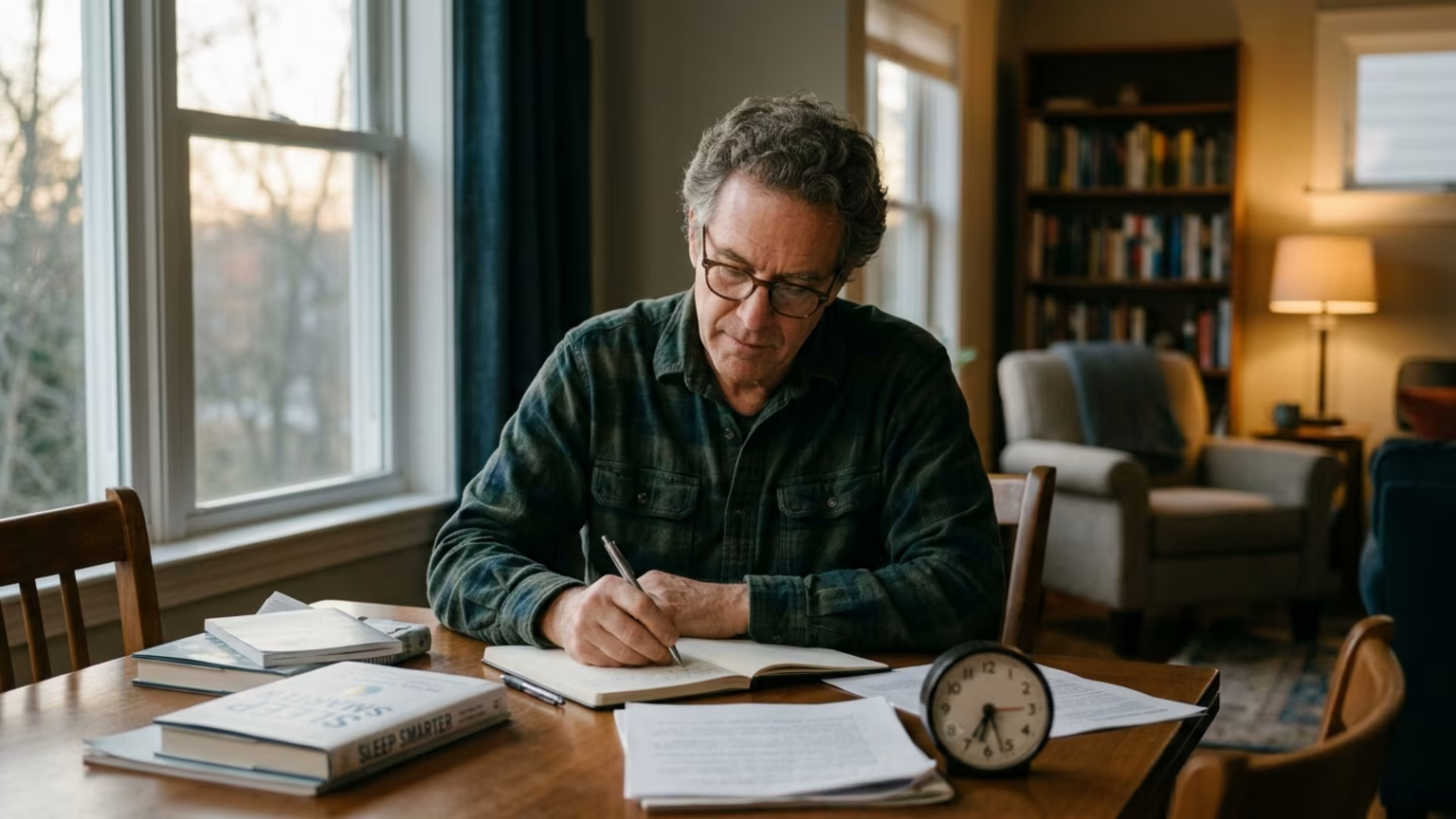

Sleep expert Olivia Arezzolo recommends a 3-2-30 evening routine to manage night-time waking. Learn how this structured framework helps adults wind down.





In September 2026, the Australian publication news.com.au reported on a structured evening framework called the 3-2-30 routine, developed by sleep expert Olivia Arezzolo. The updated coverage outlined a timed approach to food, lighting, and showering to help adults manage night-time waking and pre-sleep worry.
The primary conclusion of the expert guidance is that breaking the evening into three specific timed intervals can help transition the body toward rest. The routine asks individuals to organize their final hours awake around a declining level of environmental and physical stimulation. Arezzolo presents this routine as a practical way to change evening habits, offering a structured off-ramp for the day. While the coverage clearly describes sleep as a highly personal process influenced by individual habits, this framework provides a clear schedule for the hours leading up to bed.
The article frames night waking and pre-sleep worry as issues potentially connected to stress or anxiety. By following a predictable schedule, individuals may find it easier to shift away from the heightened alertness of the workday. However, the available coverage does not establish that the complete 3-2-30 routine has been tested as a clinical program. It is practitioner guidance reported in a news article, rather than a proven medical treatment for chronic insomnia. The value lies in its simplicity and the clear boundaries it creates for the end of the day.
The first phase of the routine begins three hours before your intended sleep time. The framework suggests avoiding eating in this final three-hour window. Alongside this timing rule, it recommends planning a dinner that is light on digestion. This creates a clear physiological boundary between the active part of the evening and the beginning of the rest phase.
By managing food intake early, the body is not tasked with heavy digestion during the time it should be preparing for sleep. This early cut-off is designed to support the body's natural shift toward recovery. It offers a practical rule for adults who might otherwise consume heavy meals late in the evening.
The second phase targets environmental input, starting two hours before bed. The routine advises people to lower lights and significantly reduce screen use during this window. The news.com.au article points to a 2024 study associating screen use in the 30 minutes before sleep with specific negative outcomes. According to the accessible reporting, late screen use is linked to higher likelihoods of excessive daytime sleepiness and sleeping less than seven hours.
Managing light exposure is a deliberate attempt to counter these statistics. Integrating this type of environmental control aligns with broader conversations about evening stimulation and delayed sleep. By dimming the lights, the routine attempts to signal to the body that the day is concluding.
The final phase of the framework occurs in the last thirty minutes of the evening. The routine recommends taking a shower during this final window. Making a shower a screen-free transition toward bed is a core part of this strategy.
This physical step serves as the final marker before attempting to sleep, replacing the habit of scrolling on a phone with a simple sensory experience. The shower acts as a definitive break between the activities of the evening and the quiet of the bedroom. It provides a tactile way to separate daytime stress from nighttime rest.
Beyond the timed intervals, the guidance addresses the mental load that often keeps adults awake. Arezzolo advises putting phones entirely out of reach to prevent late-night disruption. She even suggests leaving devices outside the bedroom to remove the temptation completely. By keeping technology out of the physical sleep space, you reduce the likelihood of checking notifications during a brief awakening.
To further support mental relaxation, she recommends adding specific calming habits to the evening routine. These suggestions include practicing meditation, drinking herbal tea, reading, and keeping a worry journal nearby. If a worry journal is useful, it can serve as a dedicated place to capture persistent thoughts.
This practice allows you to record concerns on paper rather than continuing to mentally rehearse them in the dark, which is a common source of pre-sleep anxiety. Finding ways to manage this mental load is critical for adults navigating recovery and nervous system balance. Writing things down can help clear the mind before getting into bed.
Managing physical temperature is another aspect of the routine for those who struggle with overheating at night. Arezzolo suggests trying a gel cooling pad under the pillow for people who frequently wake up hot. She particularly highlights this intervention for women experiencing perimenopause-related temperature changes or menstrual overheating. The source does not establish exactly how effective this will be for any single individual, but it offers a tangible option to test.
For adults in their late thirties and beyond, you can treat the 3-2-30 framework as a simple experiment in evening structure rather than a rigid medical protocol. You can test whether avoiding food for three hours, using dimmer light, or taking a screen-free shower fits your actual schedule. Notice whether these specific adjustments help you wind down effectively. The goal is to see if a predictable timeframe creates a more reliable transition into night.
Many adults find that building an effective evening transition routine requires testing different variables to see what actually works for their lifestyle. You do not need to view these suggestions as guaranteed fixes, but rather as tools to organize your evening.
Implementing a three-hour boundary for food can be challenging for working adults with busy family schedules. Treating this guidance as an experiment means finding a version of the rule that fits your reality. If a strict three-hour window is impossible, focusing on the recommendation to eat a dinner light on digestion may still offer benefits. The intention behind the routine is to reduce physiological stress before bed, not to create additional logistical pressure during the evening.
Similarly, reducing screen time for two full hours may require significant shifts in how you manage evening communication. The 2024 study cited in the news.com.au article specifically highlights the negative outcomes associated with screen use in the final 30 minutes before sleep. If a two-hour digital blackout feels unrealistic, starting by eliminating screens during the final thirty-minute shower window can serve as a practical compromise.
Even with a highly structured evening, you may still experience periods of wakefulness. If you are awake and becoming anxious or frustrated in the middle of the night, The Sleep Charity offers different behavioral guidance. Their stimulus-control advice is to leave the bed entirely in these moments. You should only return to bed when you actually feel sleepy, which helps prevent the sleeping environment from becoming associated with frustration.
The guidance from The Sleep Charity serves as an important counterweight to any strict routine. When a routine fails to prevent night waking, the frustration of being awake can quickly escalate into anxiety. By moving to a different room and engaging in a quiet activity, you break the association between your mattress and the feeling of stress. This approach highlights that managing sleep is sometimes about managing wakefulness.
Staying in bed while anxious often reinforces the cycle of night-time waking. For more context on managing the emotional toll of poor sleep, understanding sleep anxiety can provide additional perspective. Returning to bed only when tired is a widely recognized strategy for breaking this cycle.
Furthermore, adults should recognize when behavioral experiments are not enough. The Sleep Charity says that people whose sleep difficulty has lasted for more than four weeks should take additional action. If persistent sleep problems are actively affecting your wellbeing, they advise making an appointment with a GP to explore further options. A structured schedule can help organize your night, but it does not replace professional guidance for ongoing issues.
How might integrating structured, screen-free transition periods into our evenings alter our long-term resilience against midlife stress?
Establishing a structured transition to reduce night waking often requires sorting through conflicting behavioral advice, but letting Relaxopia organize the clinical data simplifies your approach. We translate credible evidence into clear, practical guidance without wellness hype to help you resolve low daytime energy and inconsistent recovery.
Stay connected for research-led guidance on sleep quality, stress, circadian rhythm, recovery, fatigue and everyday energy. Clear ideas for adults 35+ who want to sleep better, recover more fully and feel more capable through the day.




Explore practical guidance on sleep, stress and recovery without chasing every new hack, device or promise.
explore the blog