
A recent report outlines an environmental routine to signal rest. Review the evidence behind evening sleep habits, adult screen use, and chronic insomnia.





On September 19, 2026, Infobae published a report detailing a brief bedtime setup to help adults transition from daytime activity to rest. The feature, updated on September 26, synthesizes suggestions attributed to various news organizations about small environmental changes.
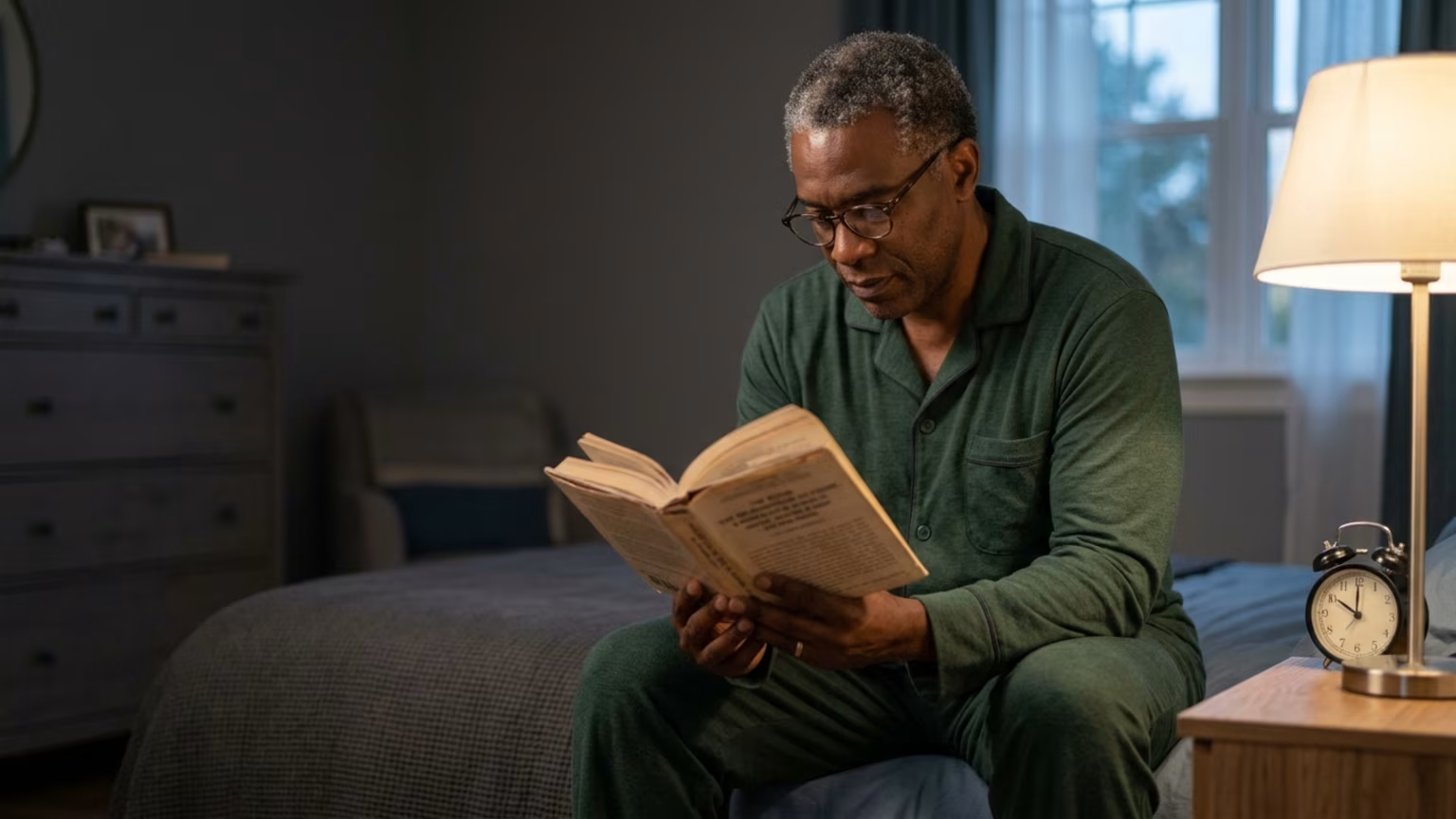
The primary conclusion of the recent reporting focuses on modifying the sleep environment to signal the brain that the day has ended. Infobae describes a short pre-bed setup that includes dimming lights, closing curtains, preparing the bed, and moving the phone out of reach. The publication presents these steps as a practical way to mark a daily transition. It frames the routine as an easy experiment rather than a guaranteed medical treatment.
Infobae frames its suggested sequence as a low-cost approach to easing evening overstimulation, requiring no specialized equipment or expensive technology. This aligns well with the reality that simple habits often provide the most sustainable path to consistent recovery. By focusing on lighting and physical space, the routine addresses basic sensory inputs.
Midlife adults frequently experience a persistent mental load that makes it hard to switch off at night. A brief sequence of physical actions can help bridge the gap between a demanding workday and sleep. Preparing the bed and dimming the room requires minimal cognitive effort, respecting the limited energy reserves of exhausted professionals.
The report gathers recommendations from several major media outlets to form its suggested routine. Infobae attributes lower lighting and quiet activities to CNN. It attributes the suggestion to use dimmer lamps to NPR. A broader wind-down period is attributed to NBC News.
These news outlets frequently report on wellness topics, but the Infobae feature does not link to the underlying original articles. The lack of direct links means the specific clinical context for these suggestions remains secondary. Still, the overarching theme points toward reducing sensory input before sleep. Modifying your surroundings can serve as a physical boundary between working hours and recovery time.
A routine that works for one person might feel rigid or unhelpful to another. Relaxopia focuses on explaining what current evidence actually shows about sleep and stress without making medical promises. The real value of these media suggestions is drawing attention to the transition period before bed, serving as a buffer zone for calming the nervous system.
A major component of the suggested routine involves placing mobile phones out of reach. The Infobae report summarizes a 2025 adult study showing associations between daily bedtime screen use and worse sleep metrics. This study linked evening screen habits to later bedtimes, shorter weekday sleep, and worse reported sleep quality. The report explicitly notes that the study does not prove causation.
It is common for tired adults to use their phones to unwind after a demanding day. The association between screens and delayed sleep might simply reflect a desire for restorative leisure, as people who feel mentally overloaded often delay sleep to reclaim personal time. While moving the phone away is a practical step, it is not a universally validated fix for every sleep issue. The exact sequence or ten-minute duration has not been tested in a published clinical trial.
Adults in their late thirties and beyond often notice that their resilience to evening stimulation changes. The blue light and cognitive engagement from devices can confuse the body's internal clock, creating a common hurdle for consistent recovery. However, turning normal life strain or screen habits into a personal failure is counterproductive. The goal is to understand how your environment affects your energy without enforcing absolute technological purity.
The clinical consensus regarding adult screen use remains less definitive than popular coverage often implies. A separate AARP summary reports that a National Sleep Foundation expert panel reviewed evidence on nighttime screen use. The panel found evidence of impairment for ages five to nineteen. They could not reach agreement on the effects of bedtime screen use in adults because evidence was limited.
This uncertainty highlights a frequent challenge for adults trying to optimize their rest. Advice that applies clearly to teenagers might not translate perfectly to adults juggling caregiving, professional demands, and persistent mental load. The lack of strict scientific agreement suggests that adults should evaluate their own sensitivity to evening technology. Blanket bans on bedtime screens may add unnecessary stress for those who find them relaxing.
Some professionals find that reading on a tablet provides a necessary distraction from work-related thoughts. Others find that checking notifications right before closing their eyes triggers an active stress response. A rigid interpretation of sleep hygiene can accidentally turn rest into another demanding optimization routine. Evaluating your own daytime energy levels is a better gauge of whether your evening habits need adjustment.
Simple bedroom adjustments are helpful for general relaxation, but they are not a medical protocol. Guideline summaries support multicomponent cognitive behavioral therapy for chronic insomnia. These same clinical guidelines advise against relying on sleep hygiene alone as a treatment. Readers experiencing severe or persistent sleep disruption should recognize the limits of a ten-minute routine.
Treating sleep hygiene as a sole remedy can sometimes increase frustration. When adults follow every environmental rule and still cannot sleep, they may feel a sense of personal failure. Environmental shifts are supportive habits rather than comprehensive treatments. They create a foundation for rest without replacing targeted behavioral therapies.
Relying exclusively on room temperature, darkness, and quiet to fix severe insomnia often leads to disappointment. Multicomponent cognitive behavioral therapy helps individuals reconstruct their relationship with sleep and wakefulness. This therapeutic approach addresses the anxiety and active mental interference that simple environmental cues cannot resolve. It is entirely appropriate to enjoy a neat bedroom while acknowledging that medical conditions require medical solutions.
Some adults rely on their devices for reading or listening to audio to quiet a busy mind. If removing the phone entirely feels too restrictive, experts suggest smaller compromises. The AARP article quotes Mariana G. Figueiro, director of Mount Sinai's Light and Health Research Center. She suggests dark mode as an option for people who need to use a phone near bedtime.
This perspective aligns with a realistic approach to modern recovery. Adjusting the brightness of a screen might offer a middle ground between total restriction and overstimulation. It allows individuals to maintain their preferred winding-down activities while minimizing harsh visual input. Pragmatic adjustments often prove more sustainable than rigid protocols for tired professionals.
This kind of pragmatic advice is highly relevant for individuals balancing family responsibilities and work obligations. Telling a busy parent or professional to abandon all technology at dusk is rarely realistic. Adopting dark mode or lowering screen brightness respects the individual's need for autonomy and relaxation. Small environmental tweaks often yield more consistent compliance than complete avoidance strategies.
Adults dealing with low daytime energy can test these environmental cues without treating them as strict rules. You might try lowering the lights and preparing your bed to see if it helps signal rest. If checking work emails keeps you alert, moving the phone to another room could provide a useful physical boundary. Treat the routine as a gentle cue to disengage rather than a performance target.
Consistency matters more than the specific details of the routine you choose to adopt. Performing a few calming actions in the exact same order each night helps build an automatic psychological association. Over several weeks, this repetition trains the brain to recognize that sleep is imminent. Simply dimming the overhead lights and clearing your nightstand can be an excellent starting point.
Implementing these changes should reduce stress rather than add to your evening workload. You can learn more about arranging your physical space by designing a recovery-friendly home. If your mind remains active after the lights go out, consider establishing a better evening transition routine. The goal is to build habits that fit your real life without demanding perfection.
Basic hygiene steps are not always sufficient for those experiencing long-term fatigue and persistent wakefulness. You can review clinical approaches by reading a guide to behavioral tools for insomnia. Understanding the biological shifts that interrupt overnight rest is also a valuable next step. Finding the right intervention requires matching the tool to the specific severity of the problem.
As sleep science continues to evolve, our understanding of daily transitions will likely become more refined. How might clinical sleep research eventually clarify the exact environmental triggers that best support rest as our daily stress levels change?
Deciphering evening light exposure and realistic sleep timing usually falls squarely on the individual, but letting Relaxopia assess the clinical data changes the approach. We translate credible evidence into practical guidance without wellness hype to resolve your confusion about circadian rhythm, light exposure and sleep timing.
Stay connected for research-led guidance on sleep quality, stress, circadian rhythm, recovery, fatigue and everyday energy. Clear ideas for adults 35+ who want to sleep better, recover more fully and feel more capable through the day.





Explore practical guidance on sleep, stress and recovery without chasing every new hack, device or promise.
explore the blog