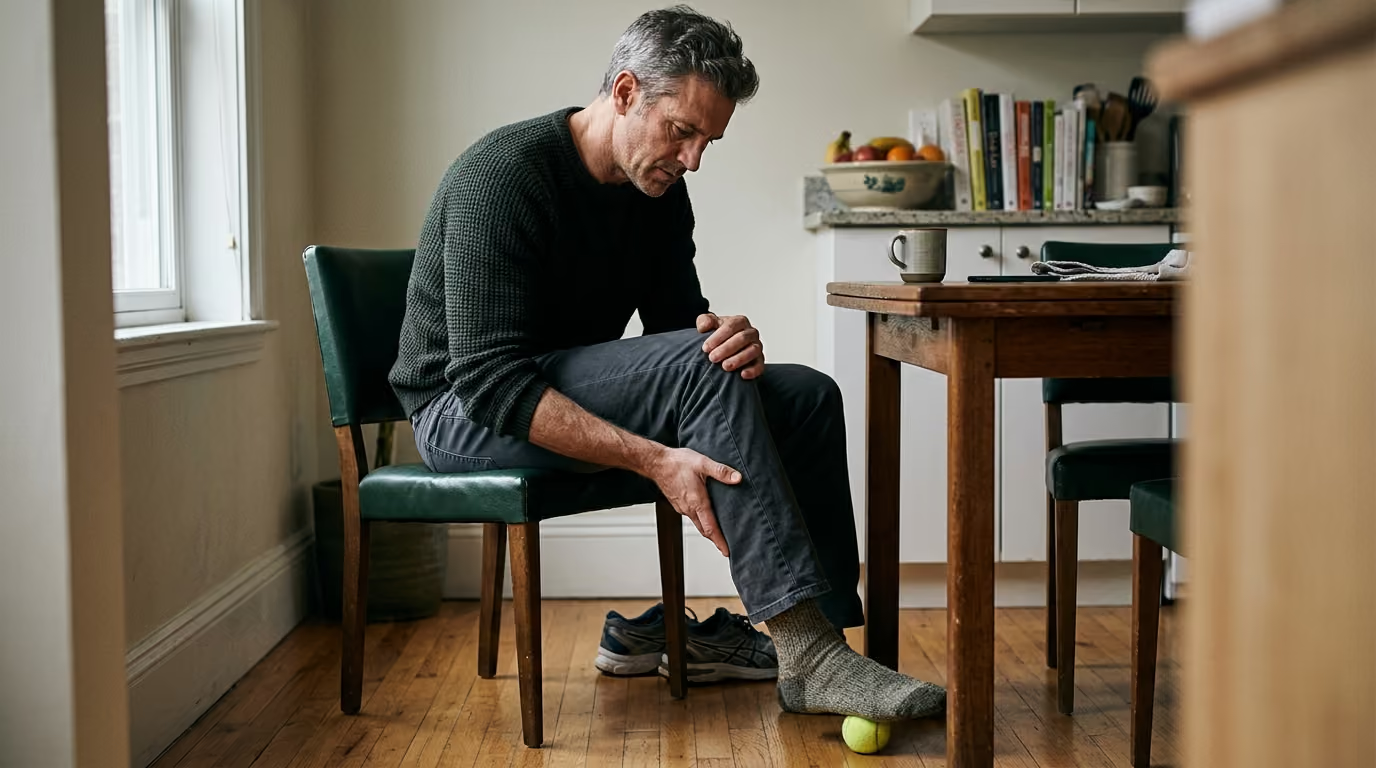

Viral marketing often treats nervous system regulation as an instant fix, but sustainable biological resilience requires dynamic adaptation backed by reliable clinical evidence.





You cannot reset your nervous system in two minutes. The human body does not possess a master reboot switch, and permanent calm is not a biological marker of health.
Popular health culture often presents the autonomic nervous system as something fragile that constantly falls out of alignment. Online videos promise that special eye movements, ice water splashes, or humming exercises will instantly heal trauma and lower cortisol. In reality, physiological arousal is a normal response to life demands. Being able to mobilize energy when required is just as vital as being able to rest afterward.
Adults over 35 frequently notice that stress recovery takes longer than it used to. Work demands, parenting, hormonal shifts, and sleep changes can make daily recovery feel inconsistent. When fatigue sets in, fast-acting regulation techniques sound appealing.
Understanding how the nervous system actually adapts helps you separate helpful daily habits from exaggerated marketing claims. This guide examines what scientific research shows about autonomic balance, vagal tone, cortisol, breathing practices, and grounding.
The autonomic nervous system regulates functions that do not require conscious thought. It coordinates heart rate, blood pressure, airway diameter, digestion, and pupil dilation. Popular media divides this network into a sympathetic fight-or-flight mode and a parasympathetic rest-and-digest mode.
Real biology is far more integrated. Arousal operates across a continuum managed by multiple interacting systems. Sympathetic activation mobilizes the body for effort, exercise, and immediate problem solving. Parasympathetic pathways, especially through the vagus nerve, slow the heart and support restorative digestion.
At the same time, the hypothalamic-pituitary-adrenal axis coordinates endocrine responses by releasing hormones like cortisol. Brain networks constantly evaluate safety, manage attention, and process emotions.
Sympathetic activation is not toxic. When you climb stairs or complete a demanding work project, your sympathetic system provides the necessary blood flow and mental focus. Problems occur only when high activation persists without adequate opportunities for recovery.
Arousal simply describes physiological alertness and metabolic activity. Stress involves how a person perceives a challenge relative to their available internal and external resources.
High arousal during vigorous exercise is healthy and promotes physical conditioning. Low arousal during profound depression or medical illness can be debilitating. A well-functioning nervous system responds dynamically to changing circumstances instead of staying frozen in one state.
Healthy regulation means you can increase arousal to meet a deadline, step down that activation when the task ends, and sleep deeply at night. It is about cognitive and physical flexibility.
When evaluating any technique, it helps to identify which level of evidence actually exists. Conflating these levels is the most common reason wellness claims become misleading.
A slow breathing exercise can reliably produce an immediate state change. That short-term shift does not prove the exercise cures clinical depression or reverses decades of cardiovascular risk. Evidence at the first level does not automatically transfer to the fourth.
For a deeper look at how daily habits support physiological balance, explore our guide on rest and nervous system balance.
Heart rate variability measures the tiny fluctuations in time between consecutive heartbeats. If your pulse is sixty beats per minute, your heart is not beating like a rigid metronome. Some intervals are slightly longer than a second, while others are slightly shorter.
These beat-to-beat differences reflect continuous communication between the sympathetic and parasympathetic branches. The vagus nerve acts as a rapid brake on cardiac pace, slowing the heart during exhalation and releasing during inhalation.
Wearable devices typically summarize this variability using mathematical calculations:
In marketing language, vagal tone is often treated as an internal battery level. Promoters claim a single high score proves emotional resilience, while a low score reveals deep trauma or burnout.
Peer-reviewed physiology does not support this rigid interpretation. Research confirms that heart rate variability is heavily influenced by posture, hydration, ambient temperature, recent meals, physical fitness, age, and medication use. A single lower morning score does not prove psychological weakness.
Heart rate variability biofeedback uses paced breathing devices to help individuals synchronize respiration with cardiac rhythms. When you breathe at roughly six breaths per minute, heart rate fluctuations match breathing oscillations, creating high amplitude waves.
A meta-analysis of 24 studies involving 484 participants found that HRV biofeedback produced significant reductions in self-reported anxiety and stress. In people with cardiovascular conditions, stress-management interventions that included biofeedback or yoga improved long-term measures like 24-hour SDNN.
These gains represent valuable training in autonomic awareness. However, short-term increases in variability during a biofeedback session do not automatically transform baseline cardiovascular health.
Consumer smartwatches track trends over time, but individual daily numbers are noisy. Checking your wearable score constantly can generate unnecessary worry, which inadvertently raises stress hormones.
Cortisol is widely labeled as a destructive compound that causes abdominal fat, brain fog, and premature aging. This characterization misrepresents an indispensable hormone.
Cortisol is a steroid hormone produced by the adrenal glands. It maintains blood pressure, mobilizes glucose for energy, regulates immune function, and curbs excessive inflammation. You cannot survive without it.
In healthy adults, cortisol follows a predictable 24-hour curve governed by the central circadian clock.
A robust morning rise is not a sign of adrenal burnout. It is an adaptive mechanism that prepares your brain and muscles for the day. Trying to suppress cortisol across the entire day can cause severe fatigue, dizziness, and compromised immunity.
Measuring cortisol accurately is challenging. Salivary and blood levels fluctuate based on meal composition, caffeine intake, mood swings, light exposure, and recent physical exertion.
Single-point saliva or blood tests provide little insight into chronic stress neurobiology. While hair cortisol tests measure hormone accumulation over months, research shows complex relationships between long-term levels and cardiovascular risk.
Stress-management interventions do influence hormone activity. A 2023 meta-analysis of stress reduction programs found a small-to-moderate lowering effect on elevated cortisol levels, with an average effect size of g = 0.282. Mindfulness practices and progressive relaxation produced more reliable shifts than passive rest.
These statistical averages describe group trends rather than guaranteed individual transformations. Lowering cortisol should not be your sole recovery goal; restoring healthy daily energy patterns is what matters.
Readers struggling with late-day alertness spikes can review our analysis of midday fatigue and night alertness patterns.
Slow breathing is the most accessible tool for state regulation. Changing respiratory rate directly influences baroreceptors, cardiac filling, and autonomic outflow.
When you slow your breathing to around five or six breaths per minute, you stimulate pulmonary stretch receptors. This mechanical action prompts the vagus nerve to slow heart rate and lower vascular resistance.
The National Center for Complementary and Integrative Health reports that slow, deep breathing can produce modest reductions in blood pressure and resting pulse. A review of diaphragmatic breathing studies involving 880 participants demonstrated short-term improvements in self-reported stress and measurable reductions in salivary cortisol.
These physiological shifts are real and helpful. Yet they do not flush stored trauma from bodily tissues or rewrite neural architecture overnight. Slow breathing provides a safe, accessible method to reduce acute physical tension.
Complicated breath-holding routines are unnecessary for relaxation and can trigger air hunger in sensitive individuals. A gentle, structured approach works best:
Stop immediately if you notice dizziness, tingling in your fingers, or rising anxiety. The goal is easy, rhythmic airflow rather than extreme breath retention.
Progressive muscle relaxation involves methodically tensing and releasing specific muscle groups. Developed by Edmund Jacobson, this practice teaches the brain to recognize subtle muscular tension.
Autogenic training uses silent verbal formulas focused on heaviness and warmth in the limbs to induce physical ease. Research reviewed by health agencies indicates that relaxation training can reduce blood pressure, ease occupational strain, and improve quality of life in adults with persistent health challenges.
Relaxation techniques serve as valuable self-care habits. They work best as supportive tools alongside good sleep, physical movement, and medical care.
Meditation trains your attention to observe thoughts, feelings, and physical sensations without immediate emotional reactivity. This mental training can shift how you perceive daily stressors.
Systematic reviews confirm that structured mindfulness programs produce modest reductions in anxiety, psychological stress, and depressive symptoms. However, physiological effects on the HPA axis are variable.
A 2024 review of mindfulness interventions and cortisol dynamics revealed significant hormone reductions in 25 studies, while 10 trials showed no significant differences. Uncontrolled trials often show larger improvements because they do not account for natural recovery or participant expectations over time.
Mindfulness is widely marketed as entirely harmless. However, large clinical reviews show that meditation can occasionally provoke uncomfortable responses.
An analysis of 83 meditation studies encompassing 6,703 participants found that approximately 8% experienced adverse events. The most frequent reactions were increased anxiety, panic, depersonalization, or low mood.
People with histories of trauma or panic disorder can find intense internal focus unsettling. If silent sitting meditation triggers emotional distress, structured movement or sensory grounding is a safer choice.
Physical activity temporarily elevates heart rate, blood pressure, and circulating stress hormones. This brief stressor stimulates long-term physiological resilience.
A comprehensive meta-analysis found that regular exercise interventions reduced baseline cortisol with a standardized mean difference of −0.37 while improving sleep quality. Exercise improves insulin sensitivity, increases endothelial nitric oxide production, and supports deeper slow-wave sleep.
Dose and recovery balance are critical. High-intensity training without adequate nutrition or rest increases systemic inflammation and disrupts sleep. Exercise must match your current recovery capacity.
To learn how to calibrate your physical exertion, read our guide on how to read your daily energy accurately.
No breathing exercise can replace adequate sleep. Sleep is the primary biological window for cellular repair, brain waste clearance, and cardiovascular recovery.
Sleep deprivation alters autonomic balance. Laboratory research shows that acute sleep loss elevates evening cortisol, raises next-day blood pressure, and blunts normal heart rate variability.
Deep slow-wave sleep is when parasympathetic tone dominates, allowing heart rate and metabolic activity to reach their lowest daily baselines. Prioritizing seven to eight hours of regular sleep provides more nervous system support than any commercial wellness supplement.
Adults experiencing ongoing sleep disruption can read our evidence summary on practical habits for persistent insomnia.
The term grounding is used in two completely different ways within health discussions. Clarifying this distinction prevents confusion.
Psychological grounding is a standard cognitive technique. It involves using external sensory anchors to disrupt panic, racing thoughts, or emotional numbness.
You might name five blue objects in your room, place your bare feet firmly on the carpet, or hold a cold glass of water. These actions focus your attention outward, reducing acute mental distress without making complex biological claims.
Electrical earthing claims that placing bare skin in contact with the ground transfers free electrons into the body. Proponents argue these electrons neutralize free radicals, reduce inflammation, and normalize cortisol patterns.
One study indexed in PubMed evaluated twelve subjects who slept on conductive mattress pads connected to an outdoor ground rod. Researchers observed shifts in 24-hour cortisol profiles and reported subjective improvements in sleep and musculoskeletal pain.
Other published reviews suggest that earthing reduces red blood cell aggregation and alters heart rate variability metrics.
While these preliminary findings are intriguing, significant methodological limitations remain:
Walking barefoot on grass or sand can be a calming sensory activity. However, expensive earthing sheets and electrical grounding devices are not proven medical treatments for autonomic dysfunction or chronic insomnia.
Polyvagal theory has become popular among wellness coaches and somatic therapists. The model proposes a three-part evolutionary hierarchy: an ancient unmyelinated vagal system causing freeze states, a sympathetic fight-or-flight system, and a modern myelinated vagal system enabling social engagement.
This framework offers an accessible metaphor for understanding how safety and fear affect human emotions. Many people find value in naming their bodily states using these concepts.
Neurobiologists and comparative anatomists have raised substantial criticisms regarding the core evolutionary and anatomical claims of polyvagal theory.
Peer-reviewed analyses point out that the unmyelinated vagus nerve is not an evolutionary relic limited to primitive freezing. Unmyelinated vagal fibers are active during normal, everyday parasympathetic cardiac regulation across all mammalian species.
Scientists also dispute the claim that respiratory sinus arrhythmia provides a clean, isolated readout of the modern dorsal vagal motor complex. Autonomic cardiac control involves complex, distributed networks across the brainstem and spinal cord rather than three distinct evolutionary steps.
Polyvagal theory can be viewed as an interesting therapeutic metaphor. However, it should not be accepted as settled neuroscience.
A realistic model of nervous system function separates daily regulation into three distinct layers:
State regulation techniques offer temporary physical relief during moments of acute tension.
Regulatory capacity represents your physical and emotional baseline. It determines how quickly your body rebounds after a difficult day. Capacity develops gradually through balanced sleep, cardiovascular fitness, good nutrition, and emotional skills.
Contextual reality encompasses the external conditions of your life. If you work sixty hours a week in a hostile workplace while caring for an ailing parent, no amount of diaphragmatic breathing will prevent exhaustion. Addressing real environmental challenges is necessary for lasting recovery.
For strategies on managing mental overload, read our resource on quieting mental overdrive before sleep.
Building nervous system health requires steady, sustainable habits rather than dramatic interventions. Here are realistic ways to approach common daily challenges.
A professional finishes an intense budget review with racing thoughts, elevated pulse, and shallow breathing.
An adult wakes up, checks their wearable recovery score, notices a low HRV reading, and feels anxious about their health.
A person with a history of panic attacks tries intense, rapid hyperventilation breathwork and develops tingling hands and lightheadedness.
Before investing in expensive vagus nerve stimulators, earthing products, or online courses, consider these evaluation questions:
Prioritizing simple, evidence-based habits saves money and reduces wellness-related stress.
For more perspectives on mental strain, explore our editorial on stress management and mental resilience.
Self-regulation practices are valuable tools for daily stress management. However, they cannot replace formal medical or psychological care when significant symptoms arise.
Physical sensations of autonomic dysregulation often overlap with underlying medical conditions. Assuming that persistent fatigue or racing heart rates are purely psychological can delay essential medical treatment.
Several common medical issues alter heart rate, energy levels, and mood:
If you experience persistent daytime exhaustion, unexplained weight changes, night sweats, or recurring palpitations, consult a physician for appropriate diagnostic blood work.
Seek prompt clinical evaluation if you notice any of the following symptoms:
Working with a licensed therapist or medical provider gives you personalized guidance that self-help exercises cannot provide.
Genuine recovery is built through steady daily habits and sustainable environments rather than quick biological fixes.
Stay connected for research and practical guidance on sleep, stress, circadian rhythm and recovery. Clear ideas for adults 35+ who want better rest, steadier energy and more resilient days.



Explore practical guidance on sleep, stress and recovery without chasing every new hack, device or promise.
explore the blog