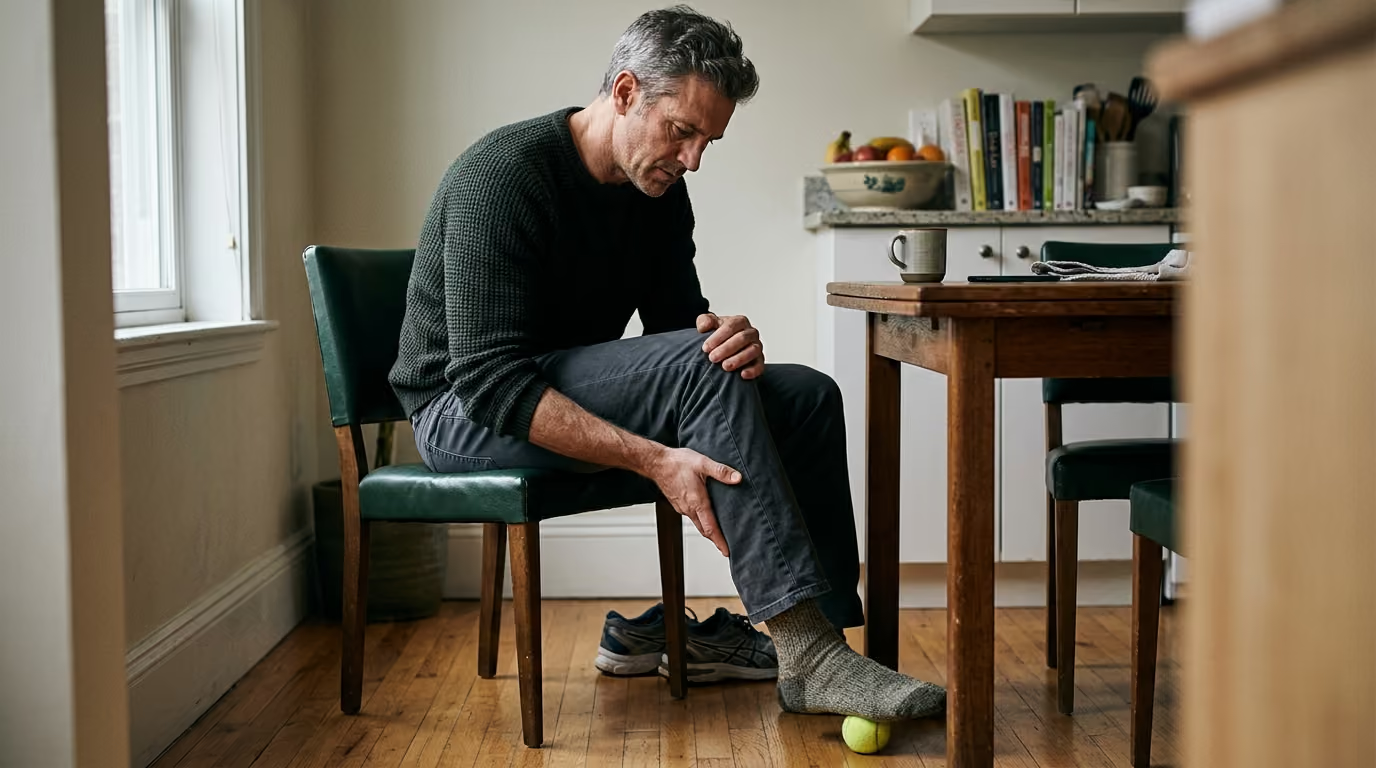

Daily energy does not rely on willpower alone but depends on the biological interaction between sleep pressure, circadian rhythms, stress, and light exposure.





You wake up to an alarm, drink a cup of coffee, and feel reasonably alert by mid-morning. By two in the afternoon, your focus fades, your eyelids feel heavy, and simple cognitive tasks require double the effort. Later that night, around ten o'clock, an unexpected wave of wakefulness arrives just as you prepare for bed.
This daily fluctuation is not a personal failure or a lack of discipline. Daily energy is not a single fuel tank that drains steadily from morning to night. It is the real-time output of several biological systems operating simultaneously.
Credible physiological research demonstrates that daytime functioning depends primarily on two interacting forces: homeostatic sleep pressure and the circadian timing system. These biological processes interact with stress hormones, environmental light, nutrition, and daily behaviors. The evidence supporting this two-process model is strong and well-established in sleep medicine. Research on specific daytime interventions, such as blue-blocking glasses or strict light protocols, shows more varied outcomes. Understanding how these biological systems interact provides a practical foundation for managing your daily energy.
The foundation of modern sleep science rests on the two-process model of sleep regulation. This model describes how two distinct biological mechanisms work together to govern when you feel alert and when you feel sleepy.
The first mechanism is homeostatic sleep pressure, often called Process S. This pressure represents the biological need for sleep that accumulates during every hour of continuous wakefulness. From the moment you wake up, your brain tracks time spent awake. The longer you remain awake, the stronger this internal pressure becomes. When you sleep, this accumulated pressure clears away, restoring your baseline capacity for wakefulness.
The second mechanism is the circadian drive for alertness, known as Process C. This internal 24-hour cycle is generated by the central pacemaker in your brain. Process C does not respond to how long you have been awake. Instead, it follows an internal clock that oscillates between promoting alertness and promoting sleep at specific times of day.
Alertness at any given moment is the net result of these two forces interacting. In the morning, sleep pressure is low after a night of rest, while the circadian wake signal begins to rise. By late afternoon, sleep pressure is high, but the circadian system produces its strongest wake-promoting signal to keep you upright.
When these two systems work in harmony, you experience stable daytime attention and predictable evening sleepiness. When they fall out of alignment, you may experience profound fatigue during the day and sudden alertness at bedtime. You can read more about how changes in biological daily rhythms alter rest patterns as the body matures.
Understanding the difference between distinct physical states helps clarify daily fluctuations:
These states frequently overlap, but they arise from different underlying systems. Treating physical exhaustion with caffeine or treating high sleep pressure with sheer willpower often produces frustration without improving performance.
Homeostatic sleep pressure operates much like an internal accounting system. During waking hours, cellular activity in the brain consumes energy compounds. This metabolic activity leads to the steady accumulation of neurochemical byproducts in the extracellular space.
As these compounds build up, they bind to specific neural receptors that quiet wake-promoting brain regions. The result is a gradual increase in subjective heaviness, slower reaction times, and a stronger desire for sleep. When you enter slow-wave sleep, the brain clears these compounds, resetting your baseline for the following morning.
When sleep duration is cut short, this clearance process remains incomplete. If you need seven hours of rest to clear your baseline sleep pressure but only obtain five, you start the next day with residual pressure. This residual pressure carries forward into subsequent days, creating cumulative sleep debt.
The American Academy of Sleep Medicine and the Sleep Research Society recommend that adults obtain at least seven hours of sleep per night on a regular basis. Epidemiological data analyzed by the Centers for Disease Control and Prevention indicates that more than one-third of adults regularly sleep fewer than seven hours.
Regularly sleeping less than seven hours per night is associated with measurable cognitive deficits, increased error rates, and metabolic strain. Many people believe they have adapted to chronic sleep restriction because their subjective sense of sleepiness plateaus after several days. Objective performance testing tells a different story. Reaction time, vigilance, and sustained attention continue to decline even when a person claims to feel fine.
Short nights create a predictable daily pattern: borrowed alertness early in the day followed by steep functional drops later. The morning circadian wake drive can temporarily mask significant sleep pressure. By mid-afternoon, when the circadian alertness signal briefly pauses, the underlying sleep debt surfaces with overwhelming force.
Your internal biological clock operates on a cycle of approximately 24 hours. This master pacemaker sits within the suprachiasmatic nucleus, a specialized structure inside the hypothalamus of the brain. The suprachiasmatic nucleus coordinates thousands of peripheral clocks located in nearly every organ and tissue throughout the body.
The master clock does not just regulate the timing of sleep. It orchestrates core body temperature fluctuations, digestive enzyme secretion, immune cell activity, and hormone production. Core body temperature drops to its lowest point roughly two hours before your habitual wake time and reaches its peak in the late afternoon.
Circadian timing is genetically influenced and varies across the population. This variation is known as your chronotype. Some individuals have an earlier biological phase, waking easily at dawn and tiring early in the evening. Others have a later biological phase, reaching peak cognitive performance in the late afternoon or evening.
Chronotype is not a matter of lifestyle preference or discipline. It reflects real differences in the intrinsic period of the internal pacemaker. Forcing an individual with a late chronotype into an early work schedule creates social jet lag. Social jet lag occurs when your biological timing conflicts with social and professional demands.
This chronic mismatch forces people to wake during their biological night, when body temperature is low and melatonin levels remain elevated. The resulting morning grogginess is not laziness. It is the physiological consequence of operating against internal circadian signals.
The hypothalamic-pituitary-adrenal axis acts as the primary neuroendocrine stress system in the body. When you encounter a physical or psychological demand, the hypothalamus releases corticotropin-releasing hormone. This triggers a chemical cascade that prompts the adrenal glands to release cortisol into the bloodstream.
Cortisol is often described in popular culture as a toxic hormone that must be eliminated. In reality, cortisol is a necessary regulatory compound that supports survival and daytime functioning. Under normal conditions, cortisol follows a distinct daily rhythm:
Cortisol levels are typically highest shortly after waking and decline steadily across the day, reaching their lowest point around midnight. Cortisol mobilizes glucose, modulates immune activity, and maintains vascular tone. It helps prepare the body for the energetic demands of wakefulness.
The relationship between sleep and the stress system is bidirectional. High-quality, deep slow-wave sleep naturally suppresses hypothalamic-pituitary-adrenal axis activity. Conversely, activation of the stress system promotes physiological arousal, elevating heart rate and core temperature.
When chronic psychological strain keeps the stress system activated, normal circadian patterns can flatten. Research shows that chronic sleep loss and persistent stress can lead to higher cortisol levels in the late afternoon and evening. This evening elevation interferes with the body's natural transition into sleep.
This interaction explains the common state of feeling exhausted but alert. A person may carry substantial homeostatic sleep pressure from a long day, yet remain unable to sleep because elevated stress hormones maintain physiological arousal. Understanding how persistent stress changes daily energy helps prevent mistaking stress-driven arousal for true physical recovery.
Compensated functioning occurs when an individual relies on stress hormones and urgency to override biological fatigue signals. While this mechanism allows short-term productivity during emergencies, it exacts a physiological cost. Prolonged reliance on urgency depletes cognitive endurance and increases sleep fragmentation.
Environmental cues that synchronize internal biological rhythms with the 24-hour day are known as zeitgebers. Among all environmental cues, light is by far the most powerful.
Specialized cells in the retina, called intrinsically photosensitive retinal ganglion cells, detect ambient light levels. These cells contain the photopigment melanopsin, which is particularly sensitive to blue-wavelength light. These retinal cells send direct neural signals to the suprachiasmatic nucleus, informing the brain about the time of day.
Light exposure affects the circadian system differently depending on when it occurs:
Melatonin is often described as a sleep hormone, but it acts primarily as a chemical darkness signal. The pineal gland produces melatonin during the biological night to signal to the body that it is time for rest. Melatonin does not force sleep in the manner of a sedative medication. Instead, it opens the physiological gate for sleep to occur.
Bright artificial lighting and electronic screens in the late evening deliver melanopic light directly into the eyes. This input signals the master clock that daytime is continuing, which suppresses melatonin synthesis and shifts circadian timing later. Even when a person falls asleep after late screen use, sleep architecture may be altered, resulting in reduced slow-wave sleep.
Other environmental factors reinforce these light cues:
Daily energy challenges rarely occur at random. They usually follow recognizable patterns driven by interactions between sleep pressure, circadian timing, and stress physiology.
Many people feel exhausted on the couch at eight in the evening, but feel wide awake by ten thirty. This phenomenon, often called a second wind, occurs when the circadian wake drive crosses paths with rising arousal.
Around two hours before your habitual bedtime, the circadian system produces its final peak of alertness. If you introduce bright indoor lighting, engage in stimulating work, or scroll through a phone during this window, you amplify this natural wakefulness. The underlying sleep pressure remains present, but the brain's arousal systems temporarily override it. You can explore why dual biological systems trigger late-night alertness spikes to better identify this cycle.
Caffeine works by binding to adenosine receptors in the central nervous system without activating them. Adenosine is the primary neurochemical responsible for tracking sleep pressure. By blocking these receptors, caffeine prevents the brain from detecting the sleep pressure that has accumulated.
Caffeine does not eliminate sleep pressure or provide true biological energy. When the liver metabolizes caffeine, the accumulated adenosine binds to the vacated receptors all at once. This creates a steep drop in alertness, often called the afternoon crash. Reaching for more caffeine late in the day perpetuates this cycle by disrupting subsequent nighttime rest.
Spending eight hours in bed does not guarantee eight hours of restorative sleep. An individual may remain in bed for an adequate duration yet wake up feeling unrefreshed because their sleep continuity is compromised.
Common causes of fragmented sleep architecture include:
Restricting sleep during the workweek and sleeping late on Saturday and Sunday is a common coping strategy. While catching up on sleep can partially reduce accumulated homeostatic sleep pressure, shifting wake times by several hours disrupts circadian alignment.
Waking up at eleven on Sunday morning delays the accumulation of sleep pressure throughout the day. It also exposes the retina to light much later, shifting the master clock forward. By Sunday night, the individual cannot fall asleep at their normal time, leading to severe fatigue on Monday morning. Reviewing the evidence on weekend catch-up sleep can help you balance rest recovery without destabilizing your biological clock.
Managing daily energy does not require complex routines or strict lifestyle overhauls. Applying a few evidence-based adjustments can stabilize your biological rhythms and improve daytime functioning.
The time you wake up and get out of bed serves as the primary anchor for your circadian clock. Keeping a relatively consistent wake time, within roughly an hour across both workdays and free days, stabilizes the timing of your internal rhythms.
A stable wake time helps predict when evening sleepiness will arrive by initiating sleep pressure accumulation at the same time each morning. If you need additional rest on weekends, going to bed slightly earlier is generally less disruptive to your clock than sleeping hours past your normal wake time.
Aim to get natural outdoor light within the first hour of waking. Outdoor light on an overcast day is significantly brighter than typical indoor office lighting.
This bright light signal helps suppress lingering morning melatonin, elevates daytime alertness, and sets a timer for melatonin production later that evening.
Begin lowering ambient lighting in your home roughly two hours before your planned bedtime. Overhead lights can be dimmed or replaced with low-placed lamps that use warm, low-intensity bulbs.
Because the average half-life of caffeine ranges from four to seven hours, a significant portion of the caffeine consumed in the late afternoon remains active in the brain at bedtime. Even if caffeine does not prevent you from falling asleep, it can reduce slow-wave sleep duration and increase nighttime awakenings.
Establishing a personal caffeine cutoff eight to ten hours before your planned sleep time allows your body to metabolize the compound before you rest. If you need a late-day hot beverage, switching to decaffeinated alternatives protects your sleep architecture.
Naps can be an effective tool for temporarily clearing sleep pressure, but their timing and duration determine whether they help or hinder your overall rhythm:
Transitioning from high-intensity work directly into sleep is biologically unrealistic. The sympathetic nervous system requires time to downshift into parasympathetic recovery.
You can find more detailed techniques in this guide on reducing bedtime mental overload.
Many widespread beliefs about daily energy oversimplify complex physiology or misinterpret normal biological signals.
When energy drops, people often assume they lack discipline or drive. In most cases, daytime fatigue stems from measurable physiological factors: high sleep pressure, circadian misalignment, chronic stress, or illness. Viewing fatigue through a moral lens leads to counterproductive strategies, such as pushing through exhaustion with more stimulants and increasing stress-system activation.
The term adrenal fatigue is frequently used in wellness spaces to describe chronic exhaustion. A systematic review published in BMC Endocrine Disorders found no scientific basis for the claim that adrenal fatigue exists as a medical condition. While chronic stress clearly alters neuroendocrine function and hypothalamic-pituitary-adrenal axis signaling, the adrenal glands do not simply burn out or run out of hormones in healthy individuals.
Blue-wavelength light certainly suppresses melatonin, but screens cause disruption through multiple pathways:
An emotionally intense email, an exciting video game, or an engaging article can stimulate the central nervous system even if blue light is filtered out. Focusing entirely on blue-blocking glasses while ignoring the psychological stimulation of the device addresses only part of the problem.
Commercial fitness trackers and smartwatches offer useful general trends about sleep duration and movement patterns. However, consumer wearables cannot directly measure brain wave activity with the accuracy of medical polysomnography. Becoming overly anxious about imperfect wearable sleep scores can elevate evening stress, creating sleep disruptions that would not have occurred otherwise.
While the broader mechanisms of sleep-wake homeostasis and circadian biology are well established, several areas of energy research remain open to debate.
First, the exact clinical significance of evening screen use varies widely across individual studies. Systematic reviews show that while bright displays can delay melatonin release and increase sleep latency, the average effect on total sleep duration in real-world settings is often modest. Individual sensitivity to light varies significantly based on age, pupil size, eye physiology, and prior daytime light history. A person who spends eight hours in bright natural sunlight during the day is often less sensitive to evening artificial light than someone who sat in a dim room all day.
Second, the cortisol awakening response remains a debated topic in neuroendocrinology. While the morning rise in cortisol is widely used as a biomarker of hypothalamic-pituitary-adrenal axis function, researchers continue to investigate whether waking itself causes an acceleration in hormone release or if it is simply a continuation of the circadian increase that began before waking. Laboratory collection protocols are highly sensitive to sampling timing, making single-day home tests difficult to interpret reliably.
Third, sleep requirements are genetically heterogeneous. While population guidelines recommend at least seven hours for adults, a small percentage of individuals carry genetic variants that alter their natural sleep duration requirements. Conversely, others require closer to nine hours to maintain optimal cognitive function. There is no simple blood test or biological marker that can define the exact sleep requirement for a specific individual.
Lifestyle adjustments, light timing, and consistent sleep habits can support normal physiology, but they cannot resolve underlying medical conditions. Persistent, unexplained fatigue or severe daytime sleepiness should be evaluated by a qualified healthcare professional.
Consider scheduling a medical evaluation if you experience any of the following symptoms:
A healthcare provider can order appropriate blood panels to evaluate iron levels, thyroid function, vitamin deficiencies, and metabolic markers. They can also refer you to a sleep specialist for diagnostic evaluations, such as an overnight sleep study to rule out sleep apnea or movement disorders.
Return to this guide whenever you experience major transitions in your daily routine:
Daily energy is not an unpredictable force, but the measurable outcome of how your sleep pressure, biological clock, and stress systems interact. Aligning your daily habits with these core systems provides the foundation for steady, reliable daytime performance.
Stay connected for research and practical guidance on sleep, stress, circadian rhythm and recovery. Clear ideas for adults 35+ who want better rest, steadier energy and more resilient days.



Explore practical guidance on sleep, stress and recovery without chasing every new hack, device or promise.
explore the blog