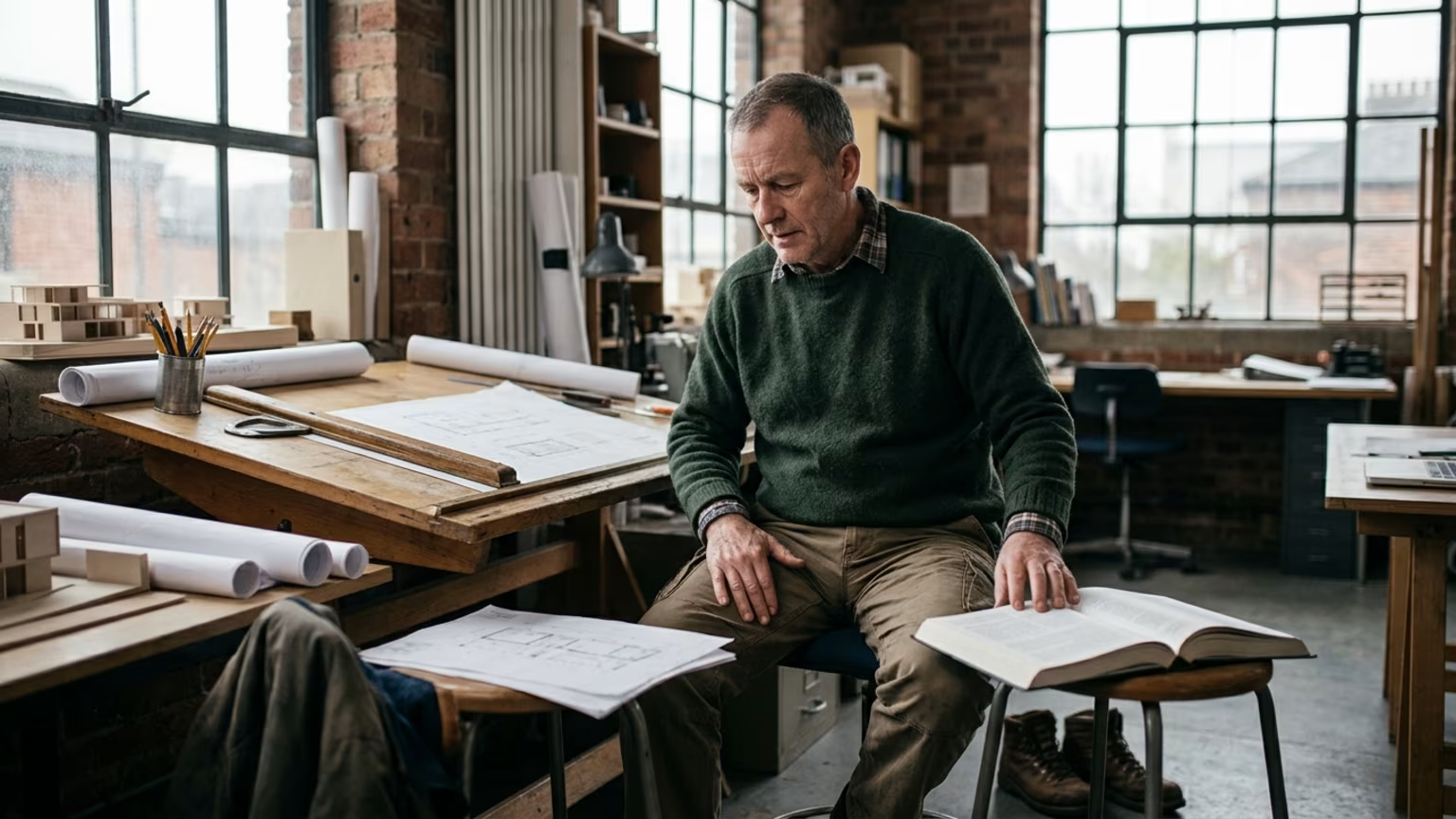

An analysis of why muscle recovery slows for adults over 35, detailing changes in cellular regeneration and practical ways to adjust your exercise routine.





On September 15, 2026, The New York Times published a report in its Move section detailing why post-exercise recovery slows down as people age. The analysis outlines how age-related changes in muscle composition and cellular regeneration alter the way the body repairs itself after physical exertion.
The primary conclusion is that older adults experience slower recovery because they are more susceptible to exercise-related muscle damage. Their muscles also regenerate more slowly after intense physical exertion. This slower cellular regeneration fundamentally changes how the body responds to training stress over time. Exercise recovery is not simply the disappearance of physical soreness.
True recovery involves the body actively remodeling and regenerating muscle tissue after the stress of a demanding workout. Post-exercise stiffness and soreness typically dissipate within 24 to 72 hours. This natural healing window can feel longer or become more noticeable as people get older. The New York Times notes that muscle mass usually begins to decline in the 30s.
Aging alters overall muscle composition in specific and highly measurable ways. Older adults lose more fast-twitch fibers than slow-twitch fibers. Fast-twitch fibers are responsible for supporting force and power during intense athletic movements. Slow-twitch fibers primarily support sustained endurance activities.
Losing these power-focused fibers has a direct mechanical consequence for the human body. The New York Times reports that this loss may leave the remaining fibers exposed to greater stress during demanding exercise. When fewer fibers are available to handle heavy loads, the resulting muscle damage is often more pronounced. This increased physical damage requires a longer and more intensive repair phase.
Another major factor in slower recovery is age-related chronic inflammation. Researchers refer to this persistent baseline inflammation as inflammaging. This systemic shift can impede the cellular mechanisms required for proper muscle regeneration. The body struggles to complete the tissue remodeling process efficiently when chronic inflammation remains elevated.
The Times article presents these explanations as researcher-supported mechanisms driving fatigue. The available material does not identify a specific study, journal, or named research team behind those statements. That limitation matters for consumers trying to understand their own changing bodies. The mechanisms are plausible and consistent with expert explanations, but they are not the sole cause of fatigue.
They should not be presented as a single definitive cause of every person's slower recovery. Slower recovery is not determined by age or cellular decline alone. Training intensity, unfamiliar movements, total exercise volume, and sleep all affect how long soreness lasts. Variables like poor nutrition and managing the impact of lost sleep heavily influence the physical repair timeline.
Illness, prior conditioning, and existing injuries also play significant roles in the total recovery duration. The supplied material does not quantify the relative contribution of these various lifestyle factors. The 24 to 72 hours timeframe describes typical stiffness and soreness following standard physical exertion. Soreness lasting longer than that is not automatically evidence of serious physical injury.
Dr. Asad Siddiqi, chief of rehabilitation medicine at NewYork-Presbyterian Brooklyn Methodist Hospital, offered perspective on this physiological shift. He told The New York Times that younger people may recover "without a second thought." Conversely, he noted that aging may require more intentional maintenance to keep the body ready for exercise or sport.
This perspective shifts the focus away from seeing slower recovery as a personal failure. It frames proactive physical maintenance as an intelligent adaptation to a changing biological reality. Active adults can adopt this mindset to maintain their physical routines without feeling constantly worn down.
Adults over 35 should treat recovery as a dedicated and ongoing phase of their overall training plan. You must schedule intentional rest just as strictly as you schedule physical exertion. If a workout repeatedly leaves you unusually fatigued, you should reduce the intensity of your next session. You can adjust the total volume or frequency of your workouts instead of trying to push through the fatigue.
Use the 24 to 72 hours of typical soreness as a rough reference point for planning your rest periods. It is a helpful baseline rather than a rigid deadline for full physical readiness. Pushing through lingering soreness without adequate rest can disrupt the body remodeling process. Learning how to navigate adjusting your weekly physical load is crucial for maintaining long-term capacity.
Exercise remains highly relevant to healthy aging and should not be abandoned because of soreness. A 2026 review found that exercise can attenuate age-related decline in bone mineral density in adults aged 40 and older. The review reported that brisk walking or jogging routinely produced favorable bone health effects for midlife adults. These benefits often appeared around 600 metabolic-equivalent minutes per week.
That specific volume is roughly equivalent to two to three hours of brisk walking or jogging per week. Combined aerobic and resistance exercise also demonstrated positive outcomes for long-term bone health. The authors characterized this evidence as cautious rather than completely definitive. It still highlights the profound utility of maintaining a consistent movement routine in midlife.
Adults must be careful when evaluating popular recovery supplements and aggressive wellness marketing claims. A 2026 meta-analysis found that creatine combined with resistance training produced a small strength benefit. This improvement was observed in healthy older adults compared with resistance training alone. The researchers noted an effect size of 0.31 and a 95 percent confidence interval of 0.18 to 0.45.
The same review did not find statistically significant additional effects on muscle mass or physical function. The certainty of evidence for those specific physical outcomes was rated as low or very low. The review stated that these findings should not be directly extrapolated to frail or functionally limited older adults. Supplements are not a guaranteed or universal solution for age-related physical decline.
Evidence for other common recovery aids is similarly modest and often overstated by manufacturers. A 2026 systematic review found that polyphenol-rich supplementation may produce a small reduction in post-exercise pain. The evidence did not establish consistent improvements in objective recovery or overall muscle function. A reduction in perceived soreness does not necessarily mean the muscle tissue has fully regenerated.
Alternative physical interventions require the exact same careful interpretation from tired midlife adults. A 2026 meta-analysis of tai chi interventions found possible improvements in selected physical performance outcomes. The reported effects on muscle mass and overall physical quality were inconsistent across the studied groups. The certainty of evidence for these outcomes remained low or very low.
The New York Times article explains why physical recovery often feels significantly slower for many active adults. It does not establish that every single adult over 35 will experience a clinically meaningful decline in capacity. The age-related muscle-loss explanation should never be read as an argument against starting strength training. Consistent physical training remains the fundamental baseline against which new supplement evidence is actively tested.
Adults with persistent fatigue, recurring joint pain, or suspected frailty should avoid treating the issue as ordinary aging. The sources reviewed here do not provide a diagnostic pathway for complex physiological conditions. Professional medical assessment is vastly more appropriate than self-prescribing a new supplement or adopting an aggressive training plan. True physical resilience requires adults to acknowledge their changing physiological limits while continuing to train intelligently.
Understanding the exact mechanisms of muscle repair helps filter out wellness noise and focuses attention on sustainable physical habits. Adults can benefit from tracking baseline recovery trends without becoming obsessed with every minor ache. The most effective approach involves balancing physical stress with structured periods of profound physiological rest. Prioritize sustainable resistance training and steady aerobic exercise over unproven daily habits.
As clinical understanding of muscle regeneration continues to evolve, will future fitness guidelines treat dedicated recovery protocols as a mandatory component of midlife health rather than an optional bonus?
Adapting to slower post-exercise muscle regeneration often causes active adults to overthink their evening routines and struggle with bedtime stress. Difficulty falling asleep frequently derails the body's natural physical repair processes, and Relaxopia interprets the underlying physiological research so you can stabilize your nightly rest. Explore Resources
Stay connected for research-led guidance on sleep quality, stress, circadian rhythm, recovery, fatigue and everyday energy. Clear ideas for adults 35+ who want to sleep better, recover more fully and feel more capable through the day.





Explore practical guidance on sleep, stress and recovery without chasing every new hack, device or promise.
explore the blog