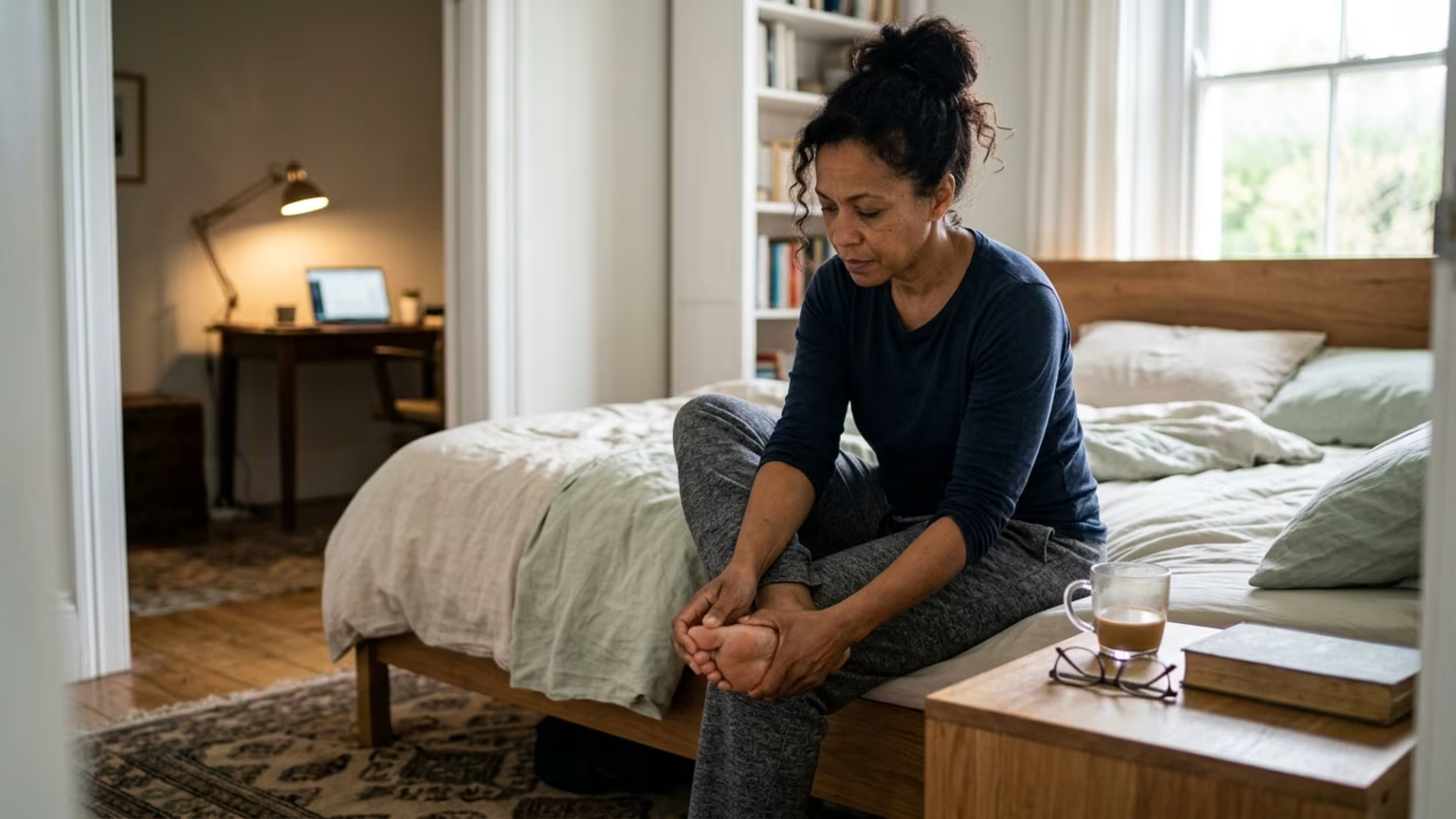

A University of Turku study found remote workers gained 14 minutes in bed but lost 44 minutes of movement, highlighting the need for active breaks at home.





On September 11, 2026, a University of Turku research team published findings in the International Journal of Behavioral Nutrition and Physical Activity detailing how remote schedules change physical routines. The WORKDAY study compared time in bed and physical activity on remote-work and office days among hybrid workers in Finland.
ConsumerAffairs reports that the seven-day study monitored 97 university employees using thigh-mounted sensors. The participant group had an average age of 42, and about 84% were women. Researchers compared the exact same participants across their different work settings. The study included at least one remote day and one office day for each person.
This specific demographic profile is highly relevant for midlife adults seeking to navigate their daily recovery. At this stage of life, metabolism and natural energy cycles begin to shift in noticeable ways. The loss of consistent daily activity can have a pronounced impact on how the body regulates its internal clock. Understanding these patterns helps adults make informed choices about their working environment.
The public summaries of the research differ slightly on the final sample count. While ConsumerAffairs says 97 university employees participated, the University of Turku press release lists 99 participants. Regardless of this small reporting discrepancy, the continuous tracking approach provided a clear comparison of how physical habits shift. Wearing the sensors for seven consecutive days allowed researchers to capture consistent behavior patterns.
The core finding highlights a clear behavioral trade-off for hybrid workers. ConsumerAffairs reports the corresponding estimates as about 14 more minutes in bed and 44 more minutes sedentary on remote-work days. This suggests that professionals are gaining a small margin of rest at the expense of their daily physical engagement. The reduction in daily movement represents a significant shift for adults trying to manage their energy.
The exact estimates for these behavioral shifts vary slightly depending on the reporting source. The University of Turku summary cites an average of 15 minutes longer sleep and a 45-minute increase in time sitting or lying down. These minor differences highlight the challenges of summarizing continuous wearable data for the public. The broader pattern remains a clear trade-off between resting and moving.
This drop in movement occurred across multiple levels of physical exertion. ConsumerAffairs reports that remote days included about 37 fewer minutes of light activity and 21 fewer minutes of moderate-to-vigorous activity. For many midlife professionals, losing this baseline movement can impact overall physical resilience. Finding ways to replace these missed active minutes requires conscious planning.
Light activity often consists of the small, unrecorded movements of office life. This includes walking to a meeting room, stepping out for coffee, or simply pacing during a phone call. These brief moments of physical engagement add up over an eight-hour workday to support overall cardiovascular health. Replicating this scattered movement at home requires intentional effort.
The drop in higher-intensity movement is equally important for professionals to acknowledge. This intensity level typically encompasses brisk walking, cycling, or other forms of purposeful exercise that elevate the heart rate. Losing nearly a half-hour of this activity can significantly alter a person's physical fatigue by the end of the day. A lower physical sleep drive can make it harder to fall asleep quickly at night.
The data clearly identifies which specific behaviors are being swapped out when professionals stay home. It also says standing and cycling were among activities most often displaced by sitting, lying down, and time in bed. Without a structured office environment, natural opportunities to stand or walk simply disappear. This behavioral shift creates a more sedentary baseline for the average remote workday.
The absence of a daily commute appears to be a major factor in this behavioral shift. University of Turku researcher Kristin Suorsa noted that the reduced walking and cycling likely reflected the lack of a commute on remote days. The physical transition between home and the workplace usually forces a certain amount of walking. When work moves entirely into the house, that automatic physical engagement is lost.
The design of the home office environment also plays a role in reducing daily movement. Suorsa said less standing accounted for most of the increase in sedentary time. She suggested that limited access to standing workstations at home is one possible explanation for this shift. Many adults have not replicated the ergonomic variety of a corporate office in their own houses.
The contrast between corporate and residential workspaces often creates an unintended physical deficit. Office environments are frequently designed to encourage movement between different zones throughout the day. Home offices, by comparison, tend to consolidate all professional activities into a single chair or desk. This physical confinement naturally limits the spontaneous movement that workers would otherwise experience.
This loss of built-in activity poses a specific challenge for adults in their late thirties and beyond. The commute often acts as an unacknowledged source of light exercise that supports natural tiredness later in the day. Understanding how these rhythms shape daytime energy can help professionals see why this missing movement matters. Without it, the body may not feel physically ready for rest by the evening.
The practical implication for adults is to deliberately restore everyday movement that office routines naturally provide. Professionals can treat a remote day as a chance to retain any useful extra time in bed. However, they must not allow reduced movement to become a permanent part of their weekly schedule. Balancing this trade-off requires intention and small adjustments to the daily framework.
To counter the increase in sedentary behavior, the University of Turku recommends varying working positions throughout the day. They also suggest taking active breaks and deliberately adding leisure-time physical activity to remote days. Discussing break practices with colleagues can help establish a culture that supports moving away from the desk. Building movement into transitions between tasks is a practical response to the study.
An active break does not necessarily require a structured workout or a change of clothes. It can be as simple as standing up to stretch, walking around the house for five minutes, or doing light chores between meetings. The goal is to interrupt prolonged periods of sitting and signal to the body that it is still active. These small interruptions can help maintain energy levels and prevent the afternoon fatigue that often accompanies sedentary work.
When adapting routines, it is helpful to distinguish between sleep opportunity and actual sleep quality. A small average increase in time in bed does not automatically resolve persistent poor sleep or high stress. Spending an extra 14 minutes resting only helps if the body is capable of high-quality recovery. Adults managing natural changes in their physical rest should focus on consistency over simply staying in bed longer.
Measuring time in bed is not identical to measuring the restorative stages of human sleep. ConsumerAffairs notes that the researchers measured sleep and time in bed with a thigh-worn sensor. While this provides useful data on physical positioning, it does not confirm deeper sleep architecture. Anyone using practical methods to monitor their rest should focus on how they actually feel during the day.
A moderate approach to remote work routines is the most effective strategy for long-term resilience. The evidence supports noticing and addressing reduced movement on remote days without resorting to alarmist conclusions. There is no claim in the research that working from home is inherently unhealthy. It simply requires a conscious approach to maintaining physical boundaries and daily activity.
Managing mental boundaries is just as crucial as managing physical movement when working from home. Without a physical commute to separate professional duties from domestic life, mental load can easily bleed into the evening. Finding ways to stop taking professional tension into the bedroom is necessary for utilizing that extra time in bed. A short walk after logging off can simulate a commute and help the mind transition.
Building a sustainable structure around hybrid work means viewing rest and activity as a connected system. The loss of moderate-to-vigorous activity can make it harder for the body to build sufficient sleep drive. Establishing a reliable framework for daily habits helps professionals offset the sedentary nature of home offices. Small additions of movement can preserve the benefits of remote work while mitigating the physical downsides.
As hybrid schedules become permanent fixtures for many professionals, how might this research change long-term approaches to midlife recovery and daily activity boundaries?
Balancing the trade-off between extra time in bed and lost daytime movement requires clear evidence, and Relaxopia organizes this information for your daily routine. By evaluating credible clinical data, Relaxopia helps you address low daytime energy and inconsistent recovery. Our research-led coverage clarifies the habits that shape rest so you can build routines without unnecessary complexity.
Stay connected for research-led guidance on sleep quality, stress, circadian rhythm, recovery, fatigue and everyday energy. Clear ideas for adults 35+ who want to sleep better, recover more fully and feel more capable through the day.






Explore practical guidance on sleep, stress and recovery without chasing every new hack, device or promise.
explore the blog