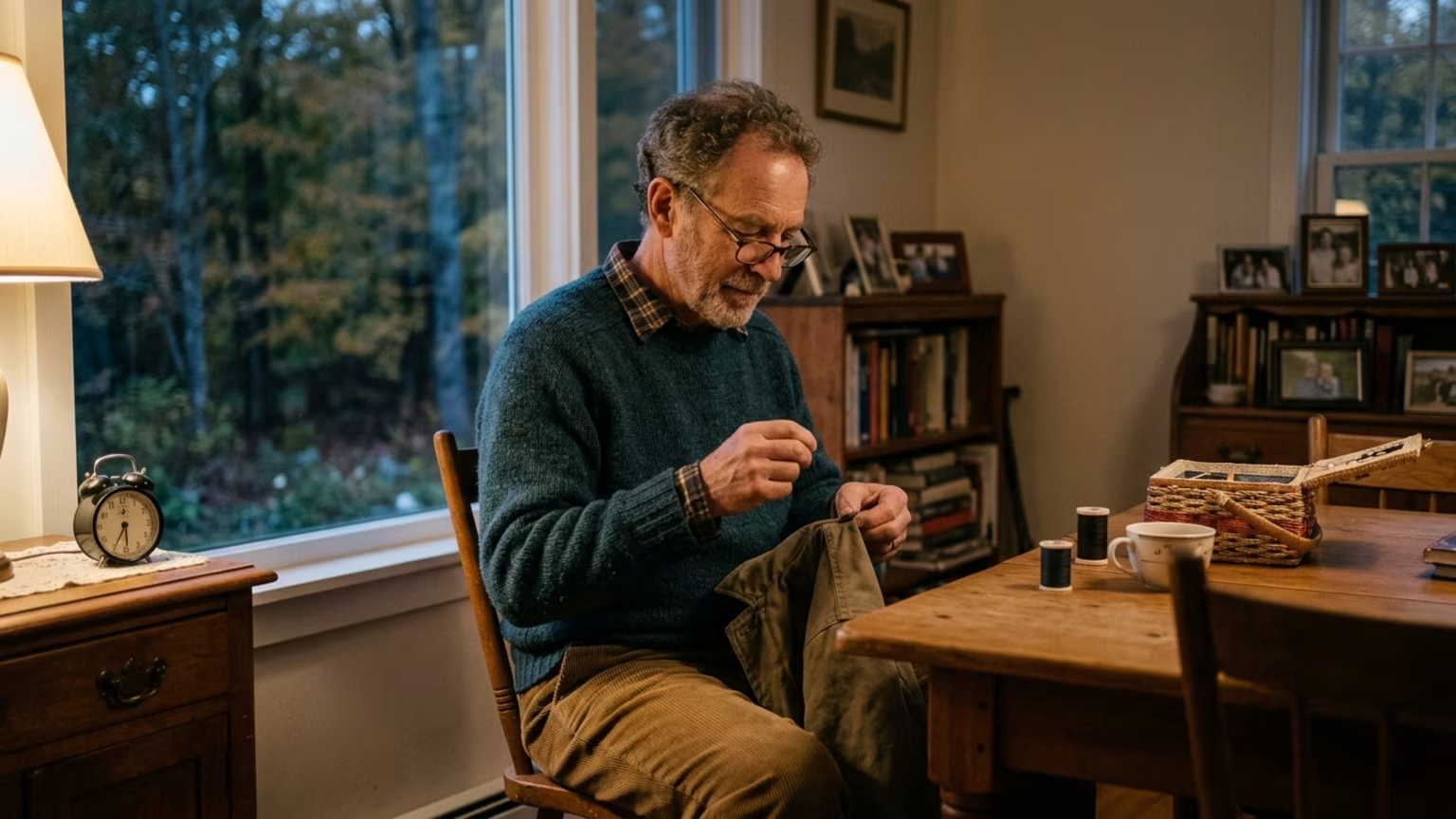

A 2024 Vanderbilt study outlines how rapid daylight loss around the autumn equinox impacts circadian rhythms, sleep timing, and daily recovery for adults.





On September 20, 2026, The Boston Globe reported on 2024 Vanderbilt University research demonstrating that the rapid decline in daylight around the autumnal equinox significantly influences mood and circadian regulation. The publication highlighted how this changing solar exposure directly impacts the brain’s master clock and alters sleep timing.
The transition away from summer involves a complex shift in environmental signals. The autumnal equinox formally marks the first day of astronomical fall. However, this event is not the precise day when daylight and darkness are exactly equal across the globe.
That precise balance arrives a few days later during a period known as the equilux. According to The Boston Globe, the equilux typically falls around September 25 or 26. This slight delay occurs because the Sun appears as a physical disk in the sky rather than a single point of light.
Atmospheric refraction also bends light over the horizon. This visual distortion makes daylight appear before the actual sunrise and allows it to persist after the physical sunset. The combination of these astronomical factors means the environment maintains slightly more light than a strict twelve-hour division would suggest.
What makes the autumnal equinox biologically significant is the extreme rate of transition. The Boston Globe reports that daylight loss reaches close to three minutes per day in the Boston region around this time of year. This rapid reduction creates a highly noticeable shift in daily environmental cues.
This accelerated pace stands in stark contrast to the solstices. During the summer and winter solstices, the daily change in sunlight is measured only in seconds. The equinox creates a concentrated window of rapid environmental change near its annual maximum. This rate of daylight reduction is smaller for populations living farther south and becomes much more pronounced for those located closer to the poles.
The human body monitors these environmental shifts with precise biological machinery. The master circadian clock is a structure called the suprachiasmatic nucleus. Located in the hypothalamus, this cluster of cells orchestrates the daily timing of human physiology.
The Boston Globe explains that the suprachiasmatic nucleus responds directly to changes in light. It processes these visual signals and adjusts the release of melatonin accordingly. This biological feedback loop helps regulate circadian rhythms and dictates when the body feels ready for rest or activity.
As the morning sunrise occurs later in the day, many working adults continue waking up at the exact same clock time. This modern schedule creates a fundamental mismatch between the environment and the body. The critical early-morning light signal might not reach the eyes until a person is already fully awake and navigating their morning routine.
Adults often find themselves drinking coffee, checking their phones, or commuting in the dark before receiving meaningful solar exposure. Missing these early natural cues can leave the internal clock lacking the necessary information to anchor a stable sleep schedule. Understanding how to use natural light to set your body clock offers a way to rebuild this environmental connection.
The biological impact of this changing light environment was the focus of recent clinical investigation. The Boston Globe highlighted a 2024 Vanderbilt University study examining how human biology reacts to these seasonal shifts. Sandra Rosenthal, a chemistry professor who also studies pharmacology, led the research team.
The Vanderbilt researchers specifically studied solar insolation across small geographic regions. Solar insolation refers to the actual amount of solar energy reaching the ground. The investigators looked at how changes in this ground-level energy affected psychological and biological stability over time.
According to the report, the researchers uncovered a compelling relationship among people with mood disorders. They found that the rate at which daylight was declining predicted depressive symptoms far better than the calendar season itself. This central interpretation suggests that the speed of environmental change is a critical variable for biological stability.
Human biology appears to monitor how rapidly the world is darkening, not just the absolute number of light hours available. This distinction is vital for adults noticing shifts in their own energy levels. The pace of seasonal light decline serves as an active environmental stressor rather than just a passive backdrop for the season.
Beyond the specific Vanderbilt findings, broader scientific literature supports the deep connection between light exposure and biological resilience. The Boston Globe references the work of Andrew Huberman, a Stanford neuroscientist, to contextualize the importance of maintaining daytime light exposure.
The publication points to a massive 2023 observational study involving more than 85,000 participants. This large-scale research project evaluated how daily light habits correlated with long-term psychological well-being. The study found that lower daytime light exposure was strongly associated with increased depression and other mental health conditions.
This statistical relationship underscores why consistent solar exposure remains critical during the shorter autumn days. However, the report clearly cautions that this finding should be treated strictly as an association. Because the study was observational, it can identify mathematical relationships but cannot independently establish that insufficient daytime light directly causes depression.
This clinical restraint is particularly important for adults evaluating their own seasonal fatigue. The changing light pattern is highly relevant for individuals who already experience poor sleep, persistent stress, or low daytime energy. Circadian timing directly influences when the biological systems promote active wakefulness and restorative sleep.
Still, seasonal effects do not impact everyone uniformly across the general population. Feeling sleepier or noticing lower physical energy as the days shorten does not automatically indicate a clinical circadian disorder. These physical changes frequently reflect a basic biological response to shifted light exposure, altered daily schedules, and competing stress patterns.
The reporting cautions against automatically applying findings from individuals with seasonal affective disorder to the broader population. The Vanderbilt findings regarding the rapid loss of daylight specifically concern people with existing mood disorders. These insights should not be interpreted as absolute proof that rapid autumn daylight loss universally causes sleep disruptions in all adults.
For an adult navigating the demands of midlife, these biological realities require practical behavioral adjustments. The goal is not to adopt rigid optimization protocols, but rather to treat outdoor light as a consistent environmental cue. Small changes to daily habits can help anchor your sleep timing against the shifting seasonal backdrop.
The most impactful adjustment involves capturing natural light early in the biological day. As the sunrise shifts progressively later into the morning, deliberate action becomes necessary to secure adequate solar exposure. A person waking at a fixed clock time will naturally receive far less morning light than they did during the summer months.
The Boston Globe reports that low-angle light around sunrise and sunset holds special importance for signaling the body clock. To harness this specific environmental cue, prioritize getting outdoors shortly after waking. A brief morning walk or taking a cup of coffee outside can provide this necessary biological anchor.
Even spending focused time near an unobstructed window can help transmit these vital circadian signals to the brain. This simple daily habit helps separate biological sleep time from waking hours. Building a complete practical guide to sleep timing around these natural anchors reduces the friction of seasonal transitions.
Protecting the end of the day is just as critical as managing the morning. Bright artificial light in the evening can actively delay the body clock and push sleep onset later into the night. This delayed biological timing makes it substantially harder to fall asleep at a reasonable hour.
Reducing bright overhead lighting in the hours before bed is a highly reasonable strategy to minimize competing late-day signals. Creating a dimmer environment mimics the natural fading of daylight and allows the suprachiasmatic nucleus to initiate proper melatonin release.
The Boston Globe also recommends seeking out remaining low-angle light in the late afternoon before it entirely disappears. This late-day exposure should be treated as useful environmental context rather than a guaranteed medical cure. The reporting does not establish a precise required duration for this afternoon habit, favoring general consistency instead.
Adults managing high mental overload or persistent low energy might benefit from briefly monitoring their routines. You can track your personal patterns for two weeks to see how seasonal light shifts interact with your schedule. Useful metrics include your daily wake time, morning outdoor light exposure, and evening room brightness. You might also monitor your actual bedtime and overall daytime alertness.
This tracking exercise serves purely as a self-monitoring suggestion to identify obvious behavioral gaps. It is not a clinically validated diagnostic test, but it can highlight where evening artificial light might be competing with your natural rest signals. Noticing these patterns helps clarify why tiredness does not always mean sleepiness when the evening routine lacks structure.
Light exposure represents only one variable in the complex equation of adult rest. A healthy approach to seasonal recovery must account for the full spectrum of daily stressors. Work schedules, caregiving demands, passing illnesses, and prescribed medications all heavily influence sleep quality. Alcohol consumption and caffeine intake are also significant factors that alter evening rest.
Bedroom conditions and evening screen exposure further complicate how easily the brain transitions into rest. Morning light is never a guaranteed standalone treatment for persistent insomnia or clinical seasonal affective disorder. Keeping wake and sleep times reasonably stable while seeking natural light remains a simpler, more sustainable strategy than striving for perfect circadian optimization. Consistency typically matters more than achieving extreme light intensity on any single given day.
Finally, individuals should never casually dismiss severe symptoms as just another normal part of the changing season. While seasonal light shifts are biologically relevant, major changes in sleep architecture require careful attention. Sustained low mood, repeated nighttime waking, significant loss of interest, or severe daytime impairment always warrants professional clinical evaluation.
The Vanderbilt University findings challenge the traditional view of autumn fatigue by highlighting the precise speed of daylight reduction. If the human nervous system reacts to the rapid rate of environmental change rather than just the total hours of darkness, how will this alter standard advice for seasonal resilience? Will future clinical guidance for adults shift away from static daily light quotas and instead focus on managing the steep environmental transitions that occur near the equinox?
Feeling tired after spending enough time in bed frequently leaves adults blaming themselves for ordinary seasonal fatigue, but Relaxopia explains the biological impact of rapid daylight loss to clarify the recovery process. The publication translates clinical evidence into manageable habits, helping readers anchor their sleep schedules with natural light cues rather than fighting a changing internal clock. Explore Resources
Stay connected for research-led guidance on sleep quality, stress, circadian rhythm, recovery, fatigue and everyday energy. Clear ideas for adults 35+ who want to sleep better, recover more fully and feel more capable through the day.






Explore practical guidance on sleep, stress and recovery without chasing every new hack, device or promise.
explore the blog