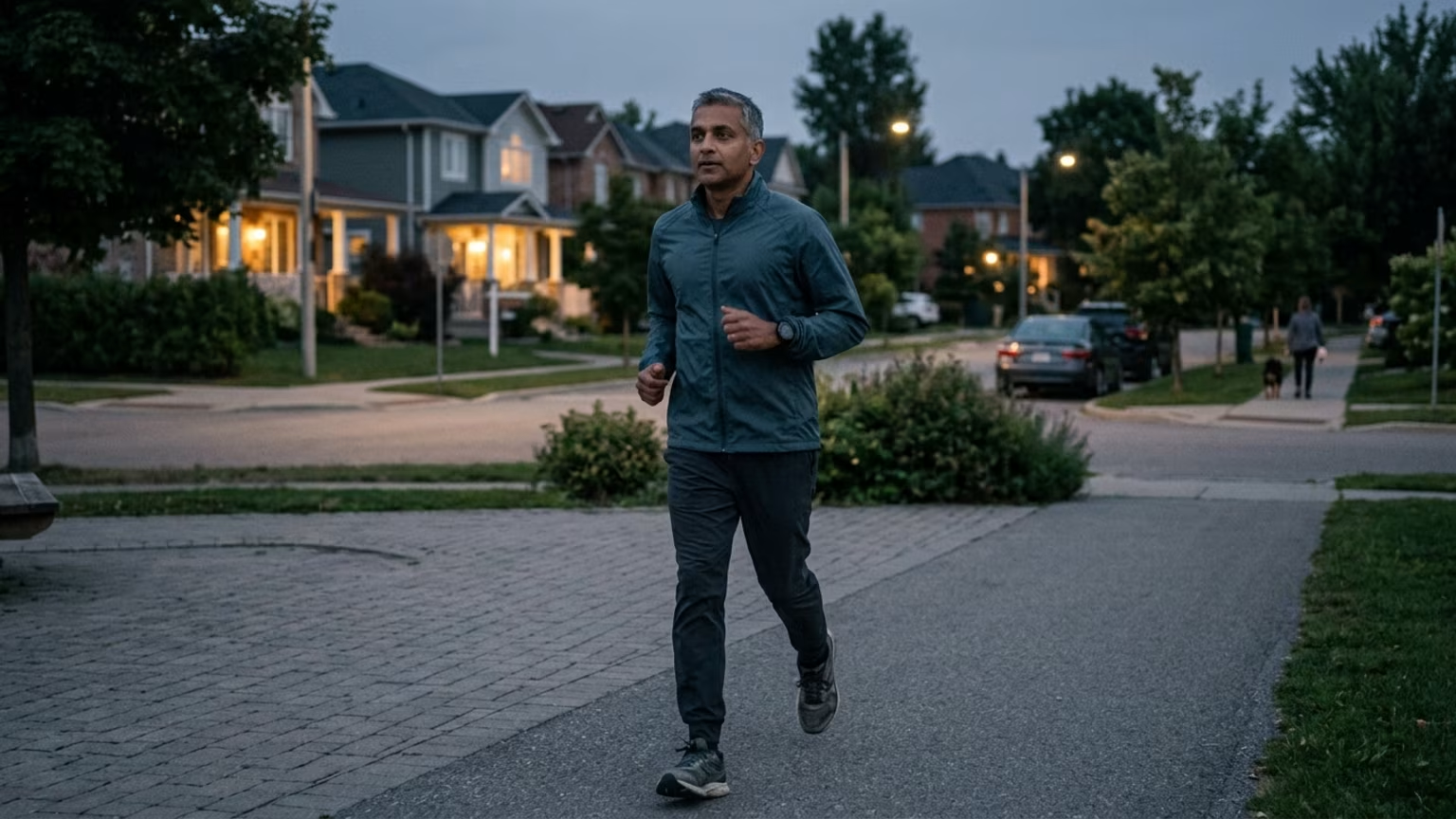

A 2026 study in SLEEP found that 30 minutes of moderate evening cycling helped young adults preserve delayed recall after an isolated 4.5-hour short night.





On August 26, 2026, the journal SLEEP published an original research article showing that moderate evening exercise helped healthy adults preserve memory function after a heavily restricted night of rest. The Oxford University Press publication detailed how a simple cycling routine buffered against the specific cognitive deficits typically caused by cutting an average sleep window in half.
Poor rest quickly degrades declarative memory. This type of memory handles the retention of newly learned facts, names, and visual associations. Adults noticing cognitive fatigue often assume that extending their time in bed is the only variable they can manipulate. The latest research tested a different approach by introducing physical activity directly before a planned period of inadequate rest.
The study involved 88 healthy young adults. The participants had an average age of 24.0 years, and 52% of the group was female. The researchers recorded a standard deviation of 3.8 years for the participant ages. They randomly assigned these individuals to four distinct experimental conditions to isolate the variables.
Some participants received an average sleep opportunity of 8.5 hours in the laboratory. Others were restricted to a 4.5-hour sleep opportunity, simulating an acute disruption. Within those sleep conditions, half of the participants completed a specific exercise intervention. The non-exercising participants engaged in seated rest instead.
The routine consisted of exactly 30 minutes of moderate-intensity cycling. This activity took place at 7 p.m., targeting 55% to 60% of their estimated VO₂ max. The researchers chose this specific intensity and duration to create a standardized metabolic demand without causing severe exhaustion.
The precise timing of the intervention played a key role in the experimental design. Scheduling the activity at 7 p.m. left a clear gap before the learning phase began. This three-hour window allowed the participants' physiological states to settle before they began the cognitive testing.
At 10 p.m., all participants learned a series of 80 face-name pairs. They then went to bed, and researchers recorded their physiological states using polysomnography. The next morning, the participants completed immediate and delayed recall tests to measure how well they retained the learned associations.
Declarative memory is a foundational part of daily functioning for working professionals. It dictates our ability to recall specific facts, recognize new colleagues, and remember procedural instructions. While the study only measured face-name pairs, this specific task serves as a reliable proxy for cognitive load. Preserving this type of memory can dictate the flow of a functional workday.
The results revealed a statistically significant interaction between the exercise intervention and the sleep condition for delayed recall. The data analysis yielded a p-value of 0.033 and a partial η² of 0.056. Among the participants restricted to 4.5 hours of rest, those who exercised performed significantly better on delayed recall than the non-exercising group. That specific performance difference returned a p-value of 0.028.
Most notably, the delayed-recall performance in the exercise-plus-sleep-restriction group was not statistically different from the groups given the full 8.5 hours. The researchers concluded that acute moderate-intensity exercise might offset some negative effects of sleep restriction on long-term declarative memory. The data suggests that consistent routines that include physical activity can be an interesting tool for navigating acute daily challenges.
The study identified a biological pathway connecting the physical activity to the cognitive outcome. The proportion of slow-wave sleep statistically mediated the relationship between the exercise session and the delayed recall performance. The researchers reported a statistical coefficient of 0.105 and a standard error of 0.091. The 95% bootstrap confidence interval ranged from 0.073 to 0.924.
This biological rationale centers on the premise that physical activity can increase slow-wave sleep. Slow-wave sleep is known to be highly relevant to memory consolidation processes in the brain. When the total time in bed is cut short, deepening the remaining rest becomes crucial.
The SLEEP study adds to a growing body of evidence regarding brief behavioral interventions. The scientific community is increasingly interested in finding ways to reduce the next-day cognitive effects of inadequate sleep. Another 2026 study reported by Women’s Health looked at different parameters of cognitive fatigue. That separate research examined 20 minutes of physical activity after 30 straight hours of wakefulness.
The researchers compared the 20-minute movement intervention with a 90-minute nap. They found approximately 21% better memory performance with the exercise compared to a seated control group. The nap intervention yielded 23% better performance than the control condition. While these studies differ significantly in their methodology, they point in a similar direction. Brief physical activity may provide short-term support for memory under acute sleep-loss conditions.
While the findings are compelling, they require careful interpretation by the general public. The primary sample consisted entirely of healthy young adults with an average age of 24. This demographic difference matters because younger bodies manage sleep deprivation differently than mature adults. The results cannot automatically be assumed to apply to people with chronic medical conditions or shift workers.
Furthermore, the sleep restriction was acute and highly controlled. Participants experienced a single isolated night with a 4.5-hour sleep opportunity. Real-world poor sleep often involves repeated restriction and sleep apnea. It is frequently complicated by alcohol use and medication effects. Menopause-related symptoms also play a major role in fragmenting rest.
A single session of cycling does not resolve the cumulative burden of these everyday disruptions. This is a vital consideration when trying to recover after repeated short nights. The study focused entirely on delayed recall of face-name pairs, rather than a full cognitive assessment.
The results do not necessarily apply to sustained attention or reaction time. They also leave questions about judgment and mood regulation unanswered. Workplace performance remains untested by this specific protocol. Stating that the memory performance was comparable to the full-sleep group simply means the difference was not statistically significant in this specific laboratory task.
Translating this clinical finding into a daily habit requires realistic adjustments for adults between 35 and 65. If you anticipate a short night because of travel or scheduling obligations, a brief period of moderate activity before bed is a reasonable experiment. This might look like easy-to-moderate cycling or brisk walking in the early evening.
You should keep your expectations modest regarding the final outcome. The evidence supports the possible protection of one aspect of memory after an isolated short night. It is not a functional replacement for adequate nightly rest. If you need to reset your routine after a disruption, this activity should only be treated as a temporary buffer.
The intensity of your movement is a critical variable to manage carefully. The protocol specifically used 30 minutes of moderate cycling at 55% to 60% of estimated VO₂ max. A separate study found that high-intensity workouts performed two hours before bed were associated with poorer sleep-quality indicators. Vigorous late-night workouts caused higher sleeping heart rates, higher pre-sleep body temperatures, and longer sleep-onset latency.
For a working parent or a professional navigating a demanding schedule, applying these findings means focusing on timing and moderation. If you plan to incorporate an evening walk, schedule it several hours before your target bedtime. This spacing allows your nervous system to transition out of an active state before you attempt to fall asleep. Rushing through a workout immediately before turning off the lights is not supported by this specific protocol.
If late physical activity leaves you overheated or increases your alertness, it will be counterproductive to your recovery goals. You should avoid treating this study as a clinical justification to begin vigorous late-evening workouts. On a day after inadequate rest, avoid using this single research result to overestimate your capability. Memory performance in a laboratory task may look preserved even when other critical functions remain compromised.
Adults managing recurring poor rest should seek proper clinical evaluation rather than relying on a behavioral workaround. Persistent insomnia and loud snoring warrant professional medical attention. Witnessed breathing pauses and restless legs also require clinical evaluation. Disabling daytime sleepiness is another sign that you should consult a doctor. Building a realistic sleep routine starts with understanding your baseline health rather than applying temporary patches to chronic problems.
People experiencing chest pain or unusual shortness of breath should seek medical guidance immediately. Fainting and uncontrolled hypertension also require a prompt doctor visit. Anyone with significant heart disease must prioritize clinical safety above physical experiments.
As researchers continue to map the exact pathways between physical activity and memory consolidation, the biological conversation about rest is evolving. We now have documented evidence that very specific evening habits can modify how the brain handles acute restriction in a controlled laboratory setting. How will this emerging understanding of slow-wave sleep manipulation ultimately reshape our long-term approaches to midlife recovery?
Deciding whether to use moderate evening physical activity to buffer an occasionally short night requires understanding the specific limits of the research, which Relaxopia clarifies by separating verified data from generic wellness advice. We help adults dealing with difficulty falling asleep or staying asleep build sensible resting habits that genuinely support daily function. Explore Resources
Stay connected for research-led guidance on sleep quality, stress, circadian rhythm, recovery, fatigue and everyday energy. Clear ideas for adults 35+ who want to sleep better, recover more fully and feel more capable through the day.





Explore practical guidance on sleep, stress and recovery without chasing every new hack, device or promise.
explore the blog