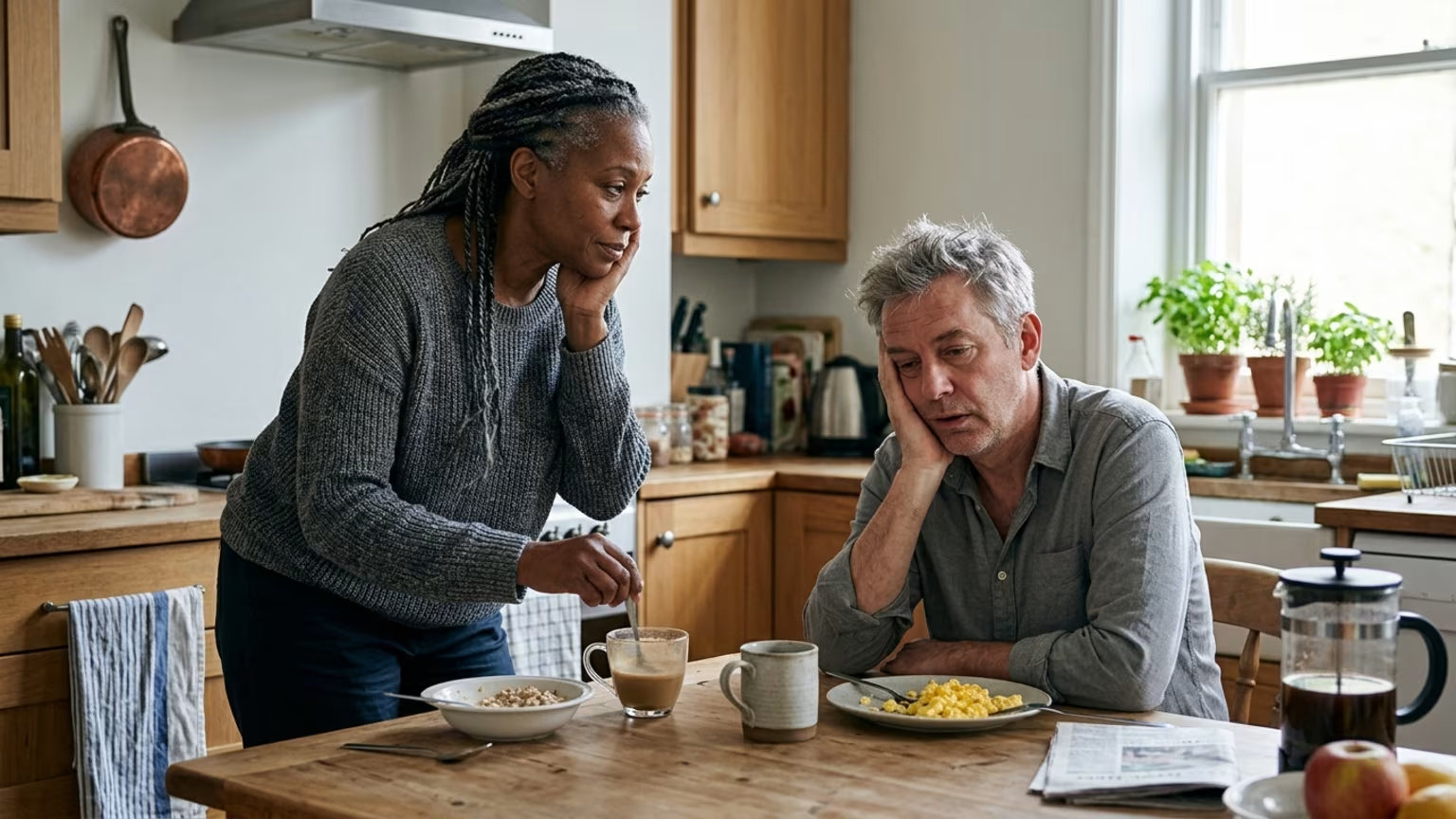

A Concordia University study reveals how one partner's poor sleep affects both partners' diet quality and daily energy through shared household habits.





On July 9, 2026, Concordia University researchers published a study in Annals of Behavioral Medicine demonstrating that when one partner sleeps poorly, both partners struggle to maintain their healthy eating habits. The three-month observation of cohabiting Canadian couples revealed that sleep quality affects household dietary choices just as much as individual effort.
The research followed 204 cohabiting couples in Canada to understand how one person's rest impacts the other over time. On average, the participants were 42 years old. This demographic makes the findings highly relevant to midlife adults managing shared households. At the start of the observation, nearly 96% of these individuals stated they were actively trying to change their diets.
At least one person in every couple had a body-mass index of 25 or higher and was trying to improve their diet or physical activity. This setup mirrors the real-life situation of many adults trying to build healthier habits while managing demanding daily schedules. The study sample was explicitly designed to capture households already working toward health goals.
The researchers built a robust timeline to capture these household dynamics accurately. Each partner completed detailed questionnaires about their sleep and diet at the beginning of the study. They filled out similar surveys after one month and again at the three-month mark. For the first 14 days, participants also kept daily diaries to record their exact efforts to eat healthily.
This steady, multi-layered data collection allowed the research team to observe subtle behavioral shifts across the entire three-month observation period. The core finding revealed a distinct connection between rest and daily nutrition. Poorer sleep was associated with less reported effort to eat well. The person who slept poorly also reported lower confidence in maintaining healthy eating habits.
This loss of dietary confidence is a familiar feeling for anyone managing low daytime energy and fatigue. Crucially, this dietary friction spilled over to the partner in the same household. The partner of the poor sleeper reported similar difficulties sticking to their dietary goals. This spillover occurred even when that second partner had slept perfectly well.
A well-rested adult might still find their nutritional goals derailed if their partner is exhausted. Jean-Philippe Gouin, a Concordia psychology professor and corresponding author, noted this dynamic. He stated that people with a sleep-deprived partner reported less confidence in following a healthy diet and made less effort to do so. The research itself was led by Concordia PhD candidate Maegan Dymarski.
Additional contributions came from Tamara Cohen of the University of British Columbia, Noémie Carbonneau of the Université du Québec à Trois-Rivières and Kaberi Dasgupta of McGill University. Their work was supported by a Social Sciences and Humanities Research Council of Canada Insight Grant.
The Concordia University report suggests that the shared food environment serves as a primary pathway for this connection. A sleep-deprived partner is far more likely to consume highly palatable snacks. They might also offer these calorie-dense foods to their partner. Items such as crackers, chips, chocolate or candy become common choices when evening fatigue sets in.
Gouin argued that understanding eating behavior requires strict attention to the social context. This includes noting how one partner may influence the other's eating behavior either intentionally or unintentionally. When one person alters their evening decisions based on exhaustion, the resulting snack habits affect the whole household. It becomes much harder for the well-rested partner to maintain their own nutritional targets when tempting foods suddenly appear on the counter.
Managing nutrition is rarely a solitary endeavor for cohabiting couples. The findings prove that everyday willpower is deeply tied to our immediate living situation.
The research team noted that diet quality improved modestly over the entire observation period. However, the participants' sleep quality did not change significantly during the same three months. Because the data is observational, it shows a clear association without proving that bad rest directly causes unhealthy eating. The modest dietary improvement without a corresponding sleep improvement weakens any assumption that better diet directly fixes sleep.
Women in the group reported healthier diets and stronger overall efforts to eat well compared to men. Still, the researchers found no evidence that gender changed the way one partner's rest affected the other's dietary habits. The spillover effect of poor sleep on household nutrition remained consistent regardless of whether the man or the woman was the poor sleeper.
For midlife adults managing shared routines, these findings offer a practical way to view daily fatigue. If you or your partner struggles to rest, you should treat sleep and eating as connected household behaviors. Recognizing that fatigue influences dietary choices can reduce friction during stressful evenings. Instead of assuming each person operates independently, couples can discuss how tiredness alters their shared environment.
Midlife often involves juggling demanding careers, caregiving responsibilities and personal health goals simultaneously. When the biological need for rest goes unmet, the resulting fatigue can quickly derail those health goals. A practical first step is to observe what happens in your kitchen after a poor night of rest. You and your partner can identify whether late-night eating, convenience foods or unplanned snacks appear more frequently.
The goal is to notice these patterns calmly without assigning blame. The researchers explicitly describe sleep and eating as socially connected behaviors rather than individual failures. This non-judgmental approach helps couples navigate persistent night-time breathing problems or insomnia without resentment.
When energy is low, adjusting your physical environment might help you avoid default snacking. Gouin noted that long-lasting change may require both partners to work together on the household food environment. Couples can agree on what foods to keep readily available during the week. This makes it easier to navigate fatigue without reaching for chocolate or chips.
Making these small adjustments creates a buffer for the times when one partner inevitably sleeps poorly. Adults 35 and older frequently deal with a heavy mental load that makes winding down difficult. You might find that evaluating your daily energy schedule helps you recognize when you are most vulnerable to fatigue-driven snacking.
If you notice that stressful periods lead to poor sleep and subsequent poor eating, you can adjust your grocery shopping habits. Keeping highly palatable foods out of the house prevents the tired partner from unintentionally shifting the household diet. When one person spends the day feeling wired and stressed, they often look for immediate comfort through food in the evening. Removing that temptation supports both partners simultaneously.
If persistent insomnia continues to disrupt your household, relying solely on informal habit changes might not be sufficient. Seeking evidence-based clinical care is often the most appropriate step for consistent recovery. The researchers said that treatments designed to improve sleep, including cognitive behavioral therapy for insomnia, could eventually be studied as couple-based health interventions. Treating underlying sleep issues medically can indirectly support better daytime energy for both partners over time.
It remains critical to remember that this study did not prove that sleep treatment automatically improves both partners' diets. The research provides a valuable framework for observing your own household behaviors. Couples should focus on small behavioral adjustments rather than expecting a single sleep intervention to solve all nutritional challenges. Better sleep quality remains a long-term project requiring patience and mutual support.
Understanding the relationship between rest and nutrition helps adults establish realistic expectations for their daily habits. You do not need to overhaul your entire lifestyle overnight. You only need to recognize that your partner's fatigue might be influencing your own dietary choices. That awareness alone can help you make more supportive decisions during the evening.
This observational study contributes to a broader shift in clinical research toward viewing sleep as a shared relationship behavior. The findings prompt an important question for adults managing busy homes. If one person's fatigue can alter another person's dietary choices, how might couple-based interventions change our long-term approach to midlife recovery?
Managing shared dietary habits while navigating a partner's poor rest often leaves adults frustrated, but Relaxopia provides clarity on how these household routines intersect. We translate credible evidence into clear, practical guidance without wellness hype to help you address the persistent mental load that makes it hard to switch off. Our research-led approach leaves you calmer and more capable of handling everyday fatigue.
Stay connected for research-led guidance on sleep quality, stress, circadian rhythm, recovery, fatigue and everyday energy. Clear ideas for adults 35+ who want to sleep better, recover more fully and feel more capable through the day.






Explore practical guidance on sleep, stress and recovery without chasing every new hack, device or promise.
explore the blog