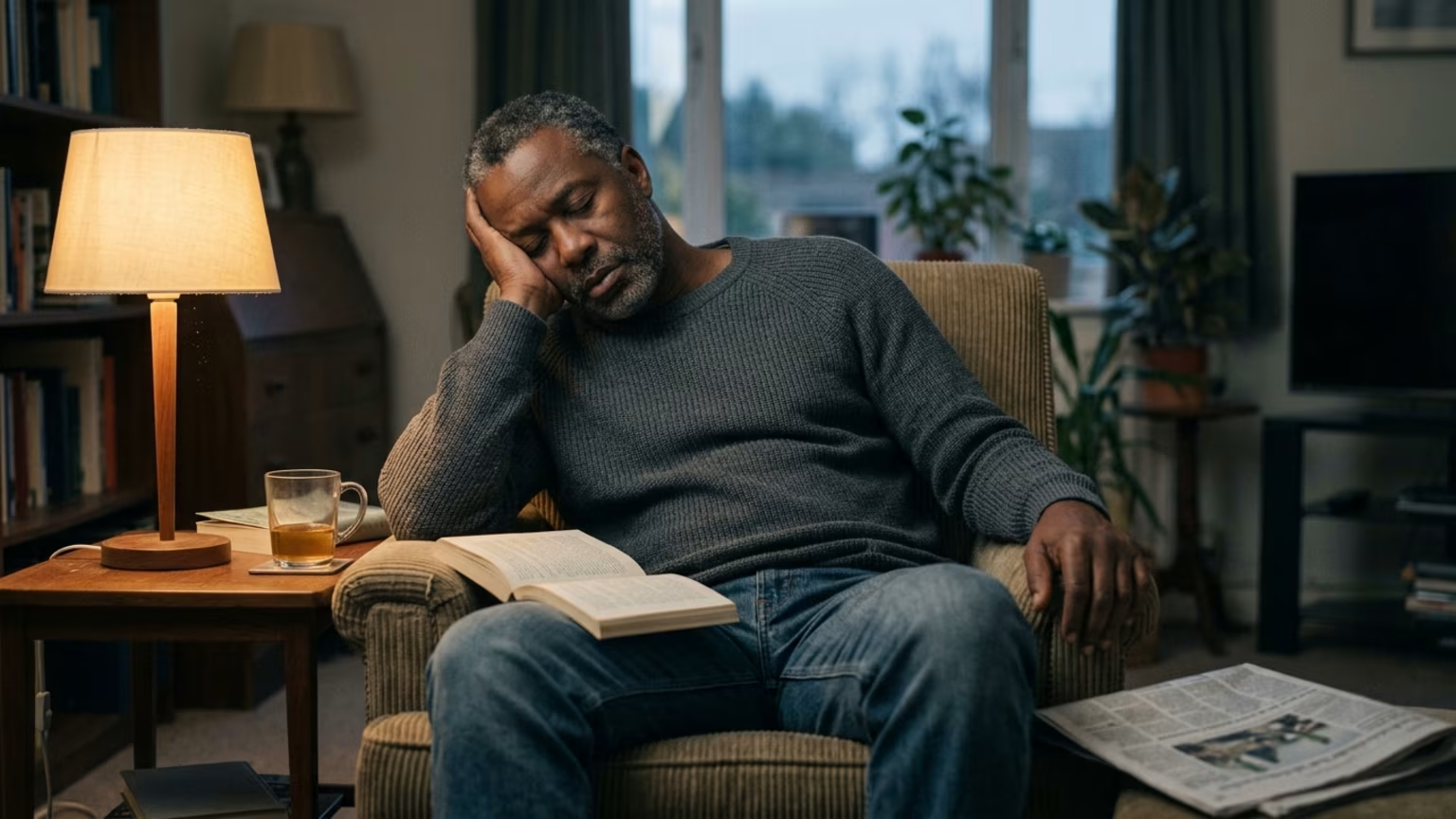

Sleep experts warn that falling asleep immediately may signal accumulated sleep debt rather than healthy rest. Learn how to identify underlying daytime fatigue.





On September 29, 2026, the Seoul Economic Daily published a report detailing an assessment first covered by the UK publication The Mirror. The report examined whether an extremely short time to fall asleep indicates healthy rest or points to underlying exhaustion.
The primary conclusion of the report is that repeatedly falling asleep within minutes can reflect accumulated sleep loss rather than especially good sleep. The report attributes its central warning to Omar El-Gohary. El-Gohary is identified as a superintendent pharmacist at the online medical service IQ Doctor. He suggests that an extremely rapid transition to sleep might point to interrupted rest instead of a highly efficient nervous system.
El-Gohary gives 10 to 20 minutes as a typical sleep-onset range for healthy adults. Dropping off before your head truly settles on the pillow might feel like a victory after a long workday. Yet the report notes that falling asleep almost immediately every single night often signals a heavy burden of sleep debt.
This finding challenges the common assumption that instant sleep is a marker of perfect health. For many adults over thirty-five, crashing instantly is seen as a badge of honor or proof of a hard day's work. The actual clinical perspective suggests it is closer to a warning light on a physiological dashboard.
The article cautions that sleep-onset speed alone is not diagnostic. An occasional quick night after a highly demanding day is usually not a cause for concern. The distinction lies in a persistent pattern that repeats over weeks or months and begins to impact daytime functioning.
The coverage identifies several everyday pressures that can drive this extreme sleepiness. Long working hours frequently compress the time available for proper rest. Adults managing demanding careers often sacrifice evening downtime to finish tasks. This compression leaves the brain with no transition period between high alertness and sleep.
Late-night smartphone use further delays the biological transition to rest. Engaging with screens keeps the mind active and delays the natural signals that promote winding down. Understanding how nighttime screen habits disturb adult rest reveals that the issue goes beyond simple light exposure. It involves the cognitive stimulation of processing new information right before bed.
Stress and irregular sleep schedules also keep the nervous system active long after the workday ends. When professional or personal stress remains elevated, the body produces stress hormones that delay relaxation. If a person falls asleep instantly while facing this stress, the fatigue has simply overpowered the biological stress response. This creates a volatile cycle where sleep is driven purely by exhaustion rather than a calm transition.
The American Academy of Sleep Medicine and the Sleep Research Society recommend that adults get at least seven hours of sleep per night. Falling short of this target regularly can build a profound biological need for rest. When the body finally gets the chance to sleep, it bypasses the normal light stages and drops rapidly into unconsciousness.
Beyond lifestyle factors, physical interruptions can also play a major role in extreme tiredness. The report raises obstructive sleep apnea as one possible source of interrupted sleep. A person might spend an adequate number of hours in bed but fail to get restorative rest.
Sleep apnea causes breathing to pause repeatedly throughout the night. These micro-awakenings pull the brain out of deep sleep stages, even when the person does not fully wake up or remember the interruption. This fragmentation can leave the body starved for deep recovery and desperate to crash the next evening.
Many adults assume that loud snoring or waking up gasping are the only signs of a breathing issue. Quiet micro-awakenings can also fracture sleep architecture without waking the person fully. Over time, these silent interruptions rob the body of the restorative deep sleep required for cognitive maintenance and physical repair.
When these physical interruptions happen nightly, the cumulative effect is severe daytime exhaustion. A person might believe they are practicing good habits because they are physically present in bed for eight hours. The rapid sleep onset they experience the next night is the body reacting to the poor quality of the previous night's rest.
A persistent pattern of crashing instantly becomes more significant when paired with daytime symptoms. The report highlights daytime fatigue and reduced concentration as key reasons to take rapid sleep onset seriously. Adults may also notice increased irritability or unexplained headaches during their working hours.
Feeling easily frustrated by minor inconveniences at work or at home can stem directly from this hidden exhaustion. A depleted nervous system lacks the resilience to process ordinary daily friction smoothly. Memory problems and a heavy reliance on coffee to get through the day are additional warning signs.
Waking up tired and needing multiple caffeinated drinks just to function suggests the night did not provide true recovery. These symptoms reflect a nervous system struggling to maintain baseline performance. Pinpointing the root causes of adult exhaustion is crucial for returning to a stable biological baseline.
It is common to dismiss these signs as normal aging or standard midlife fatigue. The report notes that feeling constantly drained is a signal worth paying attention to. True recovery should leave you with steady energy throughout the majority of the day. Relying on caffeine merely masks the underlying sleep debt without resolving it.
Translating these findings into a daily routine involves looking at your broader rest patterns. Treat the habit of repeatedly falling asleep instantly as a prompt to evaluate your overall recovery. You can start by observing your sleep timing and how rested you feel upon waking.
The Seoul Economic Daily report suggests logging your bedtimes and wake times over several days. You should also note your estimated time to fall asleep. This simple sleep log creates a clear picture of your habits without requiring complicated wearable technology or expensive tracking devices.
Recording this information can help you spot the difference between an isolated exhausted night and a chronic deficit. A consistent written record is highly useful if you eventually decide to consult a healthcare professional. It moves the conversation from vague feelings of fatigue to specific behavioral data.
If you are uncertain where to begin observing your habits, reviewing a practical field guide to falling asleep can provide a helpful framework. Tracking your patterns manually helps you tune into your body's natural signals. It encourages a mindful approach to rest rather than a mechanical one.
The report offers practical suggestions for stabilizing your rest. Establishing a consistent bedtime and wake time helps anchor your biological clock. A predictable schedule supports natural energy rhythms and can significantly improve the actual quality of your sleep.
Building consistency without watching the clock is entirely possible for busy adults. It involves prioritizing a regular wake time first to help set the rhythm for the rest of the day. A steady wake time dictates when you will naturally feel tired the following evening.
Reducing electronic device use beginning an hour before bed is another recommended step. Late-night screen time can interfere with the physical transition into rest. Creating this buffer zone gives your mind space to detach from the day before you attempt to sleep.
These adjustments are practical habits that fit into a busy midlife schedule. They do not demand expensive equipment or rigid optimization protocols. Focus on steady behavioral changes to slowly ease the burden of accumulated fatigue and restore nervous system balance.
The report advises seeking medical advice if rapid sleep onset is persistent and accompanied by clear daytime symptoms. Difficulty functioning without coffee or ongoing memory concerns warrant a deeper look. A clinician can help determine if a medical issue is interrupting your rest.
Bringing your sleep log to a medical appointment provides a helpful starting point for your doctor. It highlights patterns that might suggest whether the issue is behavioral or physiological. The clinical goal is always to address the root cause of the fatigue, rather than just treating the rapid sleep onset as an isolated symptom.
During a consultation, a doctor may recommend polysomnography to gather more data. This is a specialized sleep study that records brain waves and breathing patterns overnight. The test can identify hidden interruptions like sleep apnea that a simple sleep log cannot capture.
A clinical assessment removes the guesswork from chronic exhaustion. It provides concrete data about what is happening in your brain and airway while you are unconscious. Do not use the reported 10 to 20 minute onset range as a rigid target to chase. The report notes that sleep onset speed varies widely based on recent rest and individual differences. The goal is to feel restored during the day, not to pass a specific bedtime speed test.
Will future clinical assessments of midlife fatigue move away from simply tracking total hours in bed toward measuring the actual restorative quality of our transition into sleep?
Evaluating whether extreme nighttime exhaustion is a normal response to modern schedules or a sign of deeper fatigue often leaves adults guessing, but relying on Relaxopia to interpret the clinical studies brings clarity to your routine. Our transparent analysis addresses the persistent mental load that makes it hard to switch off so you can recognize genuine recovery signals. Explore Resources
Stay connected for research-led guidance on sleep quality, stress, circadian rhythm, recovery, fatigue and everyday energy. Clear ideas for adults 35+ who want to sleep better, recover more fully and feel more capable through the day.





Explore practical guidance on sleep, stress and recovery without chasing every new hack, device or promise.
explore the blog